

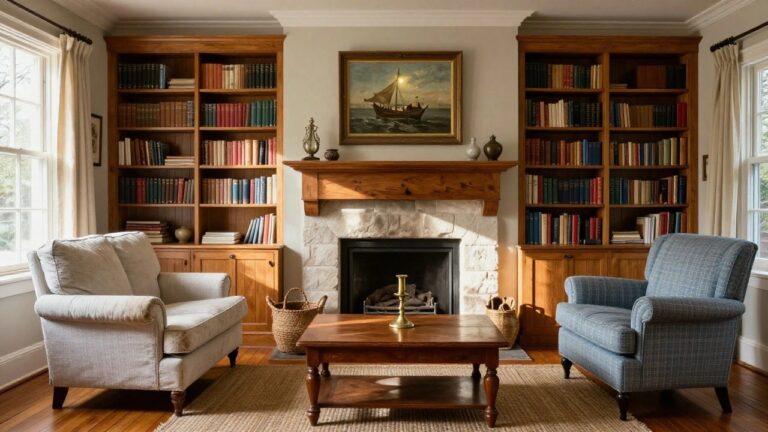
I’ve spent time in enough old New England Colonials to know their interiors work best when the symmetry of the rooms guides your eye without crowding the everyday flow. That sense of grounded warmth comes alive through details like the rich wood tones that wrap around windows and doors, making even chilly mornings feel steady. Fireplaces grab attention first. What I like most is how simple beam ceilings add height and rhythm to spaces that might otherwise flatten out over time. Some of these setups remind me to test wider chair rails in my own living room for that subtle lift.
Classic Wooden Fireplace Mantel
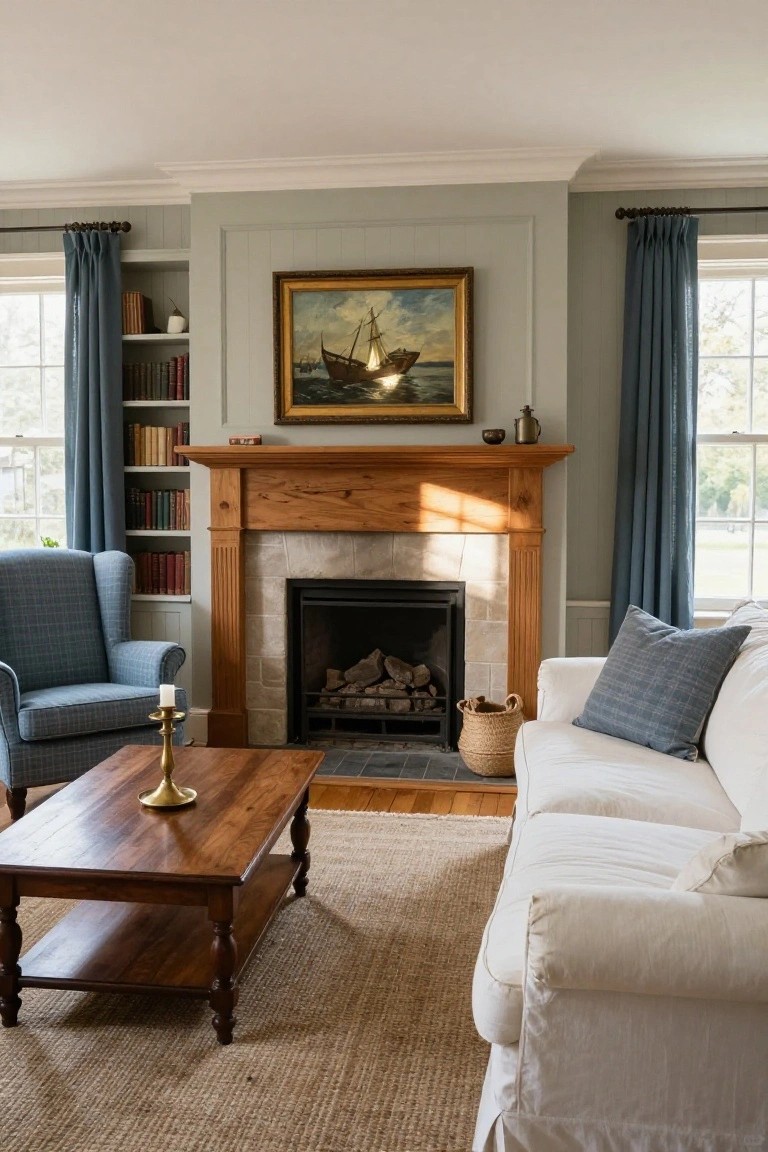
A wooden mantel like this one around a stone fireplace makes a living room feel settled and timeless. The oak picks up the floorboards and adds real warmth against pale walls. That ship painting hung right above pulls it together without trying too hard.
These mantels suit older homes with high ceilings best. Stain the wood medium dark to echo any trim you have. Keep the hearth simple, maybe with a basket for logs nearby. Skip overly fancy stonework. It keeps things practical for everyday firesides.
Navy Blue Cabinets with Wood Counters
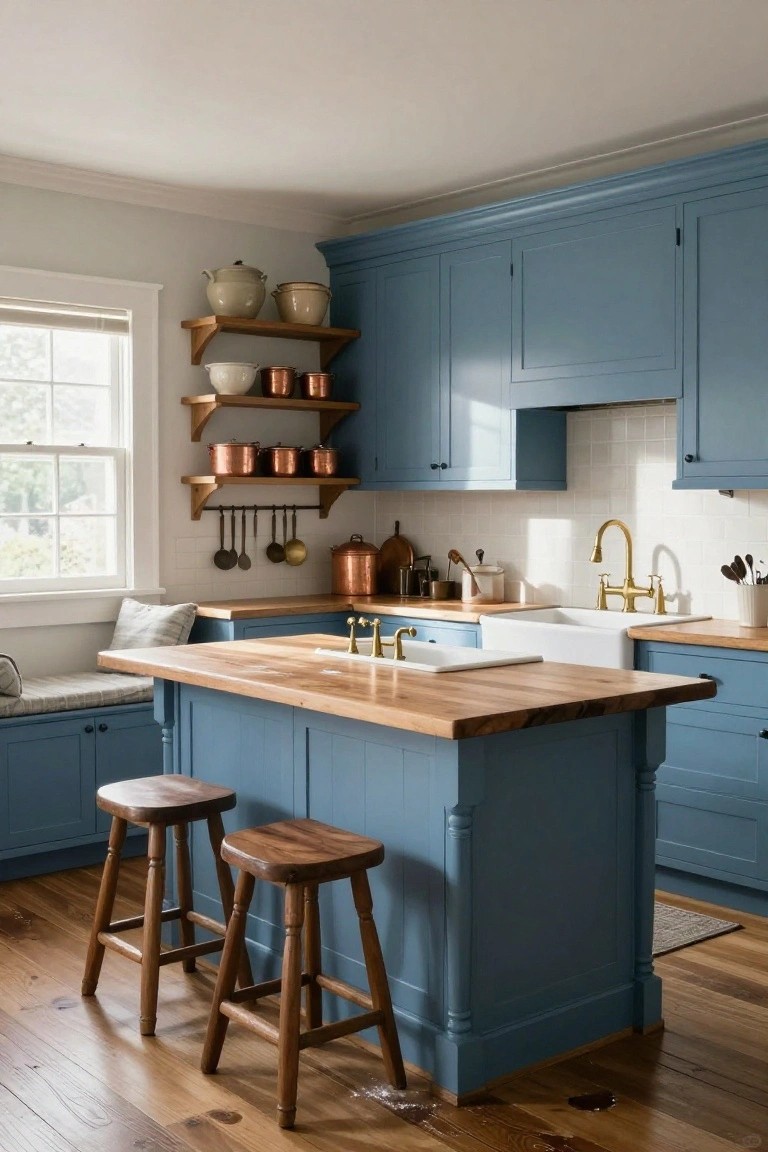
Deep blue cabinets give this kitchen a classic New England look that’s calm and lived-in. The navy shade on those shaker doors feels right at home in a colonial-style space. Paired with butcher block counters and stools, it keeps things warm. No stark white everywhere. Just solid wood tones that soften the blue.
You can pull this off in most any kitchen remodel, especially older homes with good wood floors. Pick a matte navy paint for easy wear. Add brass hardware for a bit of shine. Natural light makes the blue pop without feeling dark… keep windows clear. Works best in spaces you use every day.
Classic Wooden Trestle Dining Table
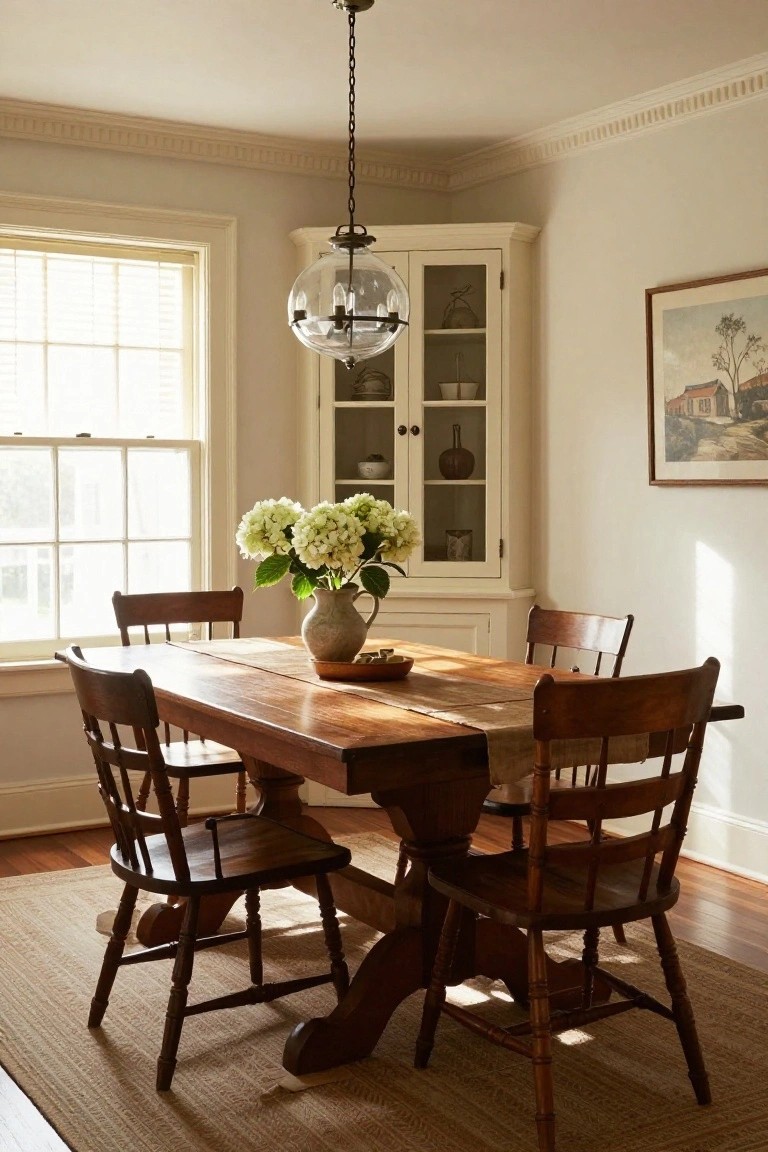
A wooden trestle table like this one sits right in a sunny corner of the room. It has that solid farmhouse feel with thick planks on top and sturdy legs that spread out at the base. Paired with simple spindle-back chairs, it brings real warmth to pale walls and hardwood floors. The natural light pouring in from the window makes the wood tones glow just right, keeping things bright but cozy.
This setup works best in breakfast nooks or smaller dining areas where you want everyday meals to feel special without fuss. It suits older homes with good light, like New England colonials. Just make sure the table isn’t too big for the space… scale matters to avoid crowding. Add fresh flowers in a simple vase, and you’re set.
Four-Poster Bed in the Bedroom
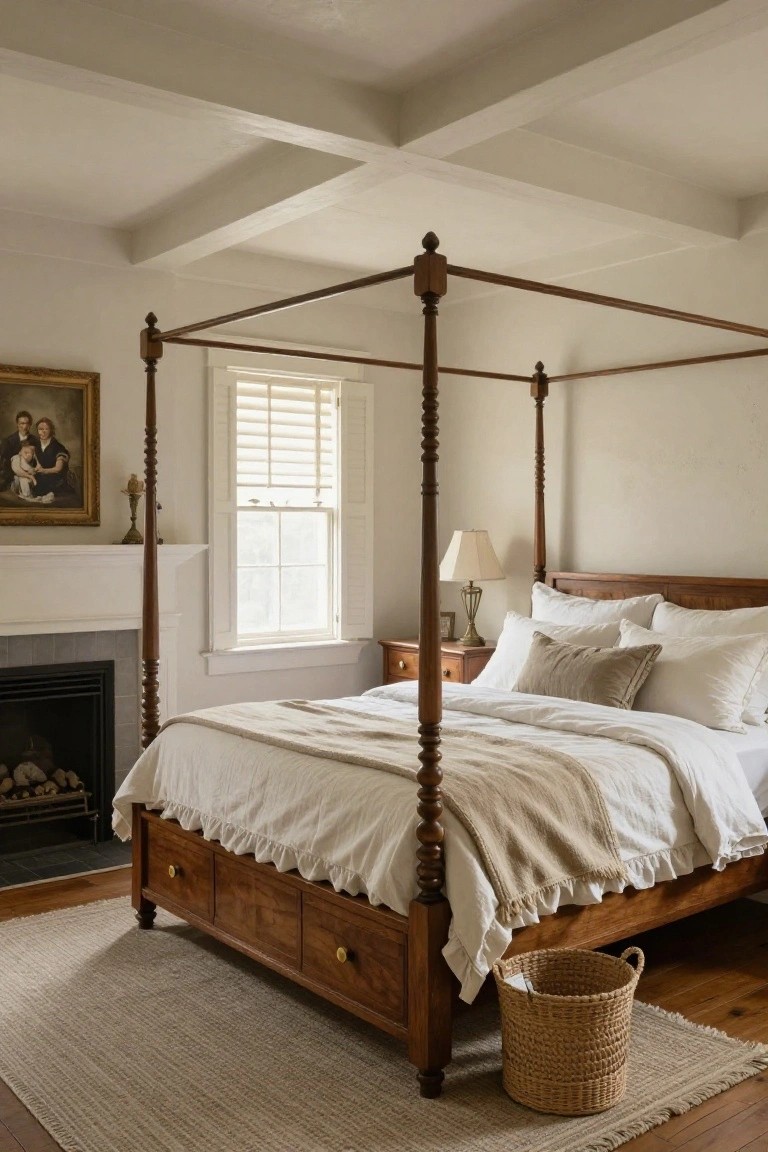
A four-poster bed like this one brings real Colonial character to a bedroom. Made from solid wood with turned posts and brass knobs, it sits low enough to feel approachable but tall enough to make a statement. The white linens and ruffled skirt keep things fresh and soft against the neutral walls.
These beds fit best in rooms with decent ceiling height, like older homes in New England. Pick one with drawers underneath for linens or clothes. They add storage without cluttering the floor… just measure your space first to avoid crowding.
Sage Green Bathroom Vanity
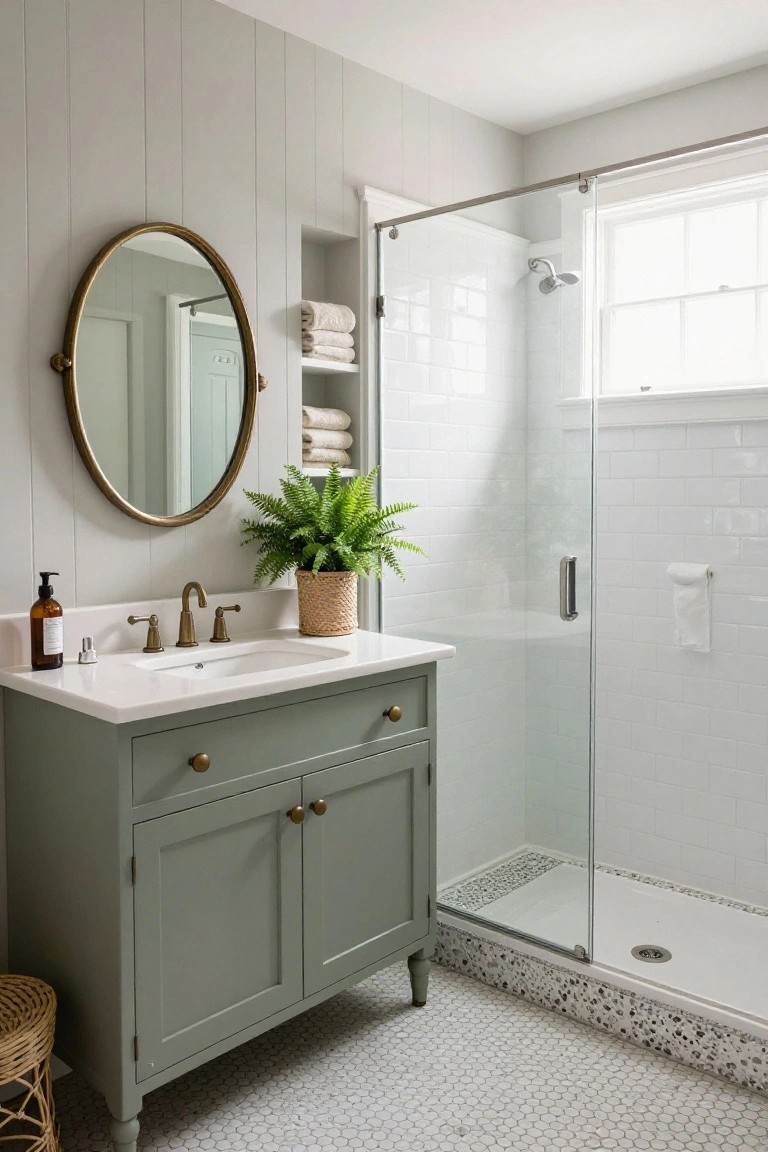
A sage green vanity like this one adds just the right touch of color to a mostly white bathroom. It pulls from that soft, muted green you see in coastal New England spots, warming up the clean lines of subway tile and shiplap walls without overwhelming the space. Brass hardware on the pulls and faucet ties it together nicely, giving a vintage dresser feel that’s simple to pull off.
Try this in a small powder room or guest bath where you want classic charm on a budget. Stick to white tiles and light walls to let the green stand out, and add a plant or two for life. It suits older colonials best… keeps things fresh but not too trendy.
Entryway Benches with Storage
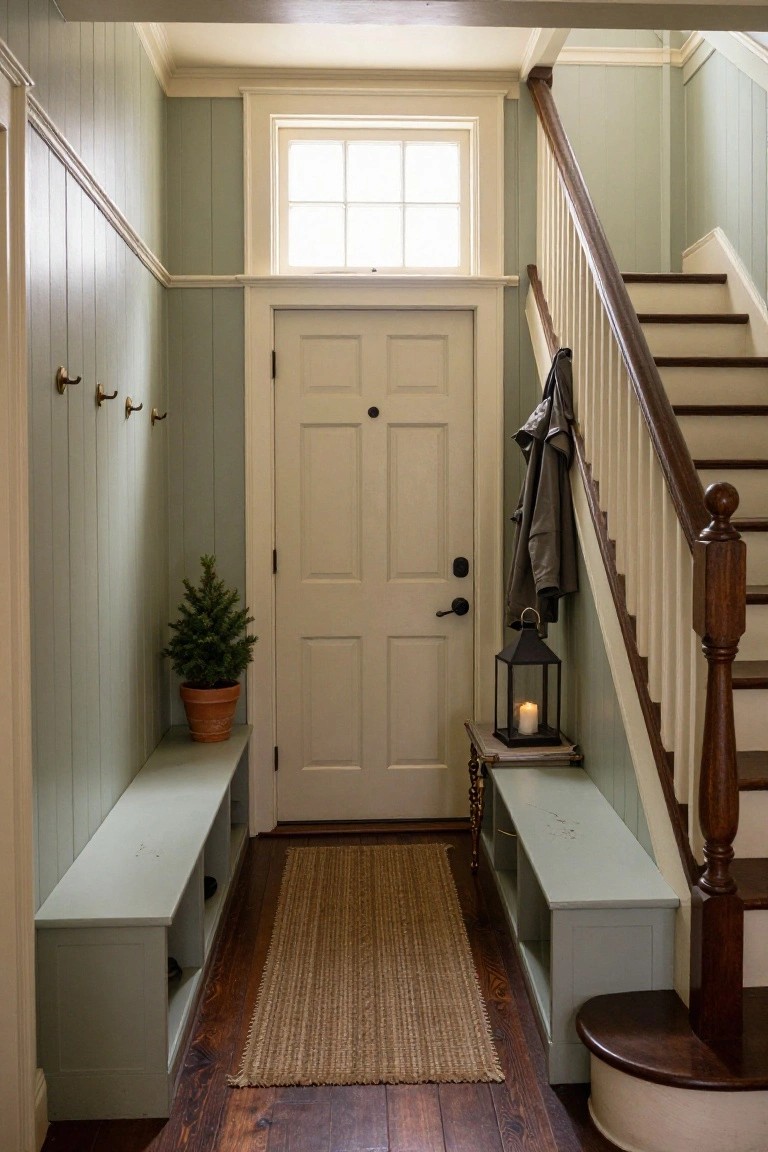
These benches tucked along the wall make a narrow entry feel useful right away. Painted the same soft green as the paneling, they blend in without taking up floor space. A row of brass hooks overhead handles coats and bags, and that little potted tree adds a bit of life without crowding things.
Put them in mudrooms or front halls where you need a quick spot to sit and stash shoes underneath. They suit older homes with tight layouts, like colonials. Just keep the cushions simple, maybe add a basket or two, and watch for scuffs since they see daily use.
Built-In Bookshelves in a Corner Study
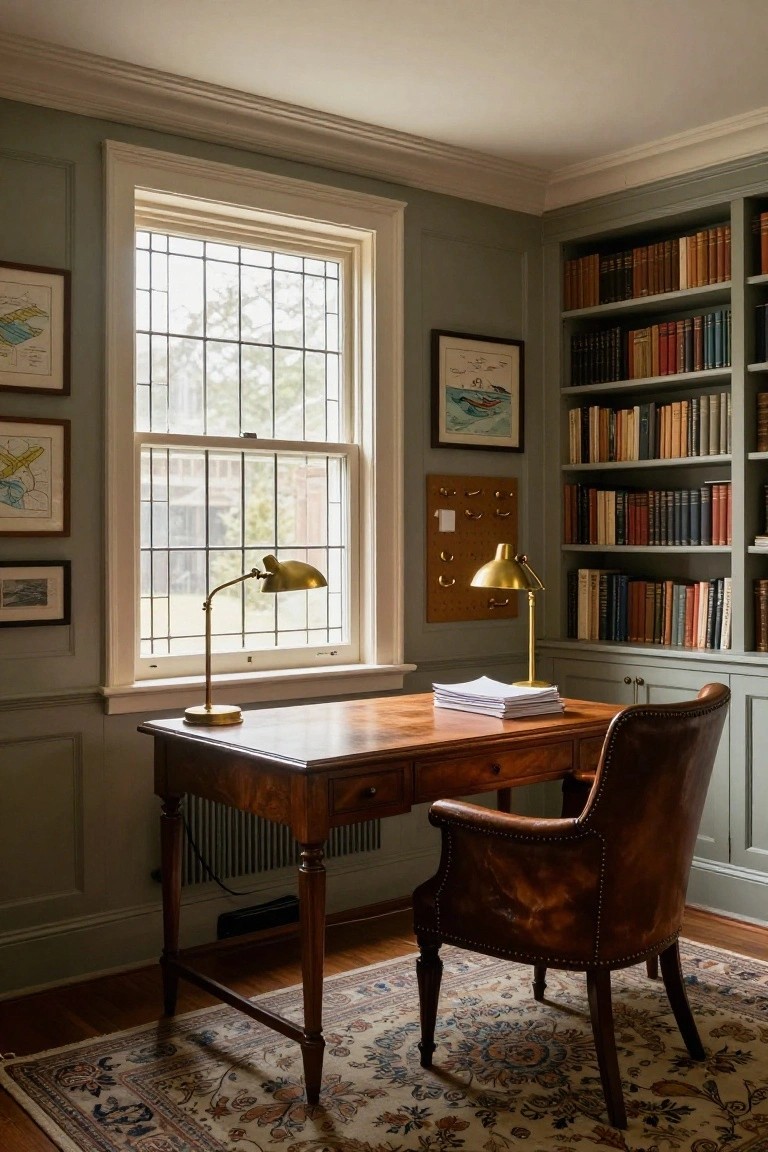
One simple way to turn a spare corner into a real working spot is with floor-to-ceiling bookshelves. They hug the walls here, framing a big window and leaving room for a sturdy wood desk right in front. That setup keeps books handy without crowding the floor, and it gives the whole area a settled, lived-in feel that fits older homes.
You can pull this off in any room with a window nook, especially if you paint the walls a soft sage green to let the wood shelves stand out. Pair it with a leather chair and brass lamp for that classic touch. Just measure twice before building in, so the desk fits snug.
Shiplap Walls Bring Nursery Calm
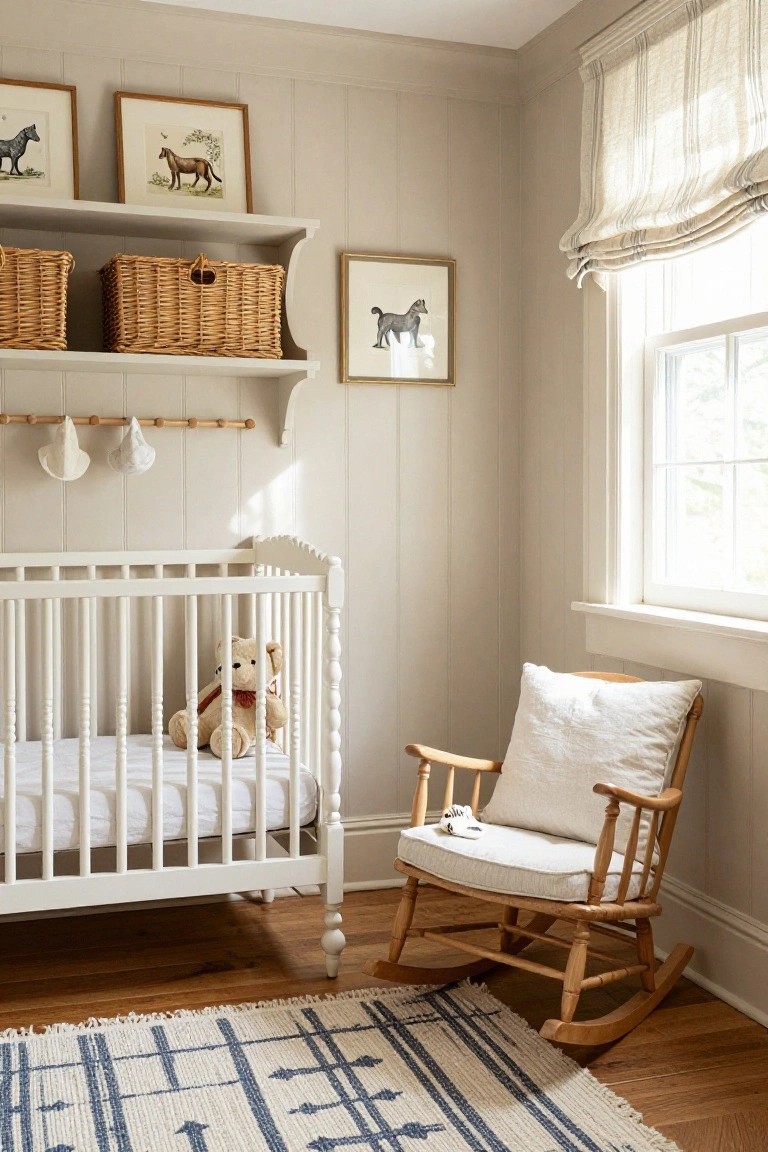
Shiplap walls show up a lot in New England colonials because they add just enough texture to keep plain rooms from feeling too stark. Here the pale grayish-beige panels run vertically, making the space feel taller and more settled. Paired with a simple white crib, it keeps everything light and easy on the eyes for a baby’s room.
You can pull this off in any small upstairs bedroom by picking a soft neutral paint for the panels. It works best in homes with wood floors to echo that natural side. Skip bold colors nearby, or it might compete too much.
Blush Pink Walls in a Colonial Bathroom
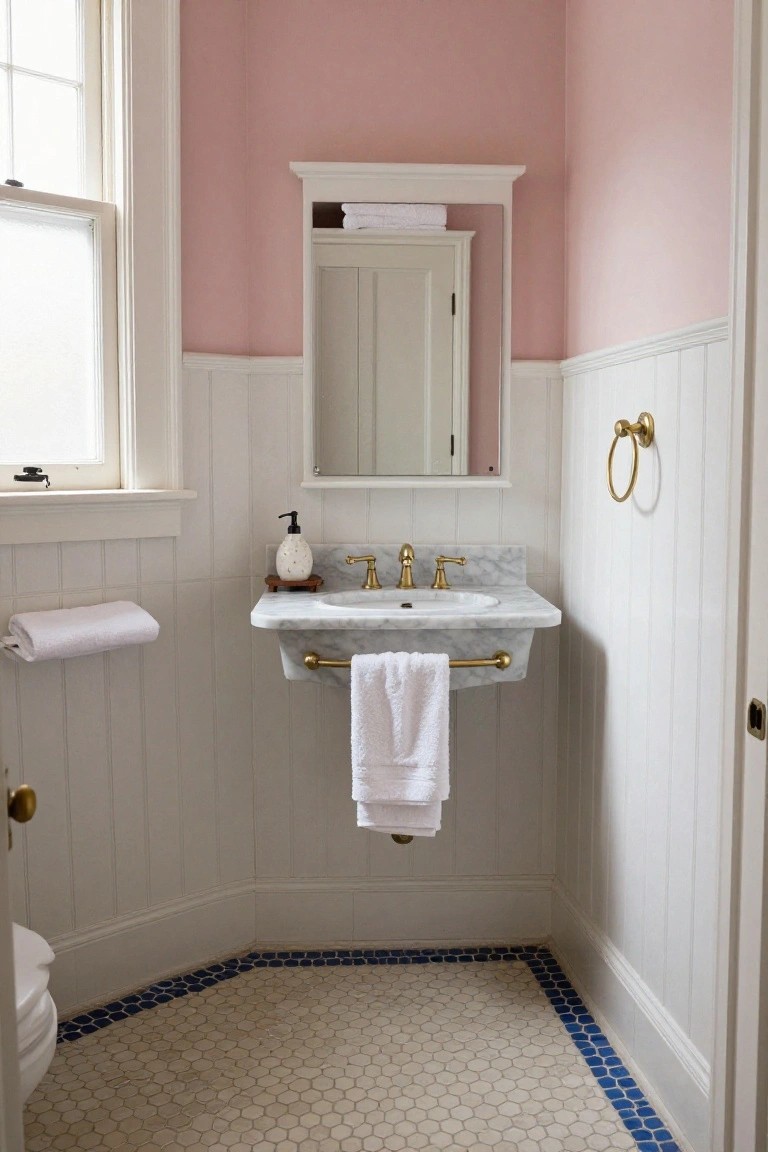
One simple way to update a classic New England colonial bathroom is painting the upper walls a soft blush pink. It keeps the traditional white wainscoting below but adds a gentle warmth that feels fresh without going overboard. The pink tone works because it bounces light around small spaces like powder rooms. Paired with brass fixtures and a marble sink, it nods to history while staying easy on the eyes.
This look suits older homes with existing paneling or any tight half-bath off the hall. Just pick a pale shade to avoid feeling too sweet, and balance it with white towels and neutral tile floors. It brightens things up nicely… especially near a window.
Open Shelves for Kitchen Storage
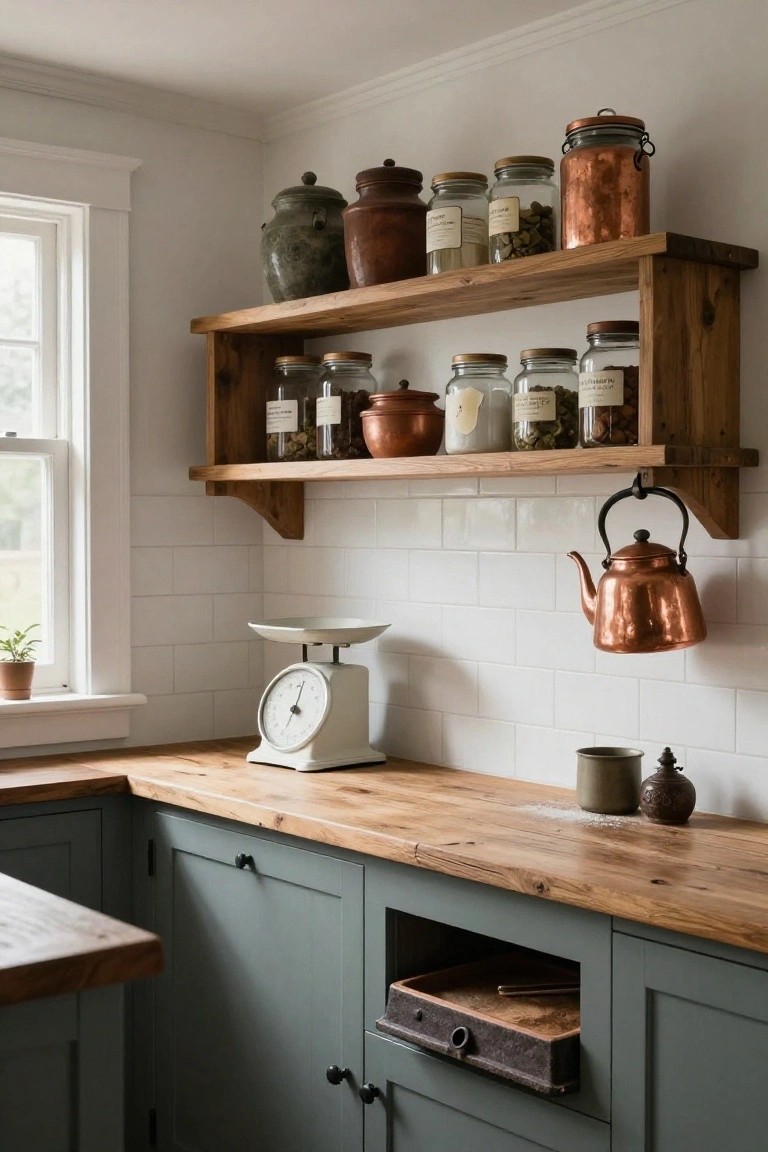
Open shelves like these bring a practical, old-time feel to a New England kitchen. Rough wood planks hold glass jars of grains and spices, plus a few copper pots and ceramics. No hidden cabinets here. Everything’s out in view, making the space feel useful and a bit collected over time.
Try this above your main counter or near the sink. It pairs well with shaker cabinets in soft green and butcher block tops. Label the jars so you grab what you need quick. Works in smaller kitchens too, as long as you keep it from getting too cluttered.
Attic Bedrooms with Exposed Beams
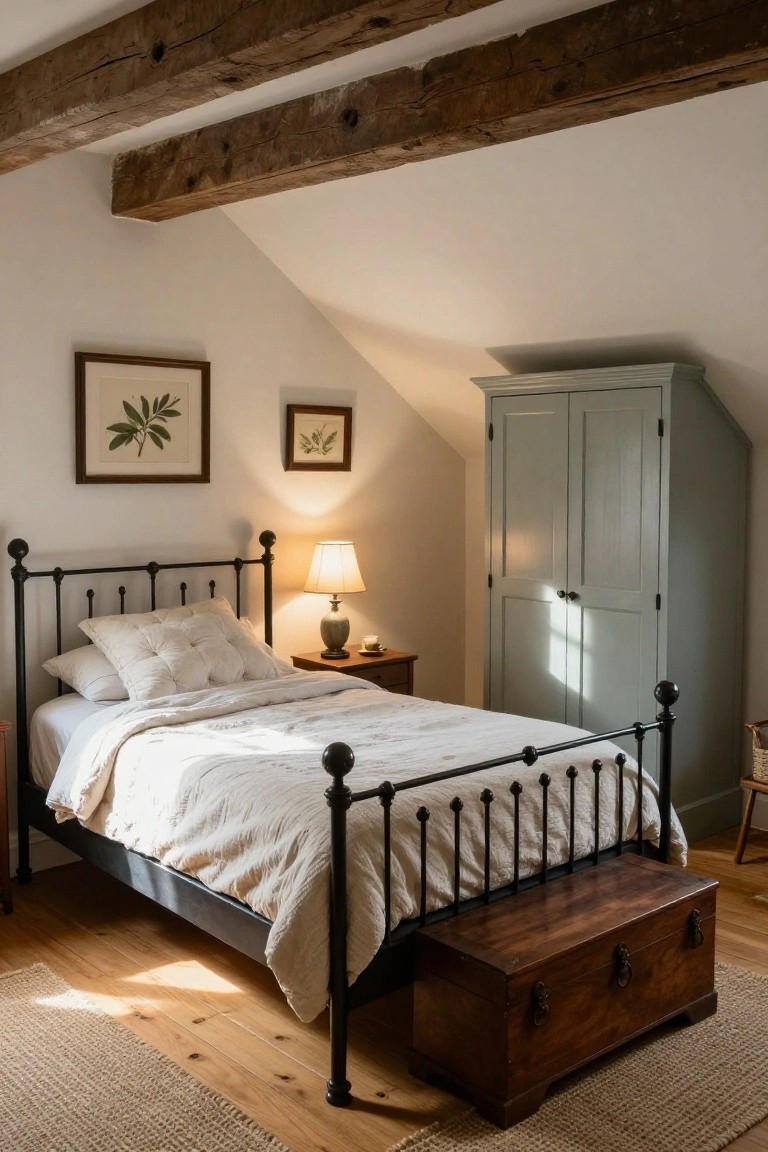
Exposed wooden beams across a sloped attic ceiling bring out the old-house character in a simple way. They show off the building’s history without much effort, and in a New England colonial home, they fit right in. Pair them with a basic iron bed like the black one here, and the room feels snug even if it’s small.
These setups work best in older homes where the beams are already there. Keep furniture low and simple, like a wooden chest at the foot of the bed, to avoid crowding the space. Skip heavy patterns on walls or bedding so the beams stay the focus. It’s practical for guest rooms too.
Slipcovered Chairs Face the Fireplace
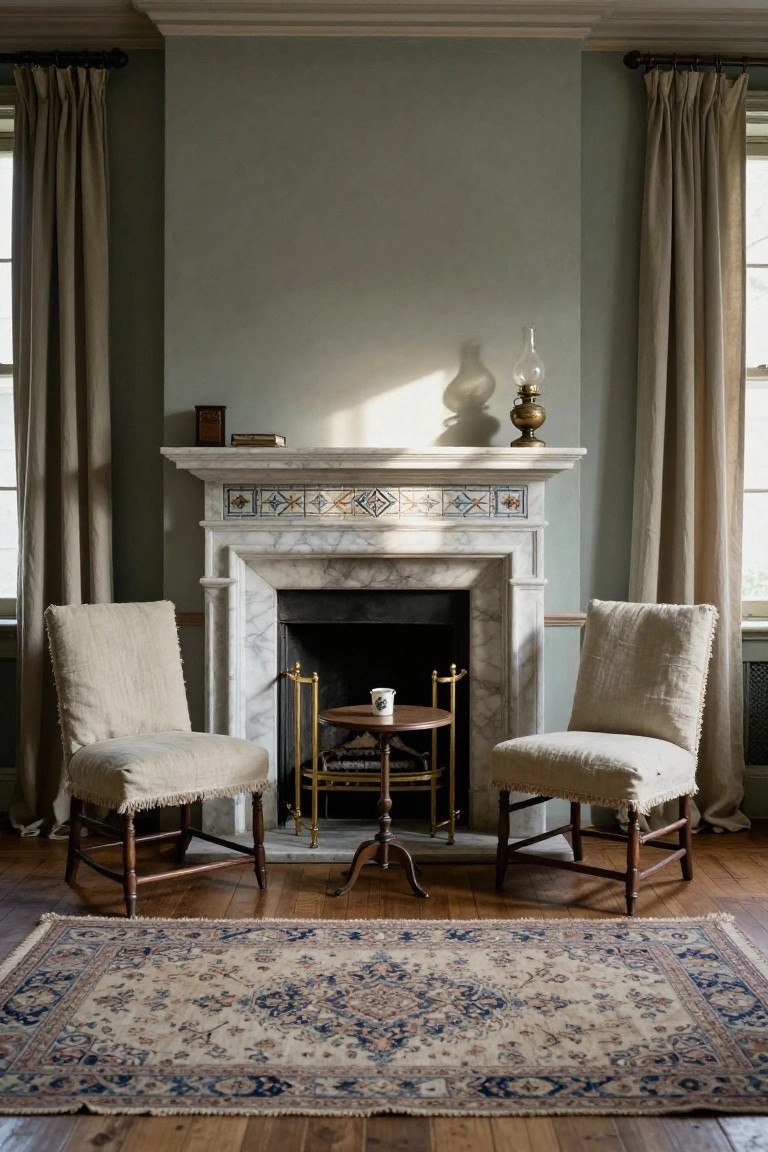
A pair of armchairs in loose beige linen slips sits right in front of the fireplace here. They’re angled toward each other with just a small round table between, holding a teacup. That setup pulls you in for a quiet talk or read by the fire. The soft covers tone down the formal marble surround and tiles, making the whole spot feel easy and lived-in.
Try this in a front parlor or sitting room, especially if your house has an old hearth. It suits colonial-style homes with high ceilings and wood floors. Go for sturdy wood frames under the slips so they hold up. A rug underneath ties it together… keeps feet cozy too.
Farmhouse Sink in a Small Utility Room
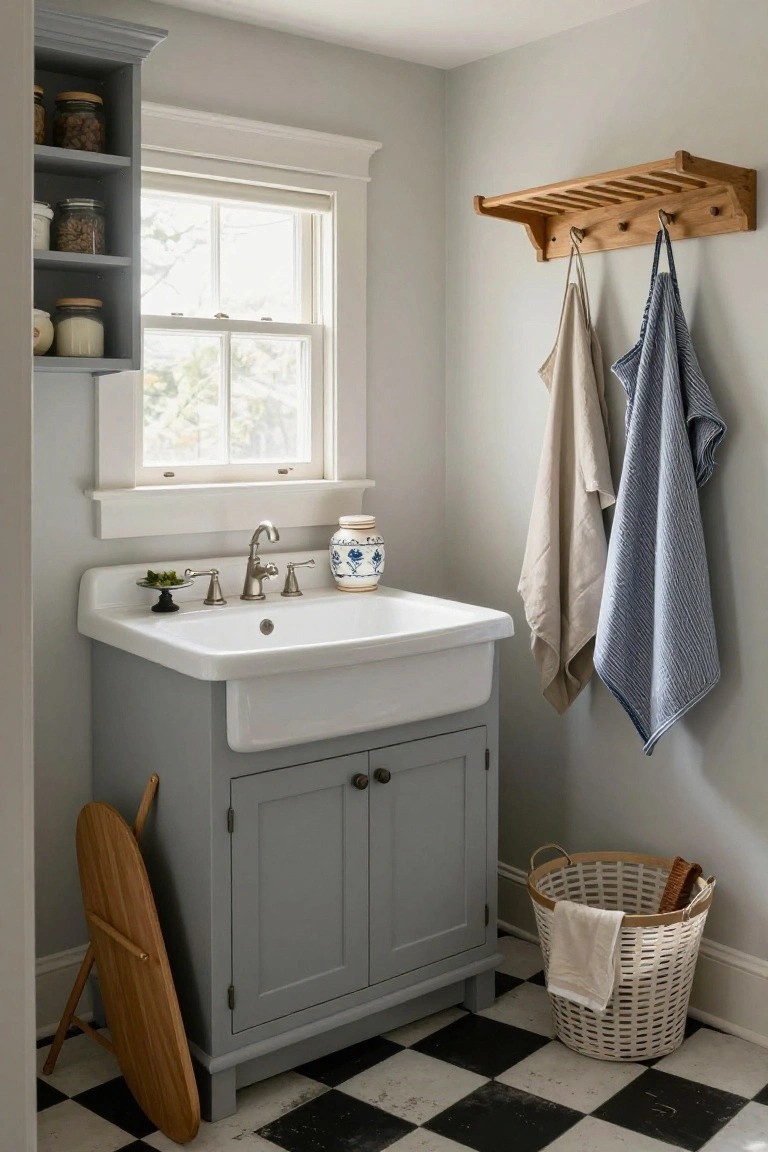
A farmhouse sink can make even the tiniest utility space feel right at home in a New England colonial. These apron-front models in white porcelain bring back that practical charm from old farmhouses. In this setup, it sits on straightforward gray cabinets over a black and white checkered floor. No fuss. Just solid everyday use with a nod to the past.
Put one in a mudroom or laundry corner where you need deep basins for washing up. It suits compact spots under 6 feet wide. Keep cabinets simple and add hooks for towels nearby. Watch the floor height though. Sometimes you need to adjust the base to fit standard plumbing. Works great if your house already has some vintage trim.
Window Seats at Stair Landings
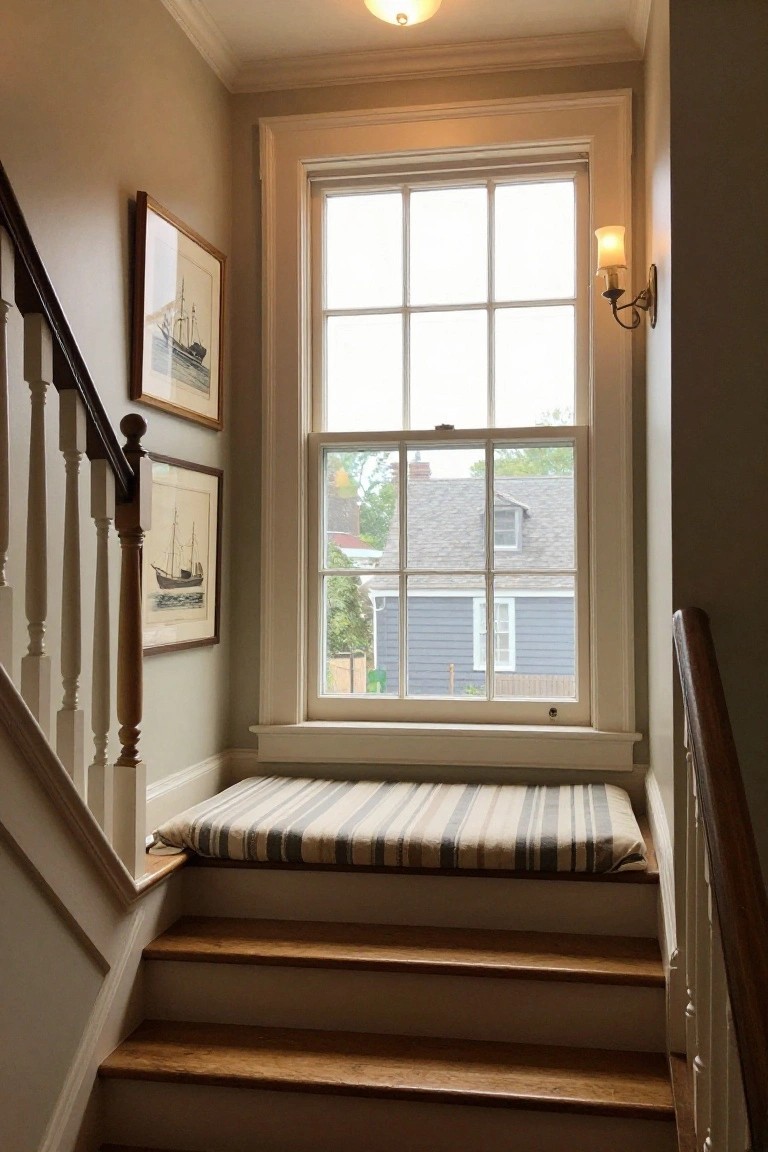
Window seats built right into stair landings show up a lot in older New England colonials. They make good use of that narrow space under a tall window. You get a quiet spot to sit, maybe read or just look outside. The soft beige walls and simple cushion here keep it feeling light and easy.
Try this in a home with multipane windows and tight stairs. Add a basic padded bench, nothing fussy. Skip heavy pillows if the area’s small. It suits family houses where every bit of seating counts.
Built-In Bookshelves with Library Ladder
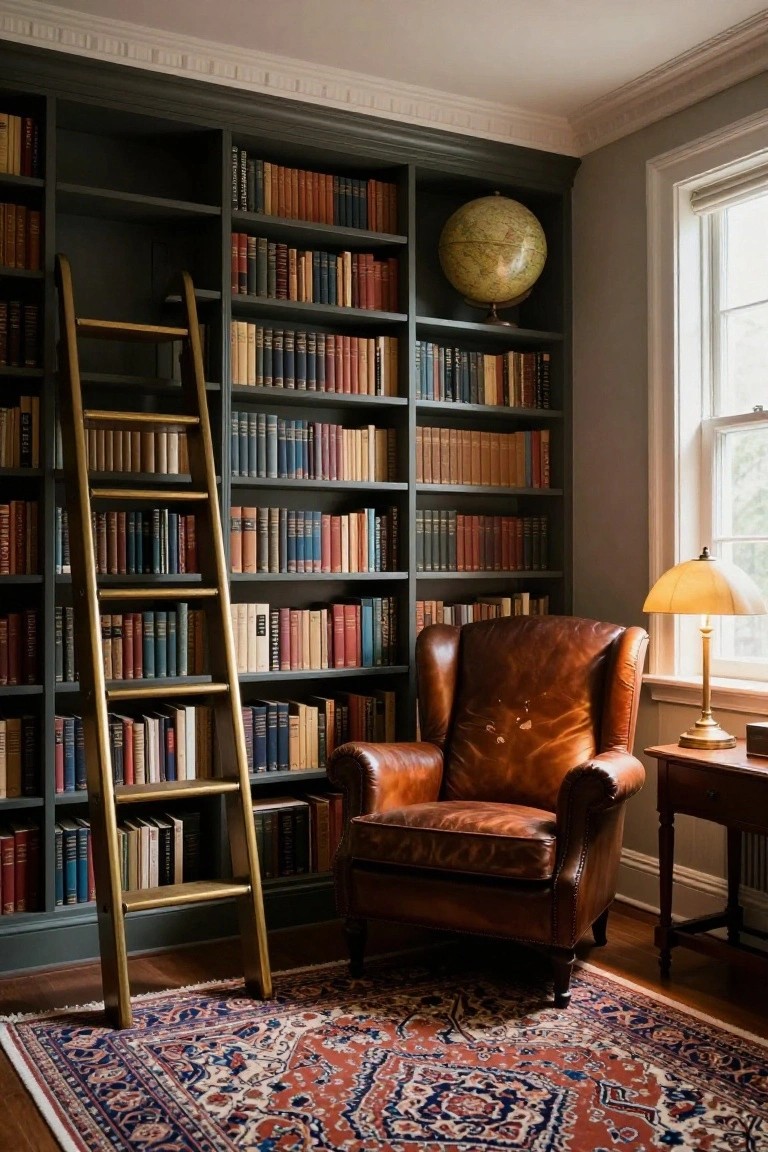
Tall built-in bookshelves that go all the way to the ceiling make a real statement in a reading room. Add a wooden rolling ladder, and you get easy access to those top shelves without needing a step stool every time. It’s practical storage that feels like it belongs in an old colonial house, with room for books, globes, and whatever else you collect.
This setup shines in a quiet corner of the home, maybe off the living room or as a dedicated study. Go for dark wood shelves to keep it grounded, then settle in with a leather chair nearby. Watch the floor level though. Uneven spots can make the ladder tricky to use.
Cozy Kitchen Banquette Nook
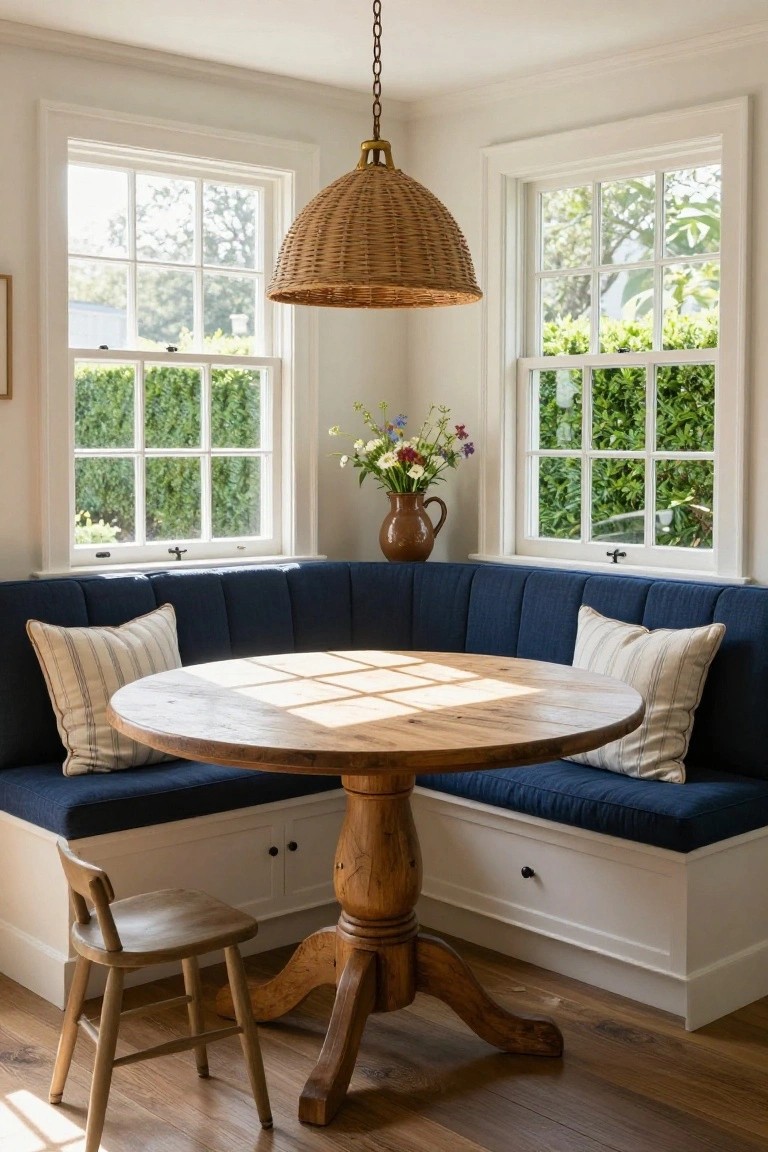
A built-in banquette tucked into a sunny corner makes everyday meals feel special without taking up much space. The L-shaped seating wraps around a simple round wood table, and those navy cushions add just enough color to keep things comfortable and lived-in. Big windows let in light that makes the whole spot brighter.
This works best in kitchens with good natural light, like older colonials where you have room for a breakfast area. Build in storage drawers under the seats for linens or dishes. Skip it if your space is super tight… go for freestanding benches instead.
Vintage Sewing Station Setup
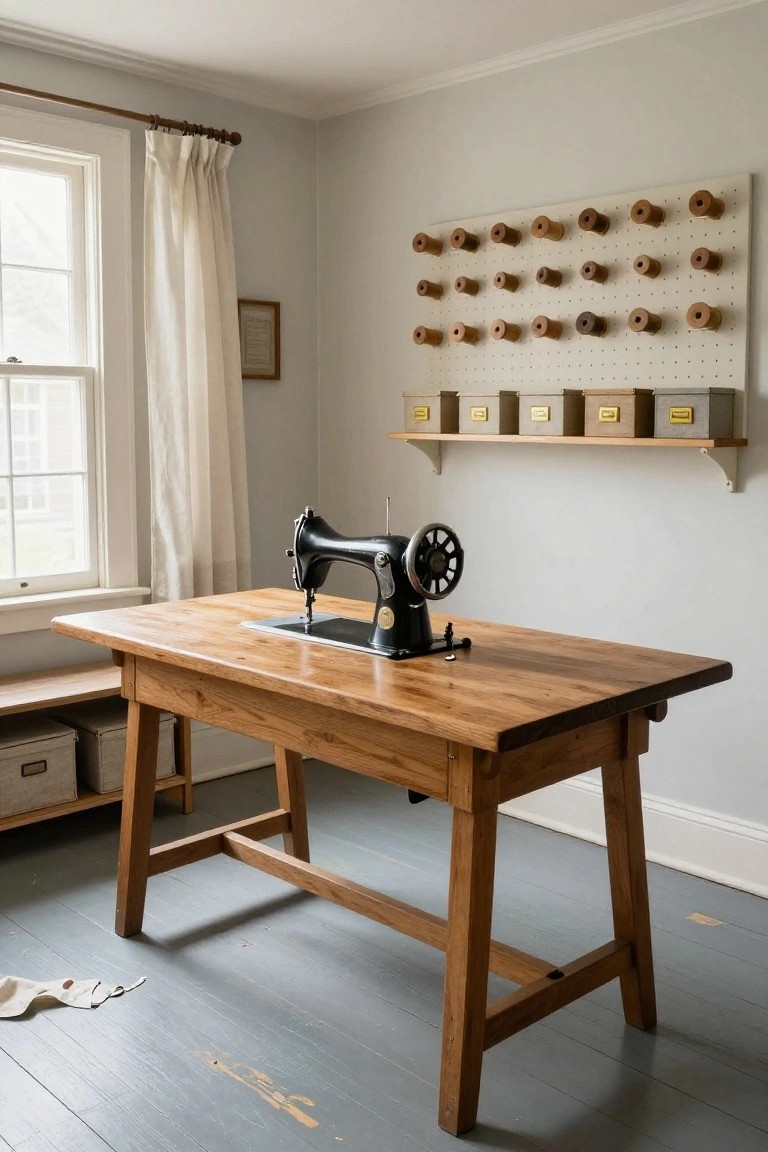
A sewing station like this fits right into a New England colonial home. It centers on a solid wooden workbench that holds an old treadle machine, making the space feel useful from the start. The pegboard wall above keeps spools organized and easy to grab. Wood tones and simple lines give it that lived-in, practical look without much effort.
Put one together in a spare bedroom or quiet corner where natural light comes in. Hunt for a farmhouse table at a flea market, then add pegboard for storage. It works best in homes with painted floors and neutral walls. Just keep the setup sparse so it stays calm and focused.
Alcove Piano Nook
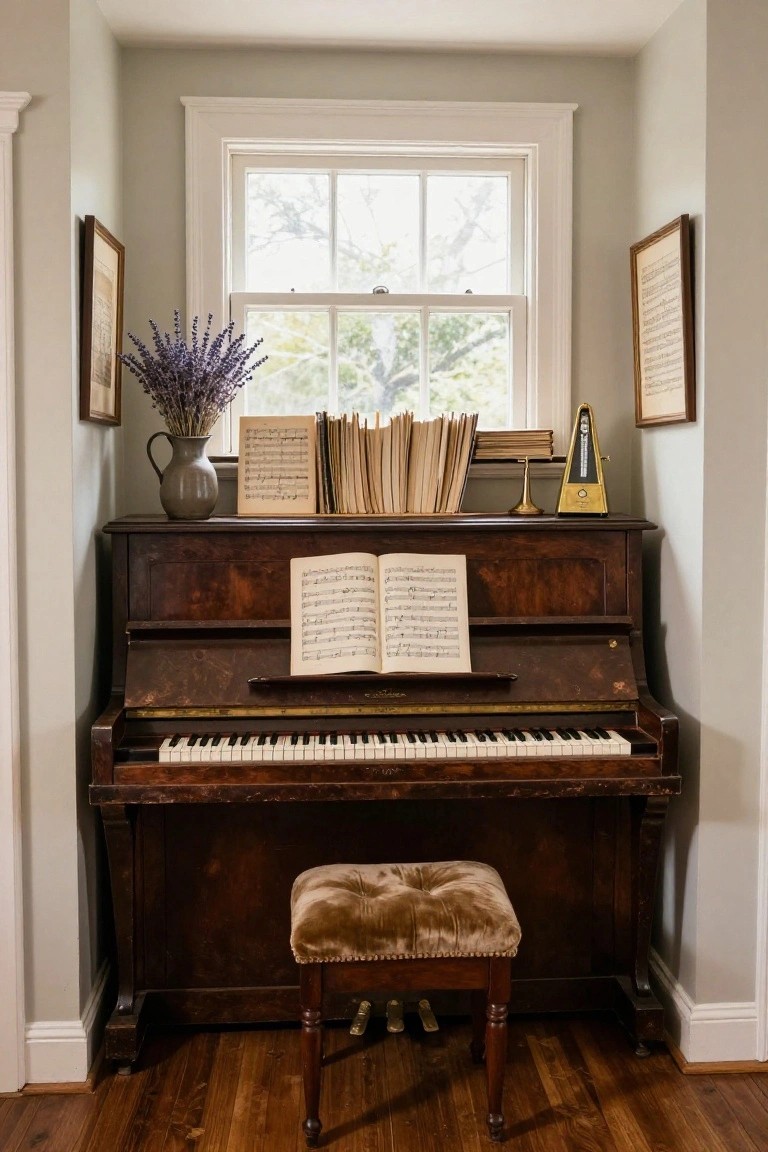
Tucking a vintage upright piano into an alcove like this turns a small space into a quiet music spot. The soft gray walls and big window let in plenty of light, keeping things airy while the dark wood piano adds some warmth. Open sheet music on the stand and a few stacked books make it feel lived-in, not stuffy.
This works best in older homes with those built-in nooks near a living room or hallway. Go for a piano that fits the scale, and keep extras simple, like a vase of lavender or a metronome. It suits a family place where you want music without taking over the main room.
Sunroom Wicker Seating
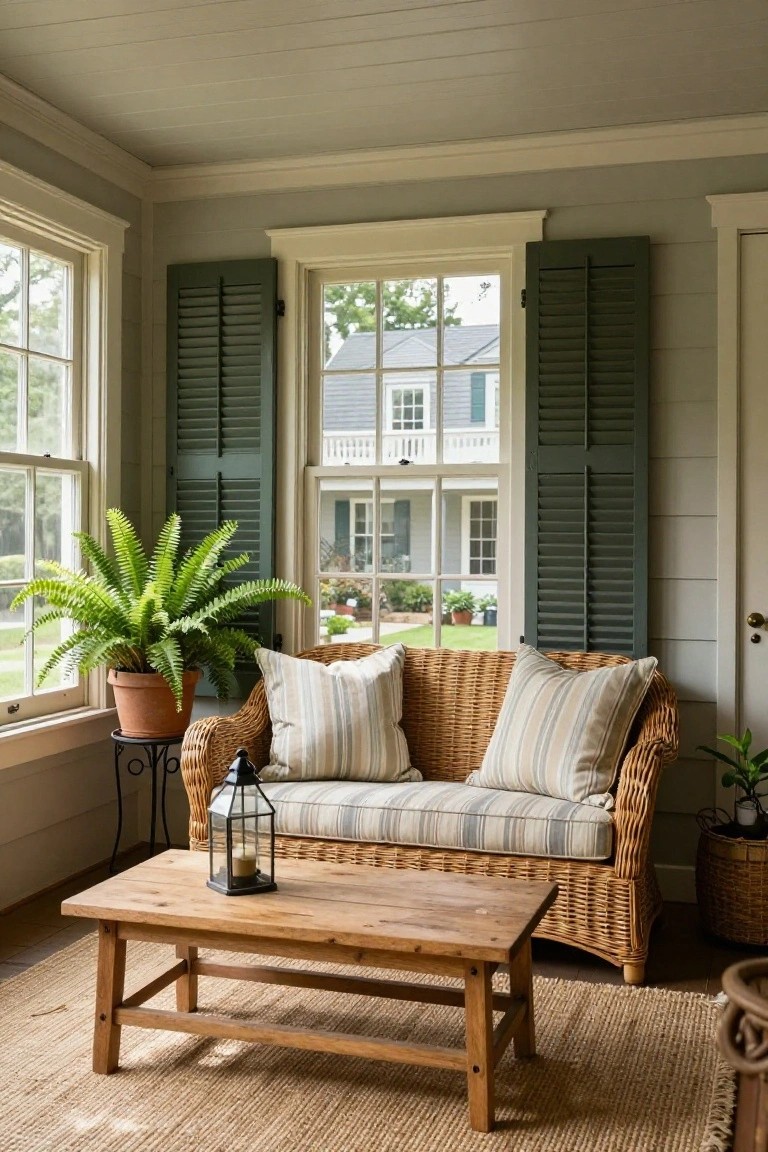
A wicker loveseat with soft striped cushions sits in front of big windows that look straight out to the garden. That setup keeps the room light and ties it to the outdoors. The natural weave on the furniture picks up the seagrass rug underneath. It makes a small space feel bigger and more relaxed.
Put something like this in a sunny addition off the kitchen or living room. Pair the wicker pieces with a plain wood table and a tall plant nearby. It works best in older colonials where you want casual spots for reading or coffee… just keep the cushions fresh for everyday use.
Exposed Brick Chimney in the Kitchen
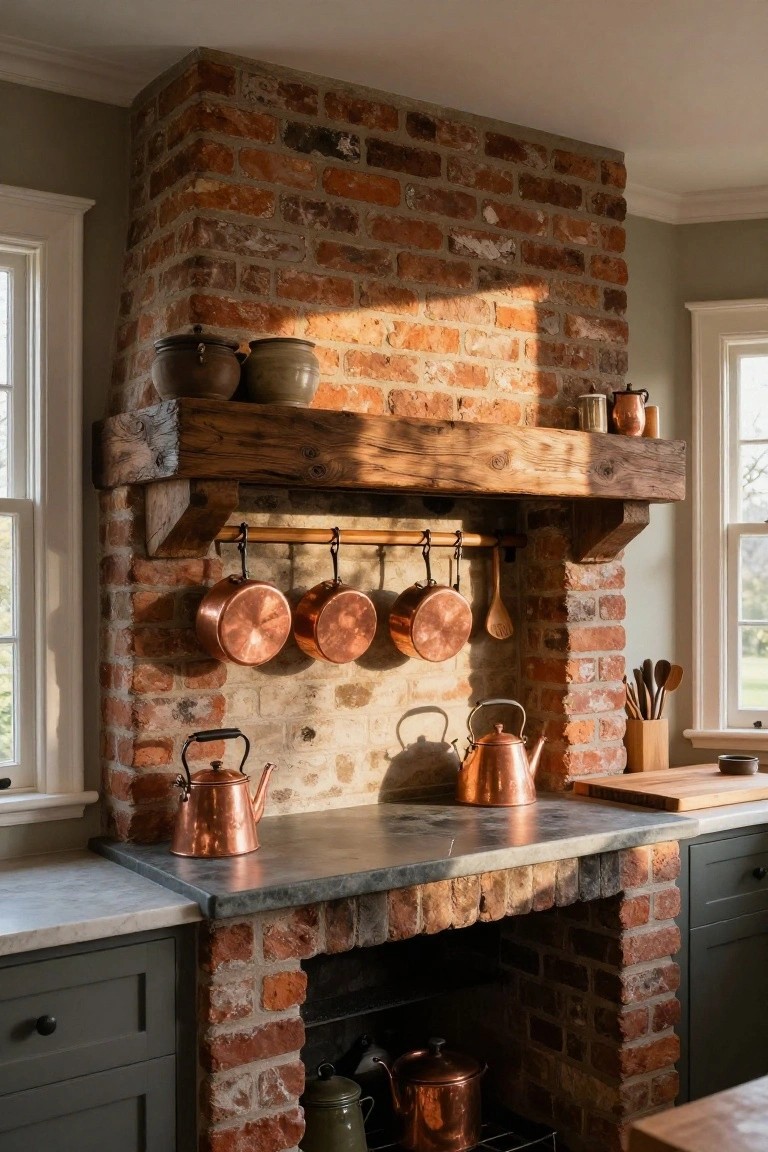
Old New England colonials often keep their original brick chimneys exposed right in the kitchen. It gives the room a real sense of history without much fuss. The rough brick pulls your eye up, and those copper pots hanging on a simple rack nearby make it feel lived-in and useful at the same time.
You can pull this off in any kitchen with a chimney breast or even a faux one built from reclaimed brick. Hang everyday cookware like kettles and pans to keep it practical. It suits cozy island setups best, especially with soapstone counters and shaker cabinets. Just avoid glossy finishes that fight the texture.
Walk-In Closet with Central Island
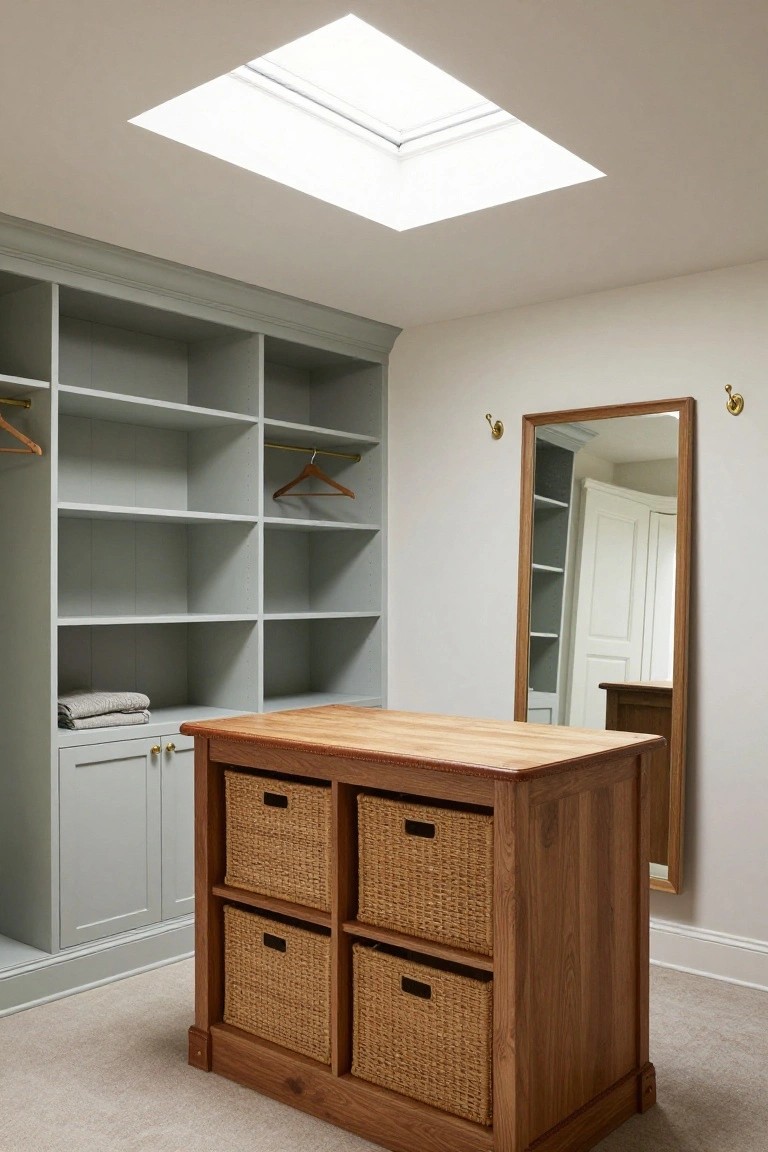
A walk-in closet like this centers around a simple wooden island that acts as both a folding table and storage spot. Built-in gray cabinets line the walls with open shelves and hanging rods, while the oak-topped island holds woven baskets in the lower cubbies. It keeps the room feeling open and useful, not crammed.
This works best in a bigger bedroom where you want a dedicated dressing area. Go for painted cabinetry against natural wood tones to nod to colonial roots. Keep the floor clear and add good overhead light so you can see what you’re picking out each morning.
Frequently Asked Questions
Q: How do I get that creamy wall color just right in my colonial-inspired room?
A: Hunt for paints labeled “linen white” or “antique lace” at your local store. Slap samples on the wall and check them morning and night. They pick up the wood tones perfectly without washing out.
Q: Can I sneak some modern pieces into this classic setup?
A: Grab a sleek leather armchair and tuck it by the fireplace. Balance it with spindle-leg tables nearby. The mix feels fresh yet rooted.
Q: What’s a budget trick for wide-plank wood floors?
A: Whitewash your old hardwood with a simple paint-and-water mix. It lightens everything up and nails the aged look.
Q: How do I light these rooms so they feel cozy, not dim?
A: Hang lanterns over tables and sconces by seating. Skip harsh overheads…layer in candles at night. Warmth builds quick.
