

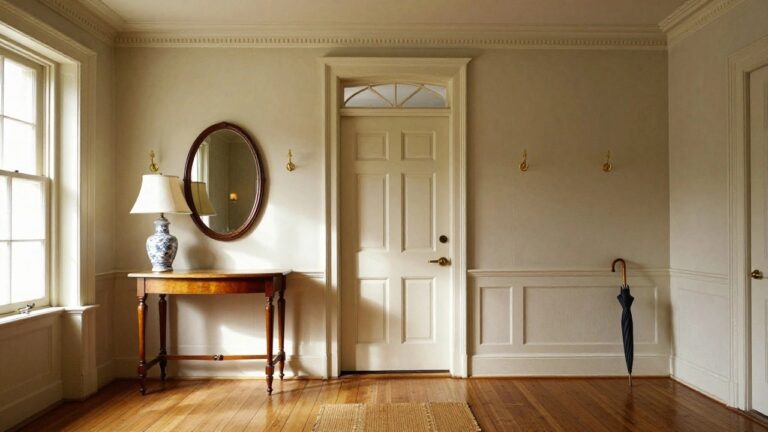
Classic colonial molding and trim quietly anchor a room, making walls and furniture feel like they belong together in everyday life.
I’ve added simple versions to a few older spaces I worked on, and they shifted the whole mood from flat to welcoming.
These details shine when they match the ceiling height and door proportions, so the room flows naturally from one area to the next.
Crown molding usually grabs attention first because it frames the light and softens hard edges up top.
A couple of these ideas are practical enough to test in your own home for that lasting polish.
Classic Crown Molding in Hallways
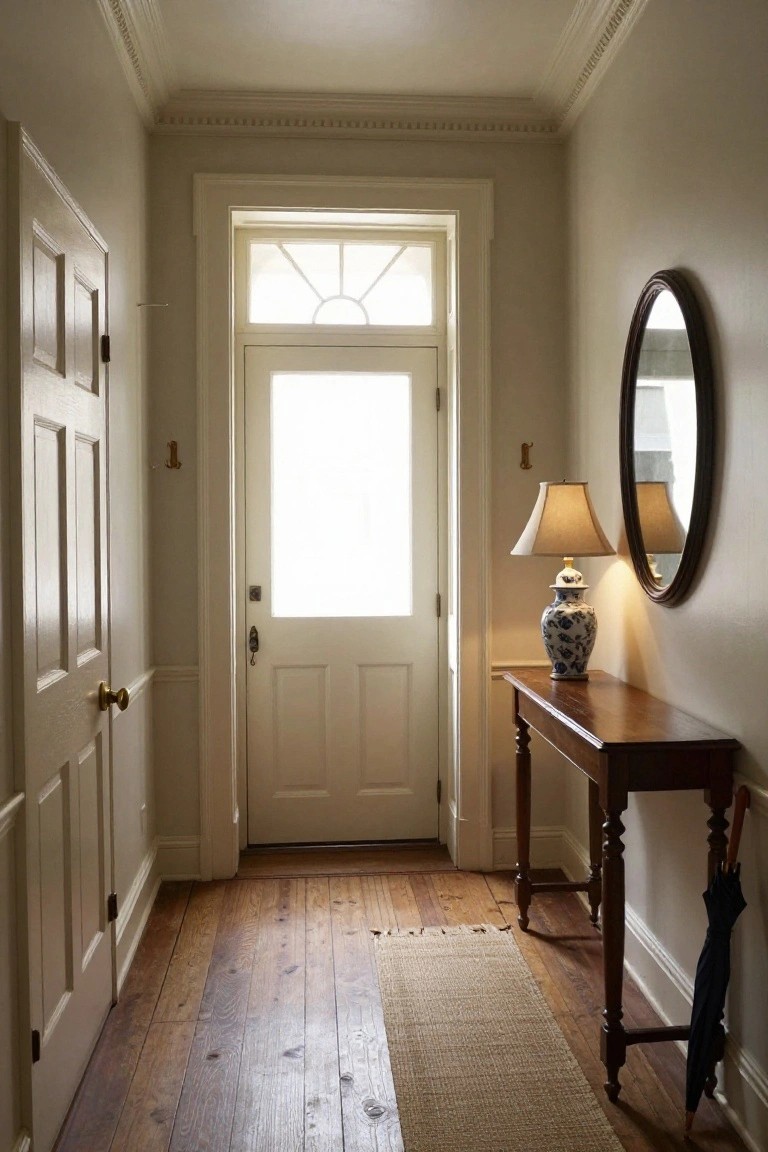
Crown molding like this takes a simple hallway and gives it real character. You see it up there along the ceiling, with those layered details that echo the paneled doors below. It pulls the eye upward, making the space feel taller and more finished, even in a narrow spot like this one.
Put crown molding in your entry or hallway if you have decent ceiling height, say nine feet or more. It suits older homes with wood floors and white trim best. Just match the scale to the room, nothing too fussy for a low space, and paint it the same white as the walls for a clean look.
Coffered Ceilings Bring Classic Structure
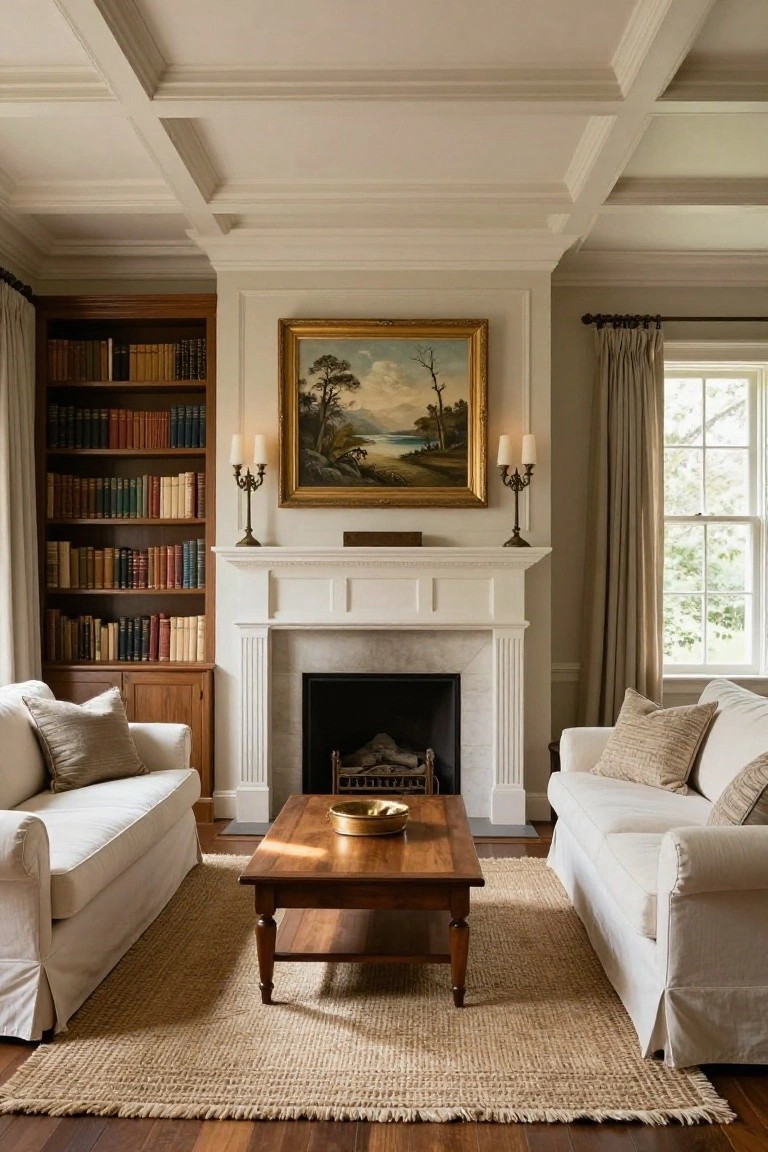
Coffered ceilings like this one show up a lot in colonial homes. The cross beams and simple molding create panels across the ceiling that add height and calm the room. Paired with plain white walls, they keep things light while nodding to old house details. It’s a subtle way to make a space feel finished.
These work best in sitting rooms or libraries with 9-foot ceilings or higher. Use painted beams to match the trim around doors and the fireplace mantel. Skip them in tight kitchens or modern open plans. They suit traditional setups where you want quiet architecture without busyness.
Classic Wood Trim on Walls and Windows
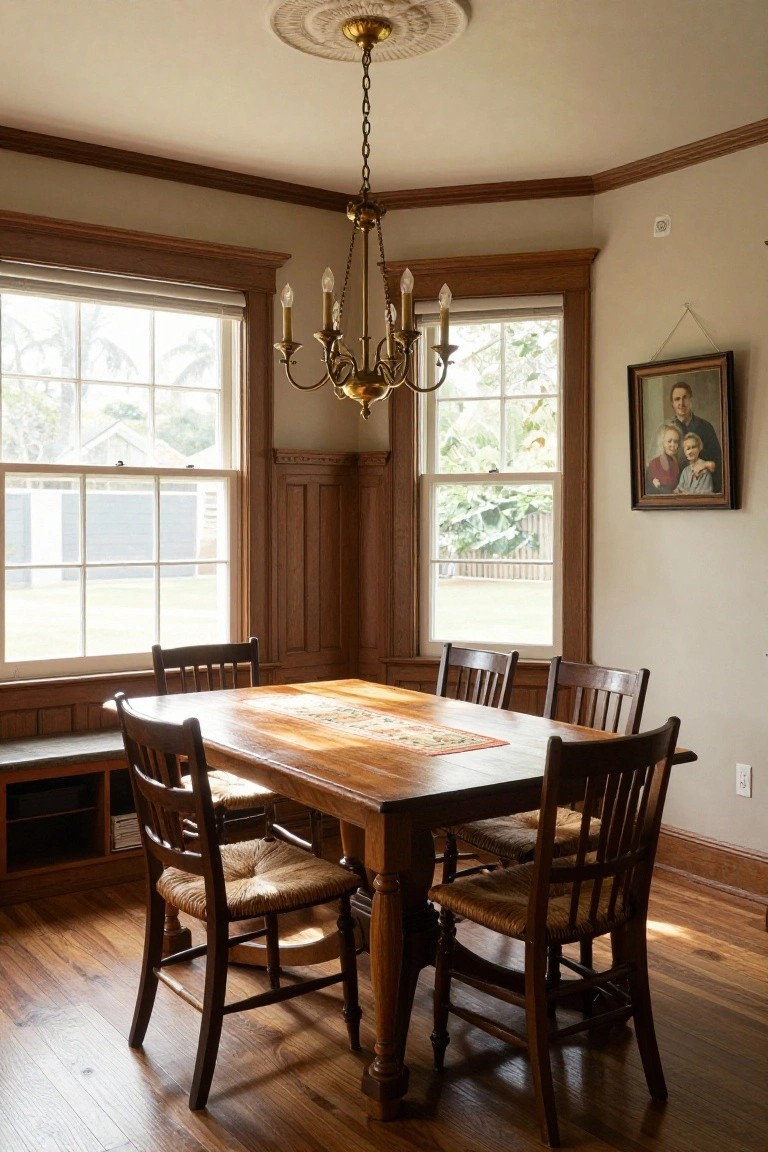
Wood trim like this covers the walls, frames the big windows, and lines the baseboards. It gives the room a sturdy Colonial look that feels right at home with wood floors and simple furniture. The dark stain contrasts nicely with lighter walls, making everything feel pulled together.
This trim works great in dining rooms or studies where you want some tradition. Use it on paneled sections or just around openings. Stick to homes with some wood already… it blends better than starting from plain drywall.
Crown Molding on Kitchen Cabinets
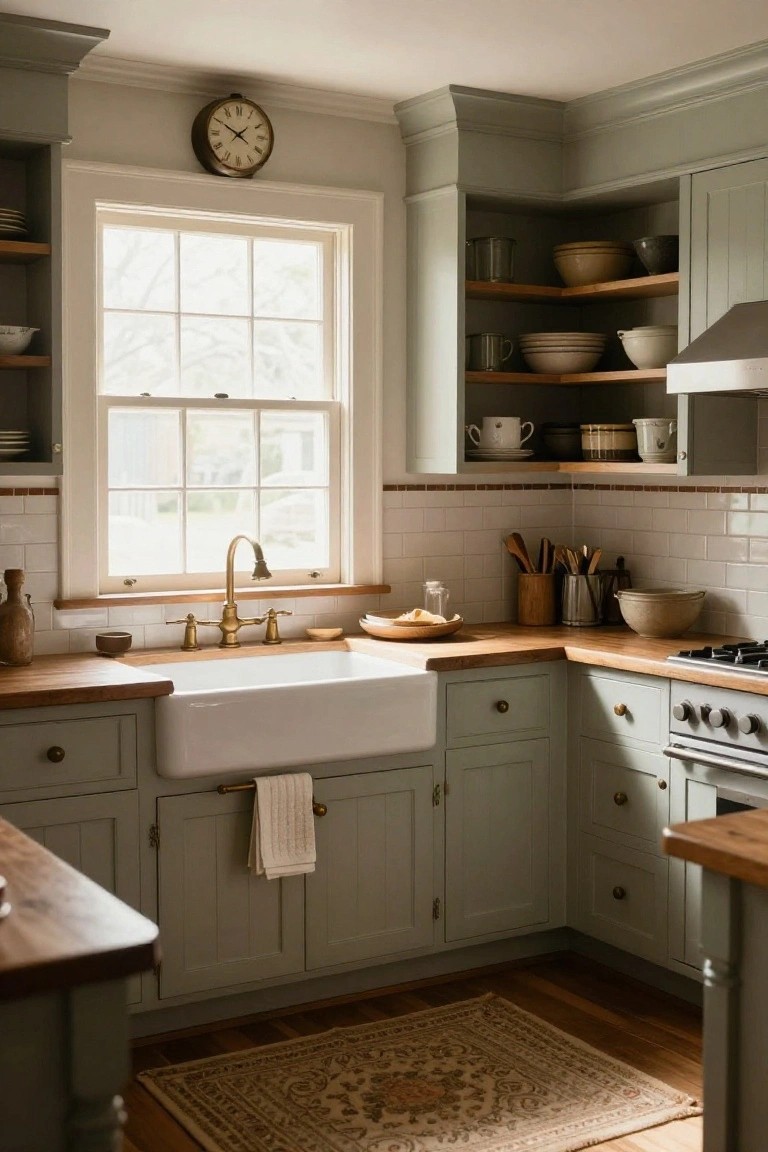
Crown molding sitting right on top of the upper cabinets pulls this colonial kitchen together in a simple way. It repeats the room’s clean lines from the shaker-style doors below and frames the open shelves nicely. With the soft green paint, it keeps things light instead of heavy.
This trim works in most kitchens if you match the scale to your ceiling height. Go for it on shaker or raised-panel cabinets in older homes or remodels. Paint it the same color as the cabinets for a smooth look, or go lighter up top. Skip it if your uppers go all the way to the ceiling.
Classic Panel Molding in Gray Bedrooms
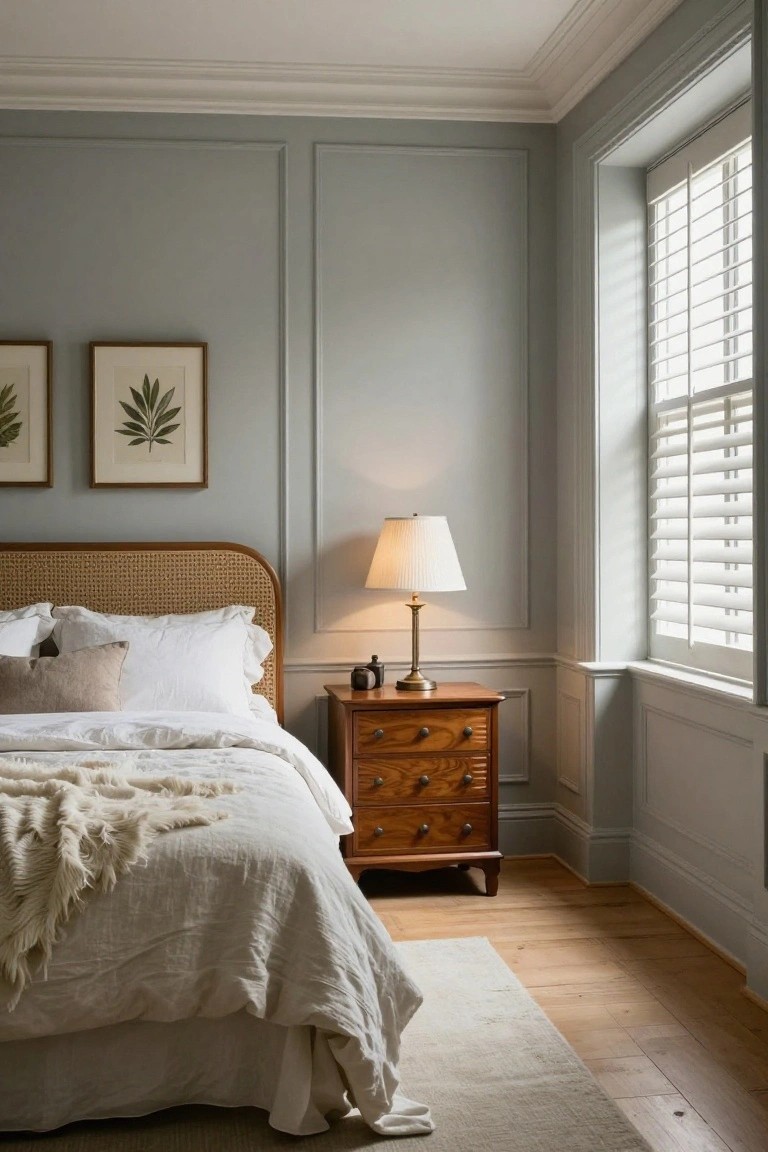
Panel molding on the walls brings back that solid Colonial feel in a bedroom. Here it’s painted soft gray, so the raised panels catch the light without overwhelming the space. It adds structure to plain walls and ties right into the ceiling trim for a finished look.
This works well in older homes or rooms with good natural light. Use it behind a simple wood dresser or rattan bed to keep things balanced. Stick to pale colors if your room is small… darker shades can close things in.
Crown Molding Fits Small Bathrooms
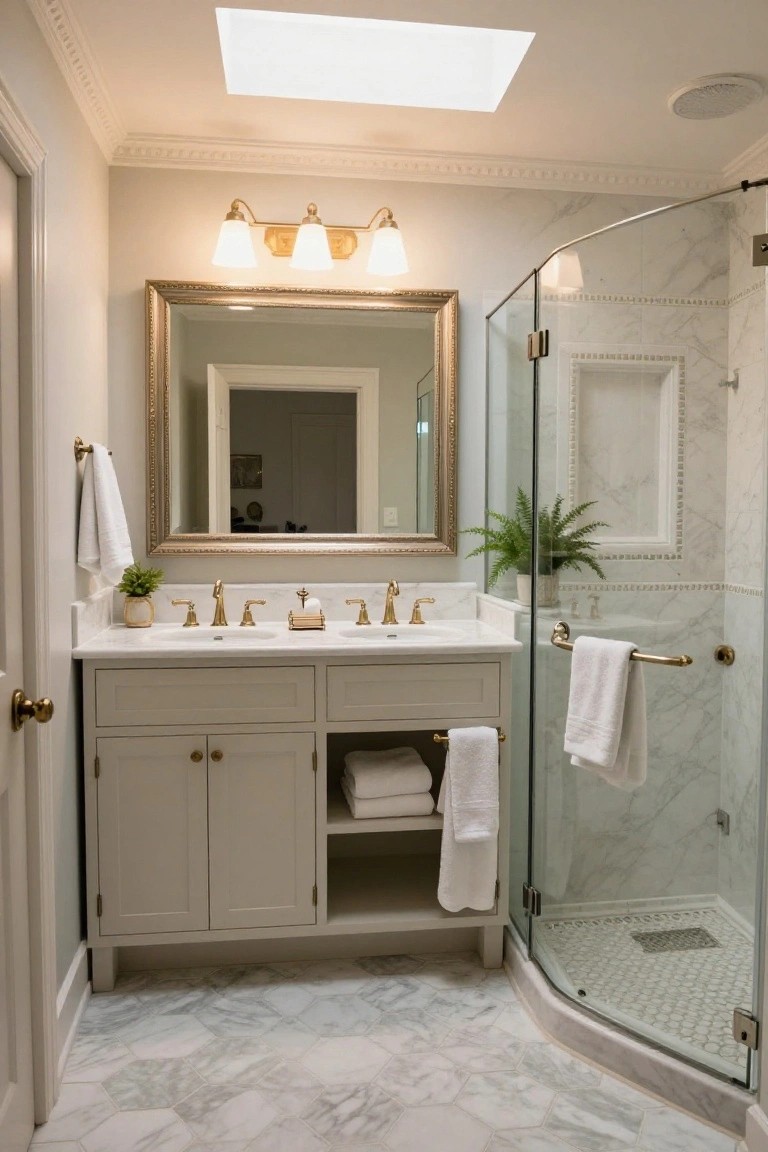
Crown molding works well in compact bathrooms like this one. It runs along the ceiling edge and picks up the colonial details without overwhelming the space. Paired with simple baseboards, it frames the room nicely and makes the white walls feel taller.
Try it in powder rooms or guest baths where you want a touch of tradition. It suits homes with marble floors and neutral cabinets best. Just keep the profile medium so it doesn’t crowd the ceiling.
Wainscoting Around the Stairs
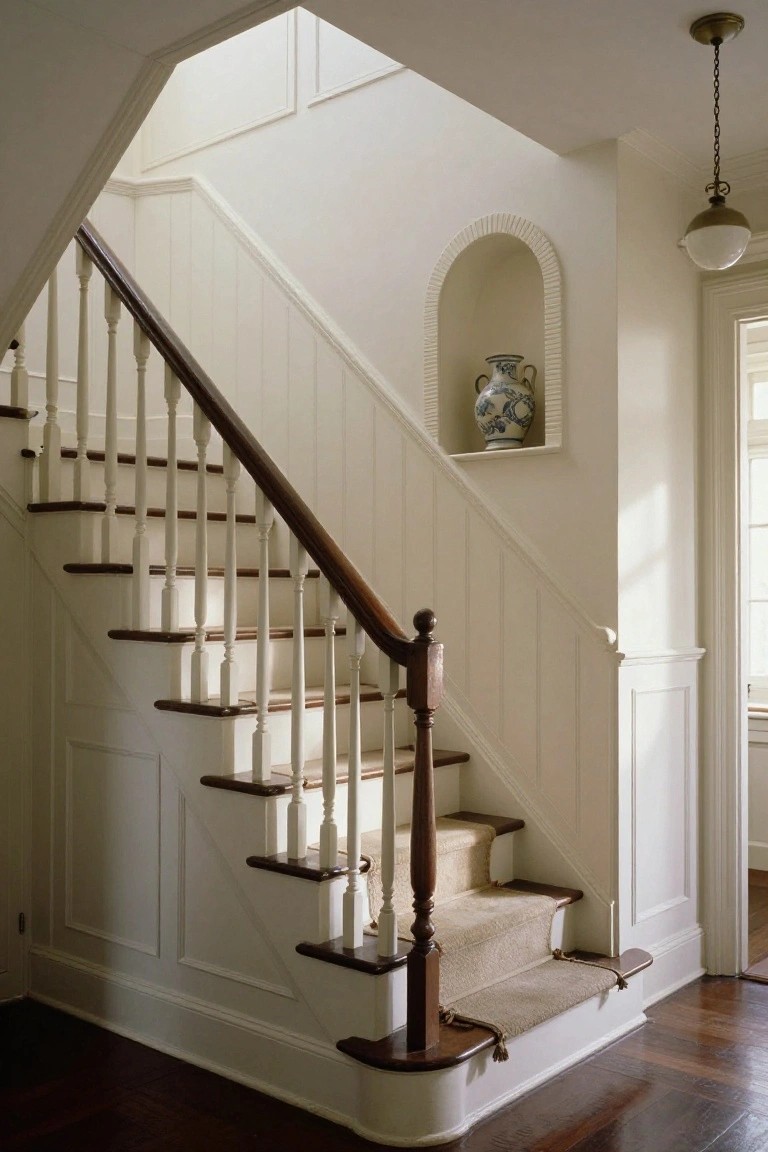
Wainscoting on staircase walls gives a room that steady colonial feel. It covers the lower half cleanly, like here with crisp white panels and a simple wood cap rail. The dark handrail adds just enough contrast to guide the eye up without fuss.
Try this in a front hall or any tight stairwell. It suits older homes best, keeping things light and practical. Stick to flat panels if you want low upkeep, and match the rail to existing woodwork.
Classic Paneled Hallway Walls
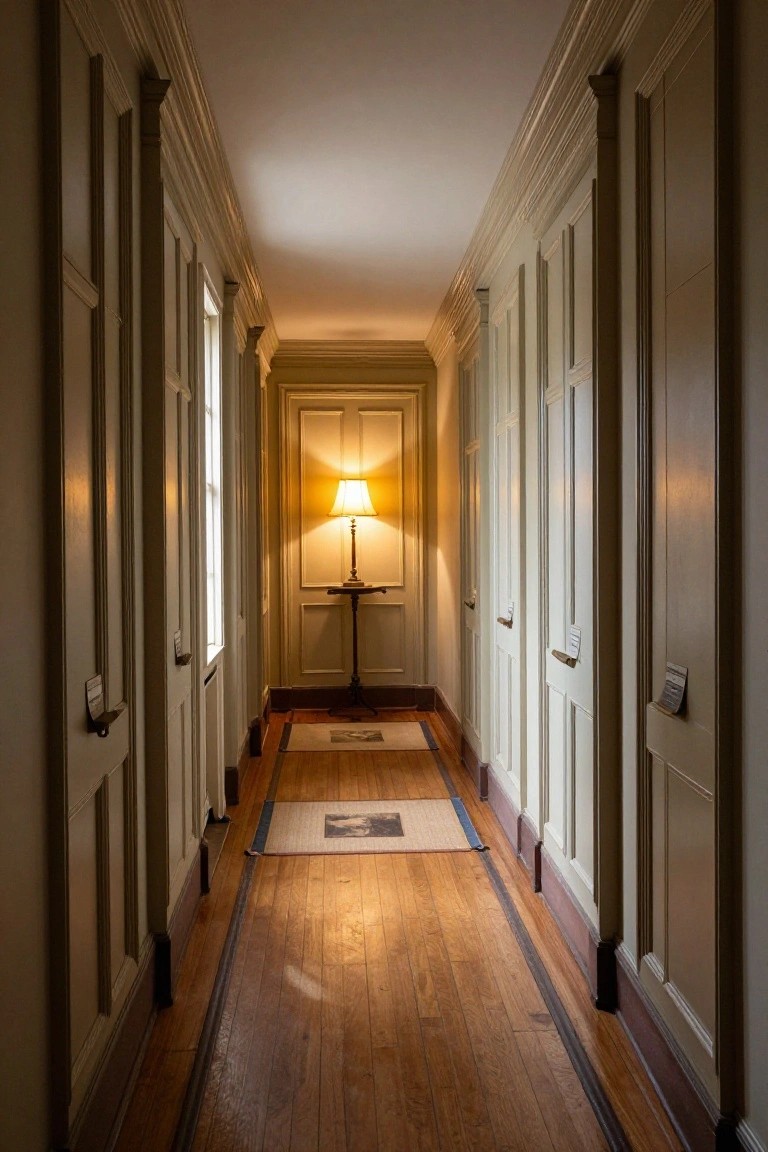
Hallways in colonial homes shine with full-height paneled walls like these. The raised panels run from floor to ceiling, broken up by detailed molding that adds structure without overwhelming the narrow space. That warm wood finish ties everything together nicely, making the walk from room to room feel special.
You can pull this off in older homes with decent ceiling height, especially entry halls or upper-floor corridors. Keep the panels painted or stained to match your floors, and add a slim runner for comfort underfoot. Skip it in super tight spots though… it might close things in too much.
Classic Wall Paneling in a Study
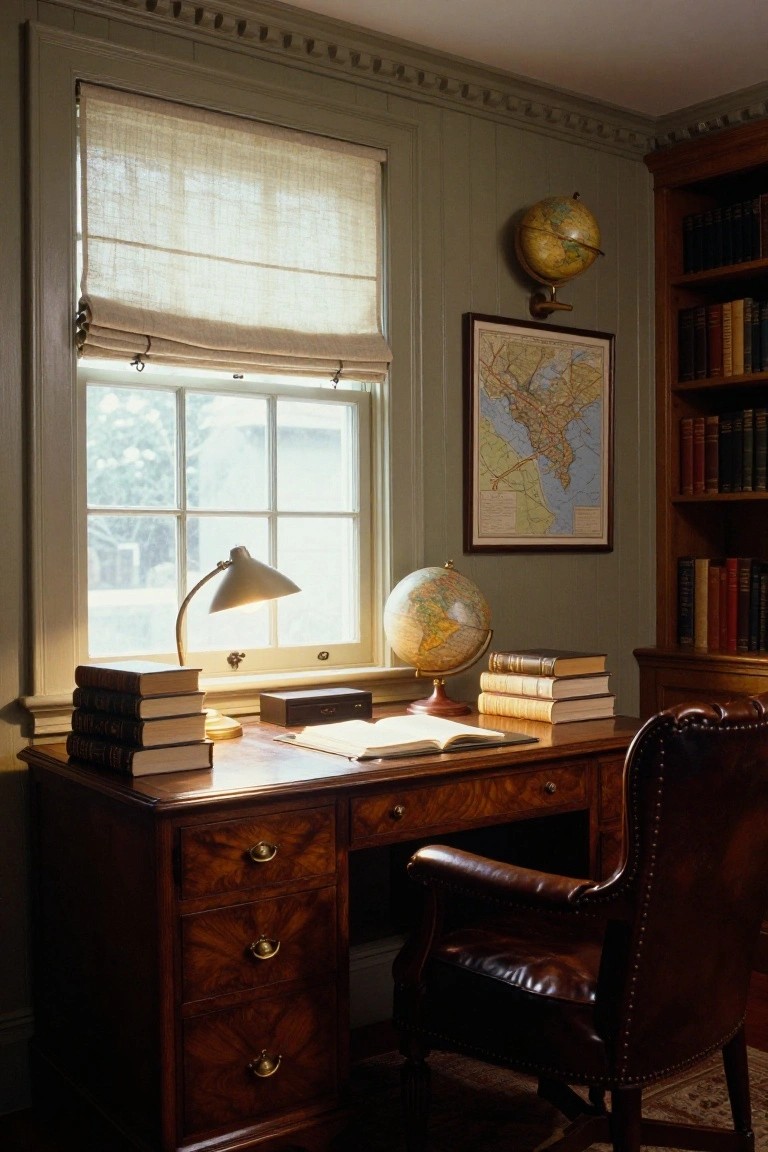
Wall paneling like you see here takes a plain room and gives it real character. Thin wood trim runs in a grid across the green walls, making neat rectangles that frame the bookshelves and window. It pulls everything together in a quiet colonial way, especially with that wood desk right in front.
This kind of paneling fits best in home offices or libraries where you want a settled-in look. Paint the panels a soft color to keep it light. Works in older houses mostly, but watch the scale, it can overwhelm a tight space.
Arched Panel Molding on Walls
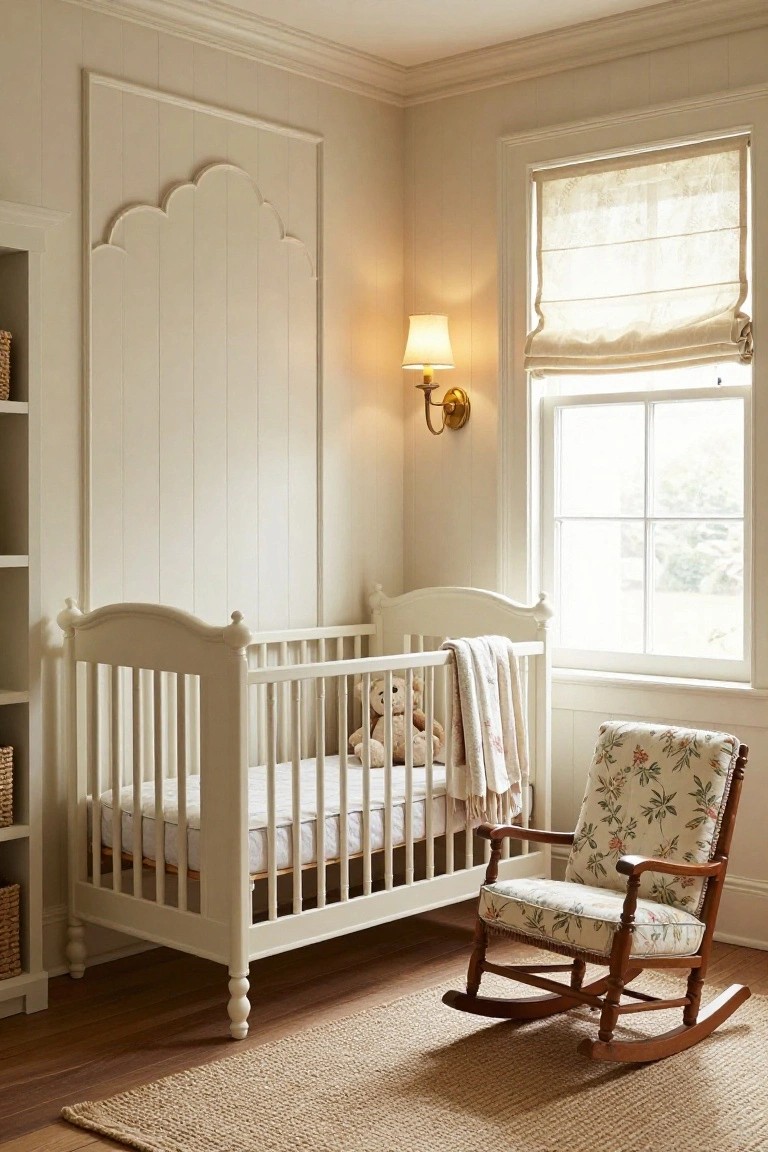
Arched panel molding like this shows up on one wall here, framing a simple bookshelf area. The white wood trim stands out clean against the pale wall color. It gives a nursery that old-house feel, soft and built-in looking. Folks like it because it adds shape without taking over a small room.
Put this kind of molding in kid spaces or quiet sitting areas. It suits colonial or traditional homes best, especially where walls need some interest. Keep the rest plain, like with a basic crib and rocker nearby. Just measure twice before cutting those curves.
Wainscoting for Everyday Mudrooms
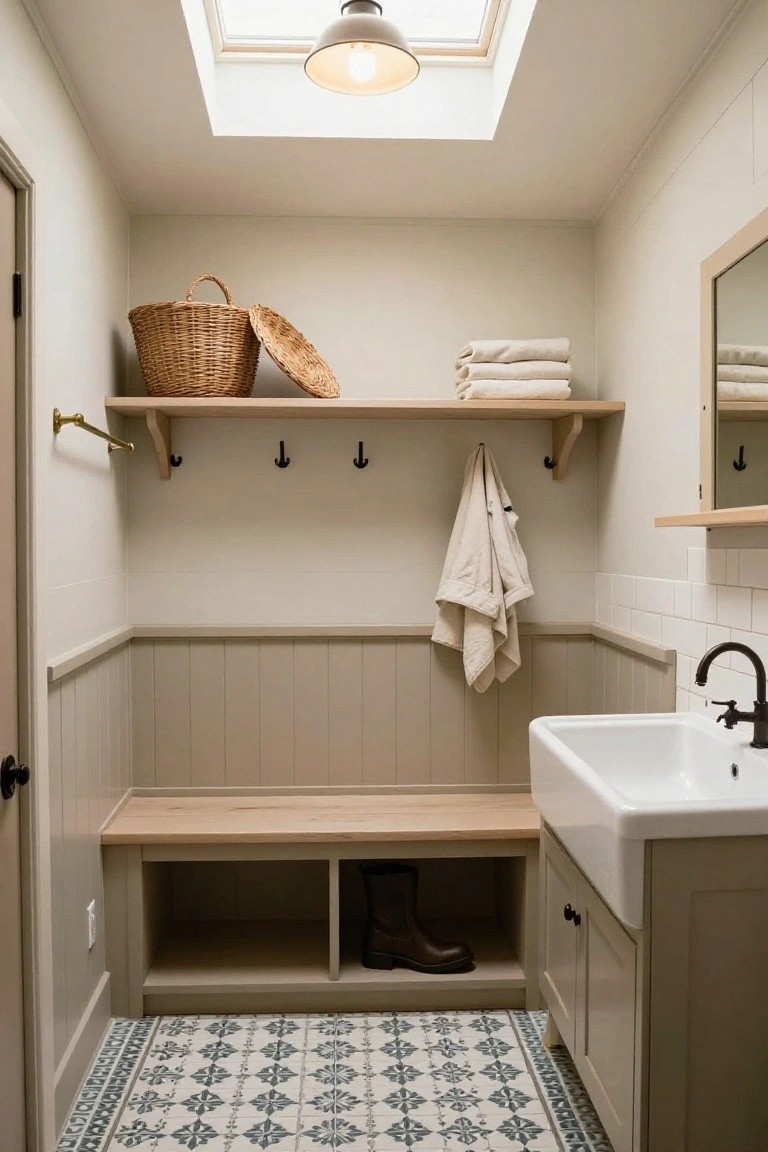
Wainscoting like this turns a plain utility space into something with real character. The lower walls here use simple beadboard panels painted soft gray, topped by a chair rail that leads into white subway tiles. It protects walls from scuffs and boots while giving that colonial trim feel without overdoing it.
Try this in mudrooms, laundry nooks, or back entries. Pair the panels with wood built-ins like the bench for storage that blends right in. Keeps small rooms practical and not too fussy. Just stick to matte paint for easy cleaning.
Fluted Pilasters Around the Fireplace

Fluted pilasters like these on either side of the fireplace give a room real colonial character. They stand tall against the paneled surround and add subtle height without overwhelming the space. The soft gray paint keeps everything calm and ties into lighter walls nicely.
You can pull this off in a formal living room or cozy den. Pair the columns with a simple stone tile hearth, like the travertine here, and keep the firebox dark for contrast. Works best in older homes… or newer ones aiming for tradition. Just scale them to your ceiling height so they don’t feel off.
Navy Paneled Walls with Built-In Shelves
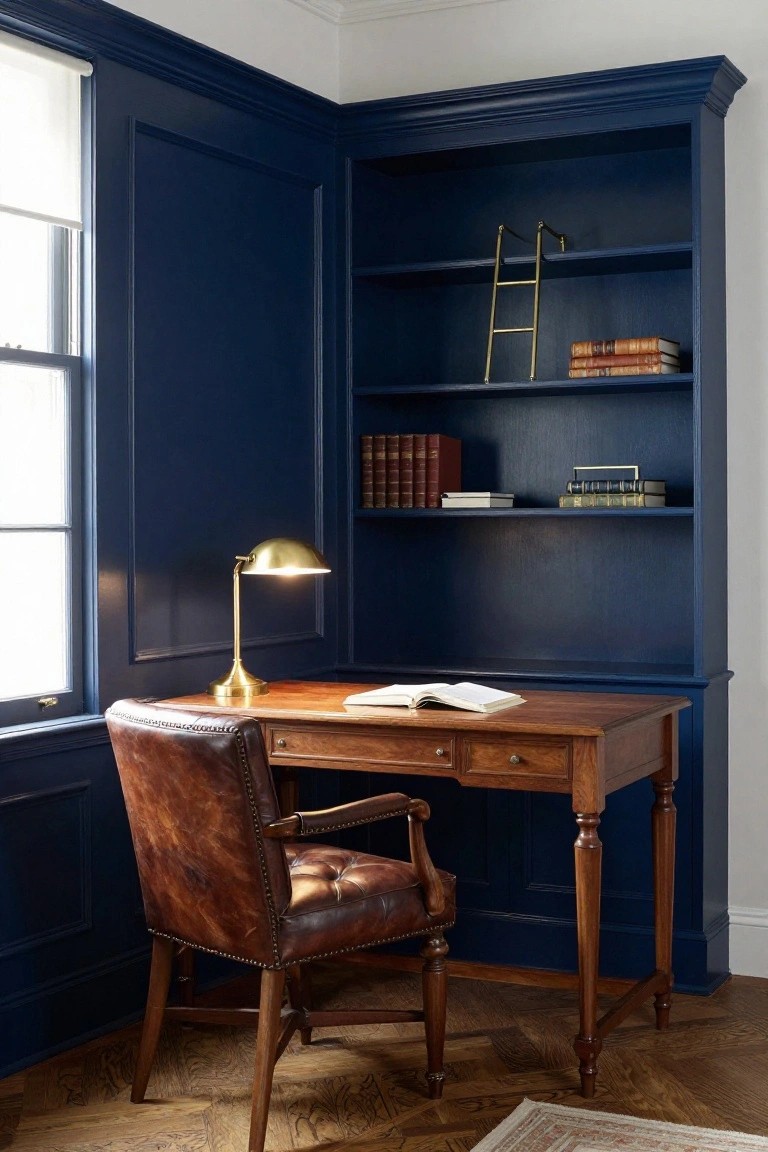
Dark navy paint on classic wall paneling and matching built-in bookshelves turns simple colonial trim into something that feels rich and pulled together. The molding lines stay crisp against that deep color, and it makes the wood desk and brass lamp pop without much effort. Rooms like this end up looking thoughtful, not overdone.
Put this in a home office or reading corner where you spend focused time. It suits older homes with good window light to keep things from feeling too cave-like. Pick a matte finish for the paint so the trim details don’t glare, and balance it with warm woods on the floor or furniture.
Cozy Built-In Window Seats
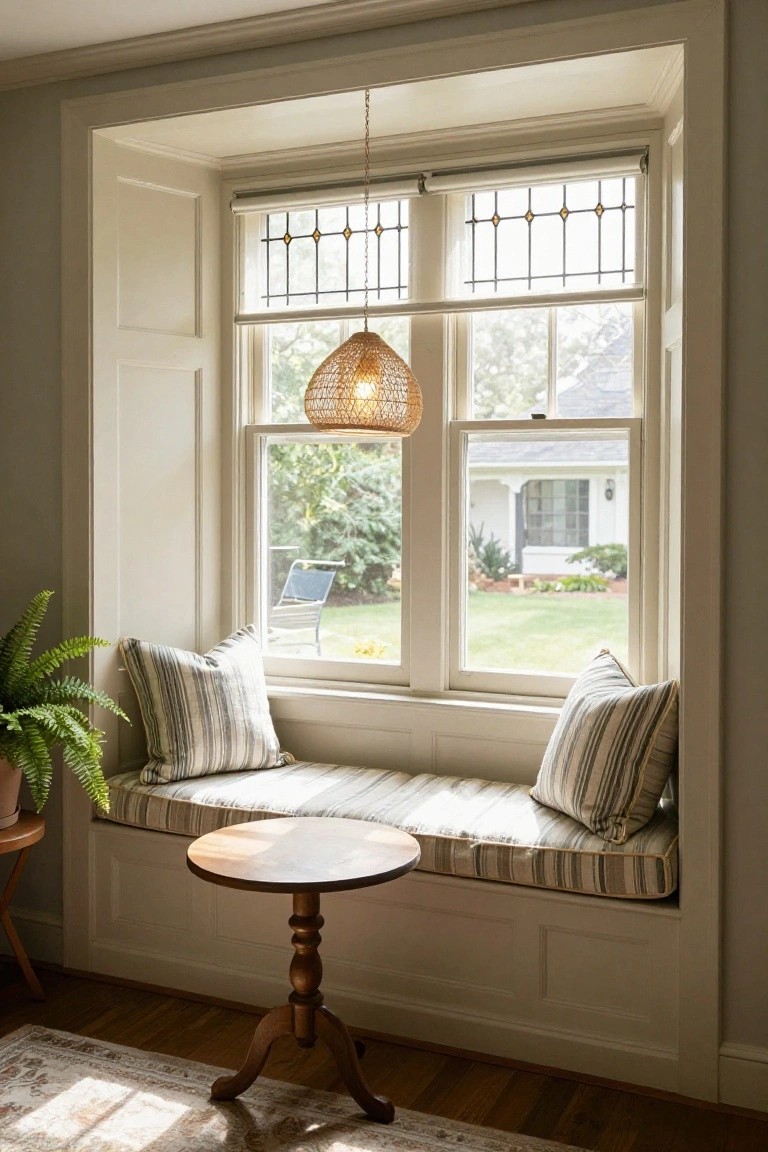
Built-in window seats like this one make great use of colonial-style paneling and trim. The white woodwork frames the nook just right, turning a plain window area into a spot for relaxing or reading. Striped cushions keep it comfortable without much fuss, and that small side table fits perfectly for a book or drink.
These seats shine in rooms with good natural light, like breakfast nooks or living areas. Paint the trim bright white to highlight the details, then layer on simple pillows. They suit older homes best but can freshen up any space with tall windows… just measure twice before building in.
Shiplap Walls in the Pantry
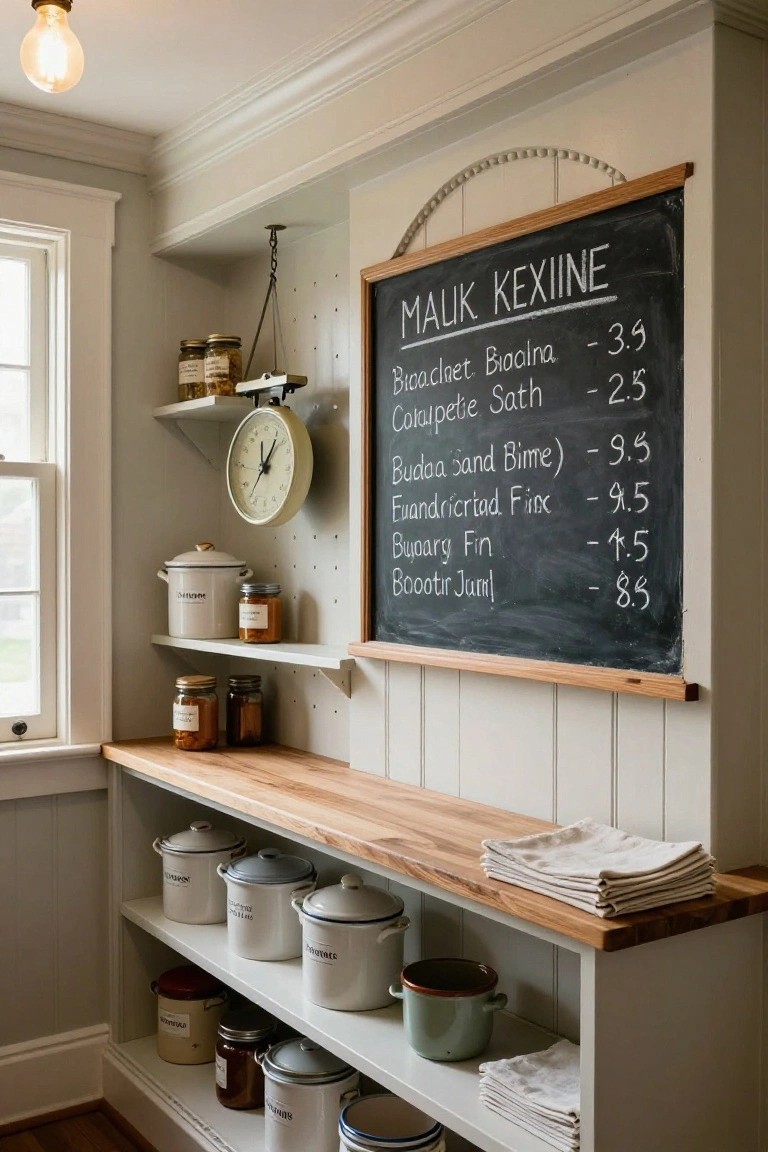
Shiplap walls give a pantry that old-house feel without much fuss. You see it here behind open wooden shelves full of jars and crocks. The white planks run vertically, making the space feel taller and brighter. It’s a simple trim choice that nods to colonial homes, and it holds up well around everyday kitchen items.
Use shiplap in a pantry or butler’s area off the kitchen. It works best in smaller spots where you want clean lines and easy cleaning. Pair it with wood shelves and a chalkboard for notes. Skip it in big open kitchens unless you like the texture everywhere. Just make sure the planks are straight, or it can look off.
Beadboard Walls in a Bathroom
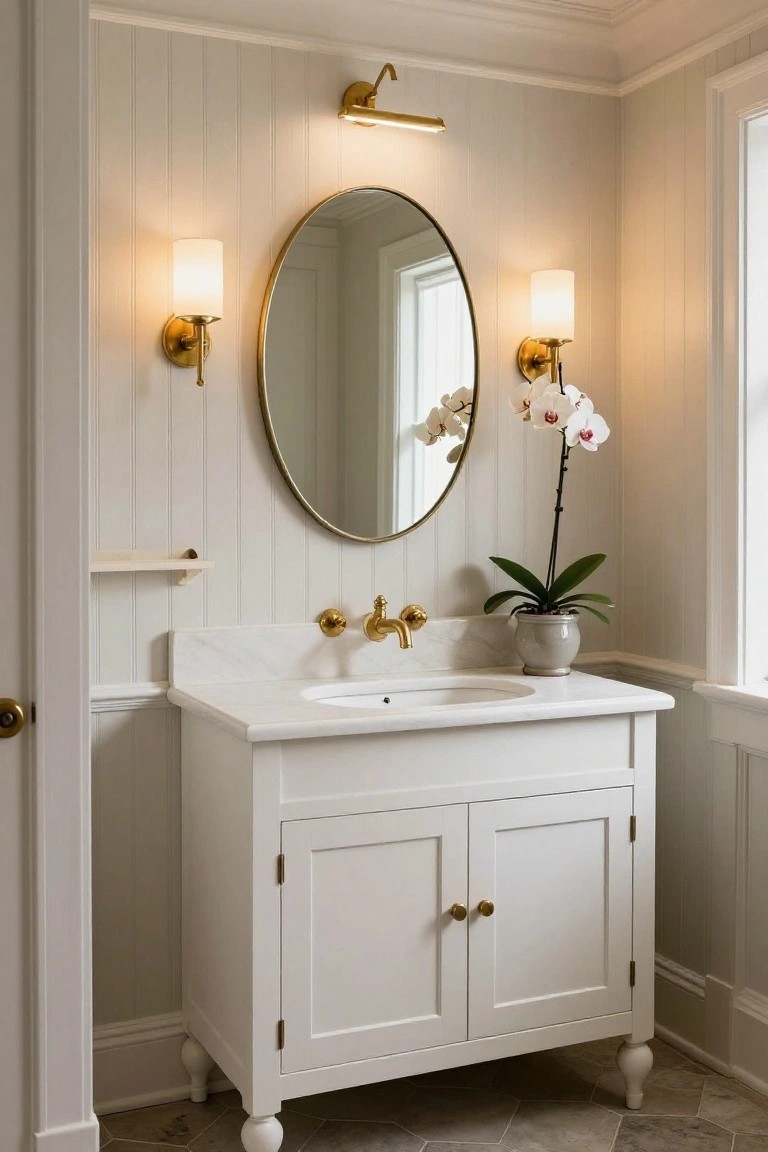
Beadboard walls give a bathroom that classic colonial feel without much fuss. You see it here on all the walls, painted a soft white that keeps things light and clean. It adds subtle texture and lines the space vertically, making even a small room feel taller and more put-together. Paired with simple gold fixtures, it stays fresh but nods to older homes.
Try beadboard in powder rooms or guest baths where you want easy charm. It works best in spaces under 100 square feet, hiding minor wall flaws too. Just paint it a shade warmer than pure white to avoid starkness, and keep cabinets matching for flow. Skip glossy finishes; matte holds up better in humid spots.
Built-In Window Seats with Paneled Trim

These built-in window seats pull double duty in a colonial room. They give you a spot to sit and enjoy the view while hiding storage behind raised panel doors. The trim around the windows and on the cabinets keeps everything looking crisp and tied together. Notice how the soft gray shutters match the paneling. It makes the corner feel useful without taking up extra floor space.
Put one in a sunlit breakfast nook or reading corner where you want both comfort and order. They work best in homes with good natural light and taller windows. Go for painted cabinets to keep dust down. Pair with simple chairs and a big plant nearby. Just make sure the bench cushion is deep enough for real sitting.
Cozy Wainscoting for Breakfast Nooks
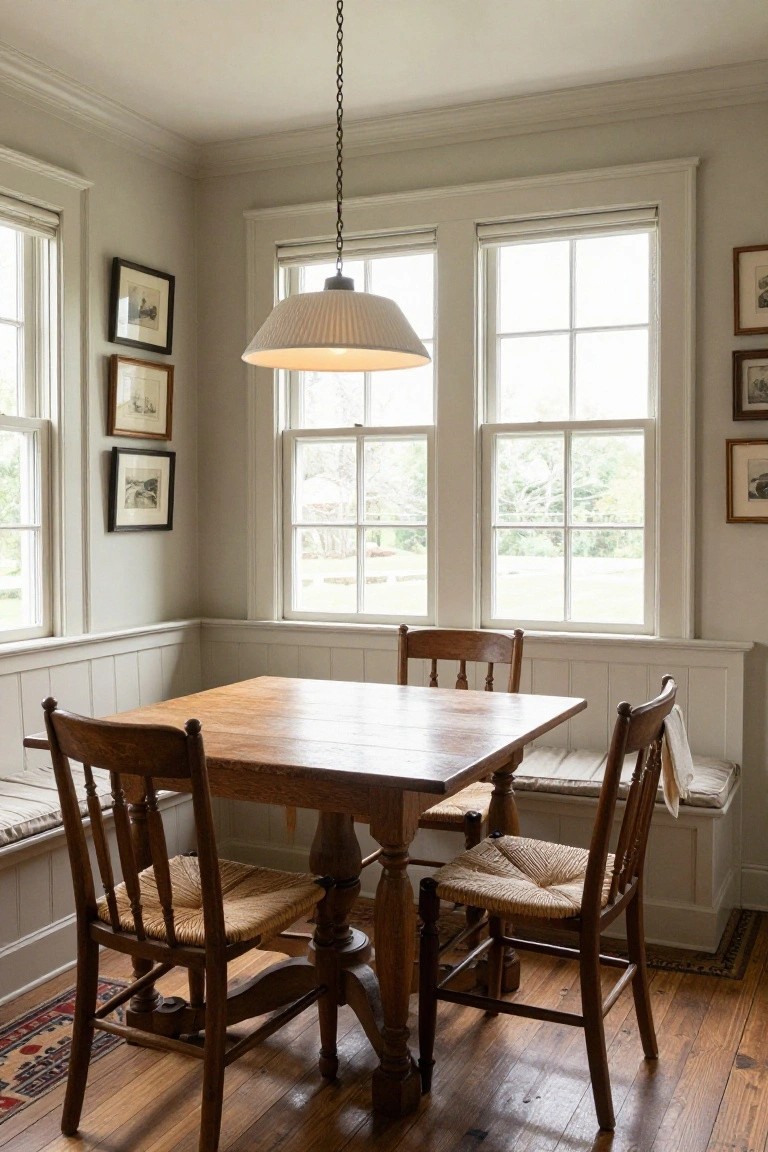
Wainscoting like this turns a plain corner into a real gathering spot. The white panels run halfway up the walls, meeting smooth plaster above, and they wrap right around the built-in bench. It adds that classic colonial touch without overwhelming the room. Big windows let in light that bounces off everything nicely.
Put it in a kitchen or eat-in area where you want meals to feel casual yet pulled together. Older homes with high ceilings take to it best. Keep the wood simple, painted fresh white. One thing… skip fancy patterns if your space is small.
Built-In Bookshelves Around a Window Bench

One simple way to add colonial charm is tall wooden bookshelves built right into the walls on either side of a window bench. The shelves go up high, giving plenty of room for books or displays, while the bench below has drawers for blankets or toys. That warm wood against a white shiplap wall keeps things classic and practical.
This works best in a bedroom or hallway where you want a quiet reading spot. Measure your window first, then build to fit snugly. It suits older homes with good trim already… just match the wood tone. Skip it in super small spaces, though. The drawers make it useful every day.
Classic Subway Tile Wainscot
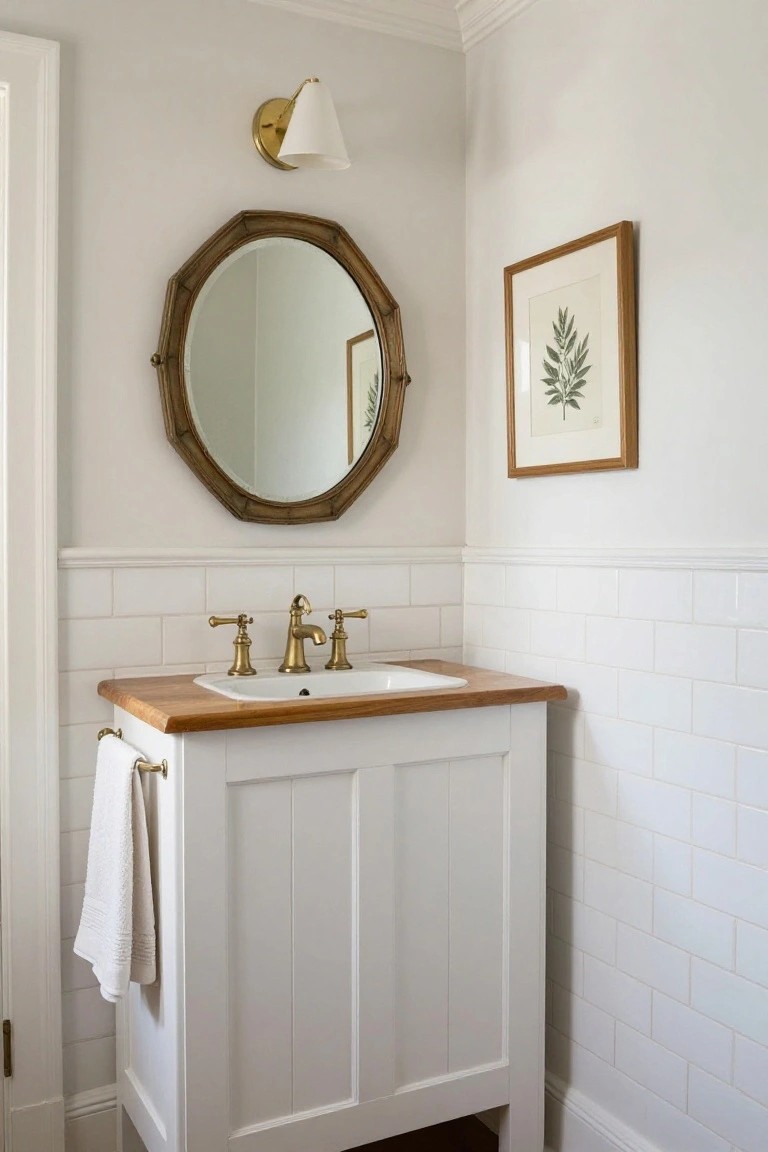
Subway tile wainscot on the lower walls brings that crisp colonial feel to a bathroom without overdoing it. The white tiles run up to chair rail height, then smooth into pale gray paint above. It pairs nicely with a paneled white vanity and brass faucet for a put-together look that’s been around forever.
Try this in powder rooms or small baths where you need splash protection that still looks sharp. It works best in older homes or ones aiming for that style. Just make sure the top cap molding ties into your baseboards.
Sage Green Wall Paneling
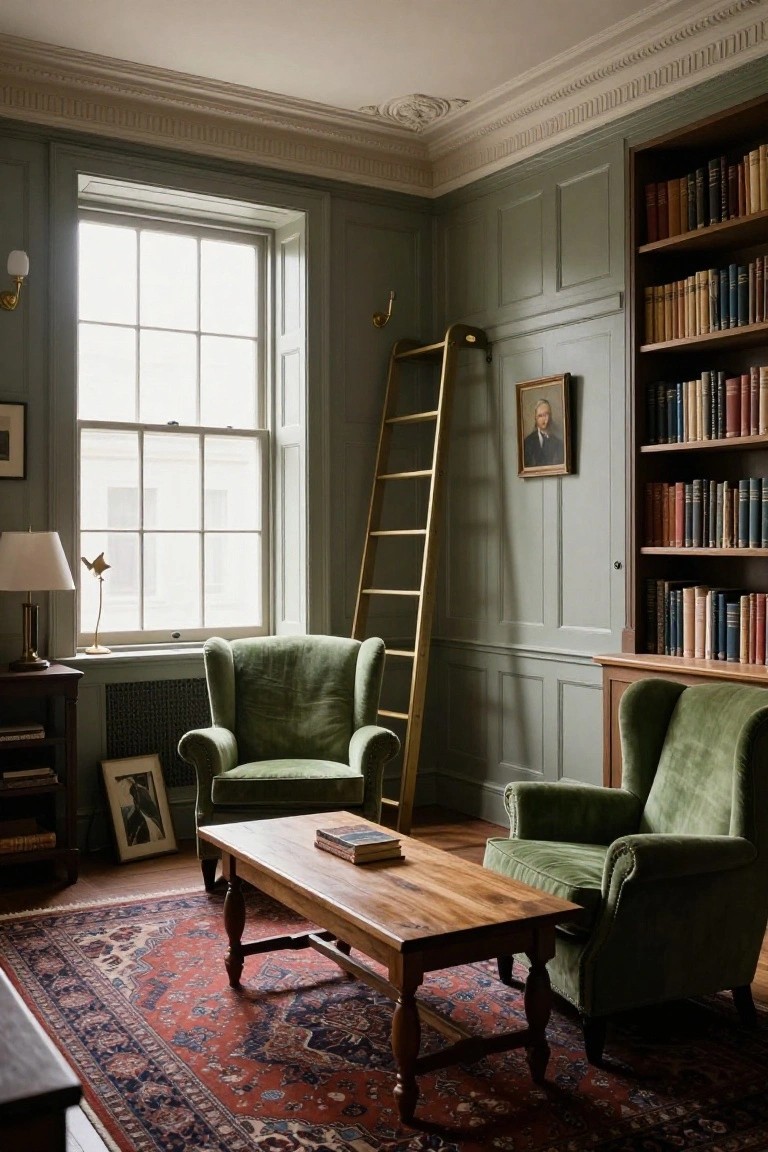
Classic raised paneling like this, painted in a soft sage green, brings a calm colonial touch to any room. The white trim outlines each panel nicely, keeping things crisp without feeling too stark. It stands out here because it covers the whole wall, making the space feel put-together and a bit formal, yet easy to live in.
You can pull this off in a home office or library where you want walls that quietly do their job. It fits older houses with good ceiling height best, or even a fresh space if you add built-in shelves nearby. Just stick to matte paint so it doesn’t glare, and maybe lean a brass ladder against it for that extra library vibe.
Frequently Asked Questions
Q: How do I pick molding that matches my colonial home’s age?
A: Look at your door and window casings first.
Match the new trim to their profile for instant harmony. Skip modern skinny versions, they jar against thicker originals.
Q: Can I paint over old stained trim to freshen it up?
A: Prime with a stain-blocking paint first.
Then top with two coats of eggshell finish. It grabs that crisp colonial glow without stripping a thing.
Q: What’s the trick to nailing crown molding corners?
A: Dry-fit pieces and mark your cut angles on scrap wood.
Use a miter saw set to 45 degrees, coping the inside edge smooth. Glue and pin it tight, caulk hides tiny gaps.
Q: Do I need a pro for installing baseboards?
And if your walls stay flat, grab a finish nailer and level.
Tap them in level, fill nails with wood putty. You save big and learn a skill.
