

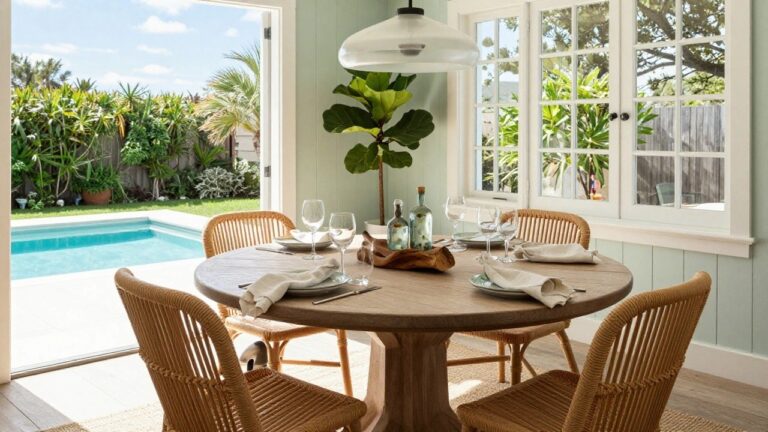
I have noticed that dining rooms tend to work best when the seating arrangement actually matches how people gather and linger during meals.
Coastal details such as pale woods and simple linens can shift the whole feel of the space once daylight moves across the table.
Some layouts only reveal their flaws after you host a few dinners and watch where guests end up standing.
The ideas worth keeping are usually the ones that leave room for extra chairs without crowding the flow.
Testing a couple of these changes in my own space showed me which elements hold up once the room is actually in use.
Round Tables for Coastal Dining Rooms
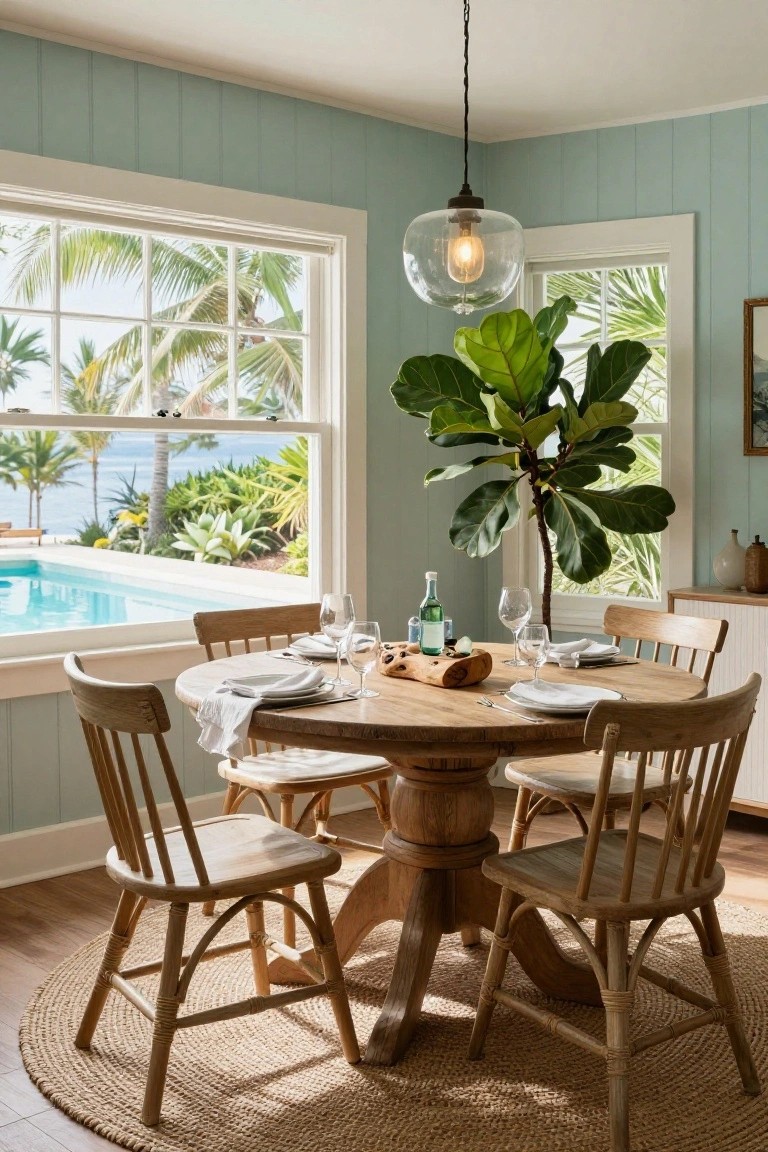
A round table helps a dining room feel more open and welcoming, especially in a coastal setting where you want the focus on easy conversation and views. The curved shape avoids sharp corners that can crowd a space, and it lets people move around freely during meals or gatherings. Natural wood tones add to the relaxed feel without overpowering the light colors on the walls.
This setup works best in homes that get plenty of natural light or have outdoor views nearby. It suits smaller or medium dining areas where a rectangular table might feel too formal or bulky. Keep the surrounding pieces simple so the table stays the main seating spot.
Woven Chairs With a Wood Table
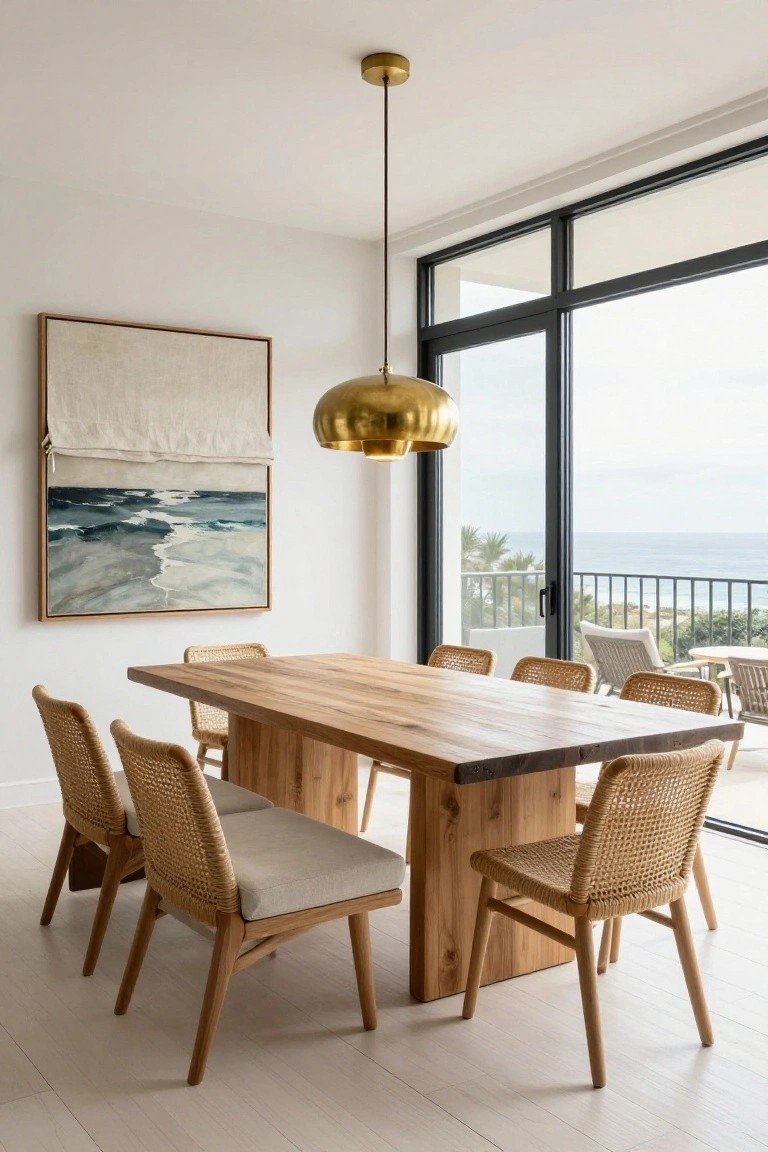
Woven chairs bring texture and an easy feel to a coastal dining room without adding weight. They pair naturally with a solid wood table and help the space stay open and relaxed even when the room gets used often.
This setup works best in homes that want a casual entertaining area rather than a formal one. Keep the rest of the room simple so the woven seats and wood grain stay the main focus.
Add a Woven Pendant for Natural Texture
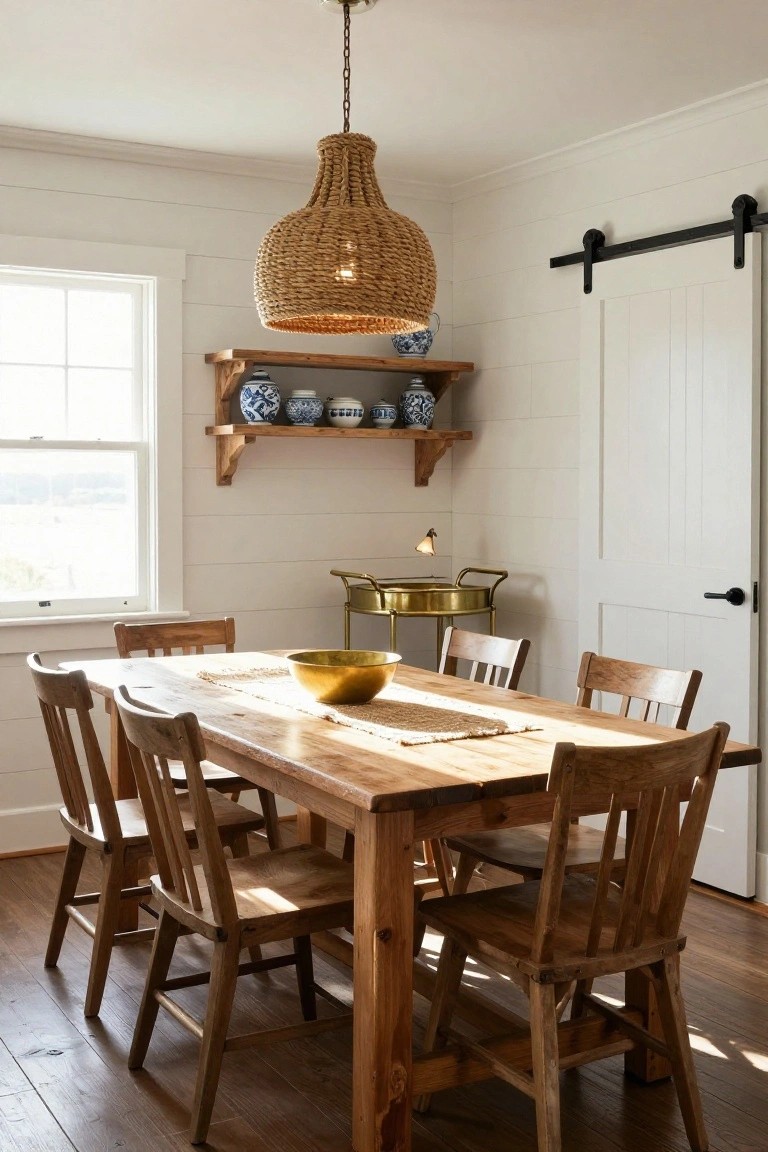
A woven pendant light brings just enough texture to a coastal dining room without crowding the space. It softens the look of a big wood table and helps the room feel lighter overall, especially when the walls stay bright and simple.
This works best in rooms that already have wood tones and open space. Keep other lighting minimal so the woven piece can stand out, and make sure the scale fits the table below it.
Try Rattan Seating For A Casual Coastal Feel
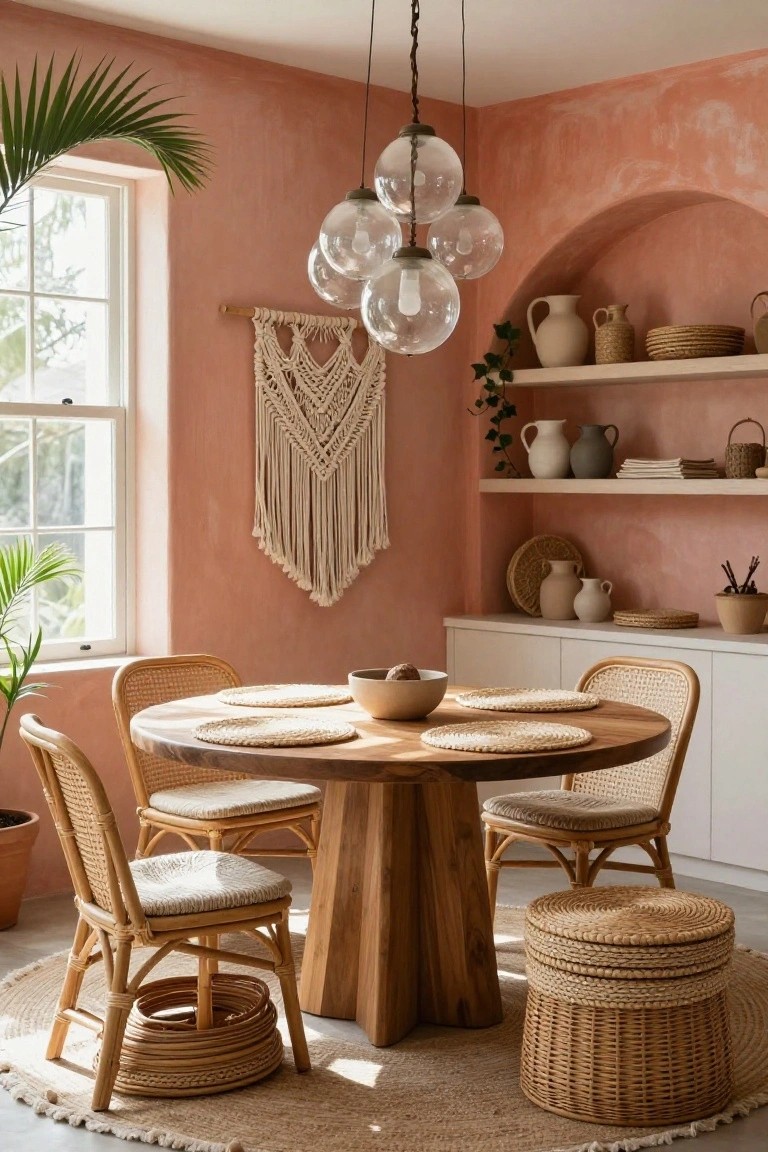
Rattan chairs around a solid wood table give a dining room an easy, relaxed look that fits right into coastal style. The natural weave adds texture without making the space feel heavy or overly decorated.
This approach works best in smaller or medium dining areas where you want seating that feels light and movable. Keep the rest of the room simple with a few woven mats and one or two wall hangings so the rattan stays the main draw.
Light Wood Dining Furniture
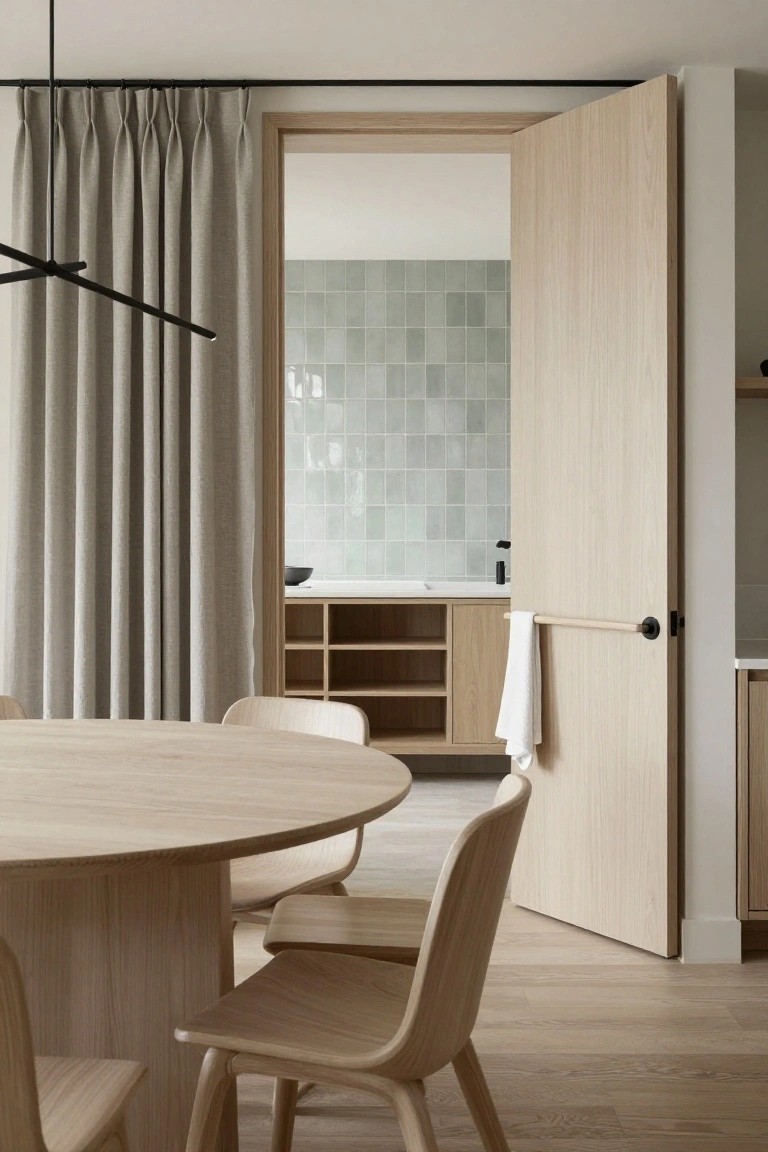
Light wood dining tables and chairs help a coastal room stay bright without looking bare. The pale tones reflect light well and keep the space feeling open even when the table is fully set for guests.
This choice works best in homes where the dining area connects to the kitchen. It creates an easy flow between the two rooms and suits smaller spaces that need to feel larger during gatherings.
Use a Fireplace in the Dining Room
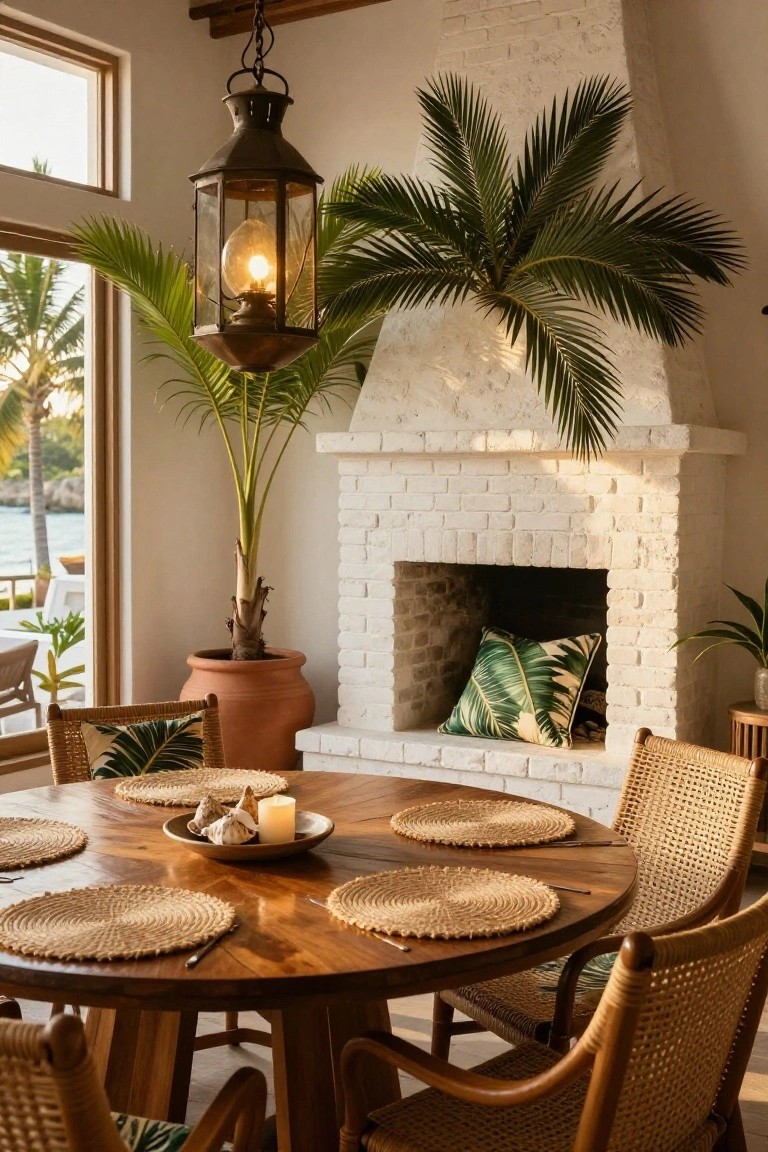
A fireplace can turn a coastal dining room into a spot that works year round. It adds a natural focal point without making the space feel heavy or closed in.
This setup suits homes where evenings get cooler or where you want one room that handles both casual meals and longer gatherings. Keep the brick light in tone and limit extra decor on the mantel so the room still feels open.
Woven Pendant Lights Over the Table
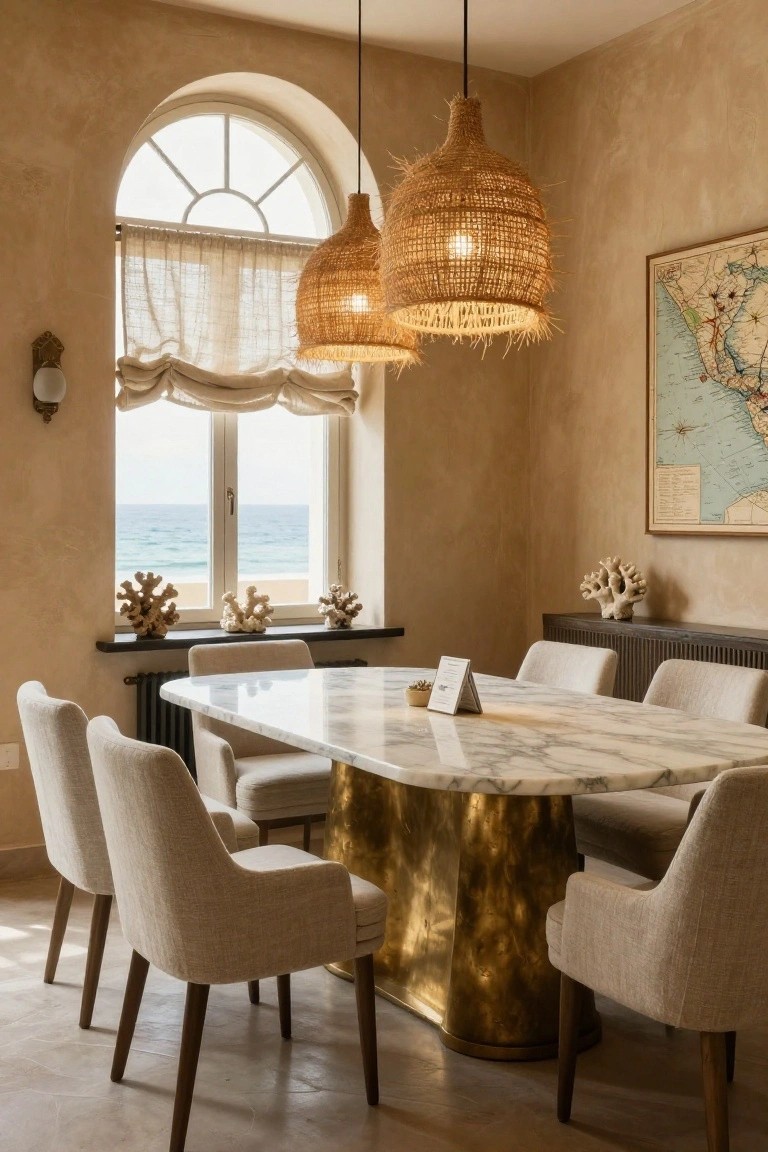
Woven lights bring an easy texture to a coastal dining room that feels natural rather than styled. They add softness above a solid table and keep the space from looking too formal while still giving enough light for meals.
Hang two or three at different heights above a longer table if the ceiling allows it. This works best in rooms with plenty of natural light and simple furnishings so the weave stays the main detail.
Built-In Seating For A Casual Dining Nook
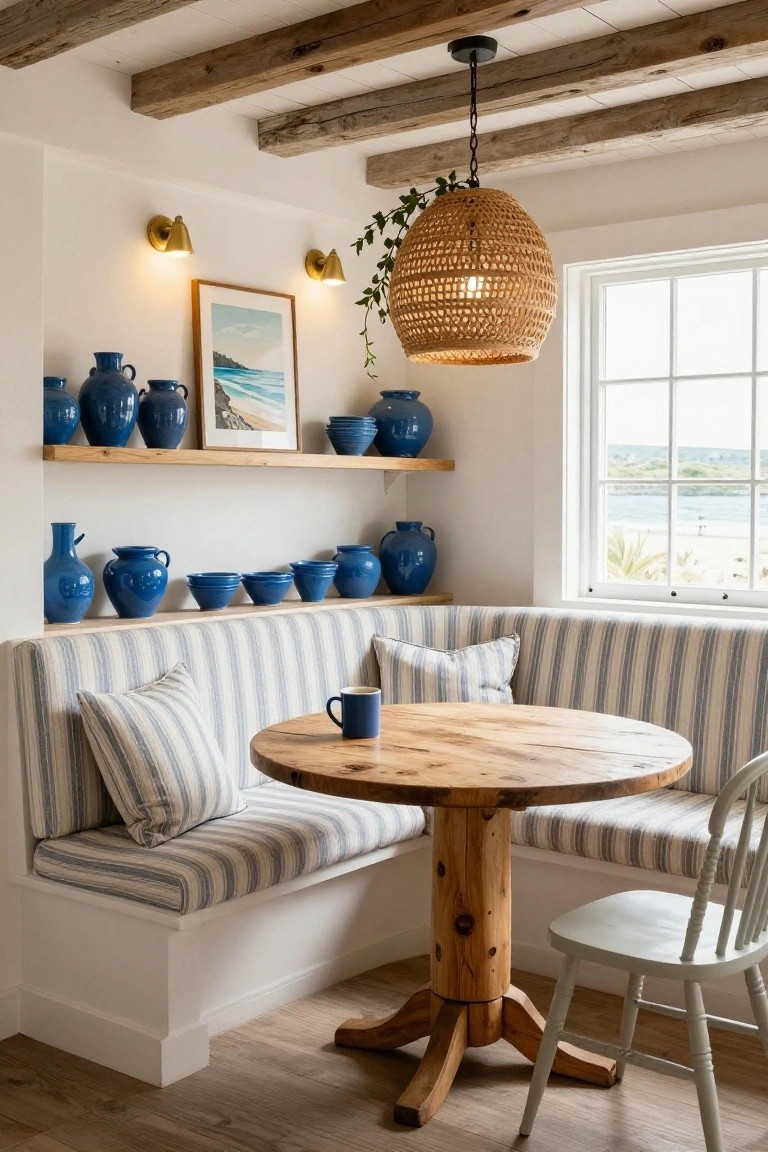
Built-in bench seating turns a small corner into a practical dining spot without taking up much floor space. The long cushioned benches follow the walls and give plenty of room for guests while keeping the center open for a table. This setup feels relaxed and works especially well in homes that need seating for more people on a regular basis.
It suits coastal cottages or any room with a window view since the benches can run right under the sill. Choose a sturdy fabric that can handle daily use and add a few loose pillows for comfort. A round table in the middle keeps the flow easy and prevents sharp corners from getting in the way.
Let a Coastal Painting Anchor the Space
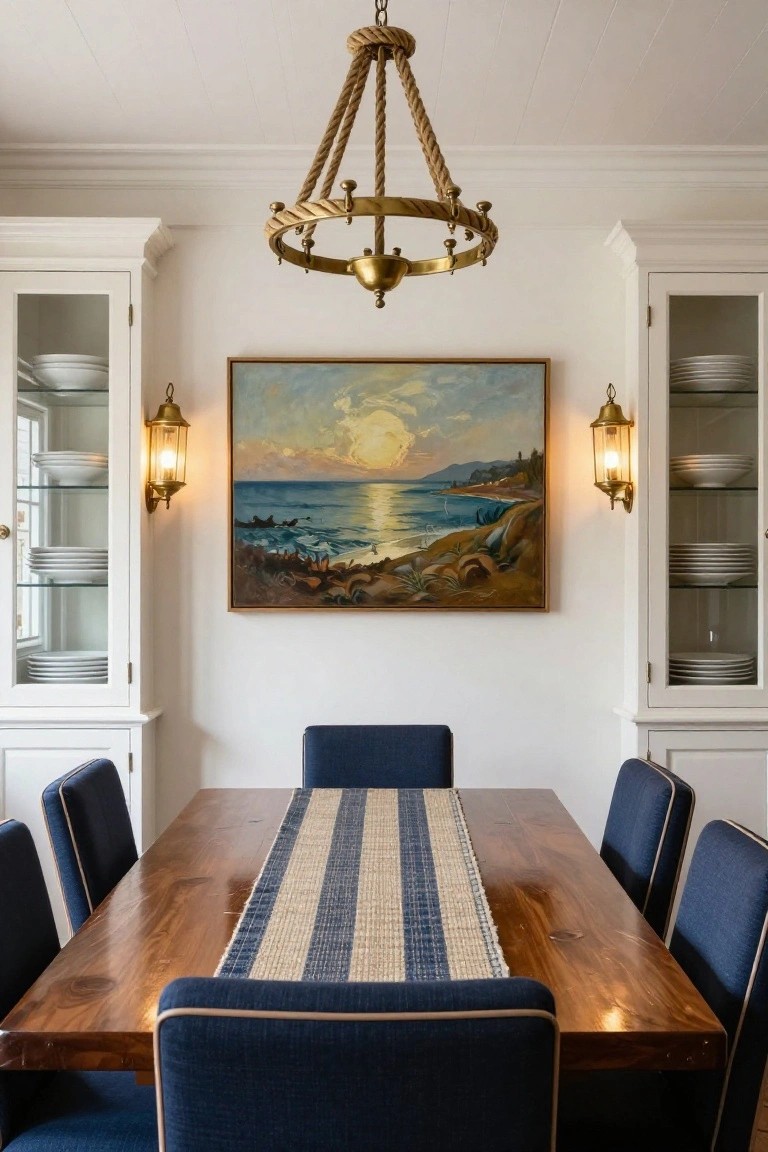
A big painting of the ocean or shoreline can pull a whole dining room together. It adds the coastal feel without filling the walls with shells or rope details everywhere else.
This approach works best in rooms that already have wood tones and simple white walls. Hang the painting right over the table so guests see it during meals, and keep the colors in the artwork close to the blues and neutrals already in the chairs and linens.
Woven Details for a Breezy Dining Room
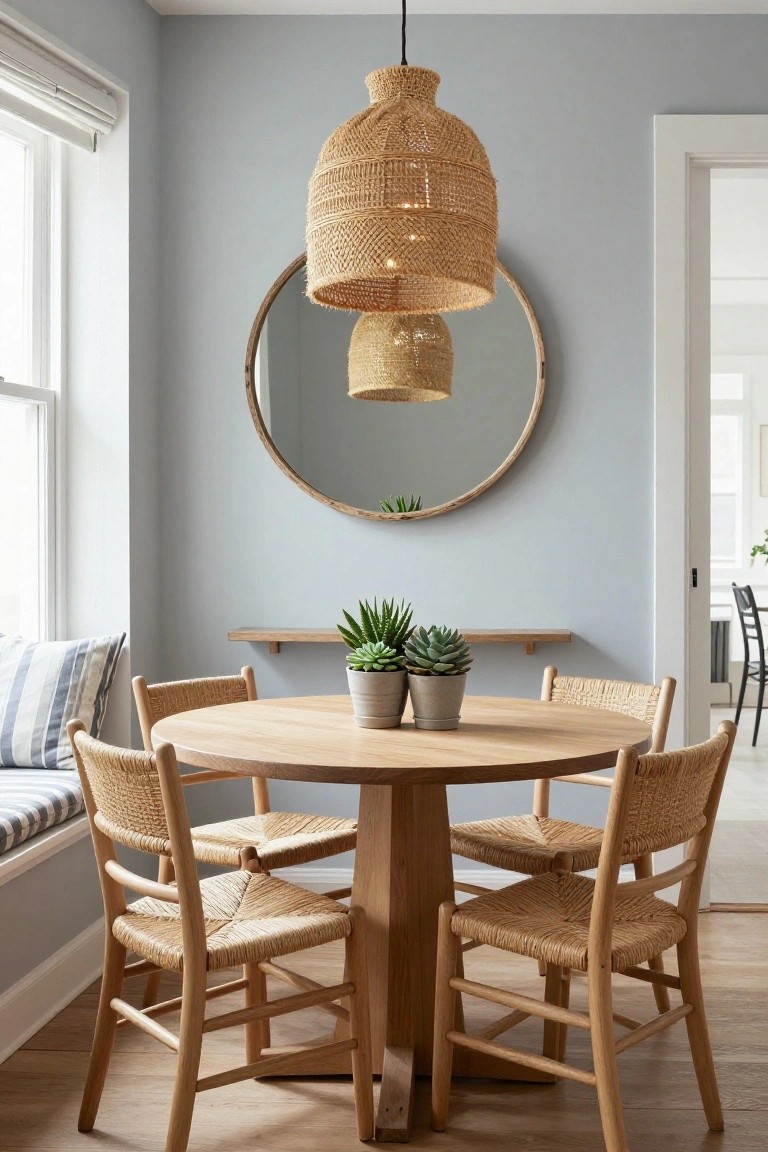
Natural woven pieces work well when you want a dining room to feel relaxed rather than formal. A large pendant made from woven fibers paired with matching chairs brings in texture that fits right into a coastal setting.
This approach suits rooms with light walls and simple wood furniture. It keeps the space from feeling too heavy while still giving it enough interest for everyday meals or small gatherings.
Mix Your Dining Chairs
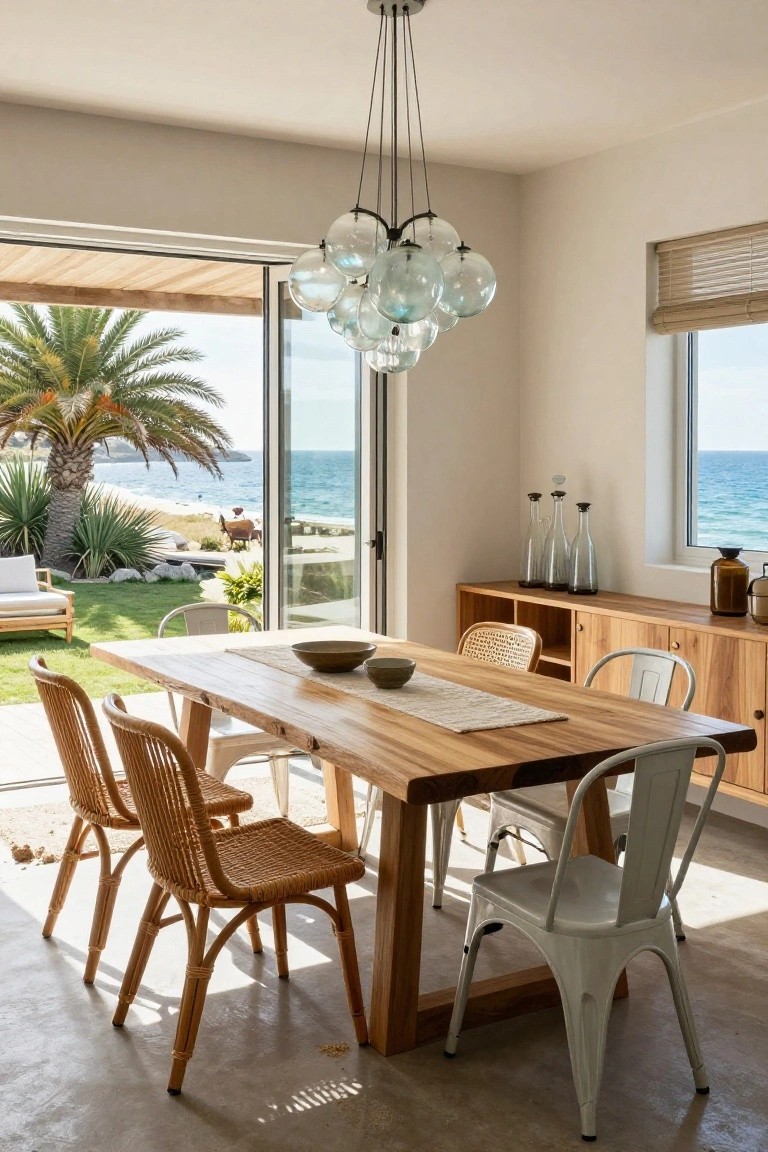
A simple way to keep a coastal dining room feeling relaxed is to use different chairs around one table. The wood surface holds up well to the mix, and the variety keeps the space from looking too planned.
This works best in homes where you eat outside often or want the room to feel lived in. Start with two or three styles you already like and add more over time instead of buying a full matching set.
Round Windows Give Coastal Dining Rooms Extra Light
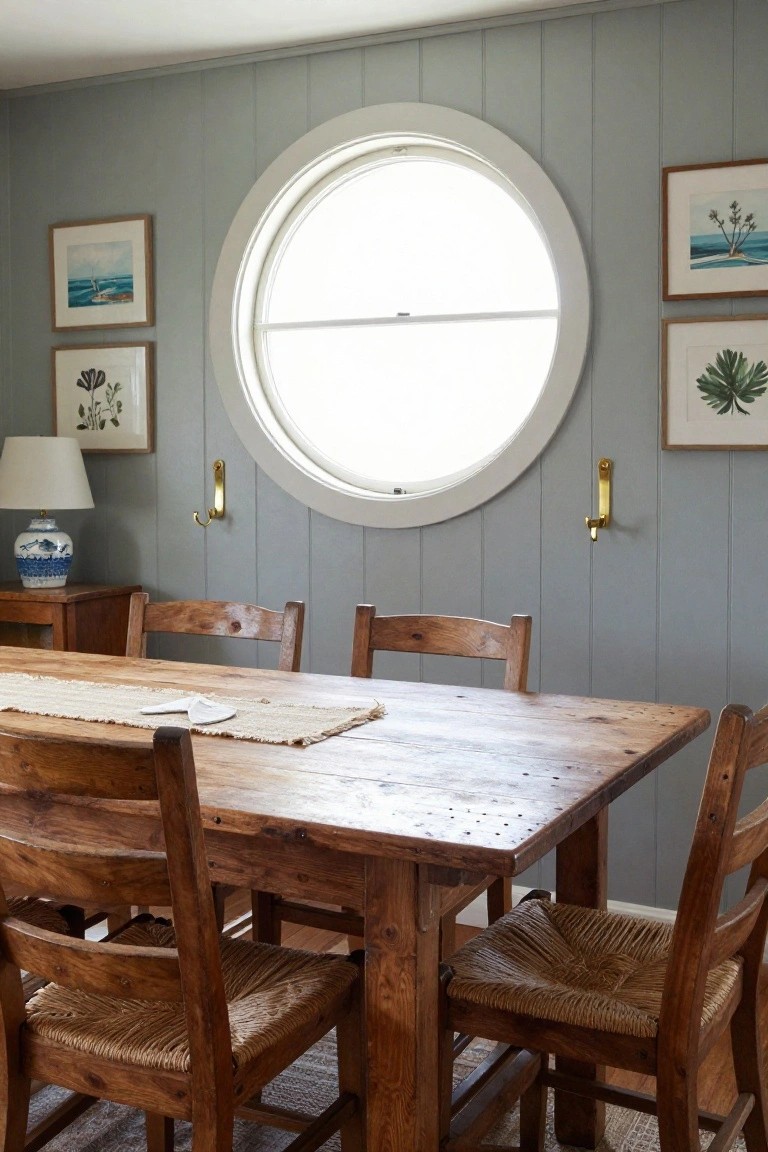
A round window stands out because it pulls in steady natural light and gives the whole room a relaxed, open feel. In coastal spaces this shape feels natural, since it echoes simple nautical details without needing extra decoration.
This choice works best above a dining table in homes that already lean toward light colors and wood tones. Keep any curtains or shades minimal so the window shape stays visible and the room does not feel closed in.
A Pedestal Table Opens Up Seating
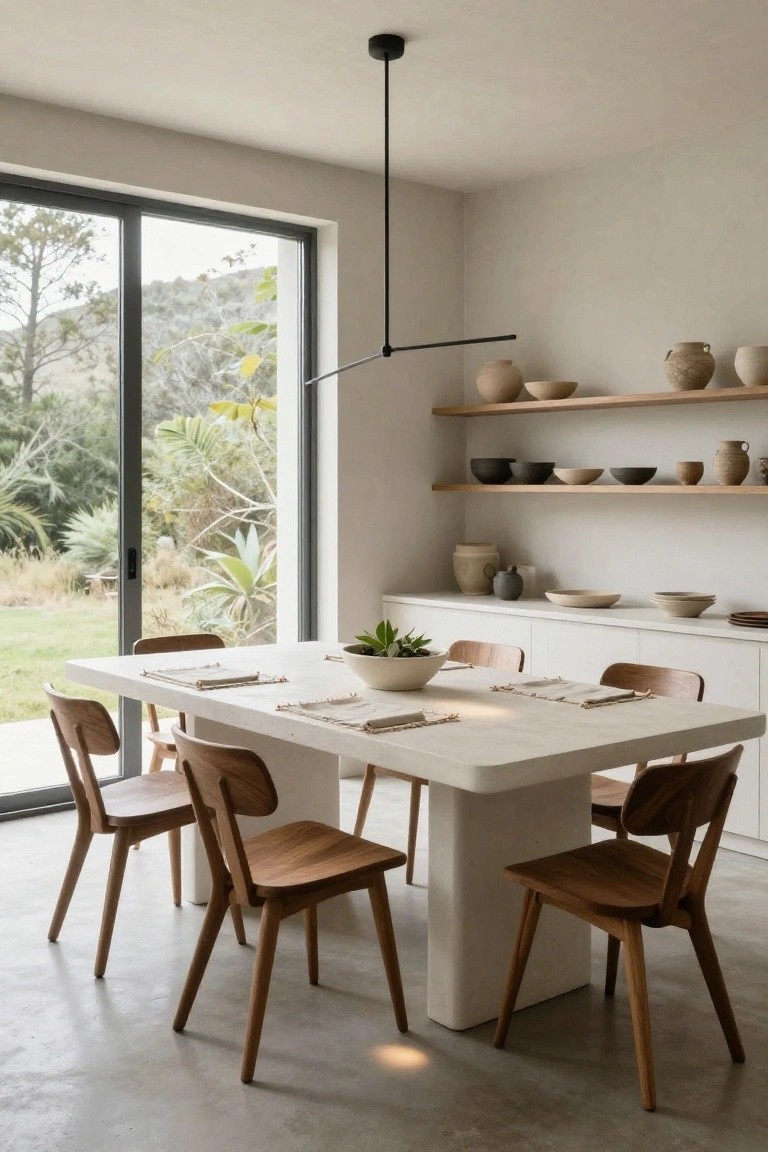
A single pedestal base under a big dining table makes it much easier to fit extra chairs without fighting a row of legs. This setup keeps the whole area feeling open, which matters when you want people to move around freely during meals.
It suits coastal homes that need the dining space to stay light and simple. Stick with a pale stone or concrete top and plain wood chairs so the table does the work without adding visual clutter.
Deep Navy Walls in Coastal Dining Rooms
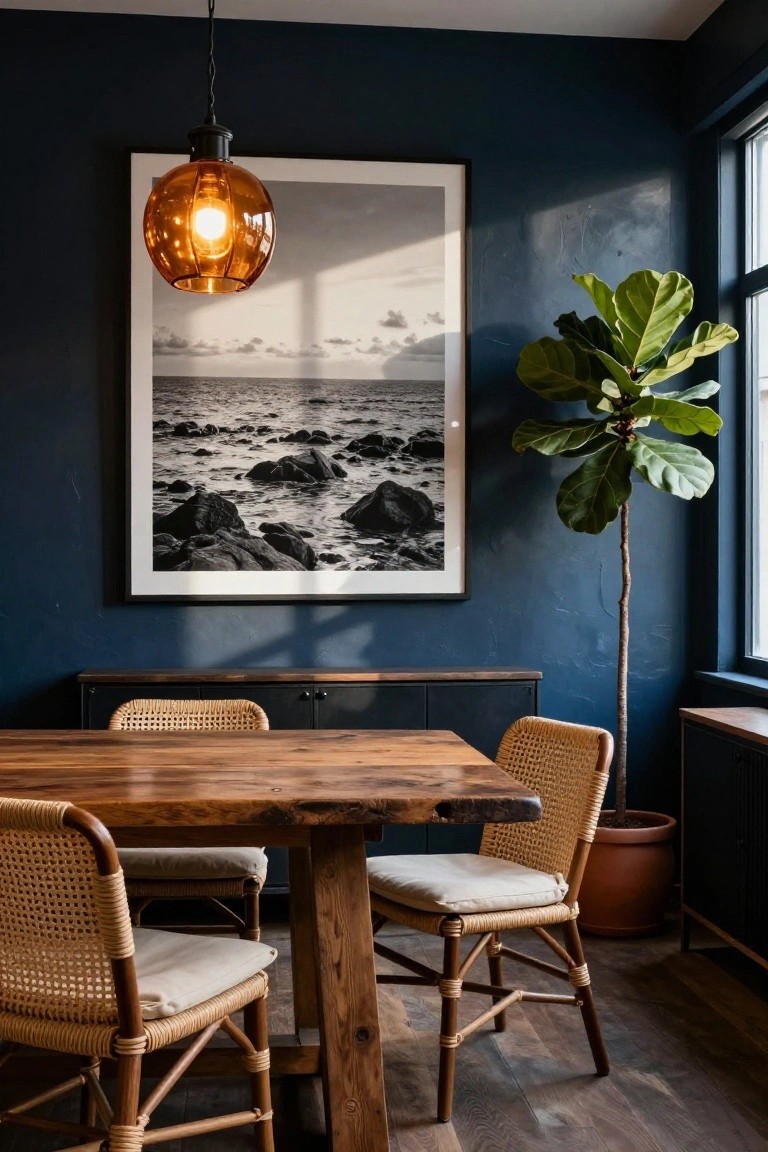
A deep navy wall can give a coastal dining room more weight without losing the breezy feel. It creates a calm backdrop that lets wood tones and natural textures stand out instead of competing with bright walls.
Use this approach in rooms that get decent daylight so the color stays balanced. Keep the rest of the space simple with wood furniture and woven seating to avoid a heavy look.
Add a Chalkboard for Casual Entertaining
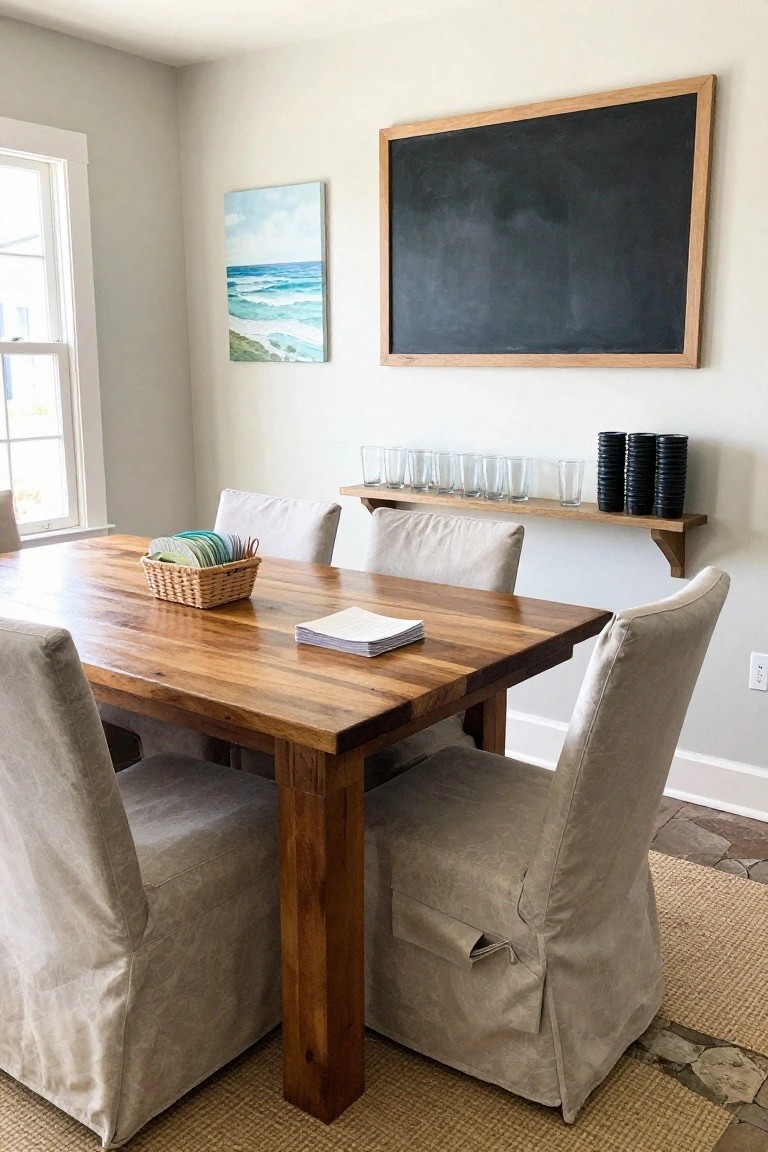
A chalkboard mounted above the dining table gives you an easy place to write menus or notes without adding clutter. It keeps the space feeling relaxed, which works well when meals stretch into long conversations with guests.
Place it near a low shelf or sideboard so it stays handy during gatherings. This setup suits coastal homes that see regular entertaining since the surface can be wiped clean and updated often.
Layer Candlelight For Evening Meals
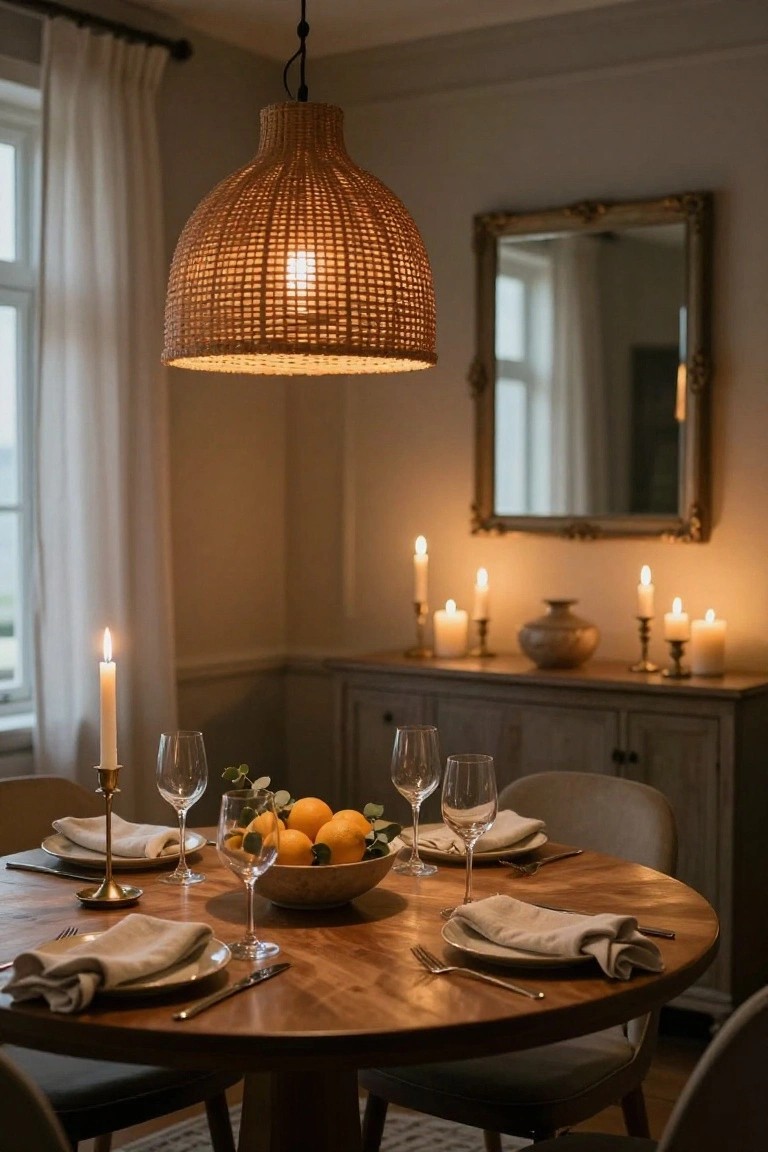
Candlelight works well in a coastal dining room because it keeps the space feeling relaxed instead of formal. A few candles on the table and a few more on a sideboard give off a soft glow that feels natural with wood tones and simple linens.
Place taller candles in holders at different heights and add a few shorter ones near the center of the table. This setup suits homes that host casual dinners and works best when the rest of the room stays light and uncluttered.
Add A Decorative Tile Wall
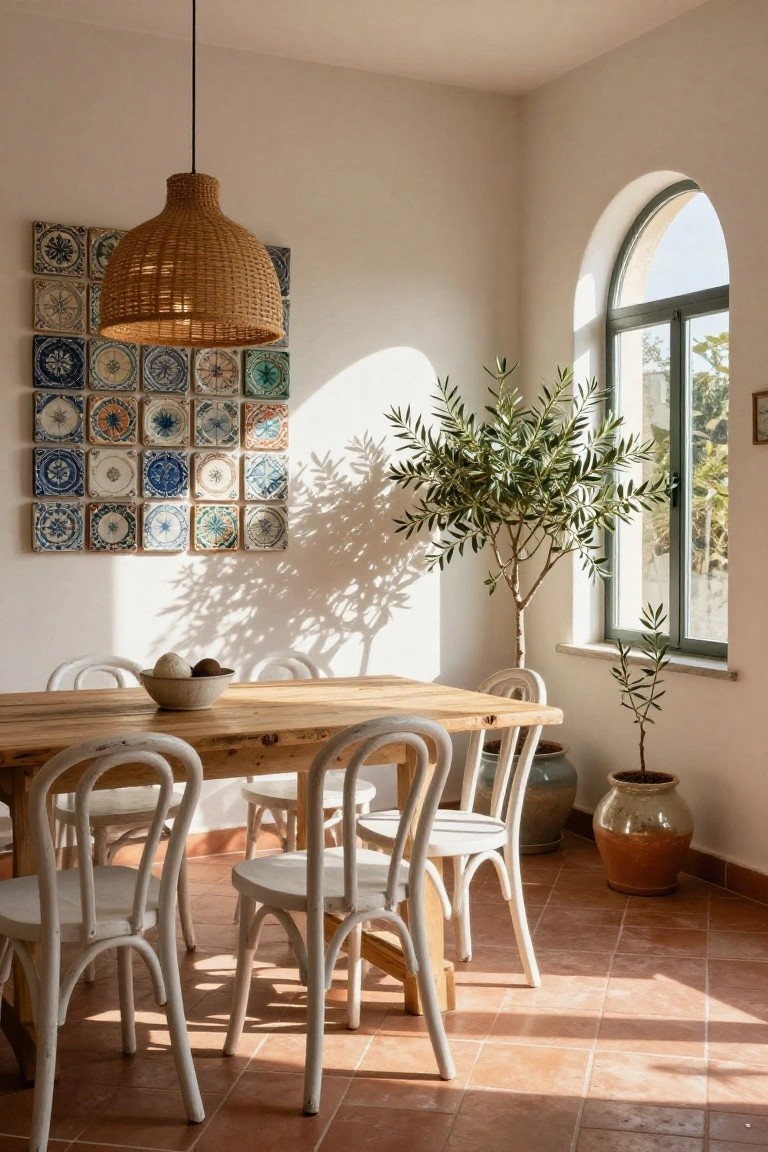
A tile wall brings pattern and color into a dining room without needing a lot of extra pieces. In coastal spaces it feels familiar and a little unexpected at the same time, especially when the tiles have soft, varied tones rather than one flat shade.
This works best on the main wall behind the table where light from a window can hit it. Keep the rest of the room simple so the tiles stay the focus, and choose a size that fits the wall without crowding the space.
Natural Wood Tables For Coastal Dining Rooms
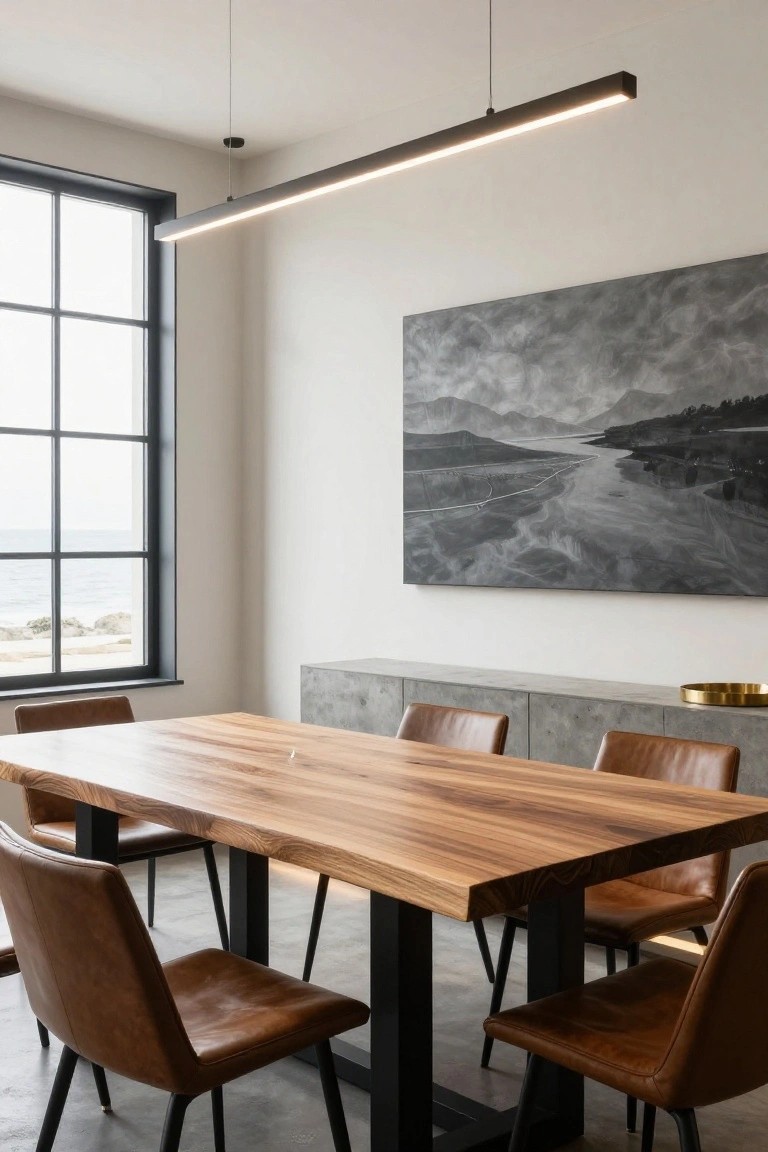
A solid wood dining table brings warmth and texture into a coastal space without adding visual weight. The grain and natural finish help balance the cooler tones that often come with ocean views and light walls.
This approach works best in rooms where you want the view to stay central. Keep the rest of the setup simple, with straightforward seating and minimal extras on the table itself. It suits homes that get plenty of natural light and need one strong element to ground the room.
Choose Woven Pendants for Coastal Dining Rooms
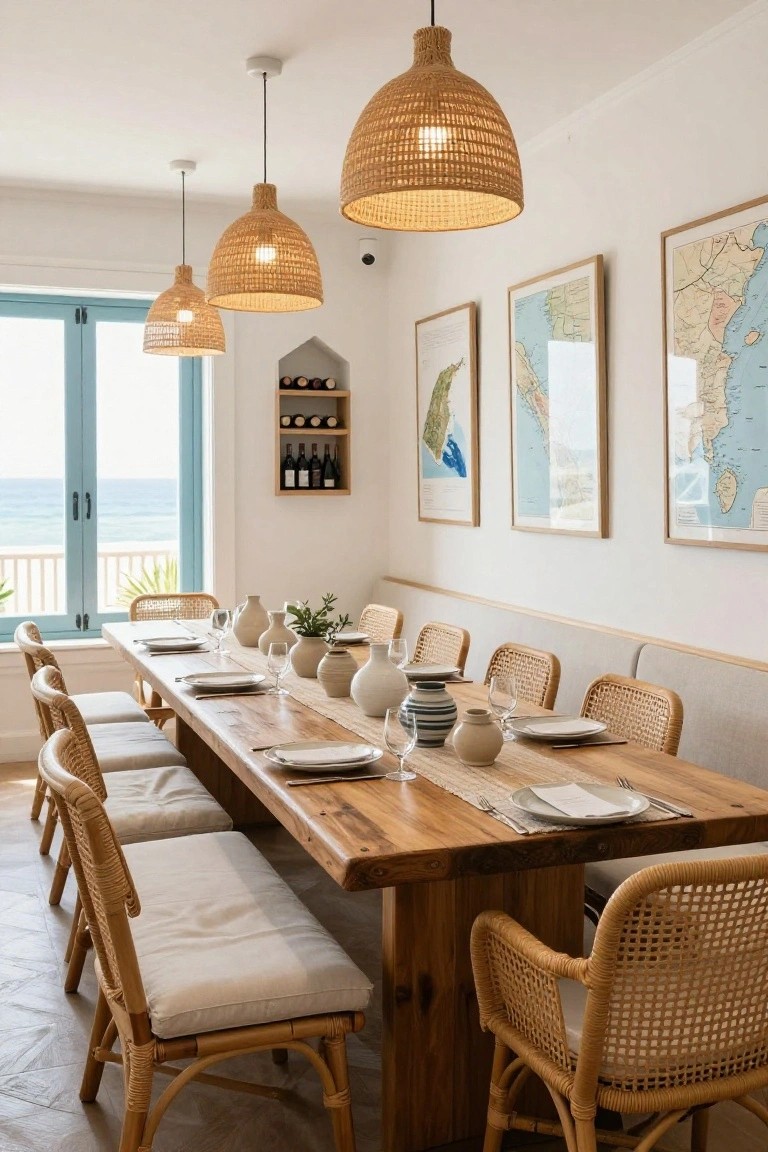
Woven pendant lights add texture that feels right at home in a coastal space. They give off a soft glow and keep the room from looking too polished or formal.
Place a few of them at different heights over a long table. This works especially well in rooms with light walls and natural seating like rattan chairs, since the look stays breezy and simple.
Mixing Mismatched Chairs Around the Table
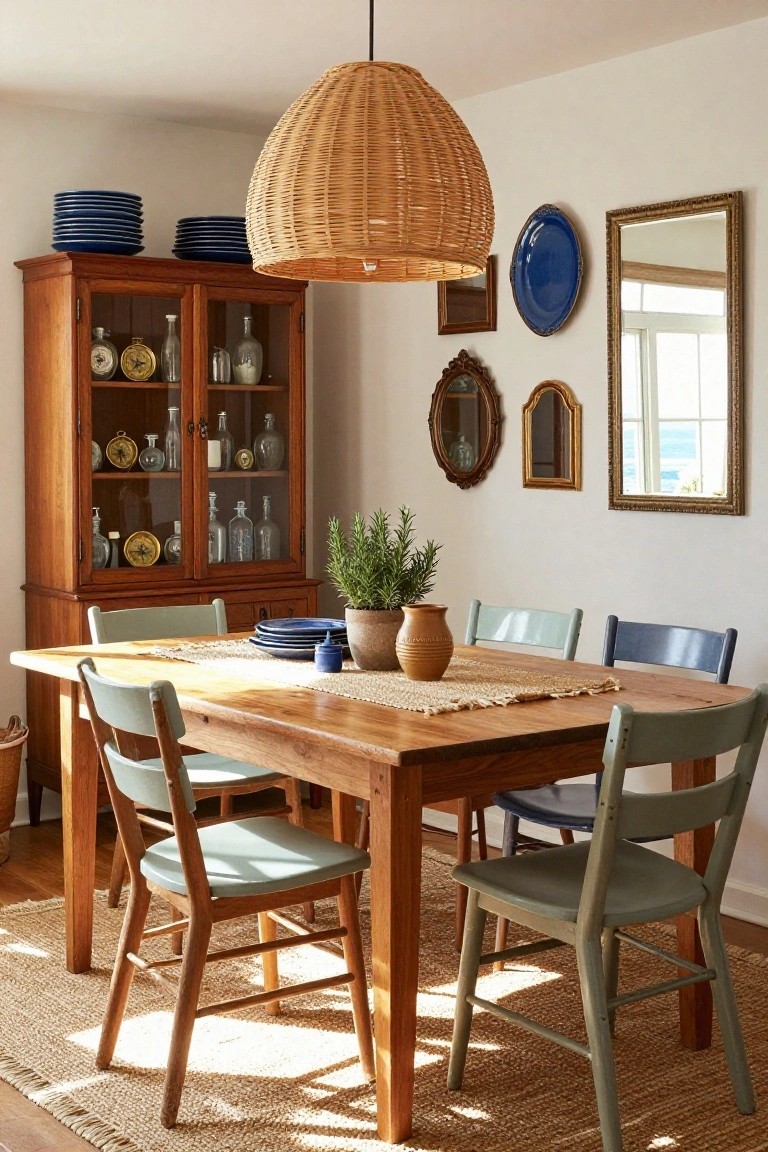
A simple way to keep a dining room from feeling too formal is to use chairs that do not match. Different colors and slight style variations add interest without much effort, and the look works especially well in coastal spaces where things should feel easy and collected.
Try starting with a few wooden chairs and painting them in soft shades that already appear in the room. The mix does not need to be perfect, but it helps if the colors stay in the same general range so the table still feels pulled together.
Floating Shelves Keep Dining Rooms Feeling Open
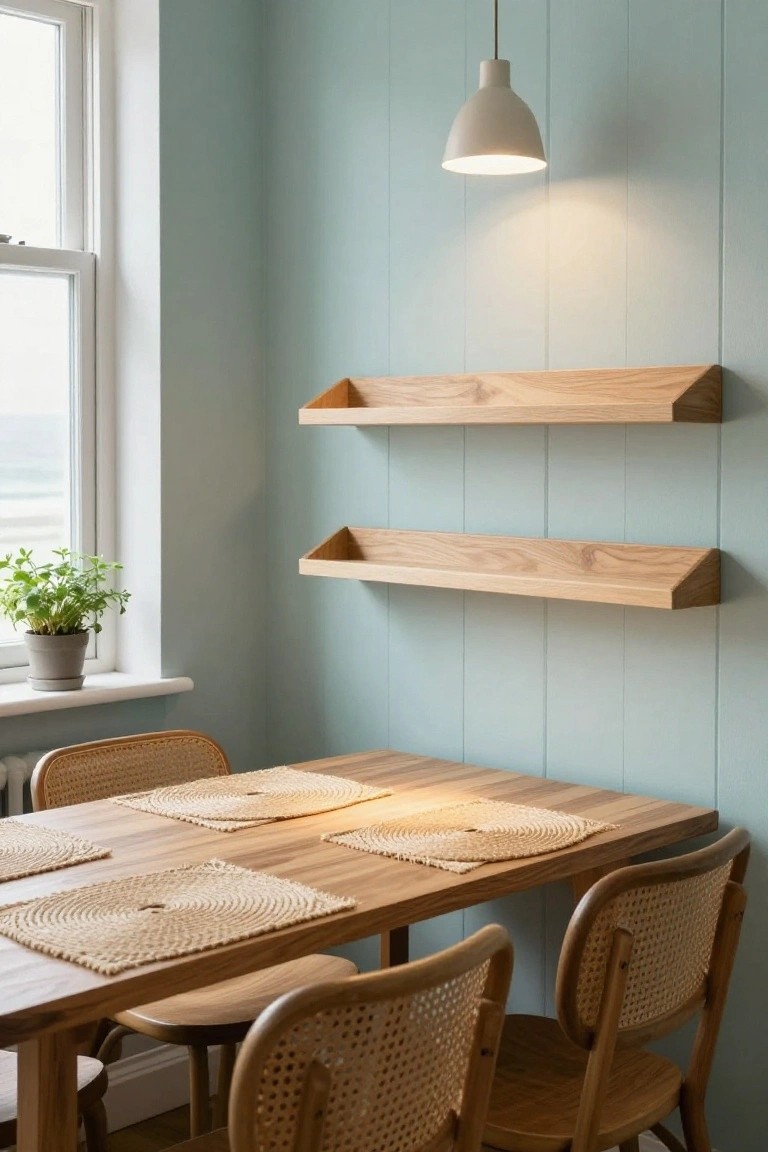
Floating shelves give you a simple way to add storage or display space without crowding the floor. In a coastal dining room this matters because it leaves room to move around the table and keeps the overall look light.
They work best in smaller homes or rooms where you want to avoid extra furniture. Mount them at eye level or slightly above and use them for just a few items so the wall stays calm.
Frequently Asked Questions
Q: My dining room gets tons of natural light already. Do I still need to add extra windows or mirrors for that coastal feel? A: Skip the extra windows and just hang a large mirror opposite the brightest wall. It bounces the light around and keeps the room feeling open during dinner parties. That one change often makes the biggest difference without any construction.
Q: How do I pick table linens that fit the breezy vibe but still handle spills from entertaining? A: Choose light cotton or linen in soft blues or whites since those fabrics wash easily and dry fast. Skip anything too delicate so you can enjoy meals without constant worry. A simple runner layered over a solid cloth gives you that relaxed look plus practical coverage.
Q: What if I want to bring in some greenery but worry about plants dying in a dining room? A: Try low maintenance options like snake plants or faux eucalyptus in ceramic pots on the sideboard. They add the fresh coastal touch without needing daily attention. Rotate them every few weeks so the space stays lively for guests.
