

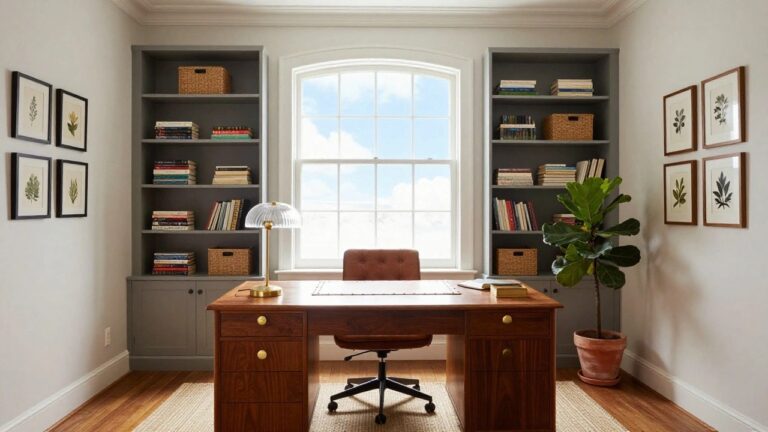
I’ve spent enough time rearranging my own home office to know that transitional design shines when it mixes sleek furniture with plush seating, making the space feel focused yet forgiving during long workdays. Rooms like this come alive when you position the desk to catch morning light and pair it with open shelving that hides cables without cramping the flow. What grabs me first is always how textures layer in, like a woven rug under leather chairs that softens the hard edges of modern lines. I end up saving the ones that rethink wall colors to warm neutrals, because they shift the whole mood without overwhelming a small footprint. A couple stand out for easy tests in real setups.
Classic Wooden Desk Setup
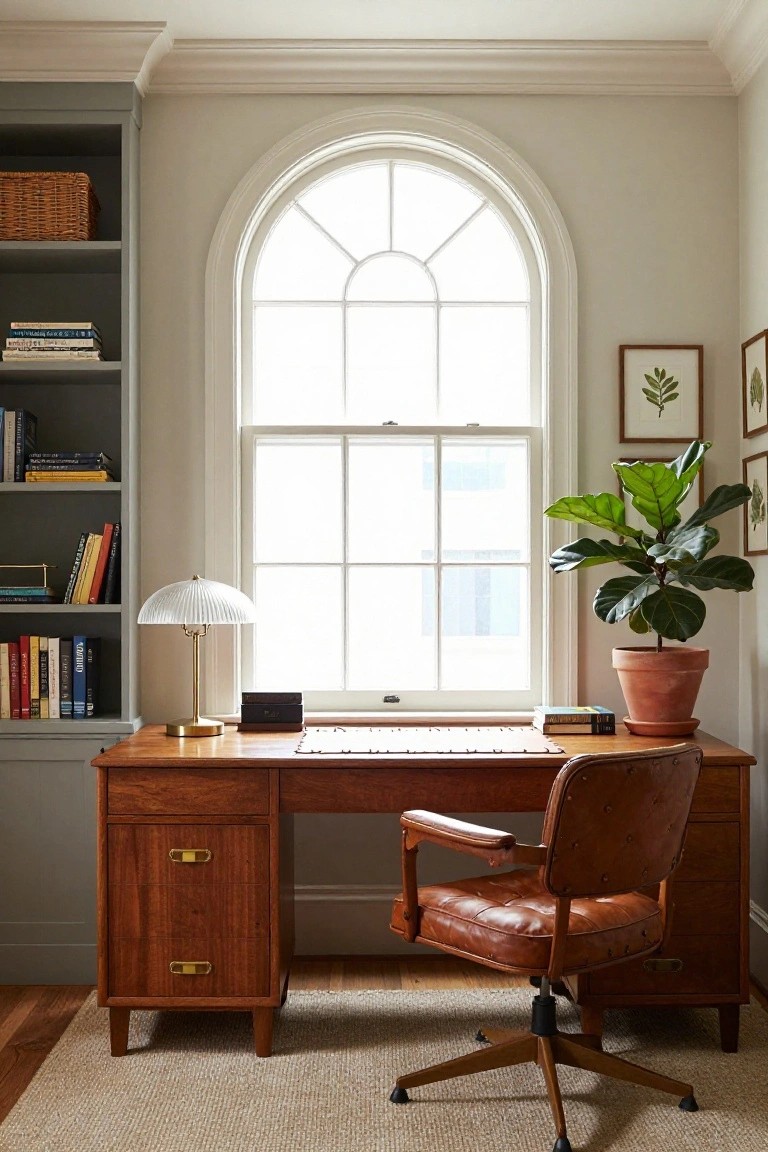
A wooden desk like this, with brass pulls and tapered legs, makes a home office feel solid and lived-in right away. The matching leather swivel chair pulls up nice and easy, giving you that comfortable spot to settle in for work. Soft walls and window light keep the wood from feeling too heavy.
This setup fits older homes or any room with natural light and wood floors. It mixes tradition with everyday use, so try it where you need storage drawers plus a bit of style. Just pick wood tones that echo the rest of the house.
Oval Marble Desk Centers Transitional Offices
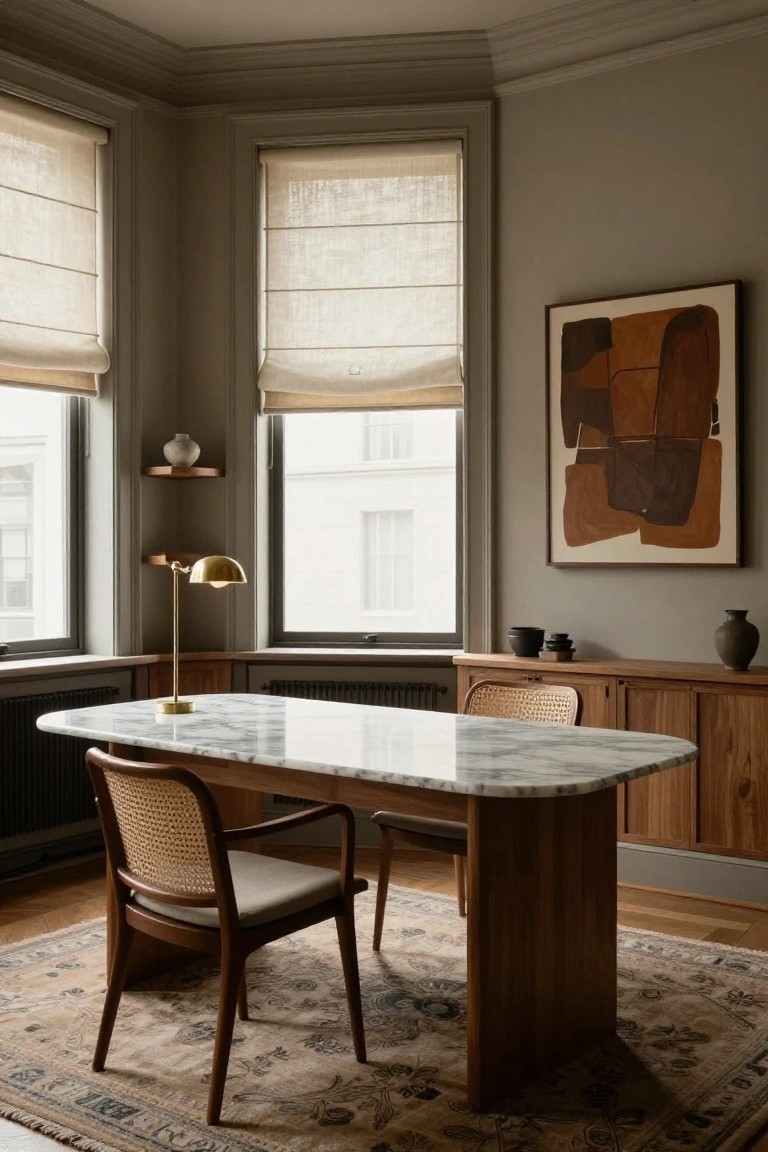
A good home office needs a desk that feels solid but not stuffy. Here an oval one with a smooth white marble top on a sturdy wooden base does just that. The curve softens the lines. Paired with a rattan chair it keeps the space relaxed. Marble adds subtle shine while wood brings real warmth. This mix hits that transitional sweet spot between old-school charm and clean modern lines.
Try this in a corner setup like a bay window area. It works in apartments or older homes with high ceilings. Go for light marble to bounce around natural light. Keep the chair cushioned for actual sitting. Watch the scale though. Too big and it crowds the room.
Corner Floating Desk Setup
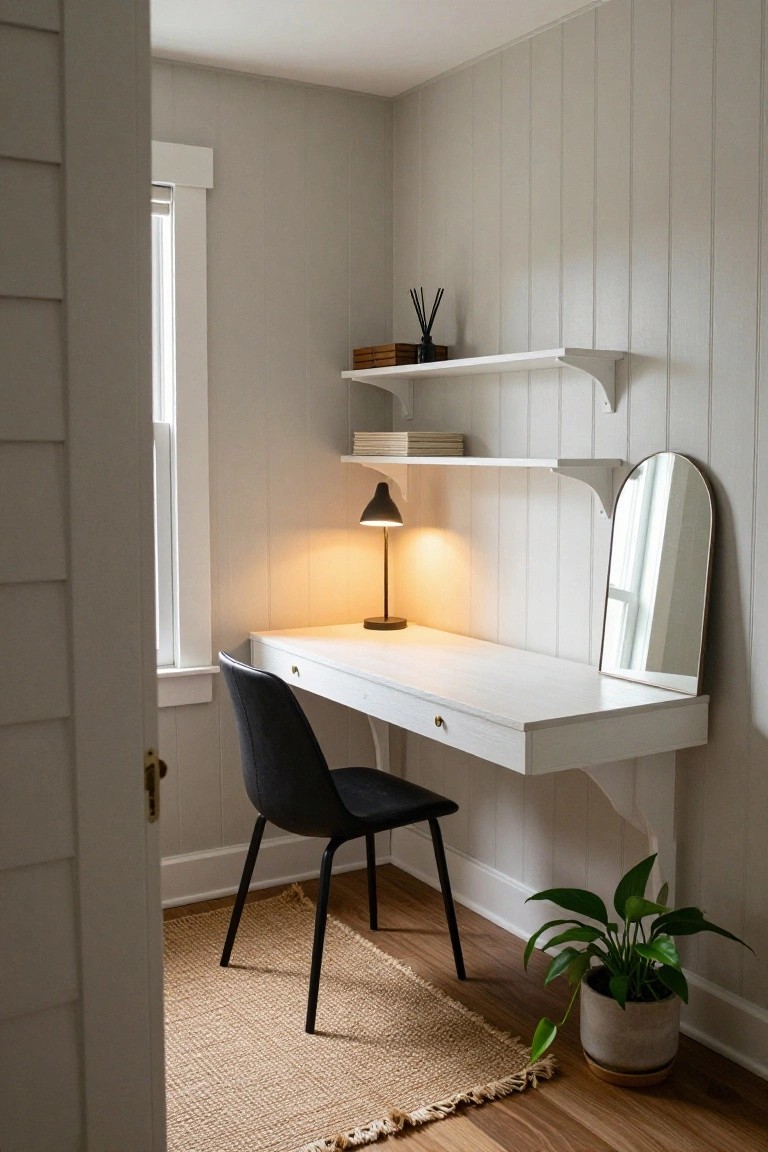
A floating desk tucked into a corner like this one keeps your workspace open and airy. Mounted right on the wall with shelves above and a slim mirror beside it, this setup uses vertical space smartly. No bulky legs cluttering the floor. The white finish blends with light walls, making even a small room feel bigger and calmer for daily work.
Try this in spare bedrooms or underused corners where floor space is tight. Pair it with a simple black chair and a trailing plant for a touch of green. It suits transitional homes with paneled walls best… just measure your wall height first to fit the shelves right.
Attic Home Office with Wood Built-Ins

Turning an attic into a home office works well when you use matching wood for the built-ins and desk. Here the shelves wrap around the space and meet a sturdy wooden table right in the center. That setup keeps everything practical while the natural wood tones warm up the sloped white walls. A skylight lets in plenty of light too, so it never feels closed in.
This kind of arrangement fits best in tucked-away spots like attics or lofts where storage is tight. Pick similar wood finishes to avoid a busy look, and add a simple rug underneath for some comfort. It suits homes that mix old architecture with everyday work needs… just make sure the desk is at a good height under the ceiling slope.
Shared Wooden Desk Under the Windows
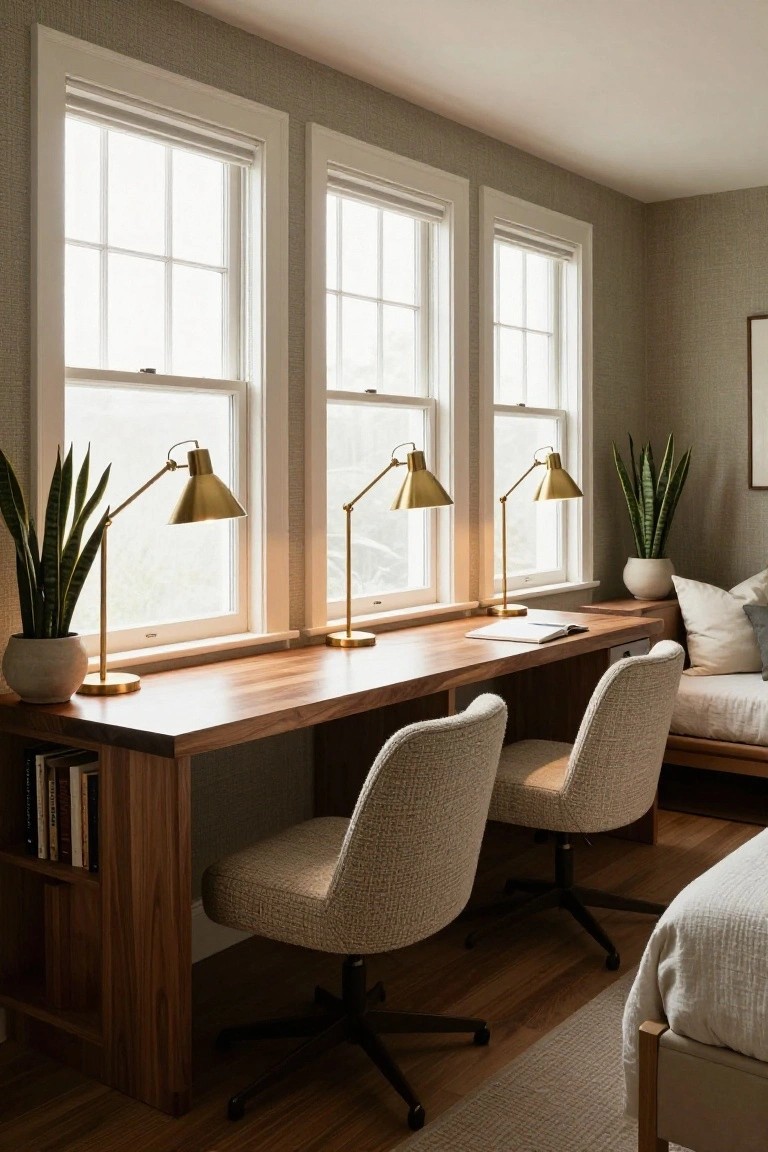
A long wooden desk built right along the window wall works great for two people sharing a home office. The walnut finish keeps it warm and sturdy, while the big windows let in tons of natural light to cut down on eye strain during long workdays. Pair it with simple gold lamps and a couple snake plants for that easy, lived-in feel.
This kind of setup fits best in spare bedrooms or nooks where you want work and rest to blend without taking over the room. Go for chairs with good swivels so you can turn away from the desk easily. It suits transitional homes that mix wood tones with neutral walls… just make sure the desk depth leaves room to walk behind.
Dark Bookshelves Around a Walnut Desk
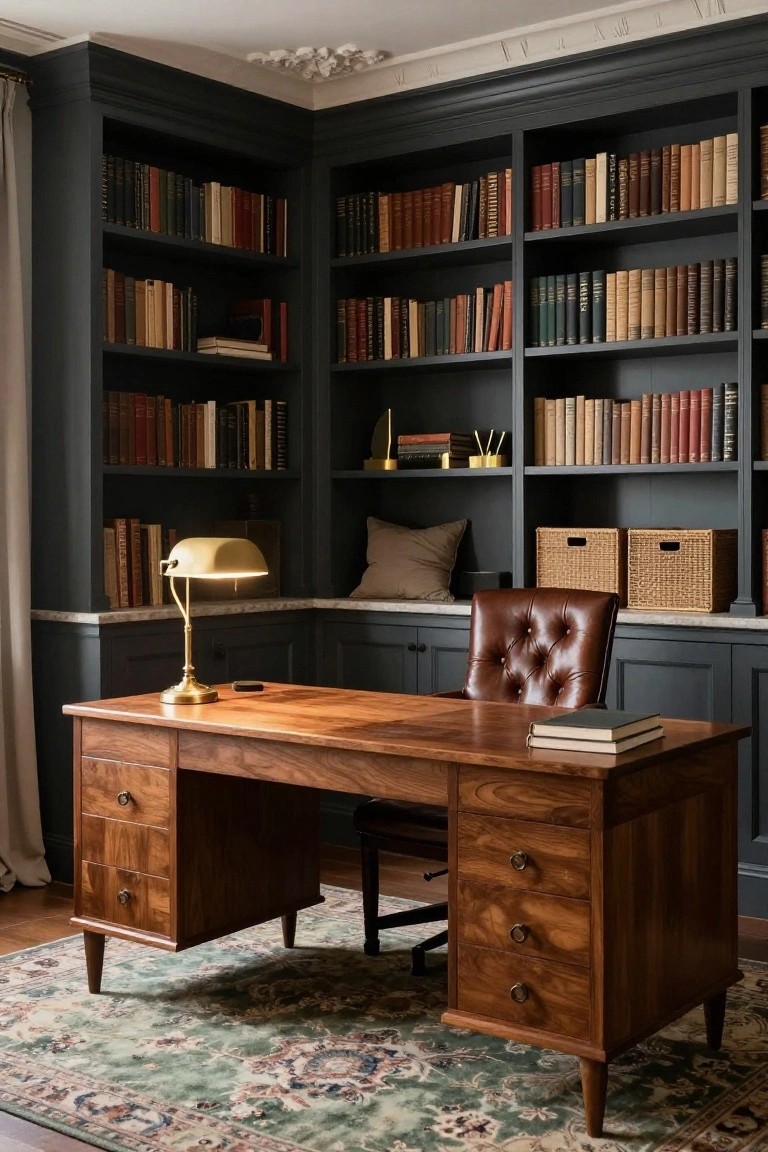
Dark built-in bookshelves line the walls here, packed with leather-bound volumes that give a real library feel. But the walnut desk in the center pulls it together. That rich wood tone warms up the moody charcoal cabinets without overwhelming the space. It’s a simple switch from matching dark furniture.
Try this in a home office or study with paneled walls. The desk works best as the main piece, maybe with a leather chair like the buttoned one shown. It suits older homes or apartments wanting that transitional look. Just keep shelves full but not cluttered to avoid a dusty vibe.
Natural Wood Desk and Rattan Chair Setup
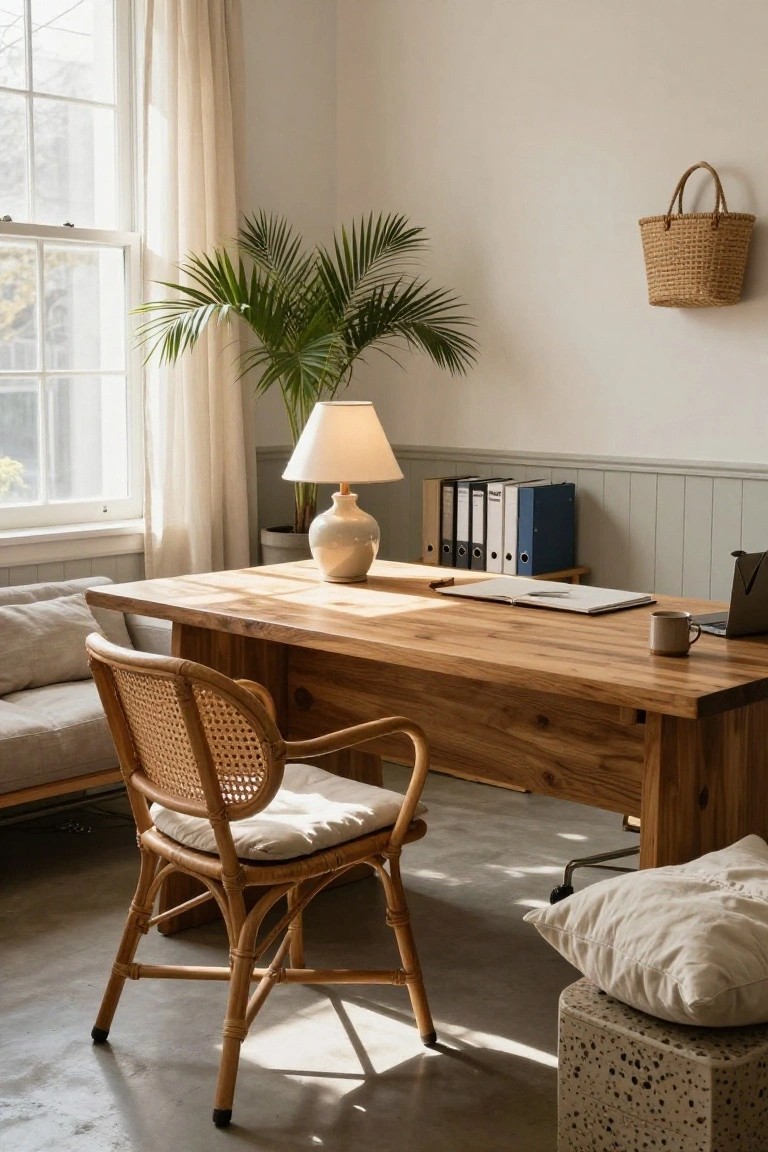
A solid wood desk like this one gives your home office a sturdy base for work. Pair it with a rattan chair, and you get that easy comfort right away. The wood feels warm and real. The rattan keeps things light and breezy. Sunlight coming through the window ties it all together nicely.
This works best in rooms with good natural light. It suits apartments or older homes where you want a calm spot to focus. Just add a tall plant nearby for some green. Skip heavy cushions if you like the simple look. Keeps the space practical without much fuss.
Open Shelves for Storage in a Compact Office
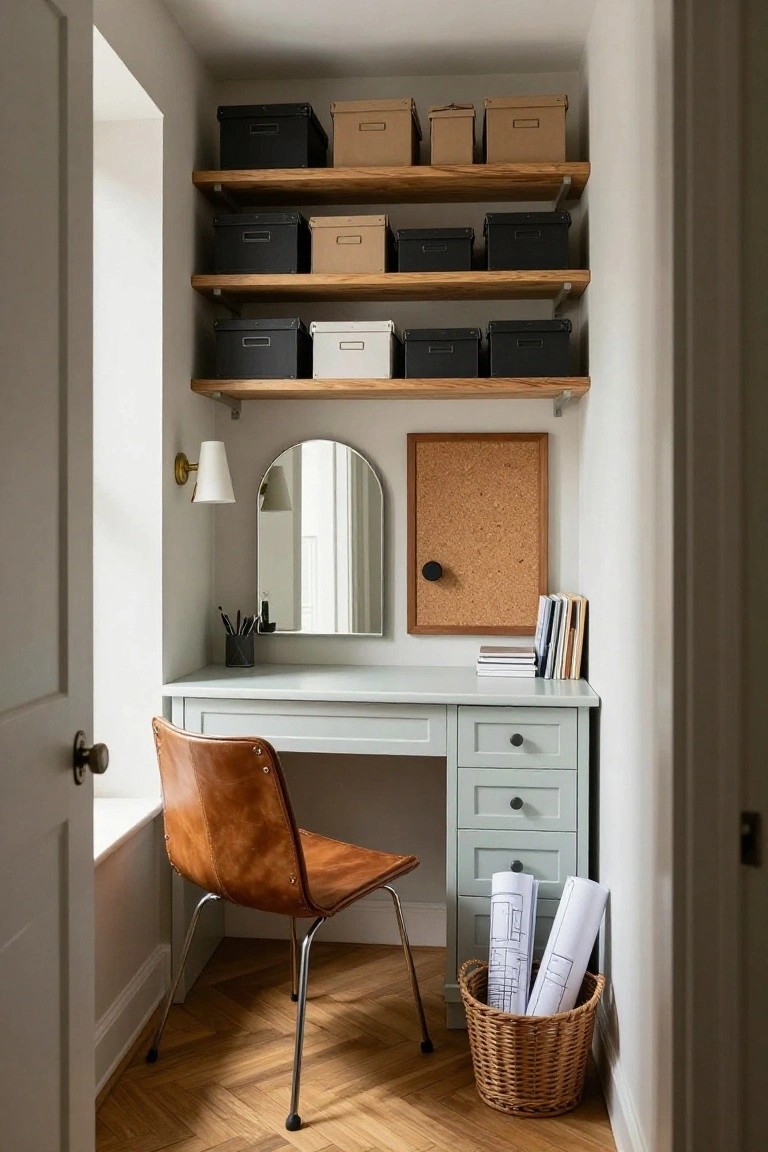
One simple way to make a tiny office space work harder is open shelving stacked with storage boxes. Here, oak shelves run up the walls of a narrow alcove, holding boxes in beige, black, and white. It keeps papers and supplies right where you need them without eating into floor space. The wood shelves add a bit of natural warmth too.
This setup fits best in small apartments or older homes with awkward nooks. Stack boxes by size for easy reach, and mix neutrals so it stays calm. Just avoid overstuffing… one neat row per shelf does the trick. Pair it with a basic desk, and you’ve got a spot for work that doesn’t feel squeezed.
Navy Hutch for Office Storage
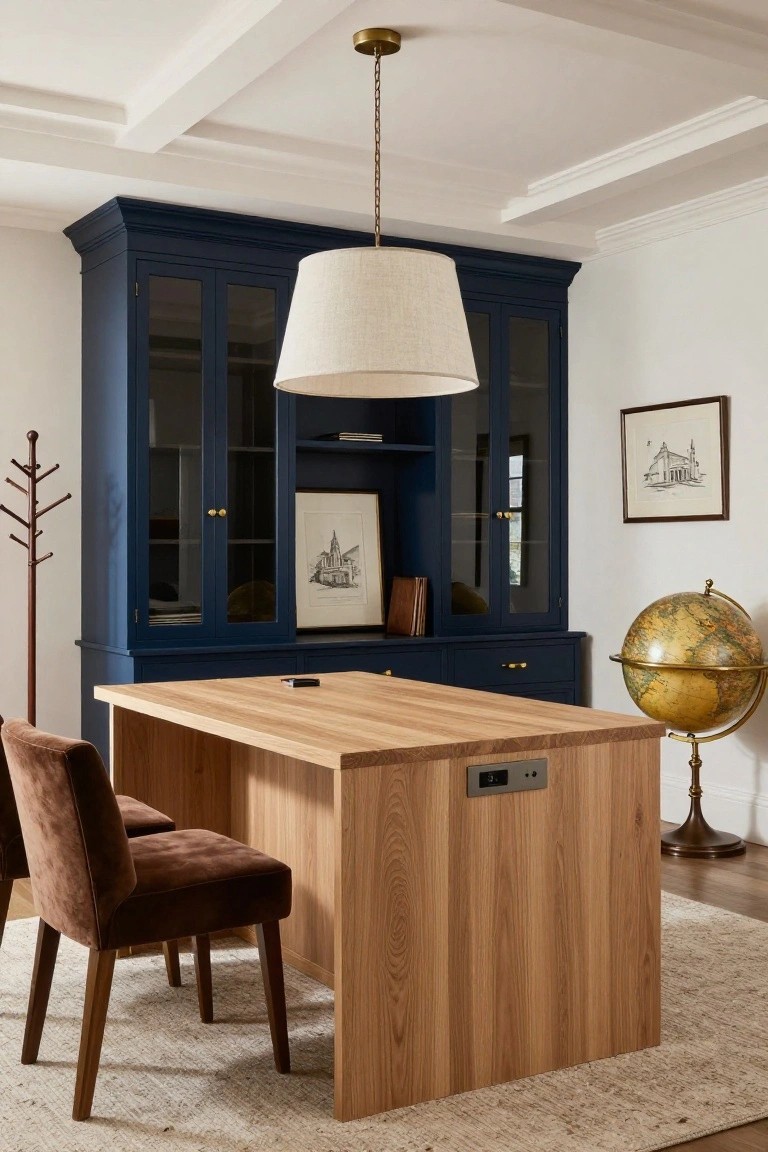
A navy hutch like this makes a solid backdrop for any home office desk. It packs in shelves and cabinets for books, papers, and small items, all behind glass doors that keep dust out but let you see inside. Paired with a simple wood desk, the dark blue adds weight without darkening the whole room.
Put one behind your workspace in a space with white walls and neutral floors. It suits transitional setups where wood and paint mix easily. Just avoid overstuffing the shelves… stick to a few frames or plants for a clean look.
Warm Wooden Desk in an Attic Office

A good wooden desk like this one turns an attic into a real workspace without much fuss. The oak surface and built-in drawers give you room for your computer, papers, and daily stuff, all tucked under the sloped ceiling. That leather chair pulls up nice and fits the spot perfectly for sitting long hours.
This kind of setup suits older homes with unused attics or any tight upstairs room. Keep the walls white and add a lamp for evenings. It keeps things practical… just watch the headroom near the slope.
Glass Partition Creates Flexible Office Nook

A simple glass partition with black metal frames sets off this home office without blocking light or views. The wooden desk and chairs inside add a natural touch against the rough concrete wall. It strikes that balance between focused work space and easy connection to the rest of the home.
This works well in lofts or open areas where you want privacy but not isolation. Use it for a desk setup with two chairs, maybe a lamp and a few plants. Just make sure the glass doesn’t make echoes, and keep furniture to warm woods so it stays comfortable.
Built-In Cabinets Around the Desk

One smart way to set up a home office is with built-in cabinets that wrap right around the desk. Here the soft blue cabinets have louvered doors on one side and open shelves on the other. It keeps papers, books, and supplies close at hand. Plus that corkboard pinned with fabric swatches turns it into a real work zone for design ideas.
This kind of setup fits nicely in a spare bedroom or alcove. The cabinets make the space feel contained and less like it’s taking over the room. Go for painted wood to keep it light. Add a leather chair for comfort during long hours. Just measure twice before building to match your spot.
Under-Stair Home Office Built-In

Tucking a workspace under the stairs is a smart way to grab extra room without eating into main living areas. The built-in desk slides right into that tight angle, with open wood shelves above for books and files. A strip of LED lighting keeps it bright and focused, even in a dim spot.
This works best in townhouses or older homes where stairs take up prime floor space. Go for matte black or dark gray walls to make the nook feel intentional, not cramped. Pair it with a simple swivel chair that rolls easy. Just measure twice before building, since those angles can trick you.
Window Seat Desk Setup
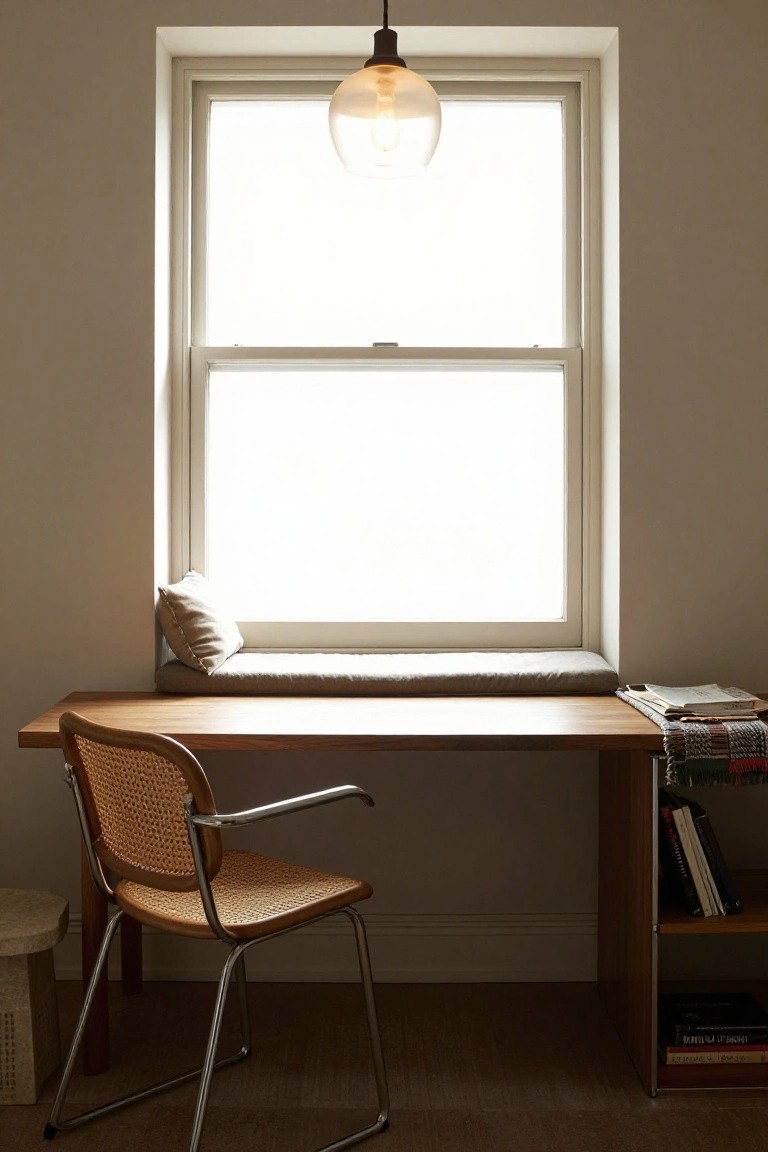
One smart way to fit work and rest into a small office is building a desk right along a window seat. The cushioned bench gives a spot to sit and think, while the desk surface pulls double duty for your computer or papers. Natural light floods in, keeping the space bright without extra lamps most of the day. That wood desk and simple rattan chair keep it practical.
This works best in rooms with tall windows facing good light. It suits transitional homes that mix old trim with everyday furniture. Just add a throw blanket on the seat for comfort, and use the nearby shelves for books you actually reach for. Avoid cluttering the surface… keep it clear for focus.
Traditional Wood Desk Centers Home Offices

A traditional wood desk like the one here makes a strong case for keeping things classic in your home office. With its burled grain and brass pulls, it brings real warmth to pale gray paneled walls. Family photos nearby keep it from feeling too formal. Folks working from home seem to settle in better around something substantial like this.
Hunt for desks with deep drawers on both sides. They suit rooms with built-in bookshelves or windows for light. This setup fits older homes or apartments needing a touch of history. Skip anything too shiny. Let the wood patina over time.
Glass-Walled Office with Warm Wood Desk

A simple wooden desk pushed up to a glass partition makes a clean work zone without shutting out the rest of the house. The oak finish brings some needed warmth to the sleek glass and soft gray walls. That mix keeps things feeling modern but comfortable for daily use.
This works well in open apartments or homes with extra space to spare. Go for a desk with built-in drawers and a low stool to stay streamlined. Add one plant or runner for life, but keep the walls neutral so the wood stands out.
Sage Green Built-In Desk and Shelves
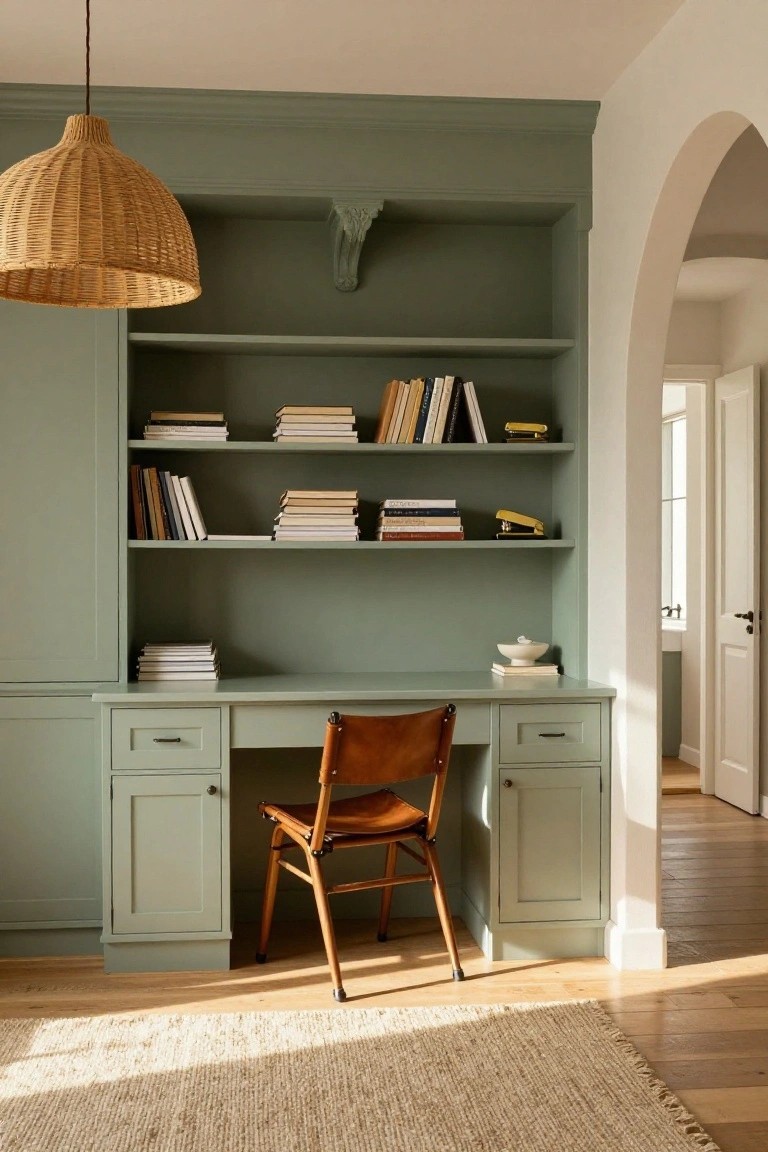
Painted built-ins like this sage green setup turn a simple desk area into real storage that doesn’t shout. The shelves hold books without crowding the space, and drawers below keep papers out of sight. That soft green tone calms things down, especially next to wood floors and a leather chair. It fits right into transitional style, mixing old wood details with fresh color.
You can pull this off in a home office nook or bedroom corner. Pick a muted green like this for walls or trim nearby, then add open shelves for books you use. Watch the scale, though. Too deep a color might shrink a tiny room… stick to light from a window or lamp to keep it bright.
Dark Built-In Bookshelves for Home Offices
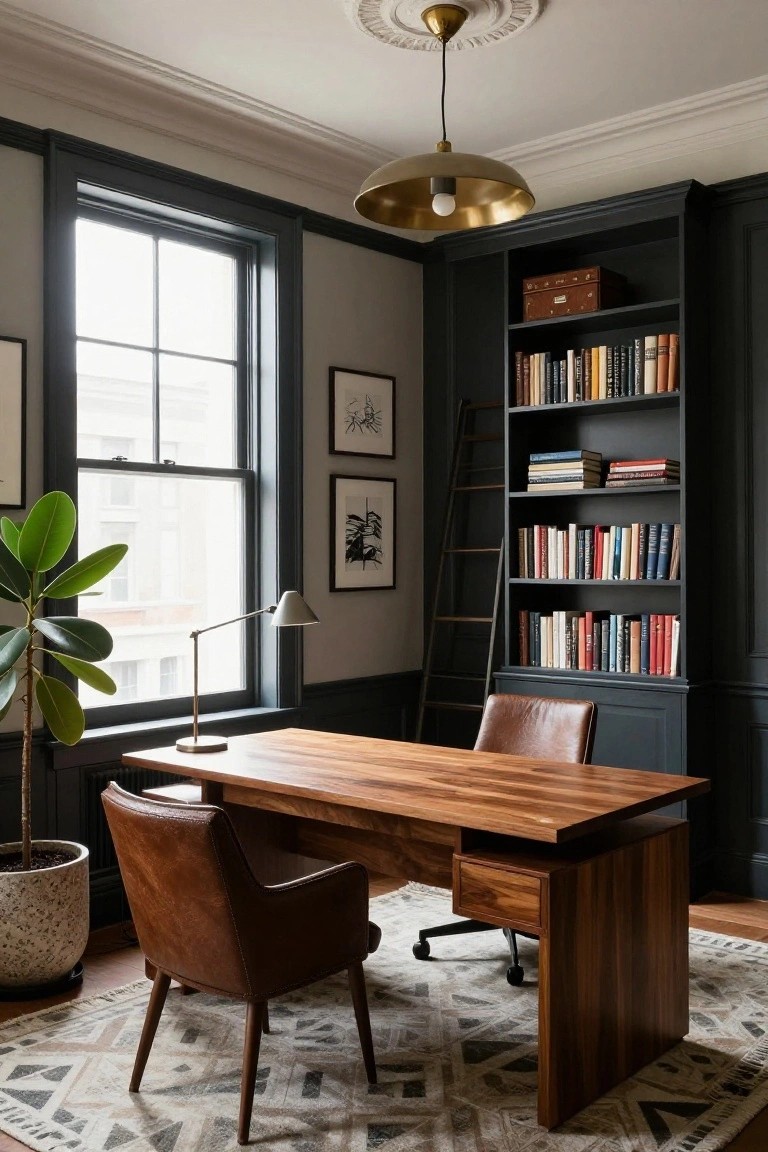
Dark built-in bookshelves turn a plain home office into something with real character. Here, they’re painted deep navy and stretch up to the ceiling with a simple wooden ladder for easy access. They hold books, boxes, and a few decorative pieces without taking up floor space. That leaves room for a sturdy walnut desk right in front.
This works well in rooms with good natural light from a big window. Pick a contrasting wood desk and leather chair to keep it from feeling too heavy. It’s perfect for homes that mix old-school charm with everyday work needs… just measure twice before building in.
Frequently Asked Questions
Q: How do I mix old and new furniture without it looking messy?
A: Start with one statement piece, like a vintage wooden desk, and pair it with sleek modern shelves.
Stick to a neutral palette that ties everything together. You end up with that perfect blend of cozy and crisp.
Q: What’s a quick way to add comfort to a transitional office setup?
A: Toss in a plush area rug under your desk. It softens the floor and warms up the room instantly. Your feet will thank you during long workdays.
Q: Can I use bold colors in this style?
A: Go for it on small accents like a throw pillow or artwork.
Balance them with plenty of neutrals elsewhere. The drama stays fun, not overwhelming.
Q: How do I keep my desk area functional yet stylish?
A: Hide cords with fabric covers or tucked trays. Add a single tray for daily essentials. Everything looks intentional and ready for work.
