

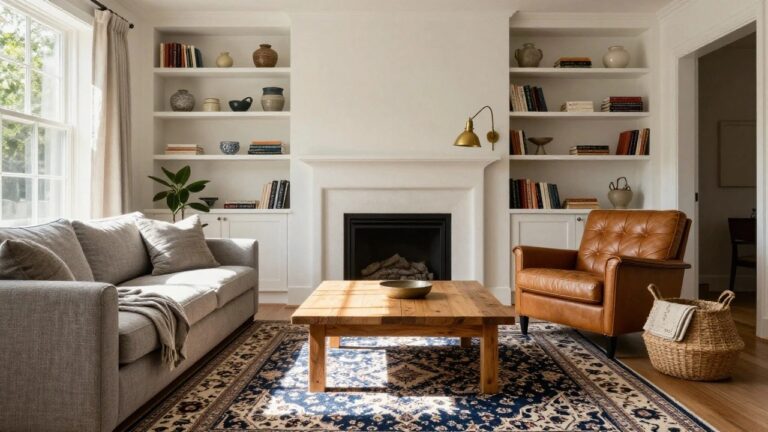
I’ve noticed how a well-chosen rug in transitional rooms instantly grounds the mix of clean lines and soft textures that define the style. It shapes the way furniture sits and people navigate, turning a collection of pieces into a space that actually works for daily life. In my own family room, I once added a low-pile rug with subtle patterns, and it balanced the leather chairs against the wood side tables without any fuss. Rugs pull the eye first on bare floors. The ideas here give you grounded options to adapt, the sort that make a home feel settled over time.
Persian Rugs in Neutral Living Rooms
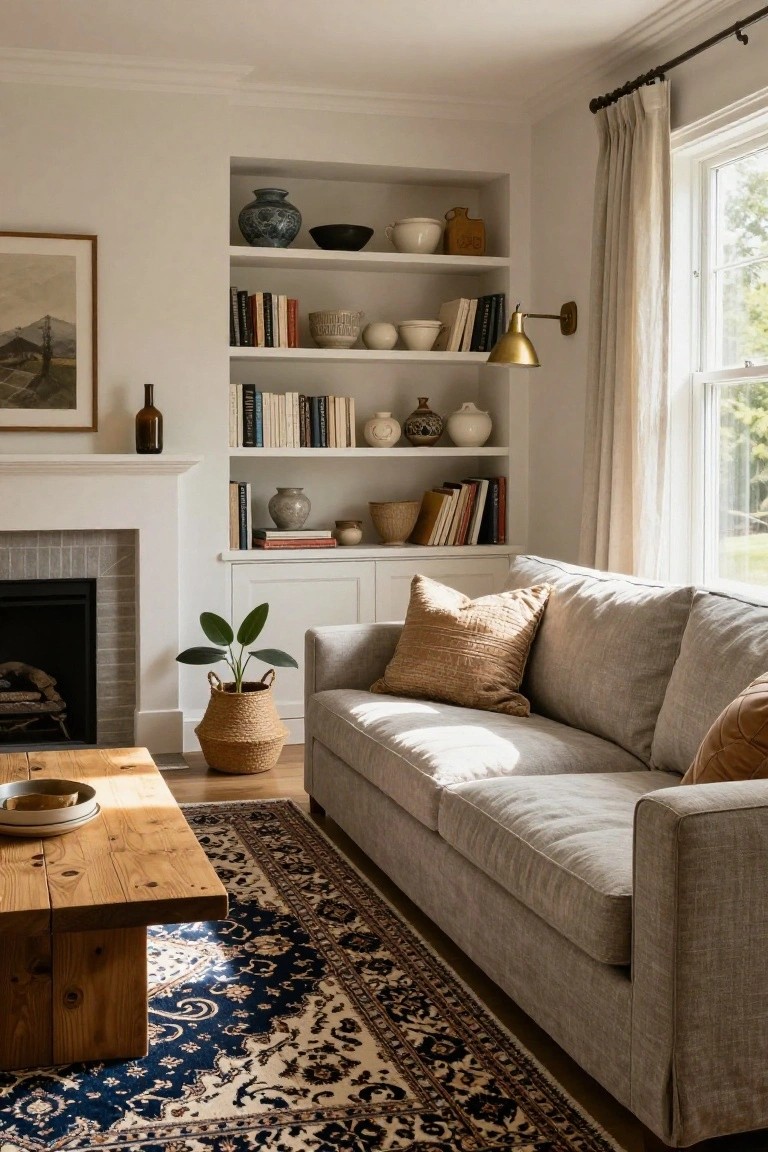
A blue and cream Persian rug anchors this transitional living room. It sits under the wood coffee table and gray sofa, bringing subtle pattern to white walls and simple shelves. The rug echoes the warm wood and pottery without clashing.
This approach fits airy spaces with light furniture. Position the rug to extend beyond the sofa front, leaving some floor visible. It works in older homes updated with modern pieces… just pick a rug sized right for the seating area.
Neutral Rugs in Transitional Bedrooms
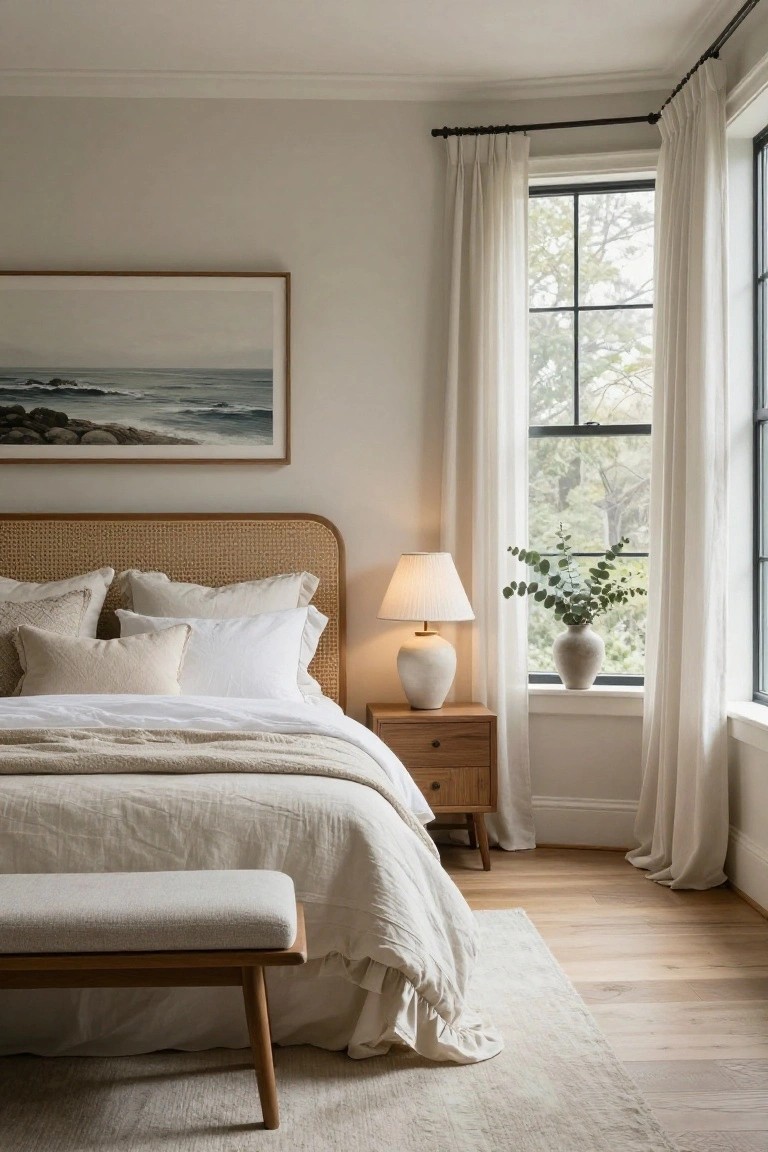
A light neutral rug like this one works quietly in a transitional bedroom. It sits under the bed and bench on those warm wood floors, pulling the cane headboard, linen bedding, and side table into one calm flow. Nothing flashy. Just enough texture to feel settled without weighing down the soft walls and sheers.
Try it in a main bedroom or guest space where you want easy mornings. Go for flatweave or low-pile in pale beige or off-white to match oak floors and light wood pieces. Skip anything too busy… it could crowd the quiet look. Fits older homes updating to something relaxed.
Jute Rugs Under Dining Tables
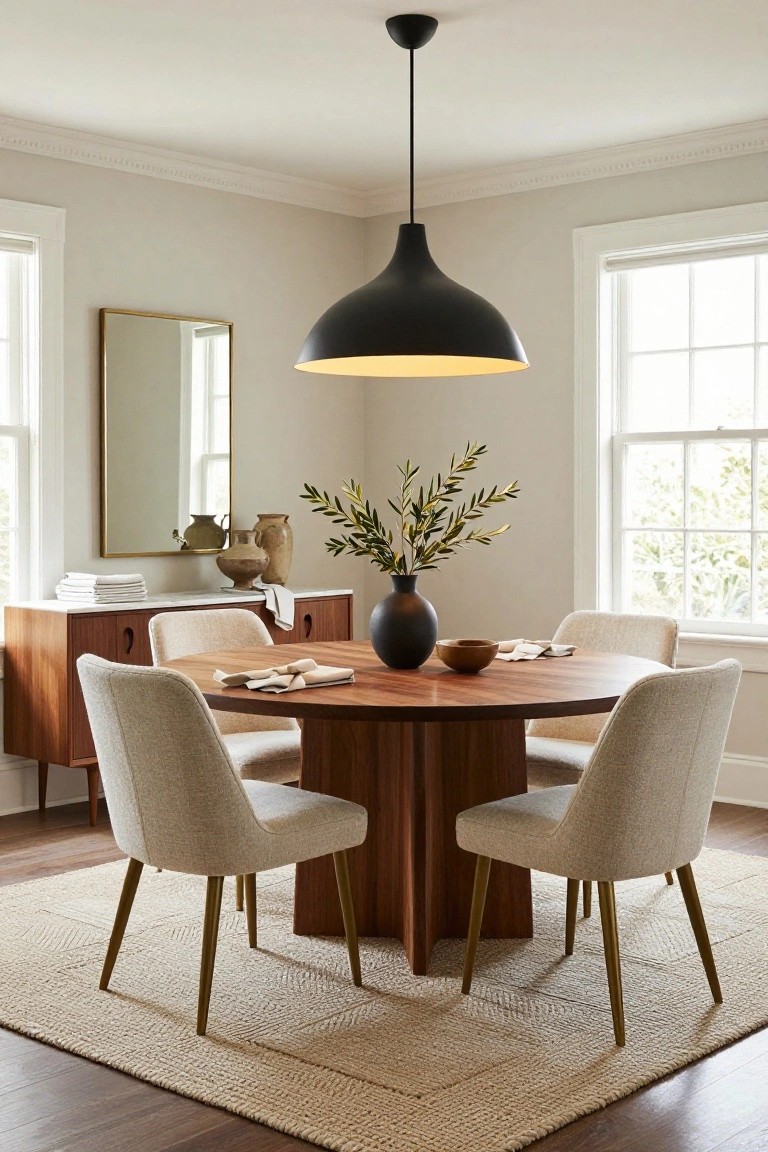
A light jute rug works nicely here under a round walnut table and cream chairs. It picks up the warm wood tones without competing with them. The texture adds a bit of casual feel to the clean lines of the chairs and that black pendant light.
This kind of rug fits best in dining rooms with neutral walls and wood furniture. Lay it so the table sits mostly on it, chairs can scoot back a little. It keeps things grounded in transitional spaces… just avoid super dark rooms where it might fade.
Marble Console with Rattan Bench
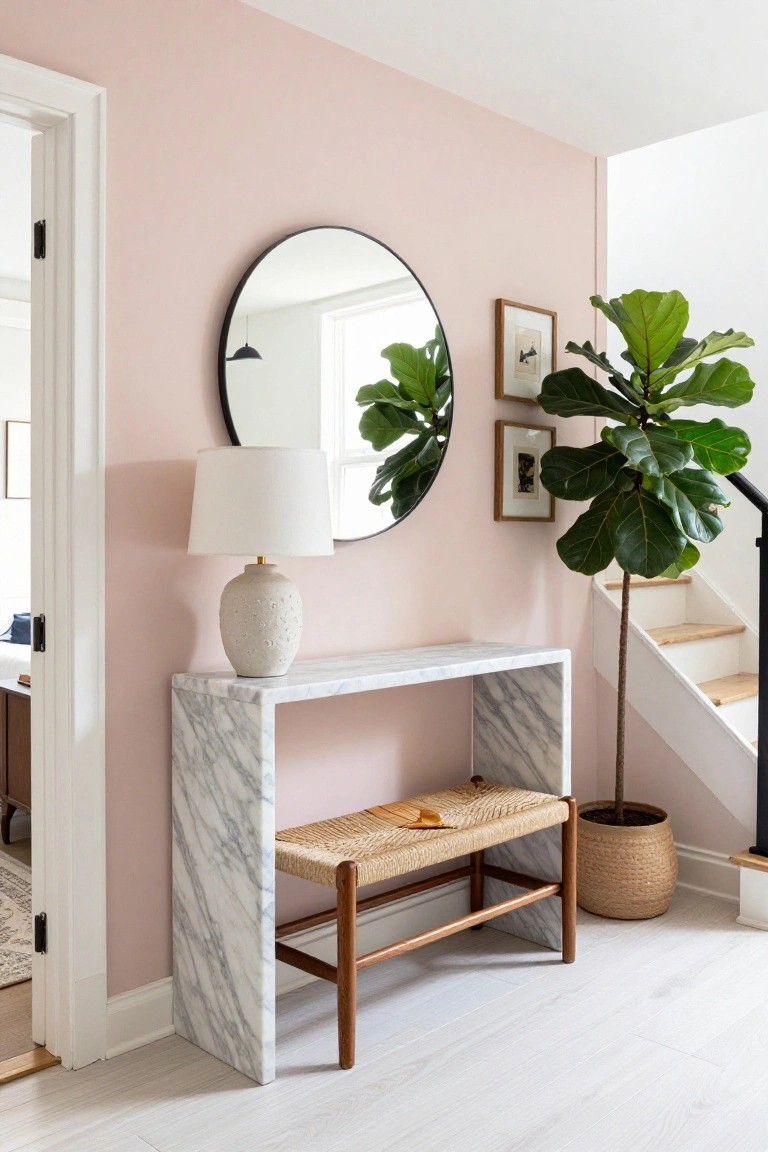
A slim white marble console sits nicely against a blush pink wall in this entryway setup. Paired with a simple round mirror and textured ceramic lamp on top, plus a rattan bench tucked underneath, it mixes cool stone with warm woven texture. That contrast feels transitional right away, keeping things light but put-together.
Try this in a hallway or front entry where space is tight. It suits older homes with wood floors… just add a low-pile rug underneath to soften the hard surfaces and connect the area to the next room. Watch the scale so the bench doesn’t crowd foot traffic.
Patterned Rugs in Wood Home Offices
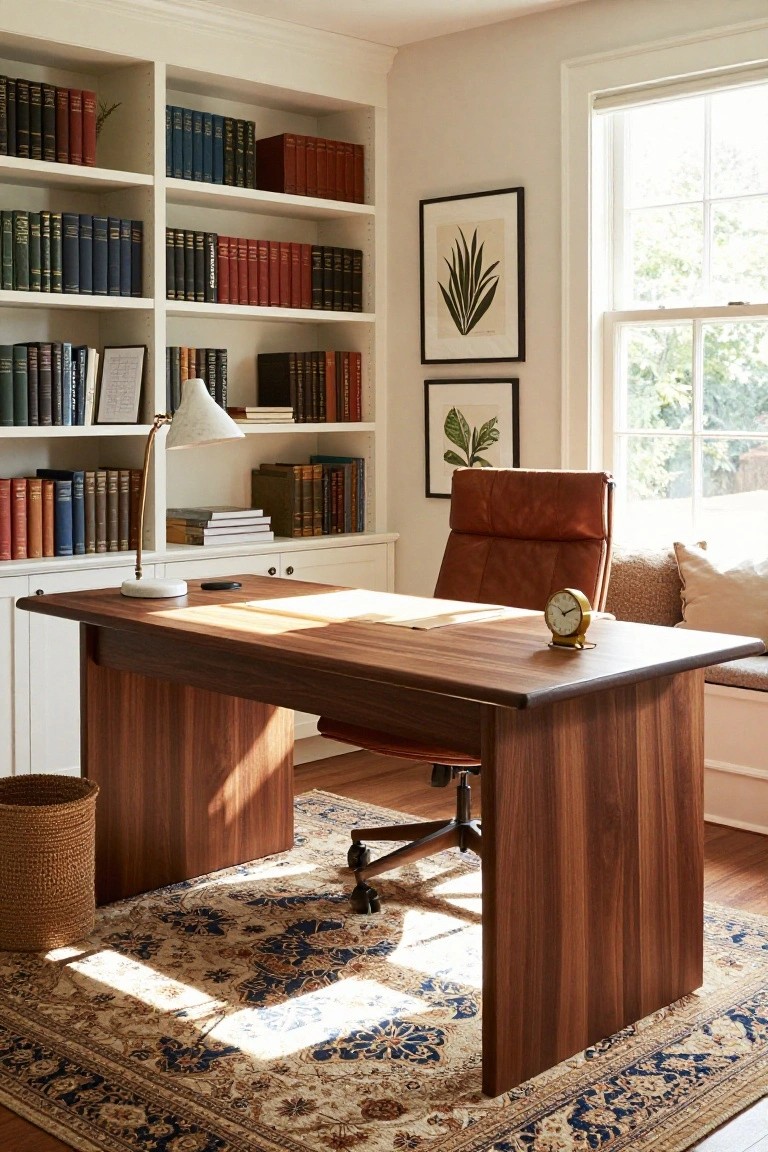
A Persian-style rug like this one pulls together a room full of warm walnut wood. You see it here under a simple desk and beside leather chairs, where it repeats the browns from the furniture but throws in soft blues and creams. That bit of pattern keeps the space from feeling too heavy with all the bookshelves and dark tones. It’s a quiet way to add interest without much fuss.
Put one in your own office or study, especially if the walls and built-ins are light and the furniture leans woodsy. Go for rugs with worn-in colors so they don’t fight the natural light. Skip anything too bright unless your room gets dim most days. This setup fits homes that mix old books with newer pieces.
Patterned Rugs Warm Blue Nurseries
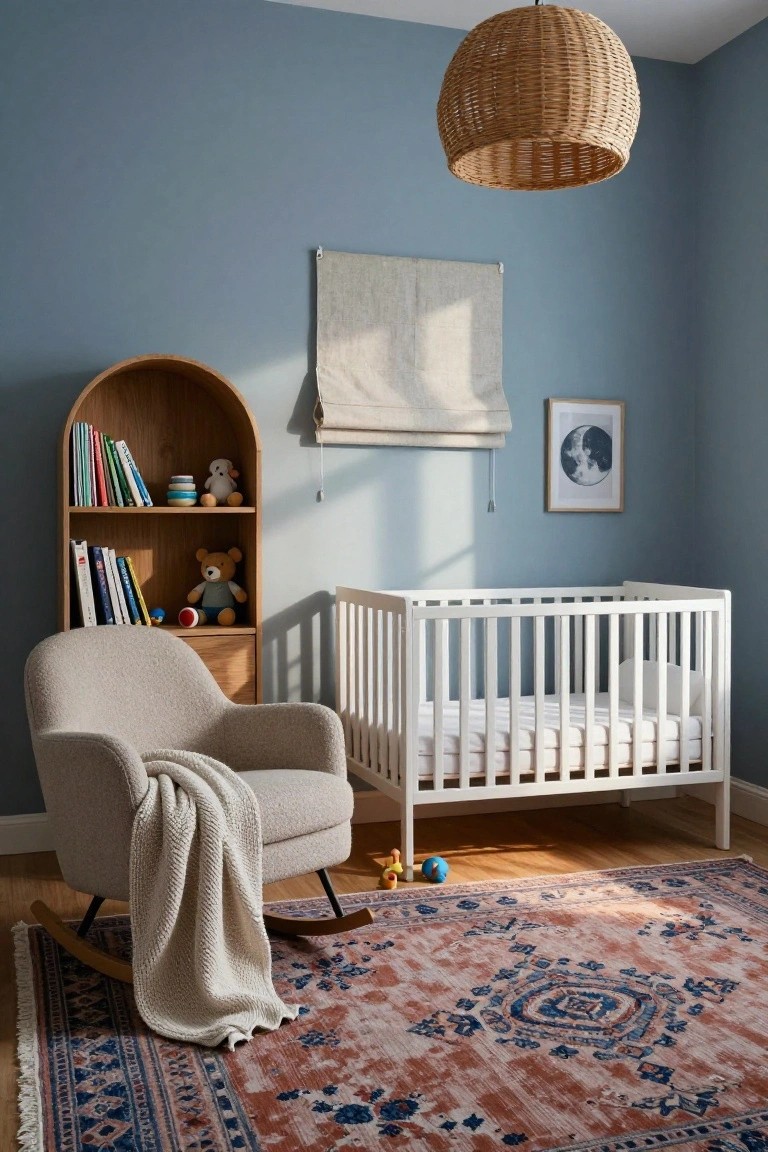
A rug like this one, with its terracotta reds, navy blues, and soft creams, sits right under the crib and rocking chair. Against pale blue walls and natural wood shelves, it quietly links everything up. The pattern adds some life without busying the calm nursery feel.
These work best in family homes where you want kid-proof floors that still look put-together. Go for wool or low-pile blends that handle toys and spills. Size it to leave a wood border around the edges… keeps the room from feeling crowded.
Seagrass Rugs in Kitchen Dining Areas
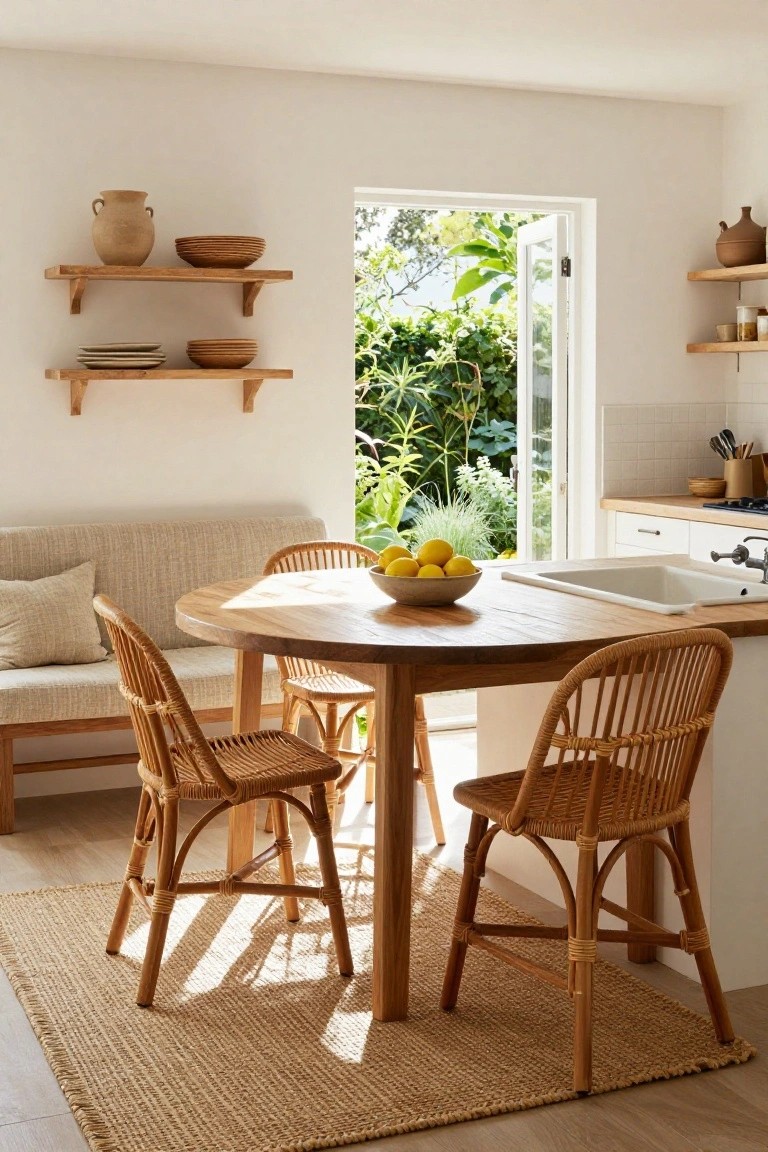
A seagrass rug like this one sits right under a round wooden table and rattan chairs. It picks up the natural tones from the furniture and the garden view through open doors. These rugs add a bit of texture without overwhelming a light kitchen. They keep things feeling casual and connected.
Try one in a transitional kitchen where you want to soften wood floors. It works best in smaller dining spots next to counters. Just make sure it’s a low-pile style so chairs slide easy… and vacuum it now and then to handle kitchen traffic.
A Rug on the Bathroom Floor
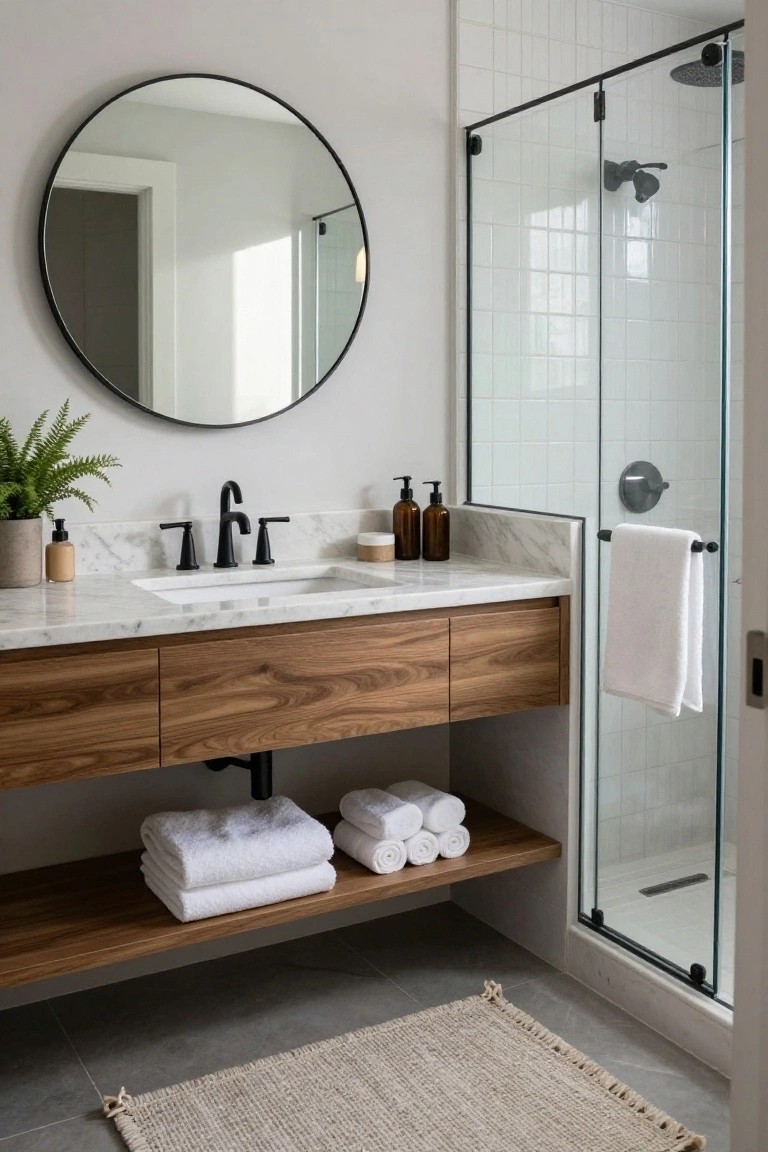
This bathroom uses a simple light rug right on the tile floor to break up the hard surfaces. You see the gray tiles everywhere, the marble countertop on that floating wood vanity, and the glass shower walls. The rug, with its fringe and neutral tone, fits without stealing focus. It just makes the space feel less echoey and more lived-in.
Tile floors are practical but can feel cold, so layer a rug like this one in modern or transitional bathrooms. Go for low-pile natural fibers that handle moisture okay. It suits open layouts with vanities or open shelves. Skip dark colors though. They show dirt fast.
Patterned Rugs Anchor Transitional Living Rooms
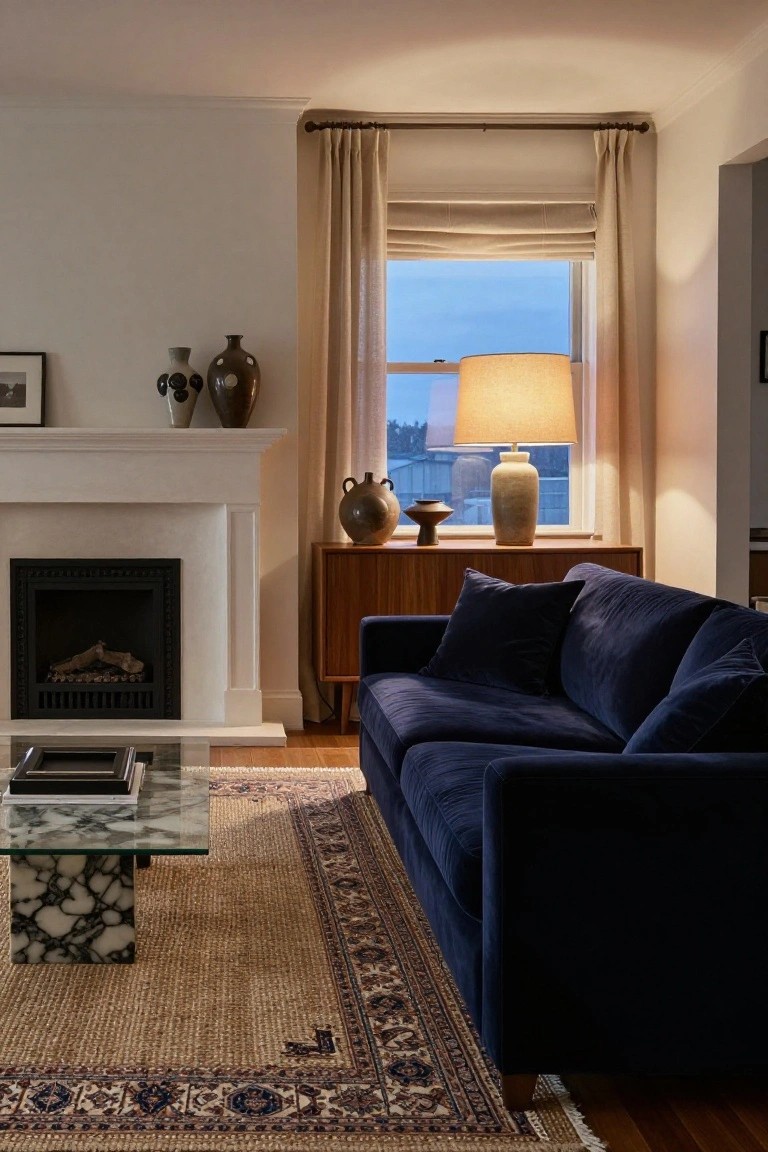
One simple way to make a transitional living room feel put together is with a good patterned rug. You see it here under the navy sofa and glass table. The rug’s blues and reds pick up the wood tones from the credenza and add some life without overwhelming the neutral walls and white fireplace. It keeps things from looking too plain.
These rugs work best in open living areas where you want a bit of tradition mixed with newer furniture. Lay one that fits just under the main pieces, leaving some floor showing around the edges. Skip super busy patterns if your room is small… they can crowd things. In a space like this, it just settles everything in place.
Neutral Rugs Warming Dark Bedrooms
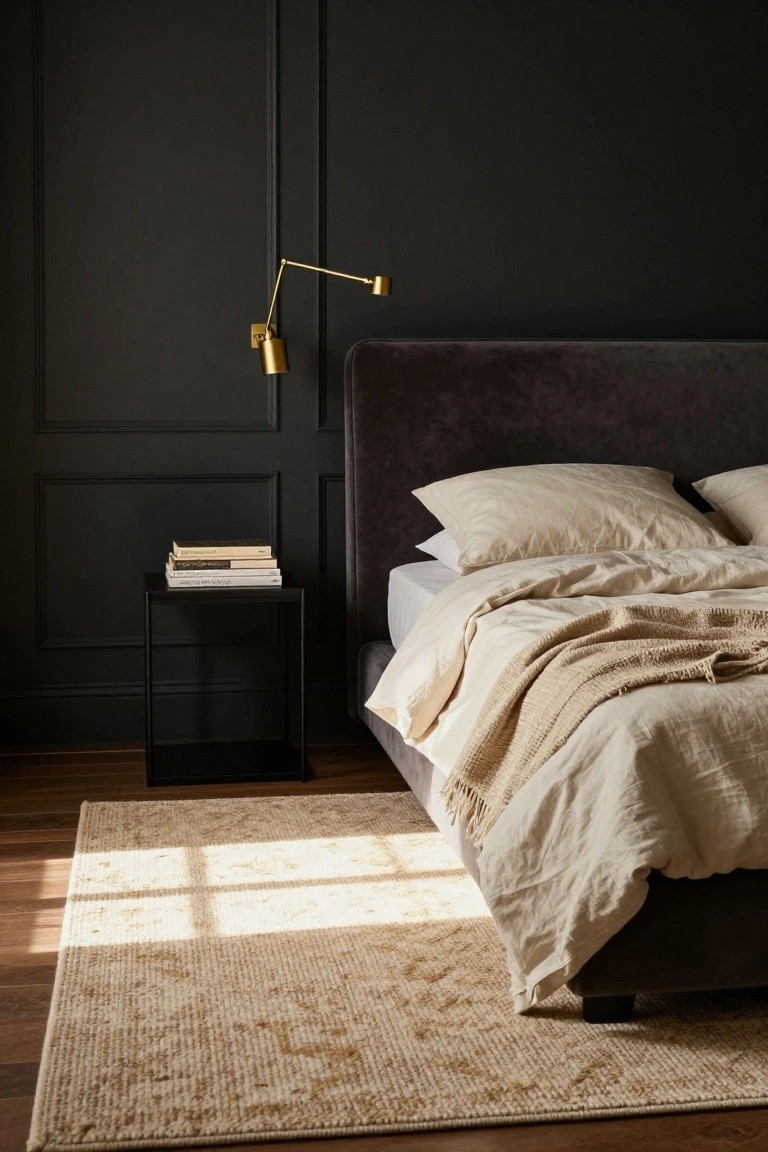
A pale neutral rug like the textured cream one here makes a real difference in a bedroom with dark walls. It sits quietly under the bed on the wood floor, picking up the soft linens and sunlight without overwhelming the moody vibe. That simple contrast keeps things from feeling too heavy.
This setup works best in transitional spaces where you want calm over drama. Go for a flatweave or lightly knotted rug in beige tones. It suits most bedrooms, especially with black or charcoal walls… just make sure the rug is large enough to extend beyond the bed frame.
Oriental Rugs in Transitional Dining Rooms
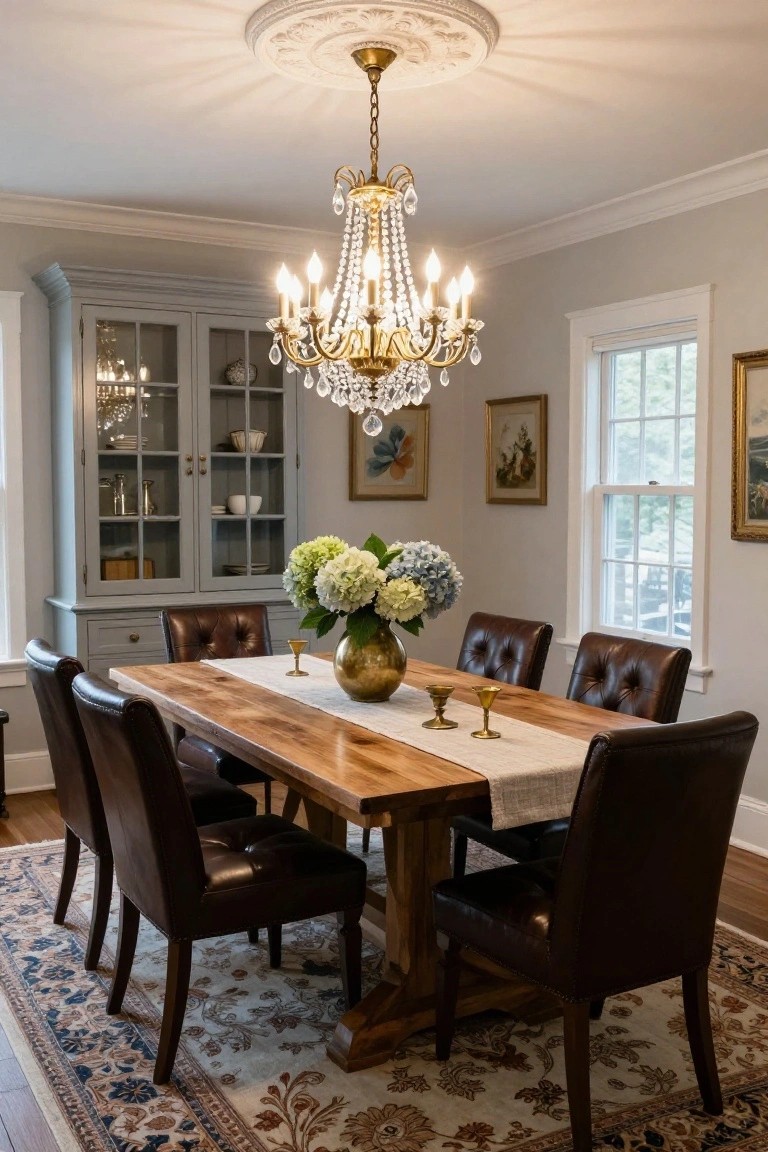
A traditional oriental rug like this one fits right into a dining room that mixes old and new. The blue and cream pattern picks up on the leather chairs and wood table without overwhelming the space. It adds some pattern and texture that makes the gray walls and chandelier feel more connected.
This setup works well in homes with painted cabinets or artwork on the walls. Go for a rug big enough so the chairs stay mostly on it when pulled out. It suits formal dining areas that need a bit more warmth… just avoid super busy patterns if your room already has a lot going on.
Round Seagrass Rug Under a Plush Armchair
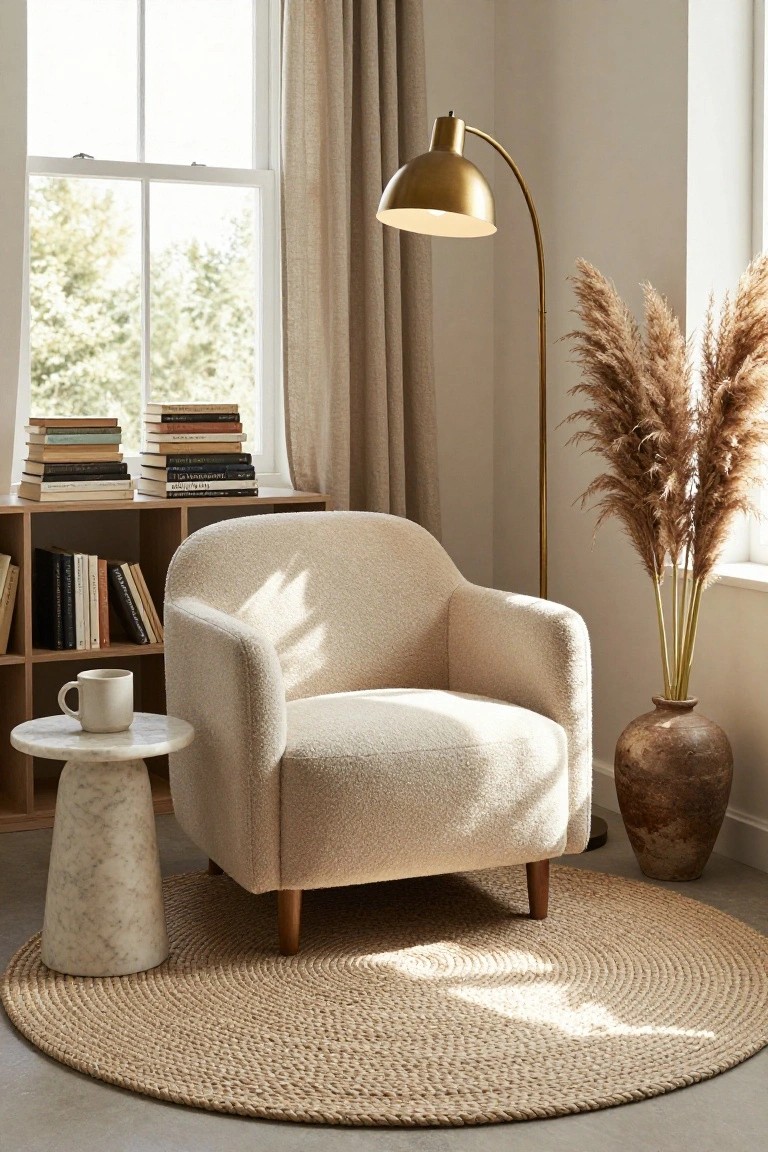
A round seagrass rug does a nice job here under the cream bouclé armchair. It brings in that woven texture against the smooth chair fabric and marble side table, tying the whole corner together without much fuss. The natural tones pick up the wood shelves and pampas grass, keeping things calm and layered in a light room.
Put one like this in any quiet spot, like a living room nook by the window or even a home office chair area. It suits transitional setups with soft neutrals and wood. Go for a size that lets the chair legs rest fully on it… otherwise it looks off. Keeps the floor from feeling empty too.
Natural Rugs for Laundry Rooms
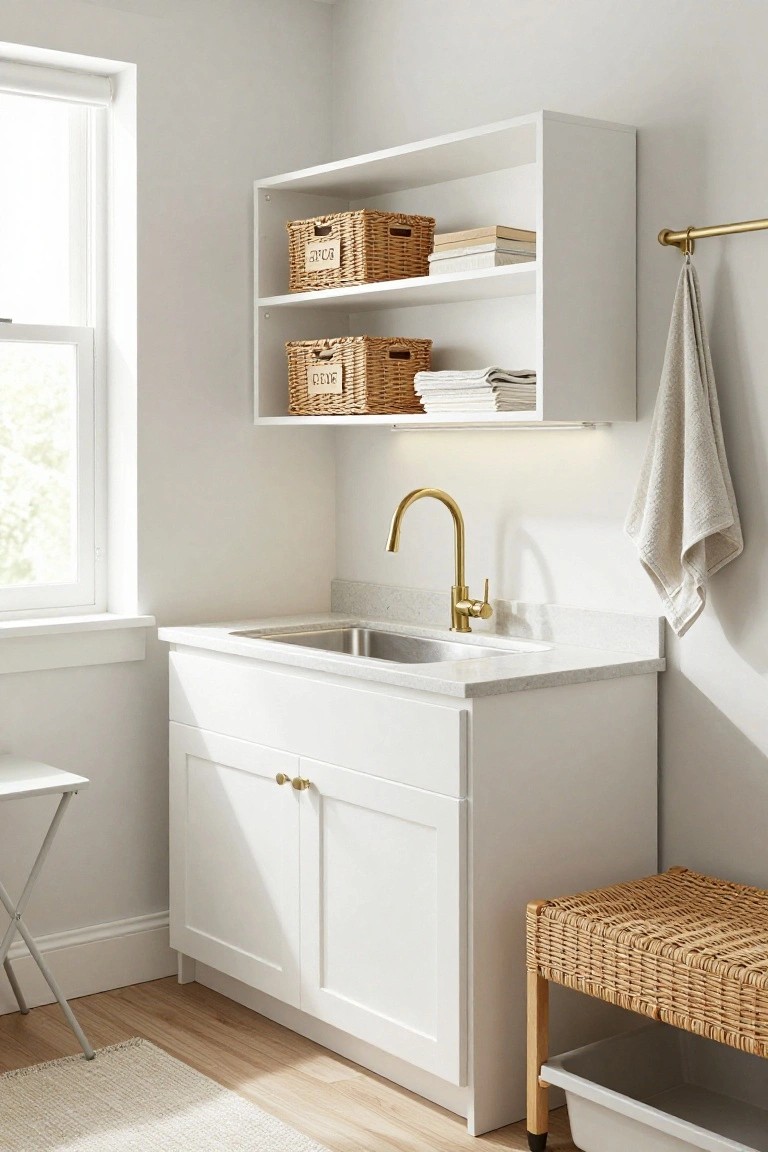
A simple woven rug like this one adds a bit of texture right where you need it most, on the hardwood floor by the stool. It picks up on the wicker baskets up above without taking over the clean white cabinets and sink. Folks like how it makes a workhorse room feel more lived-in, especially in transitional homes that blend crisp lines with natural bits.
Put one down in your laundry or mudroom if the floor feels too hard underfoot. Go for a light color in seagrass or jute that sheds dirt easily. It suits smaller spaces best, and just watch that it stays dry enough around the sink.
Striped Rug in a Small Bathroom
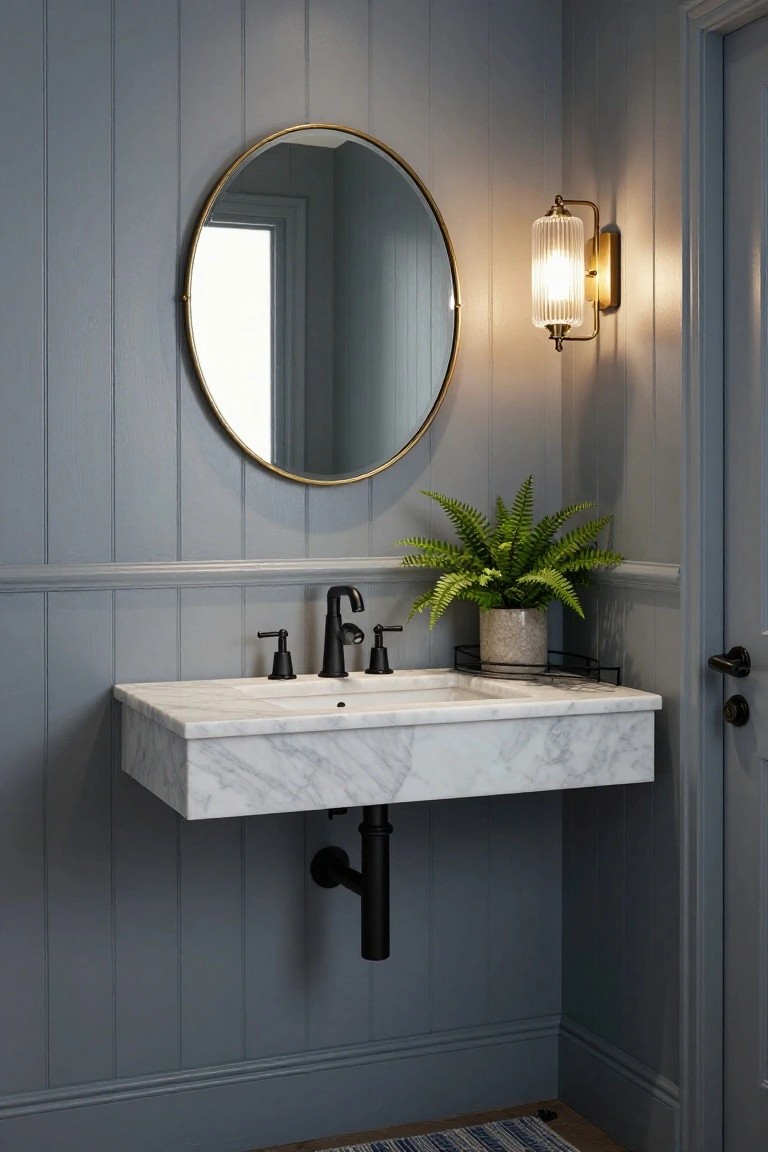
A simple blue and white striped rug sits right at the base of this powder room setup. It picks up the soft blue on the shiplap walls without pulling focus from the clean marble vanity or the black fixtures. That little bit of pattern keeps things from feeling too plain. It adds just enough interest to make the space feel finished and lived in.
Try this in a small bathroom or powder room where you want subtle texture on the floor. It works best with cooler wall colors like gray blue. Stick to thinner stripes so it doesn’t crowd the room. Pair it with a floating sink to keep the floor open. Just measure your space first. A rug that’s too big can trip you up.
Patterned Rugs in Home Offices
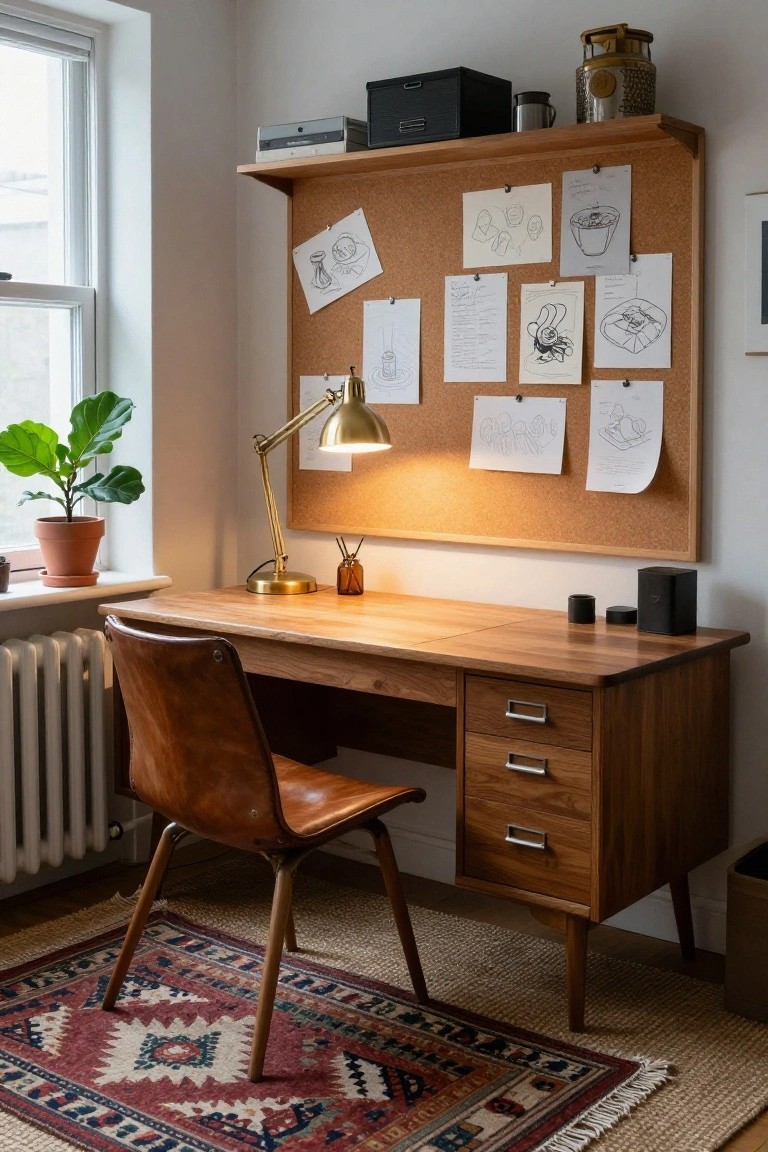
A good patterned rug can turn a simple desk setup into something more lived-in and comfortable. Here, the red and navy rug picks up on the wood tones of the desk and chair while adding its own bit of pattern against the plain walls and corkboard sketches. It makes the space feel pulled together without much effort.
This works well in transitional home offices where you have a mix of wood furniture and casual touches. Lay the rug so the front legs of the chair sit on it, leaving room to scoot back. It’s great for apartments or small studies, but pick a low-pile one if you roll around a lot. Keeps things practical.
Neutral Rugs Grounding Transitional Bedrooms
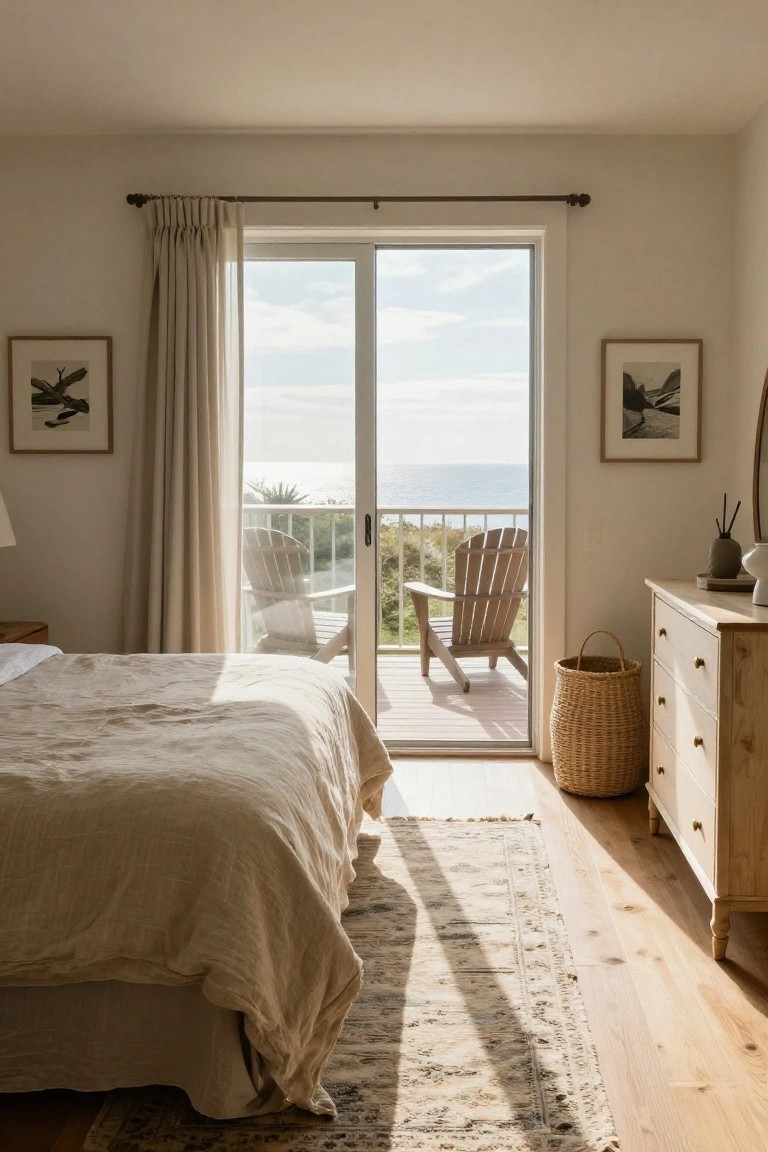
A light neutral rug like the one here does a simple job well. It sits under the bed on those oak floors, picking up the beige linens and soft walls without stealing the show. With sliding doors right there to the balcony and ocean, the rug keeps the indoor space feeling settled. No bold colors or heavy patterns to fight the view.
This setup fits transitional rooms with wood floors and big windows. Go for low-pile rugs in pale tones, maybe with a faint texture or repeat. They hide dirt better in beach houses too. Just measure for the bed area… and leave some floor showing around the edges.
Light Neutral Rugs in Transitional Living Rooms
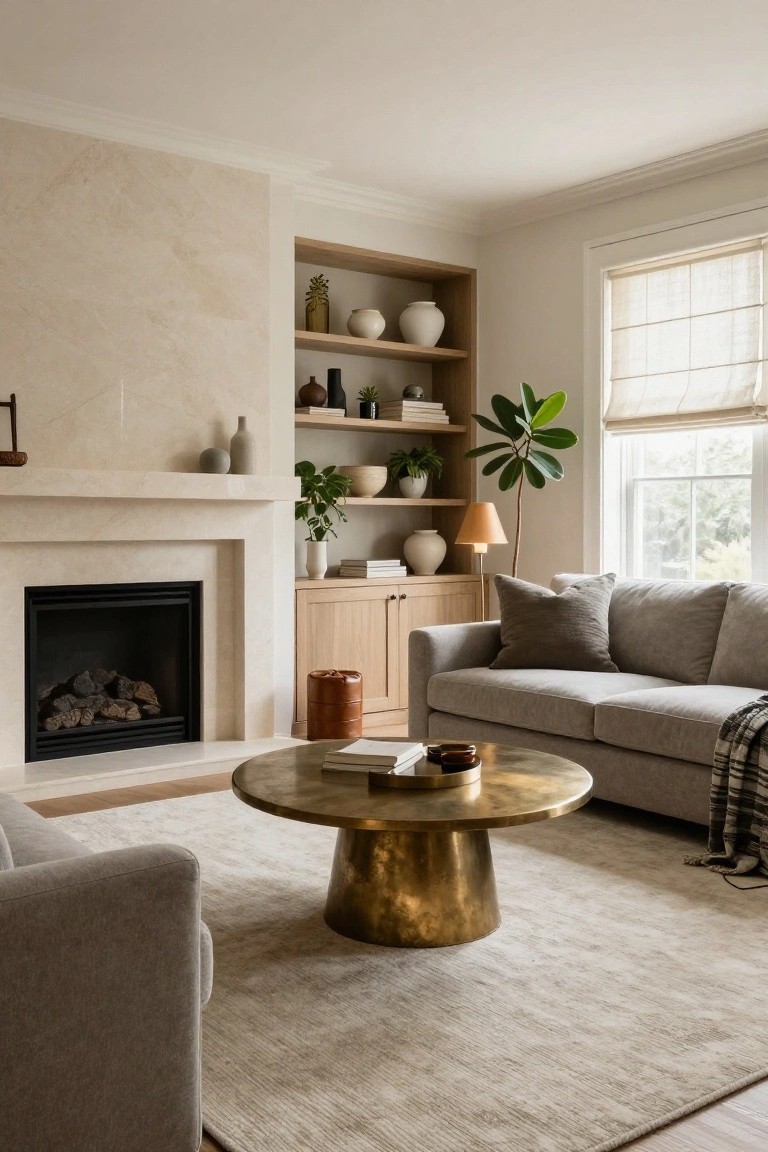
A light neutral rug like the textured beige one here sits right under the sofa and coffee table. It picks up the soft tones from the walls and fireplace without overpowering anything. In a room full of creams, grays, and wood, this kind of rug just holds the seating area together. It makes the space feel steady and calm.
Try this in any living room with a fireplace or big windows. It works best where you want to keep things airy, maybe in older homes with high ceilings. Stick to low-pile textures so it doesn’t trap dirt, and size it to fit under the main furniture only… no need to cover the whole floor.
Jute Rugs in Dining Nooks
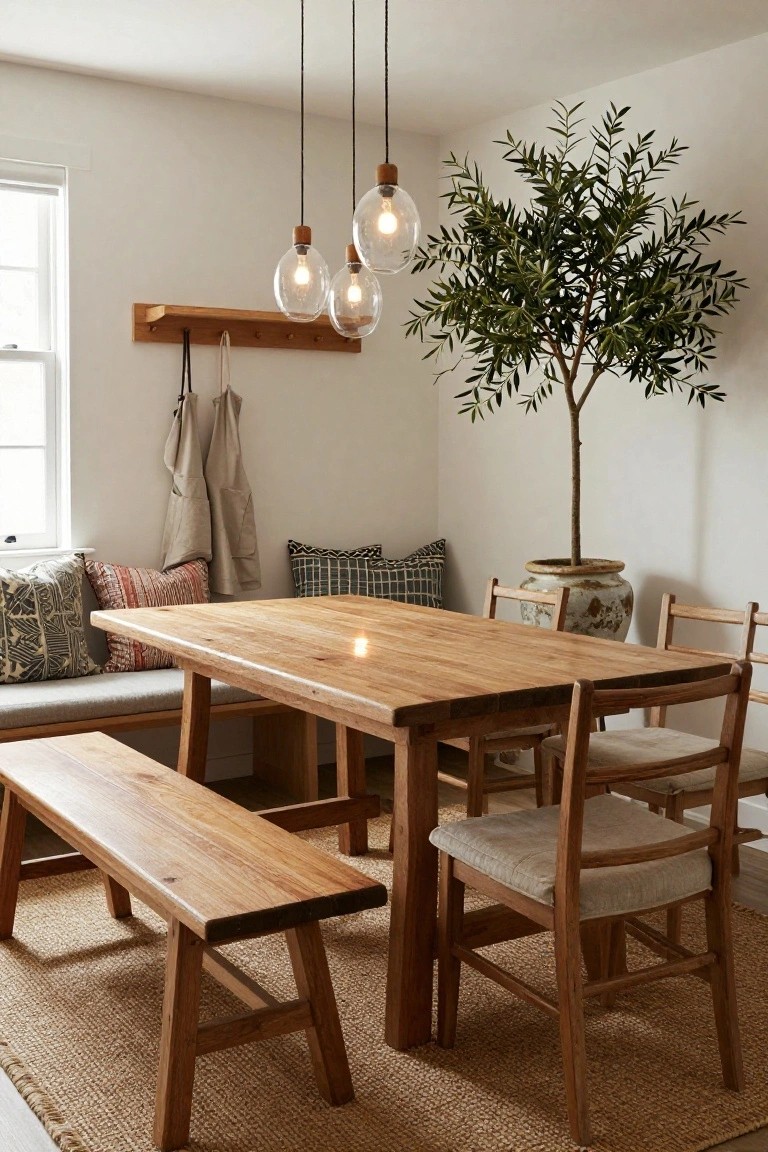
A jute rug works nicely under a wood dining table like this one. It picks up the table’s warm tones and the benches too, while keeping things light against plain white walls. The texture adds a bit of casual interest without much fuss.
Try this in a kitchen corner or breakfast area where you want a lived-in feel. Make sure the rug extends far enough for chairs to slide back. It suits homes with wood furniture already, and it’s easy to find in neutral shades that fit most setups.
Woven Rugs for Entryways
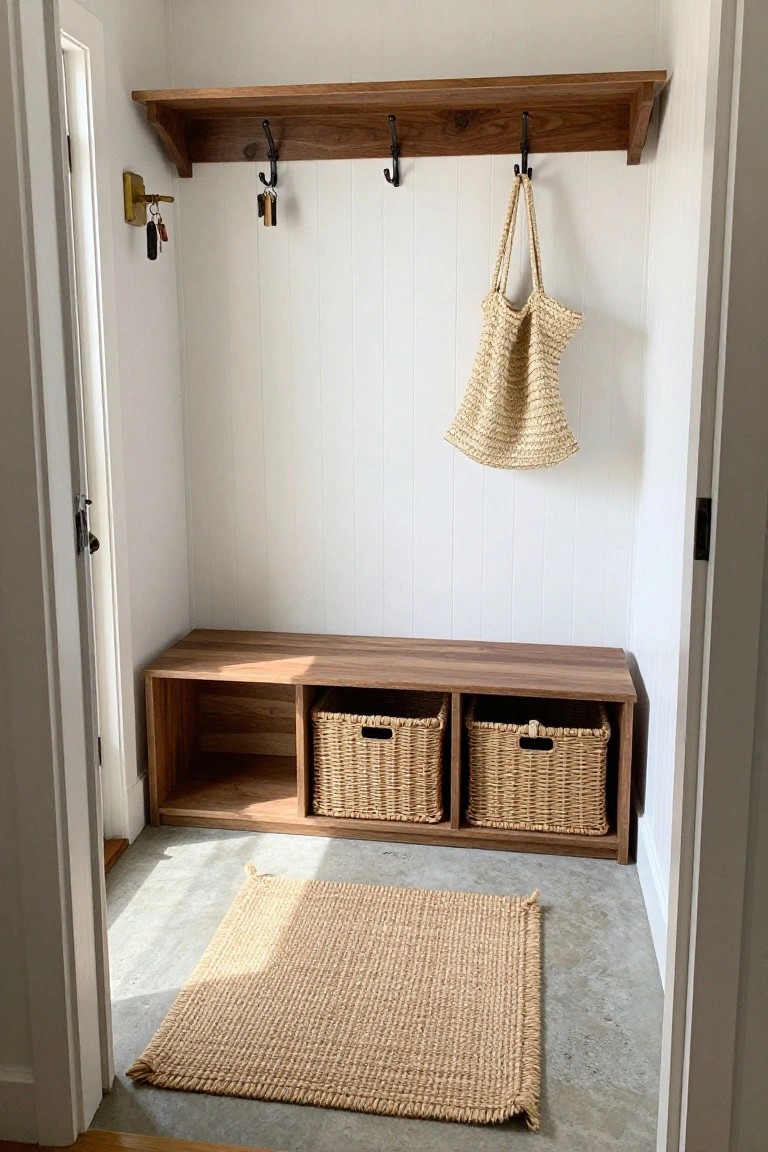
A woven rug like this seagrass one sits right in front of the entry bench. It covers the concrete floor just enough to feel intentional. With the walnut wood shelf and storage nearby, the rug picks up on those natural tones without much fuss.
Try it in a mudroom or small foyer where traffic comes and goes. It holds up to dirt and shoes better than thinner rugs. Works in homes with clean white walls and wood built-ins. Skip it if your floor is dark already, it might blend too much.
Gray Geometric Rugs for Nurseries
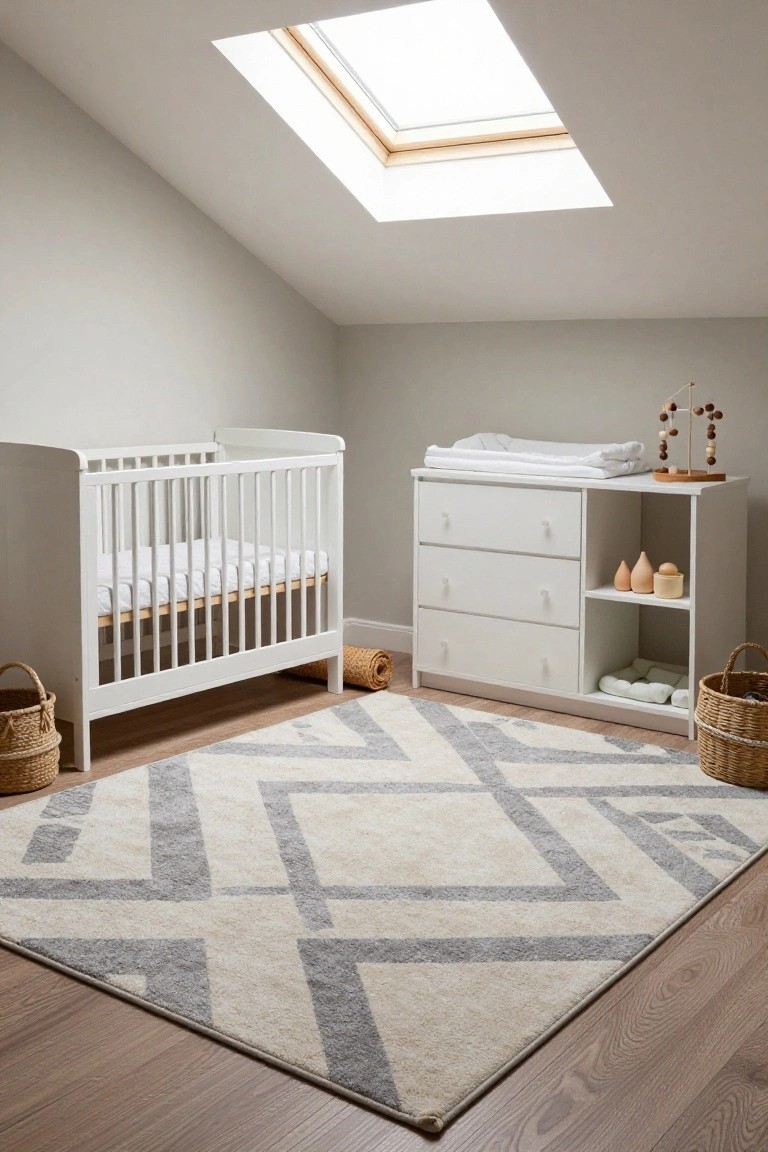
A gray rug with clean geometric lines fits right into this nursery setup. It sits under the white crib and dresser without taking over. The pattern picks up the light walls and wood floor, making the sloped ceiling feel less boxy. Keeps the whole room calm and pulled in.
Put one like this in any small kid’s space, especially attics or rooms with skylights. It hides everyday mess better than solids. Go for low pile so it’s safe around babies, and stick to neutrals if you want that easy transitional look.
Oriental Rugs in Home Offices
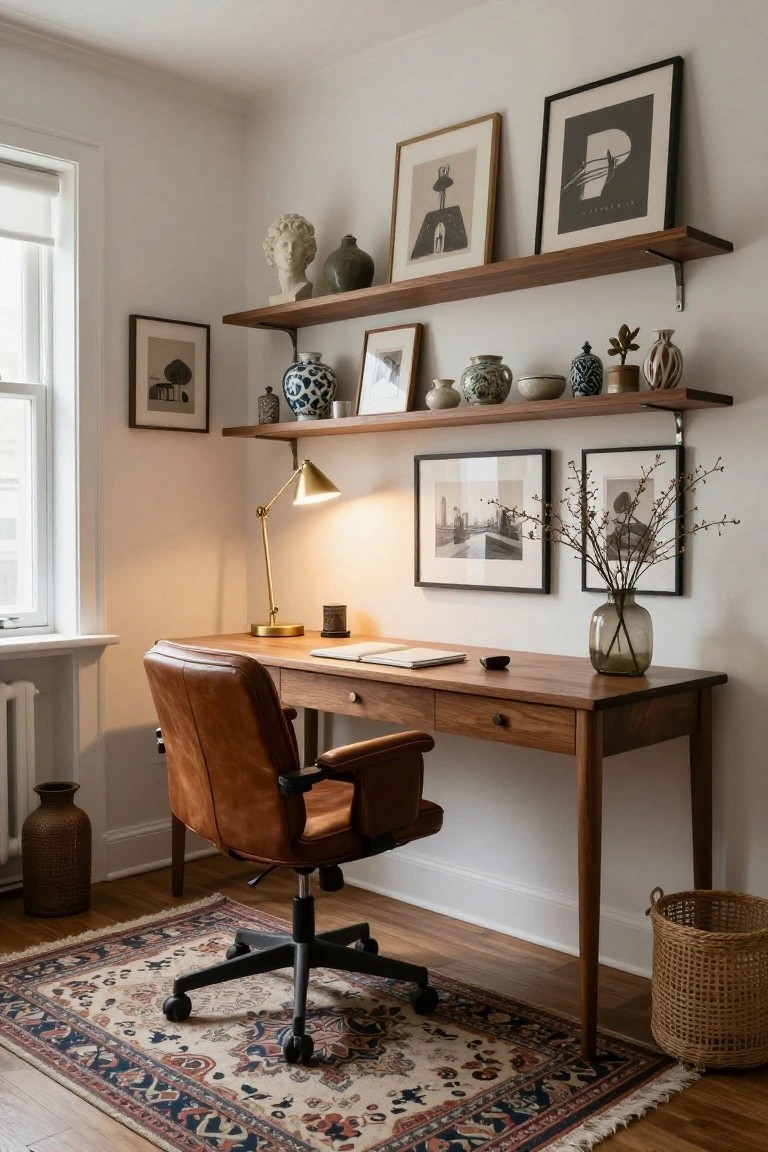
A classic Oriental rug like the one here does a nice job pulling together a mix of ceramics, wood furniture, and neutral walls in a home office. Its blues, reds, and creams echo the blue-and-white vases on the shelves and the warm desk tones without overwhelming the space. It adds that lived-in feel transitional rooms need.
Try this in a small corner setup where you want pattern but not too much busyness. It works best with wood desks and leather chairs in older homes or apartments. Just pick a rug sized right for under the chair, so wheels roll easy, and keep the rest simple.
Fringed Textured Rugs in Neutral Bedrooms
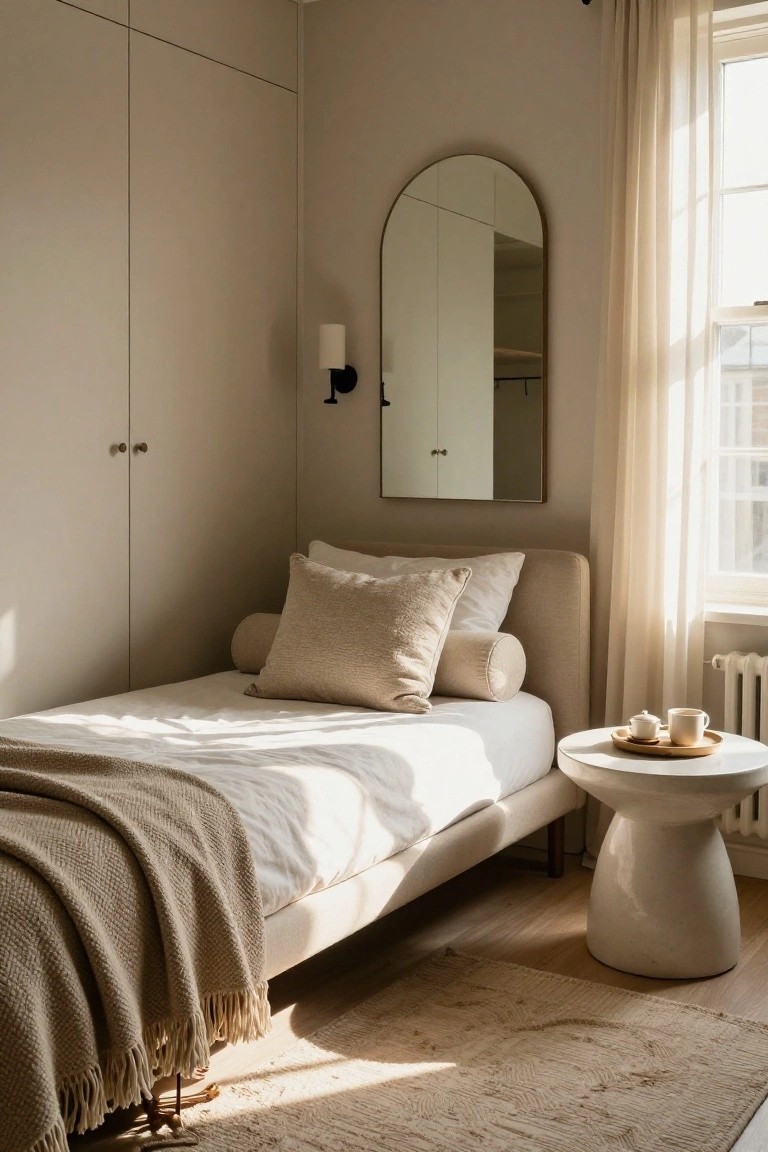
A fringed rug like this one brings a bit of texture to an otherwise plain bedroom floor. The light beige color with its subtle weave pattern fits right in with soft walls and wood tones. It sits partly under the low bed, giving the space a lived-in feel without much fuss.
These rugs work best in smaller rooms where you want calm over bold. Lay one extending from under the bed toward the window or door. They suit transitional setups with neutral furniture. Just keep the fringe trimmed so it doesn’t catch on feet.
Frequently Asked Questions
Q: How do I figure out the perfect rug size for my living room?
A: Start by outlining the main seating area with tape on the floor. Choose a rug that fits under the front legs of your sofa and chairs. This setup pulls everything together without overwhelming the room.
Q: Will transitional rugs hold up in a busy family room?
A: Go for rugs with wool or synthetic blends. They bounce back from footprints and spills better than pure cotton. Vacuum weekly and spot-clean messes right away to keep them looking fresh.
Q: Can I layer rugs like in some of those ideas if my space feels too plain?
A: Pick a larger neutral base rug first. Layer a smaller patterned one on top near the focal point. The contrast adds warmth fast.
Q: How do I make a transitional rug work with my mid-century furniture?
A: Lean toward rugs with subtle geometrics or soft textures. Position it to echo the wood tones in your pieces. Skip bold colors. Keep it grounded.
