

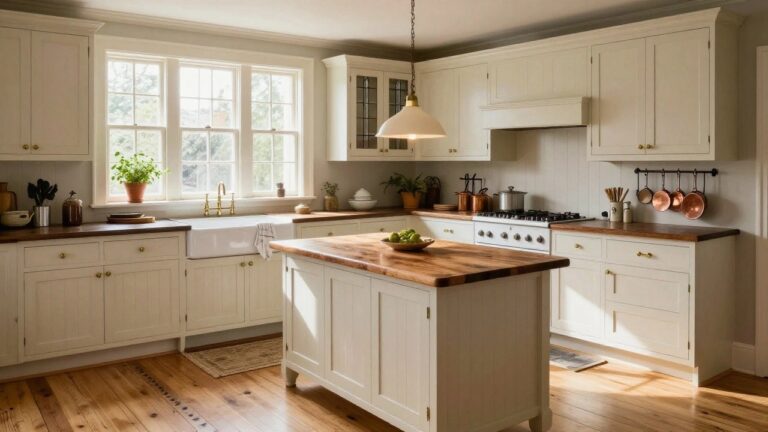
I’ve noticed that colonial kitchens really come alive in older homes when the cabinetry echoes the home’s woodwork but still leaves room for modern appliances to breathe. People tend to zero in on the moldings and hardware first, since those details ground the space in that classic feel without overpowering it. What keeps these setups working day to day is a layout that flows from sink to stove to table, avoiding the tight corners that plague so many renos. In one project I helped with, swapping brass pulls for something simpler made the whole room feel less fussy. These inspirations show ways to pull that off, with tweaks worth sketching out for your own kitchen counters.
Sage Green Cabinets for Colonial Kitchens
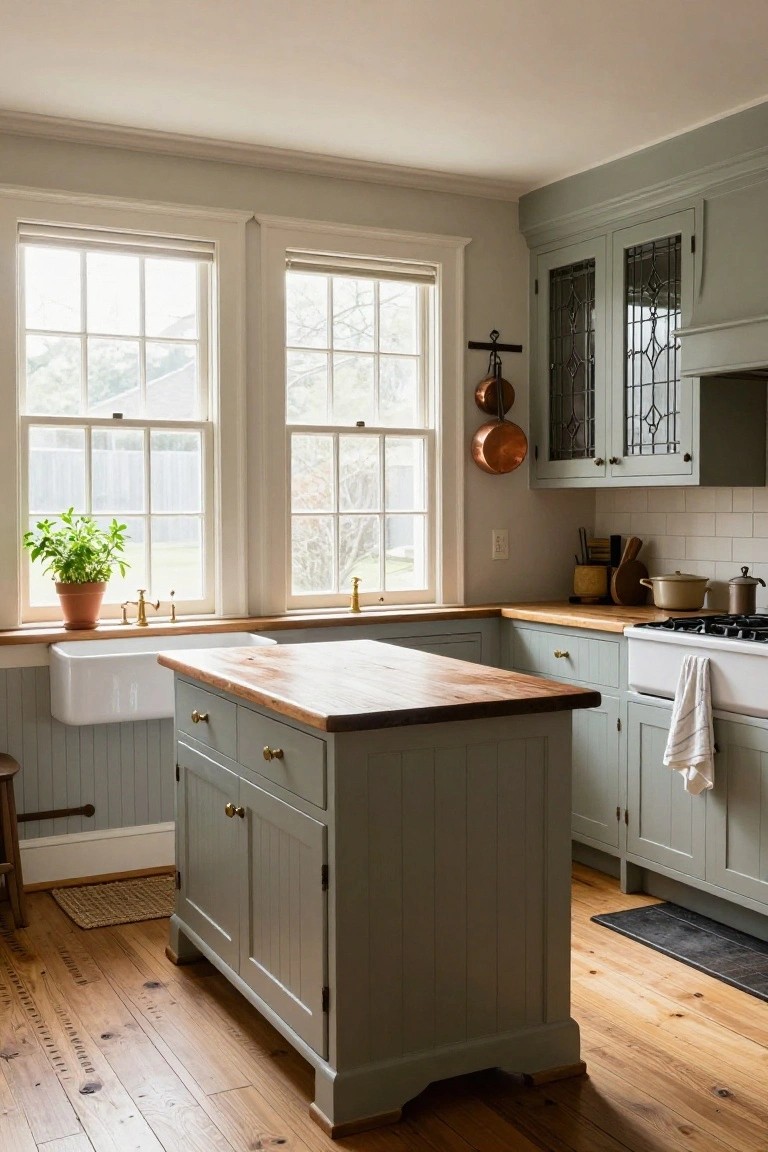
A soft sage green on the cabinets gives this colonial kitchen a calm, lived-in feel. It takes the classic white or wood look and makes it gentler, especially with the wood-topped island right in the middle. That green works because it picks up the light from the big windows without overwhelming the room.
You can pull this off in older homes with beadboard walls and pine floors. Go for matte paint on shaker-style doors, and add brass pulls for a bit of shine. It suits family kitchens where you want practical storage that doesn’t shout… just watch the undertones so it stays fresh year-round.
Navy Blue Cabinets for Colonial Kitchens
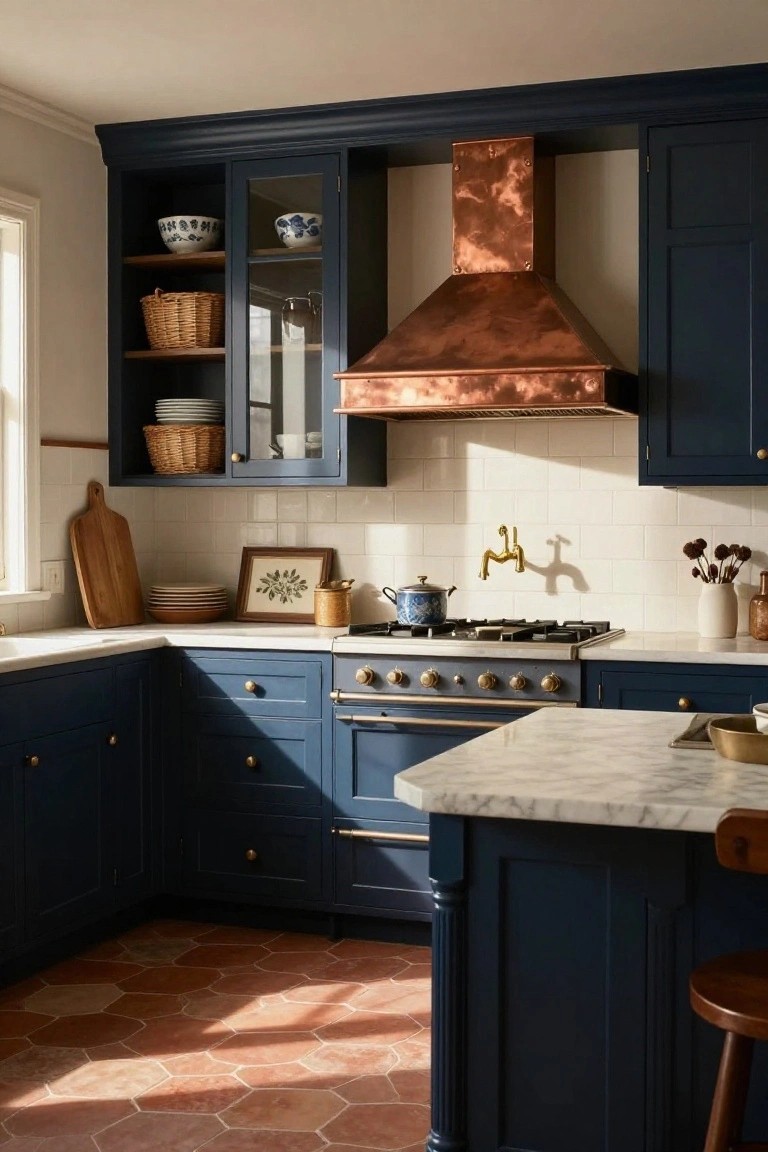
Navy blue cabinets stand out in this colonial kitchen setup. They bring a deep, moody color that feels right at home in traditional spaces, especially when mixed with warmer touches like a copper range hood and terracotta tile floors. The result is cozy without being too dark.
You can pull this off in kitchens with decent light from windows. Pair the navy with white subway tiles on the walls and marble counters to keep things fresh. It suits older homes best, where the cabinets echo classic wood tones but add a modern edge. Just watch the scale, bigger rooms handle the depth better.
Sage Green Cabinets in a Colonial Kitchen
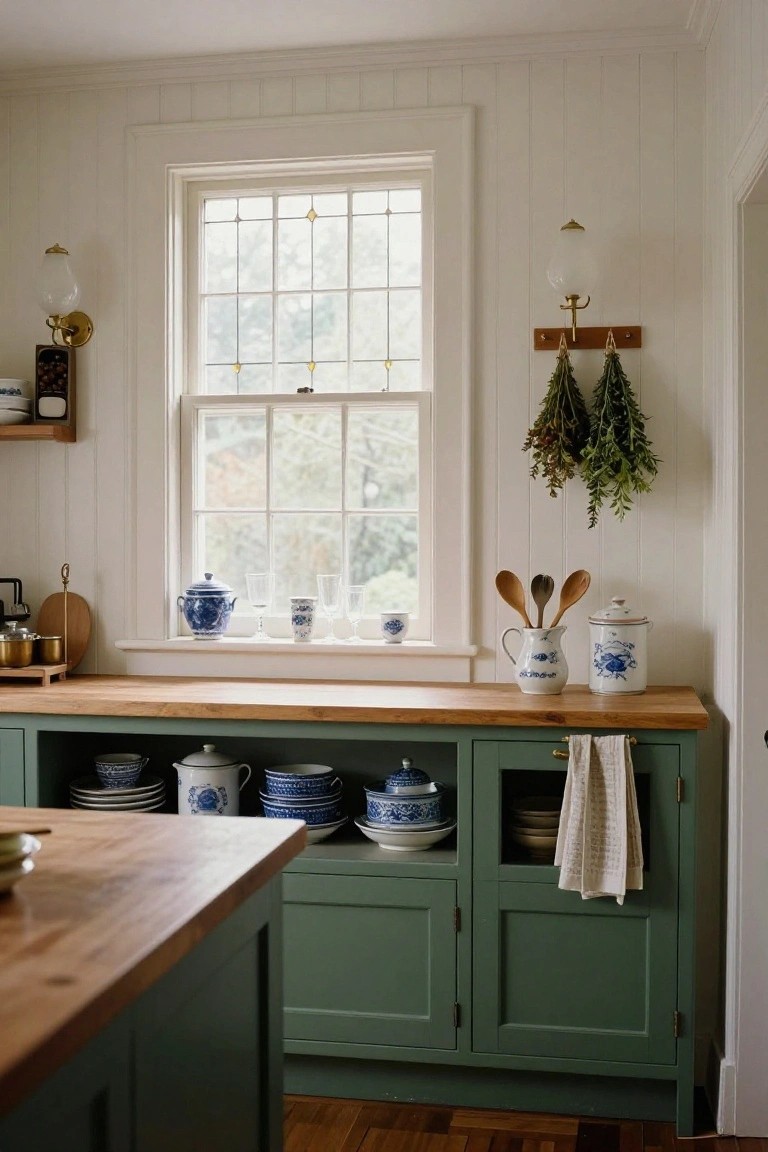
Sage green cabinets like these bring a gentle update to the colonial kitchen look. They sit nicely under white shiplap walls and wooden counters, making the room feel calm and lived-in. A few blue and white jars and plates tucked into open shelves nod to old-school charm without overdoing it.
This setup shines in spaces with plenty of window light. Keep uppers white or open to avoid closing in the room. It suits older homes best, especially where you want practical storage that still looks pulled together. Just match the green tone to your light levels, or it might read too dark.
Red-Painted Kitchen Cabinets
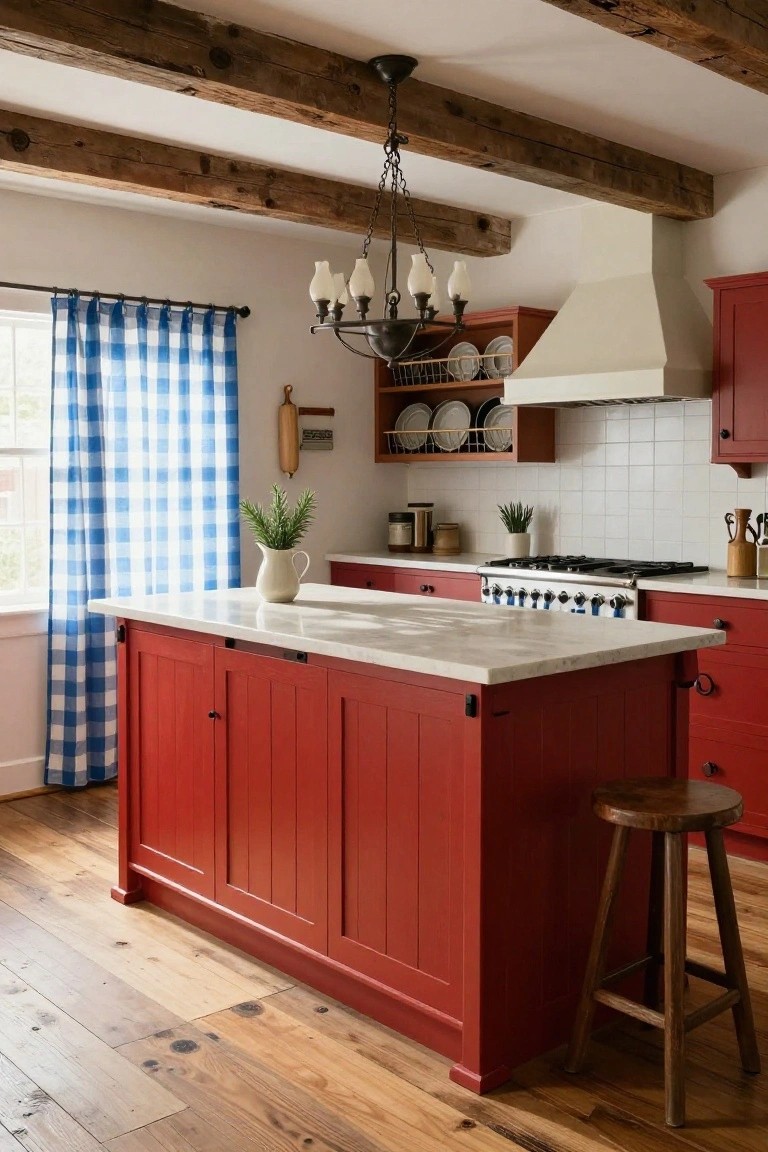
Red paint on the cabinets turns a simple kitchen into something lively. Here the island and lower cabinets get that bold color, popping against white counters and tiled backsplash. Paired with rough wood beams up top, it feels right at home in an older style without going overboard.
This works best in farmhouses or colonials with wood floors and trim already in place. Pick a semigloss paint that holds up to cooking grease. Keep uppers neutral if you want, or go all red for more punch… just test samples in your light first.
Black Soapstone Counters in a Colonial Kitchen
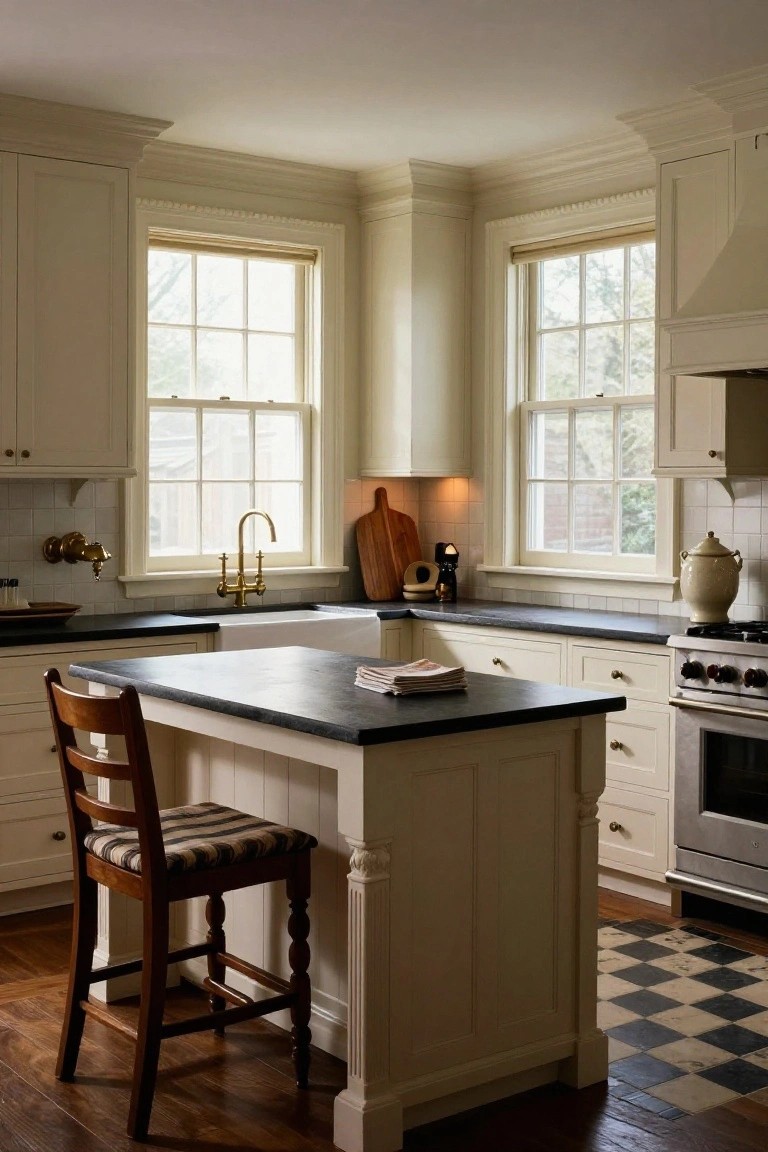
Black soapstone counters catch the eye in this setup. They run along the perimeter and top the island, setting off the creamy cabinets nicely. The dark surface handles daily wear without showing scratches or stains much. It’s a practical pick that nods to old-school kitchens.
Use soapstone if your kitchen has good natural light from big windows. It suits homes with classic details like turned legs on stools or farmhouse sinks. Just seal it now and then to keep oil from soaking in… works great in corners like this one.
Sage Green Cabinets for Colonial Kitchens
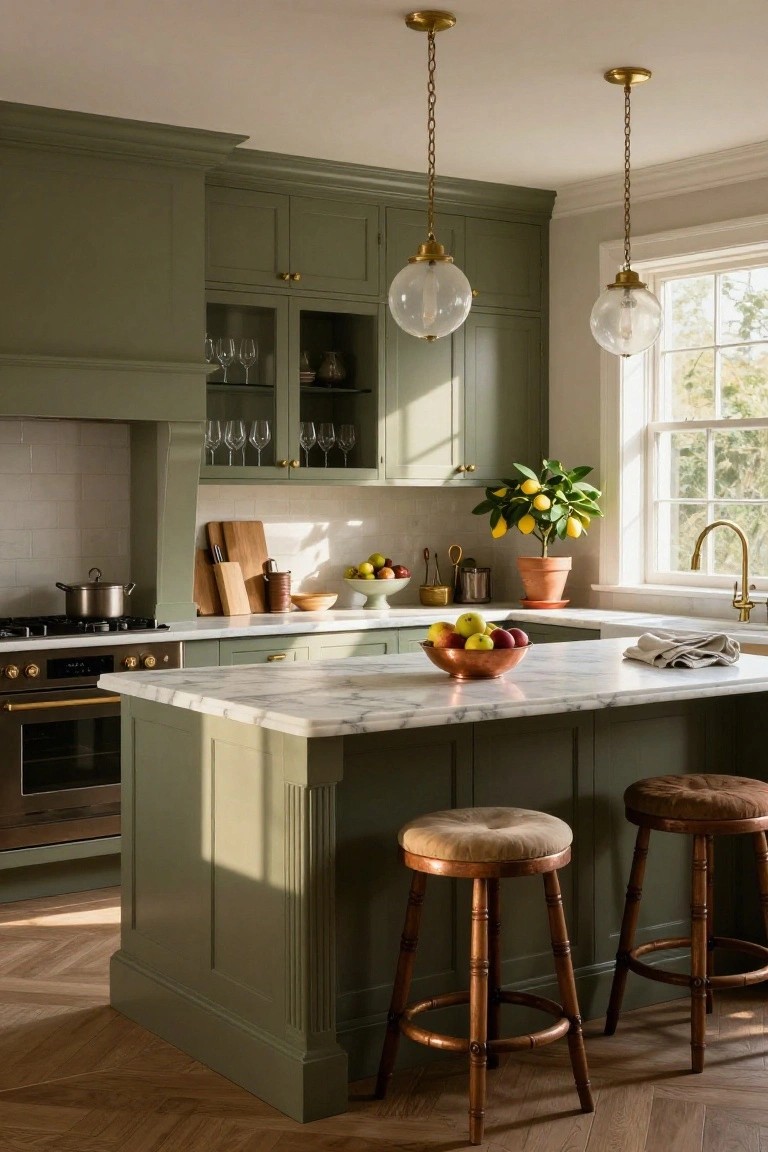
Sage green cabinets give this colonial kitchen a calm, lived-in look that feels fresh without trying too hard. The soft color on the Shaker-style doors pairs well with white marble counters and brass pulls. It keeps the traditional lines but adds a bit of garden-like ease, especially with sunlight coming in.
This works best in older homes with plenty of windows. Go for it if you want your kitchen to feel classic yet relaxed. Stick to light countertops so the green doesn’t overwhelm, and add wood stools for balance.
Soft Blue Shaker Cabinets
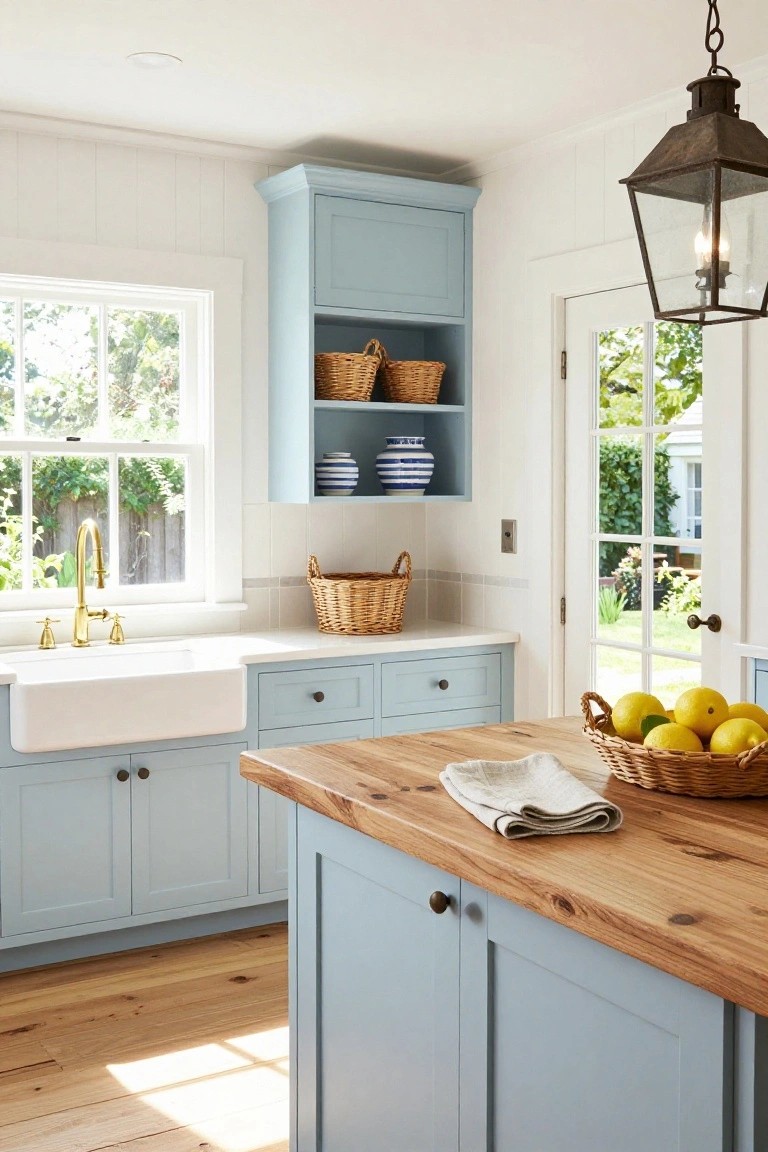
Soft blue shaker cabinets like these give a colonial kitchen a light, breezy update without losing that classic feel. The color plays nice against white walls and subway tile, making the space feel bigger and more open. Paired with a wood-topped island, it adds just enough warmth to keep things cozy.
This look works best in kitchens with plenty of natural light, like ones near gardens or with big windows. Go for it in older homes where you want to soften harsh whites or dark woods. Stick to matte finishes on the blue to avoid a shiny modern vibe, and balance it with brass hardware for that traditional touch.
Yellow Painted Cabinets in a Colonial Kitchen
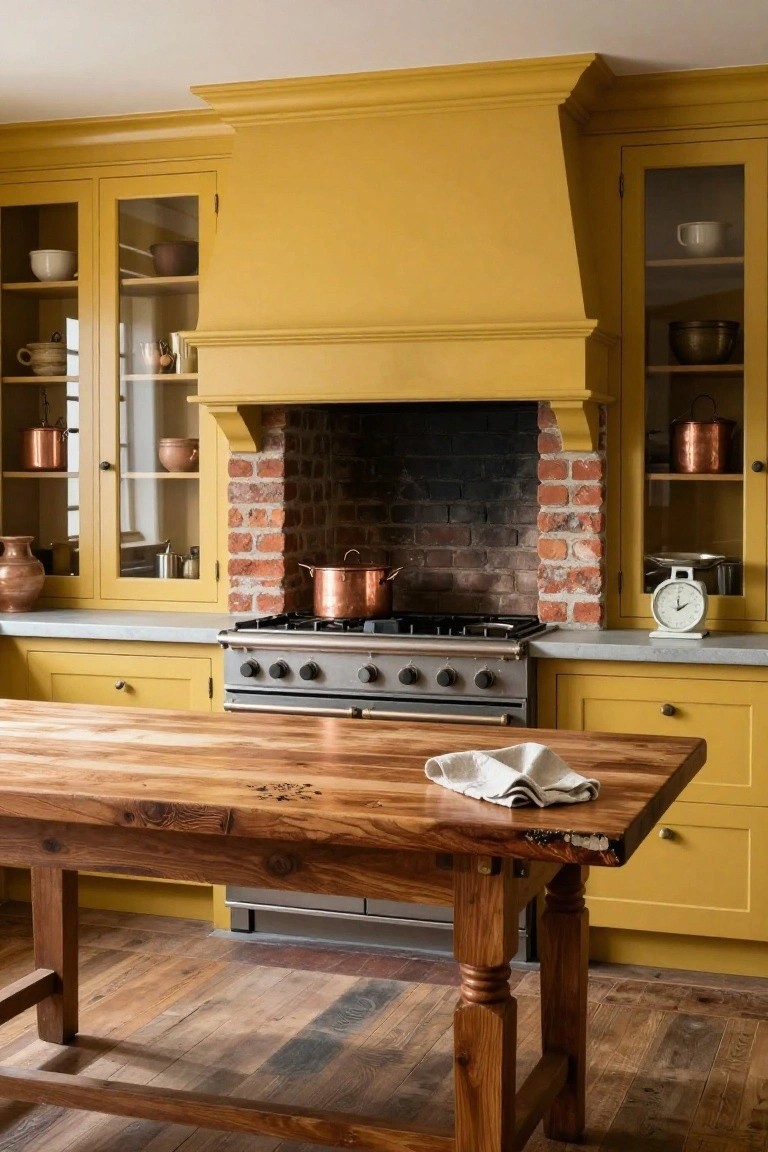
Yellow cabinets give this kitchen a cheerful lift that feels right at home in colonial style. The mustard shade plays nicely off the brick chimney hood and copper pots, warming up the whole room without much fuss. It’s simple color that nods to old painted woodwork.
Paint lower cabinets yellow for everyday use, and go lighter or glass-fronted on uppers to show off dishes. This fits older houses with wood floors best… just balance it with gray counters so it doesn’t overpower. Keeps things practical too.
Bold Navy Kitchen Island
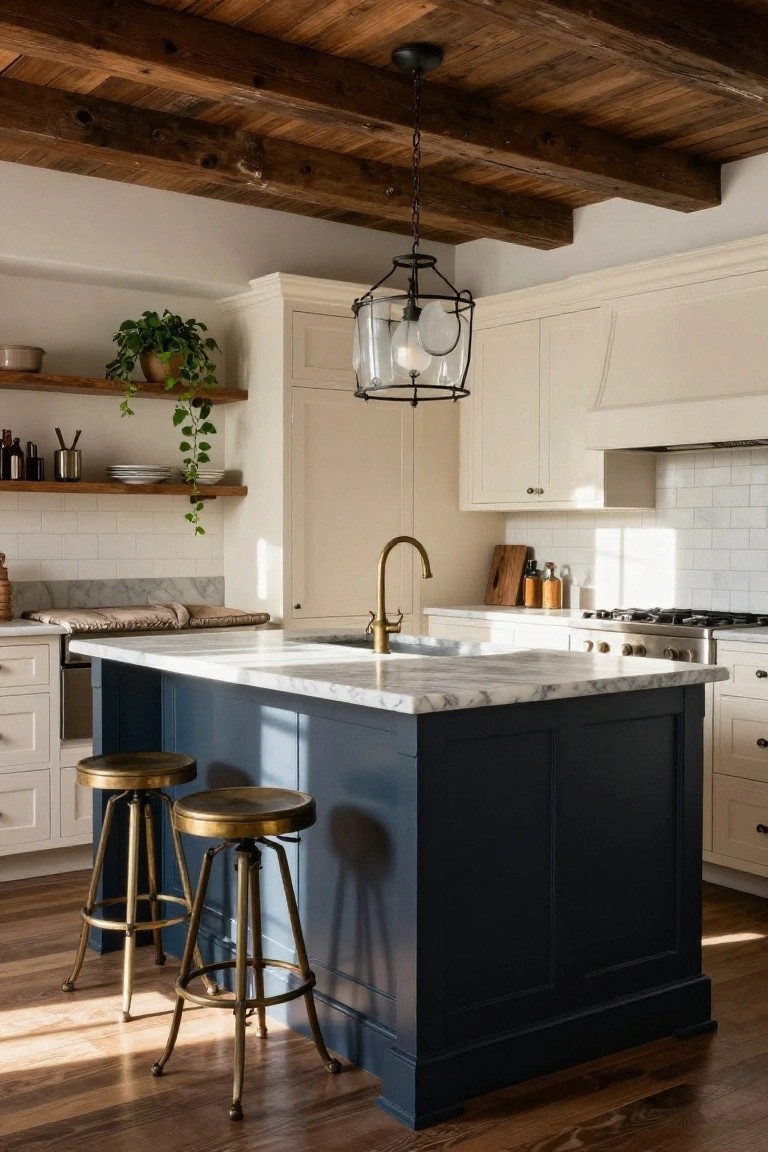
A deep navy island like this one really pulls the kitchen together in a mostly white space. The creamy cabinets and light marble counters let that rich blue color pop without overwhelming things. Those wood beams up top add some rustic warmth too. It’s a simple switch that makes the whole room feel more grounded and lively.
Try this in older homes or kitchens with shaker-style cabinets. Pick a matte navy paint for the island base and keep the rest neutral. It works best where you want a spot for stools and casual meals. Just make sure your lighting highlights the contrast, especially near windows.
Sage Green Kitchen Cabinets
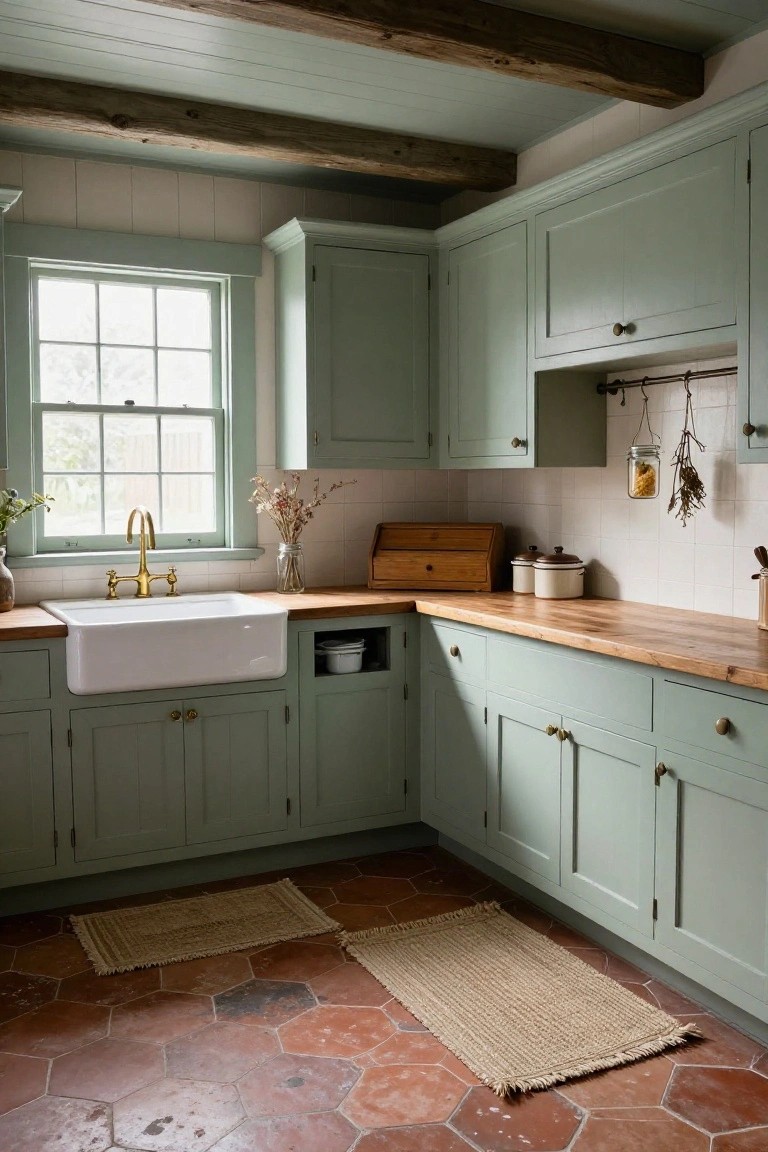
Sage green cabinets bring a gentle calm to this kitchen setup. They fit right into the colonial look with their shaker style doors and brass pulls. Paired with wood countertops and beams overhead, the color keeps everything feeling warm and settled, not stark.
This works well in older homes or spaces with lots of wood trim. Go for it if your kitchen gets decent light from windows. Stick to muted greens so they don’t take over, and layer in neutrals like white tiles or terracotta floors to let the cabinets breathe.
Rich Wood Kitchen Island
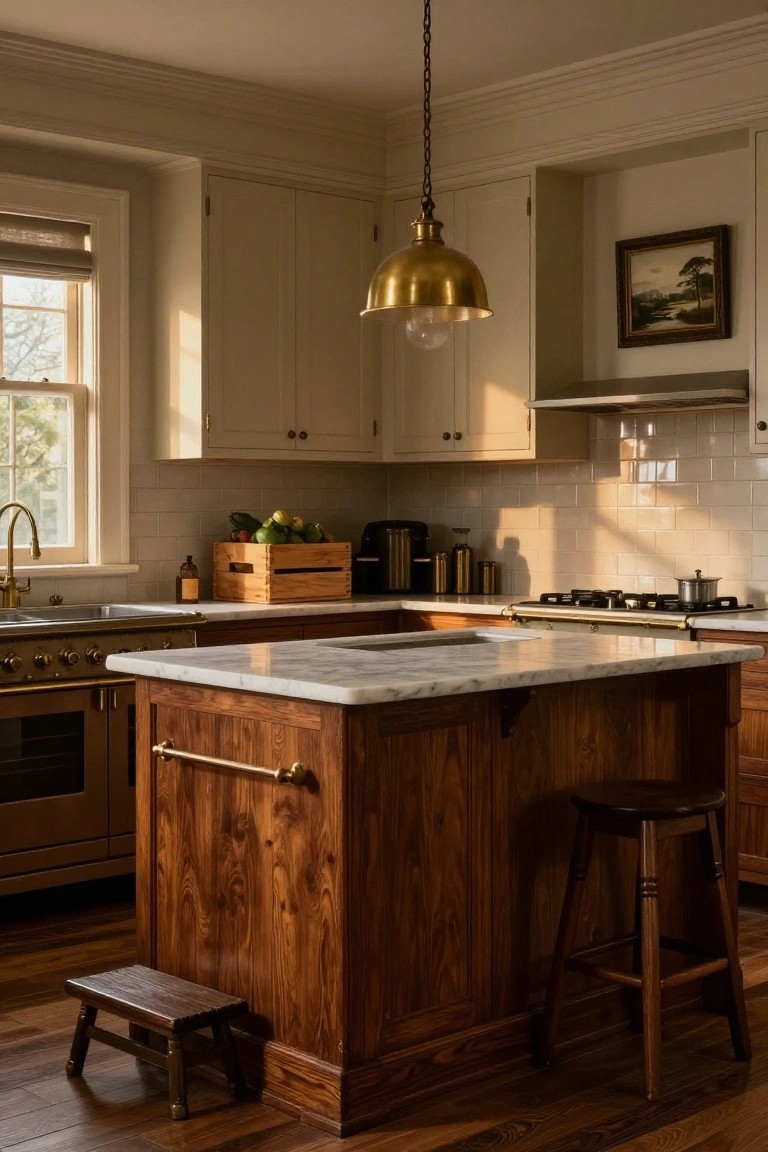
A wooden island like this one changes the feel of a whole kitchen. Deep tones from the walnut base stand out nice against creamy cabinets and white tiles. It warms things up without going dark all over. The marble top handles daily use well, and that brass bar for towels gives a little polish.
Try it in older homes or any space with pale walls and floors. Go for hearty woods like walnut that age nicely. Pair with simple stools for easy seating at the counter. Keeps the look practical and gathered around the center. Just make sure the wood finish matches your cabinets’ style.
Rustic Wood Base for Kitchen Islands
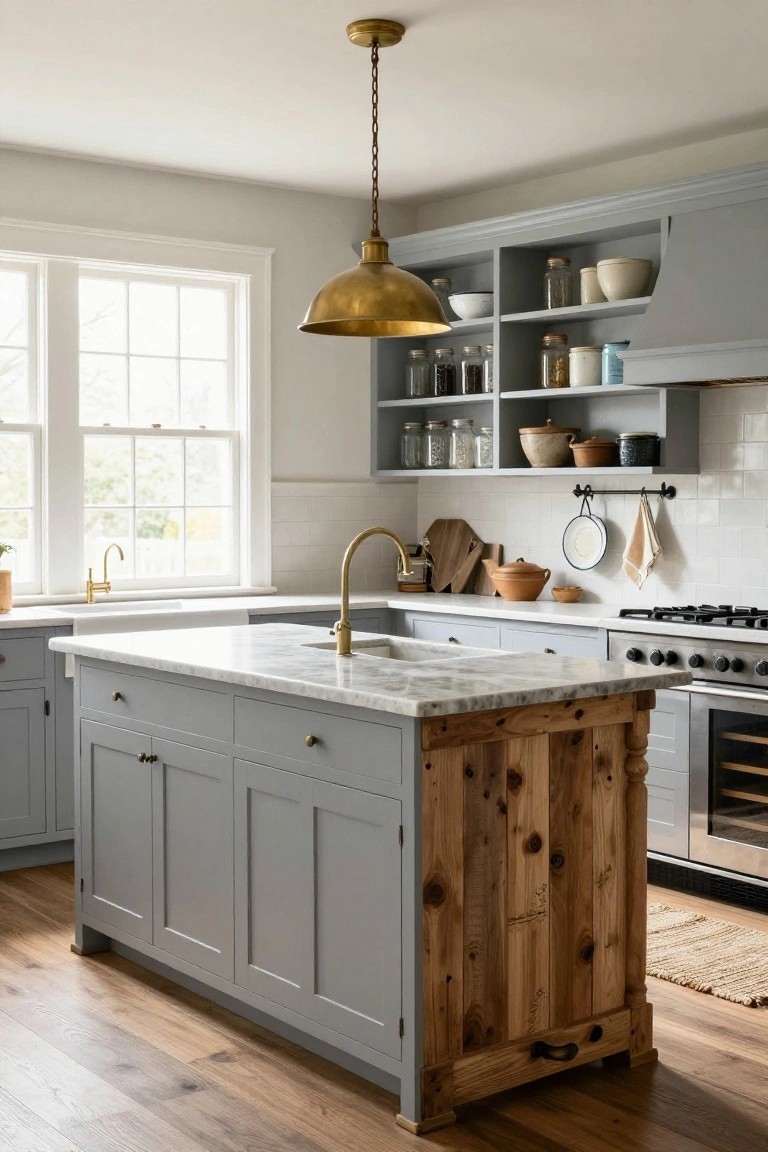
One thing that makes this kitchen feel right at home in colonial style is the island’s base made from rough wood. The upper cabinets and island top stay in soft gray paint, keeping things neat and timeless. But those thick wooden legs add real texture and warmth. It pulls the room together without much fuss.
You can pull this off in any kitchen aiming for that easy mix of old and new. Pick reclaimed cedar or pine for the legs to get those knots and grain showing. It suits homes with white tiles or marble counters best. Just make sure the wood finish matches your floor tone so it doesn’t fight the rest.
Rustic Wooden Table as Kitchen Centerpiece
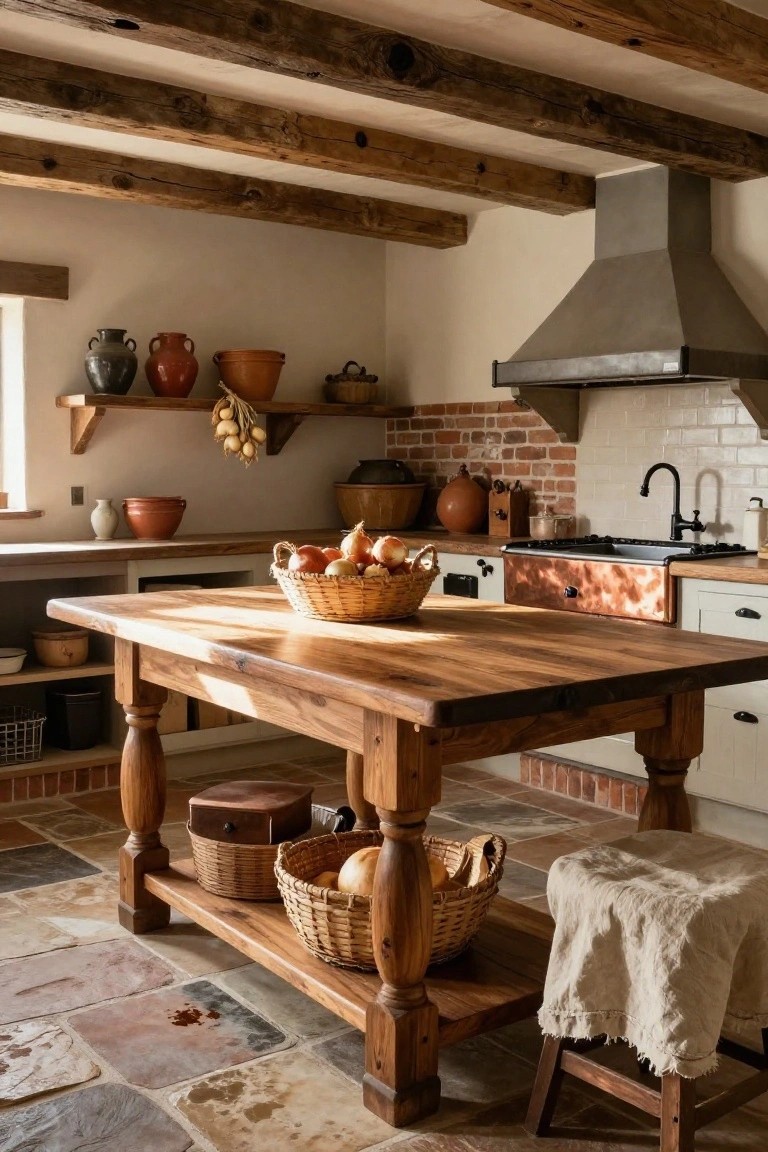
A big wooden table like this one sits right at the heart of the kitchen. Its thick top and sturdy turned legs make it perfect for chopping veggies or family meals, while the lower shelf holds baskets of apples and onions for easy reach. That setup gives the whole space a cozy, hardworking feel without needing fancy cabinets everywhere.
This works best in older homes or remodels aiming for a colonial country look. Put it near the sink and stove for practical flow, and keep the legs simple to match exposed beams or brick walls. Just make sure your room has enough open floor around it… crowded spots can feel off.
Gray Shaker Cabinets for Colonial Kitchens
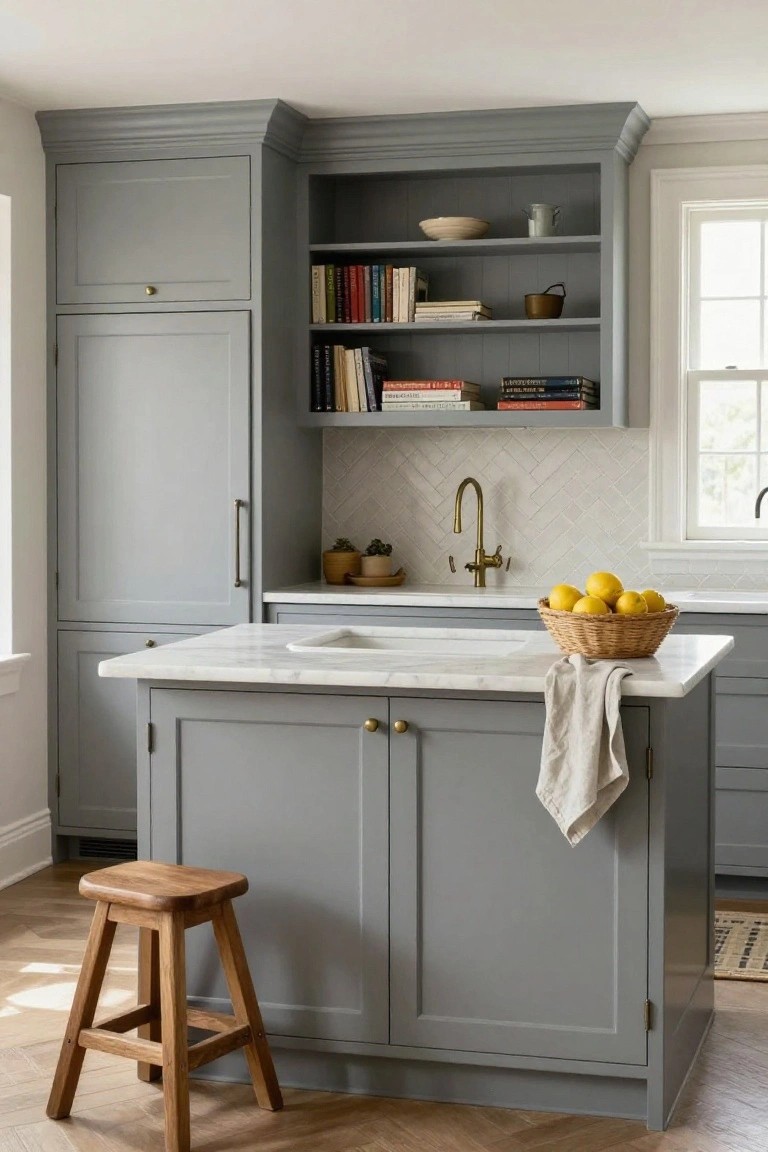
Gray shaker cabinets give a colonial kitchen a softer, lived-in feel without going too modern. That light gray paint on flat-panel doors keeps things classic but fresh, especially next to white marble counters and herringbone tile. It tones down the usual all-white look, letting brass hardware and wood accents stand out nicely.
This setup works best in older homes with good natural light, like near a window over the sink. Paint your cabinets in a muted gray, pair with white surfaces, and add open shelves for books or dishes. Skip glossy finishes; matte paint holds up better day to day.
Deep Green Cabinets Warm Up Colonial Kitchens
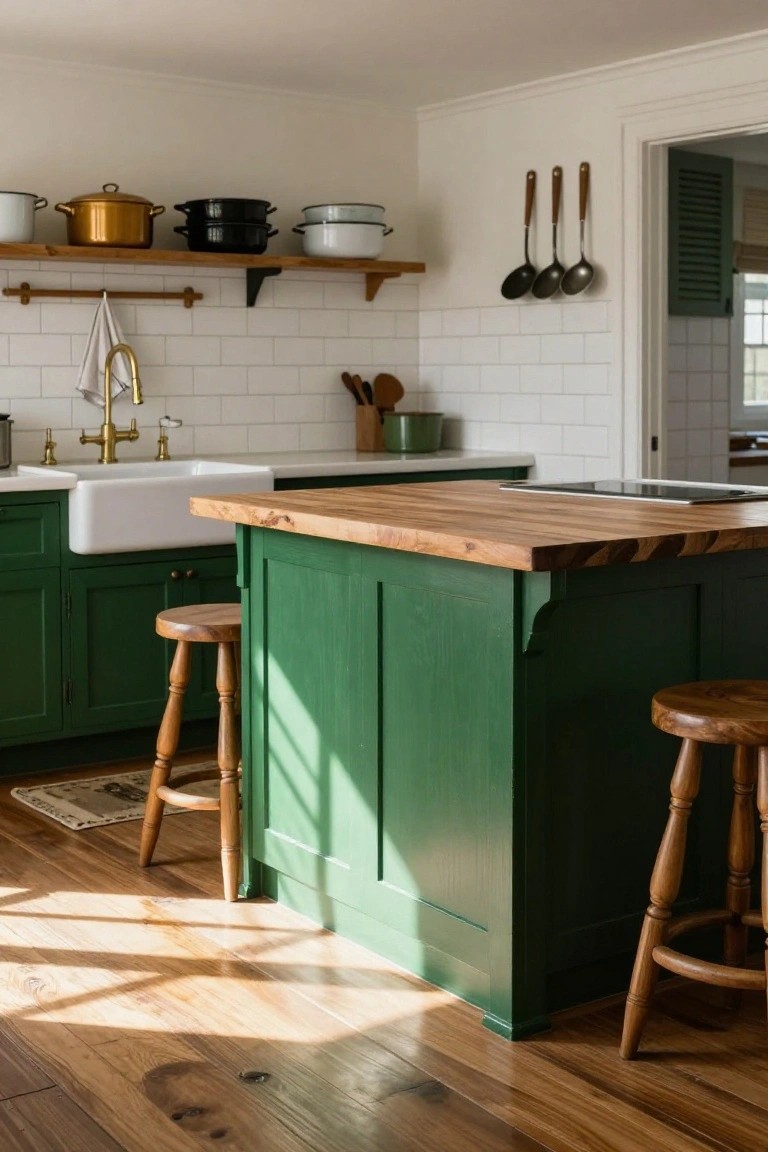
Deep green cabinets like these make a kitchen feel cozy and rooted in tradition. They cover the lowers and the island here, setting off the white farmhouse sink and subway tile backsplash. The color brings a bit of forest depth without overwhelming the room, especially with sunlight pouring in.
This look fits older homes or any space with plenty of windows. Pair the green with natural wood like the butcher block top and stools to keep things practical. Skip it in super small kitchens, though. Light walls or open shelves up top help balance it out.
Hutch-Style Sink Cabinet
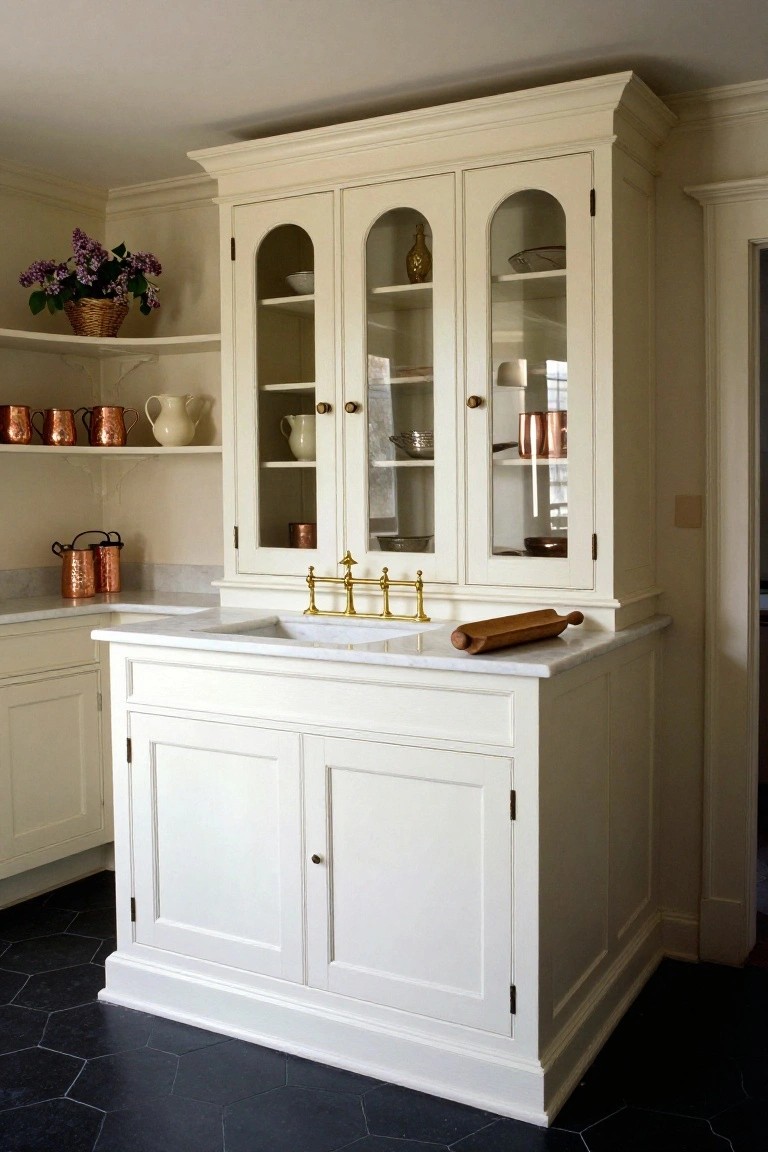
One nice touch in colonial kitchens is building the sink into a tall hutch cabinet. You get display space up top behind arched glass doors for pitchers, bowls, and copper mugs. Down below, it’s a sturdy base for the farmhouse sink with marble top. That setup pulls the kitchen together. It feels practical yet pretty, like something from an old farmhouse.
Try this in a compact kitchen or pantry area where you want storage without crowding the walls. White painted wood works on most floors, even black tile. Just make sure the hardware is brass or gold to keep the period look. It suits homes with creamy walls and simple counters.
Rustic Cast-Iron Range Setup
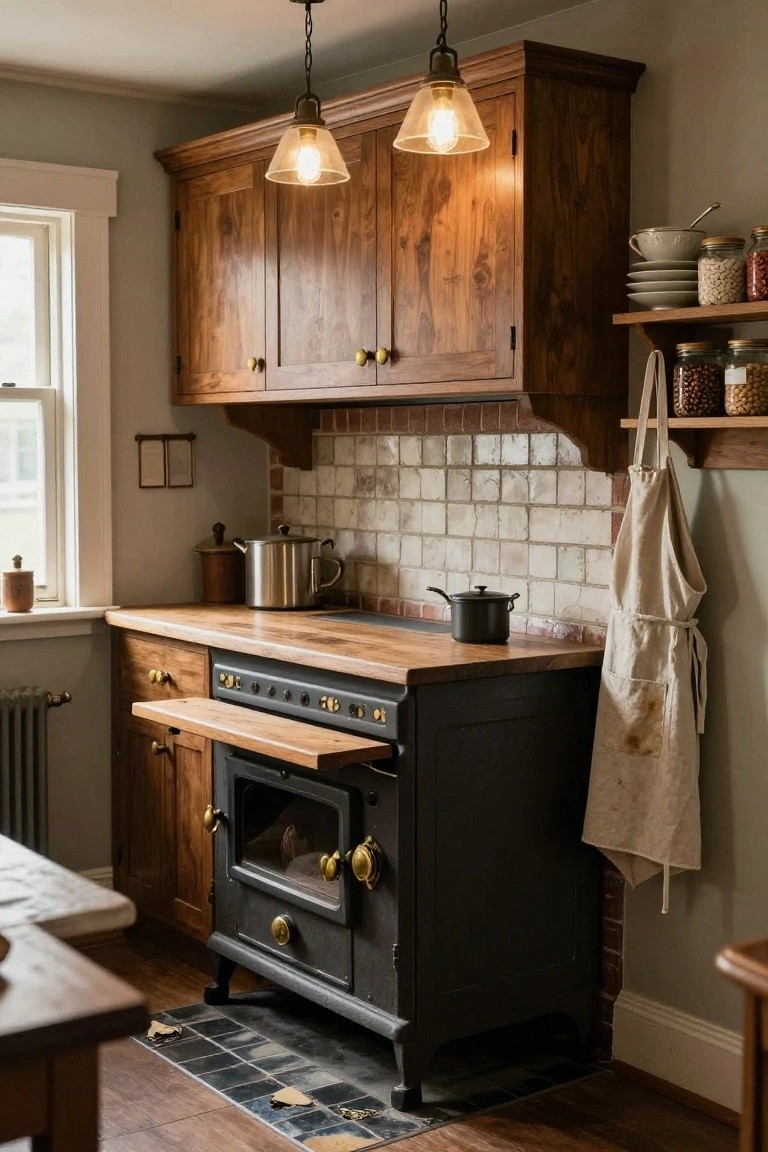
That big black cast-iron range takes center stage here, paired with all the warm wood around it. The cabinets and counters in rich tones make the whole kitchen feel like a step back to colonial days, but still ready for everyday use. It’s the kind of stove that heats up meals and the room too.
This works great in older homes or farmhouses with some character already. Size your space right, since these ranges are hefty, and stick to natural wood finishes to keep things cozy. Skip it if you’re short on cooking room.
Blue Island in a White Kitchen
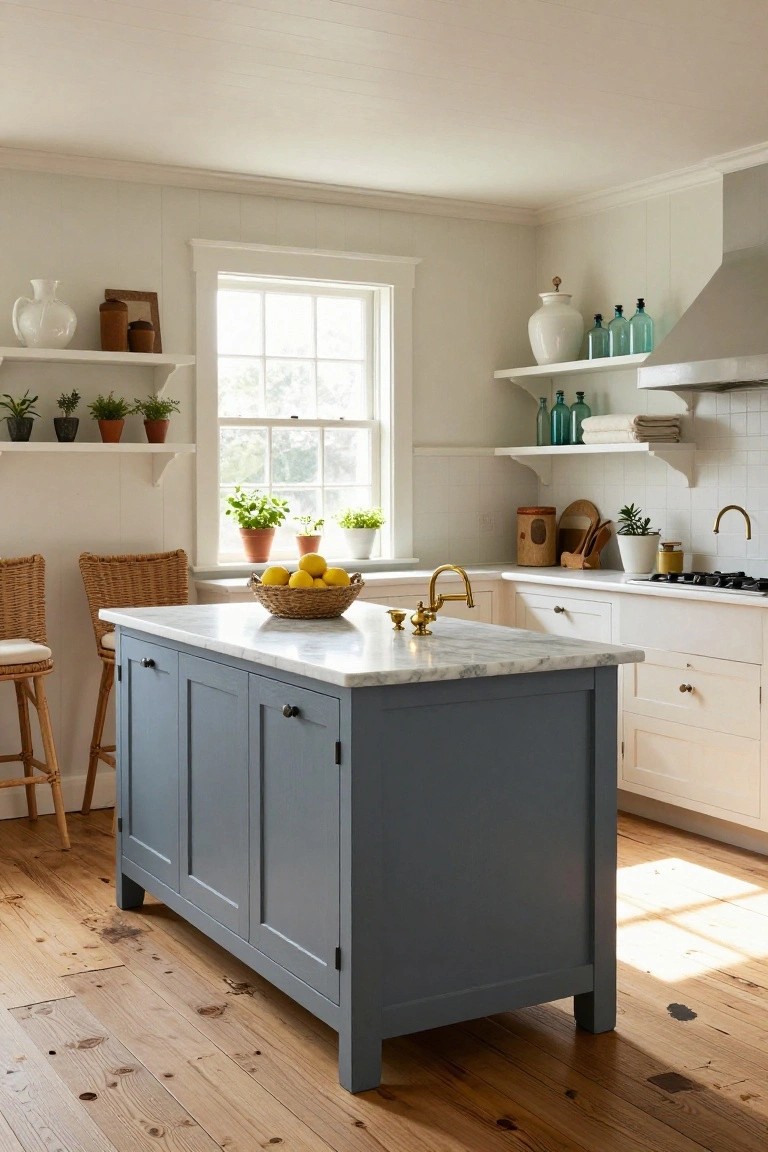
That blue island right in the middle catches your eye first. Against all the white cabinets and walls, it brings some quiet color and shape without making things busy. The marble top keeps it clean, and the brass faucet adds a little shine that fits right in with the Colonial look.
You can pull this off in kitchens with lots of natural light from big windows. Pick a soft blue-gray paint for shaker-style doors on an island you already have, or build a simple one. It works best on wood floors… just balance it with plants and baskets so it doesn’t feel too bold.
Built-In Kitchen Nook
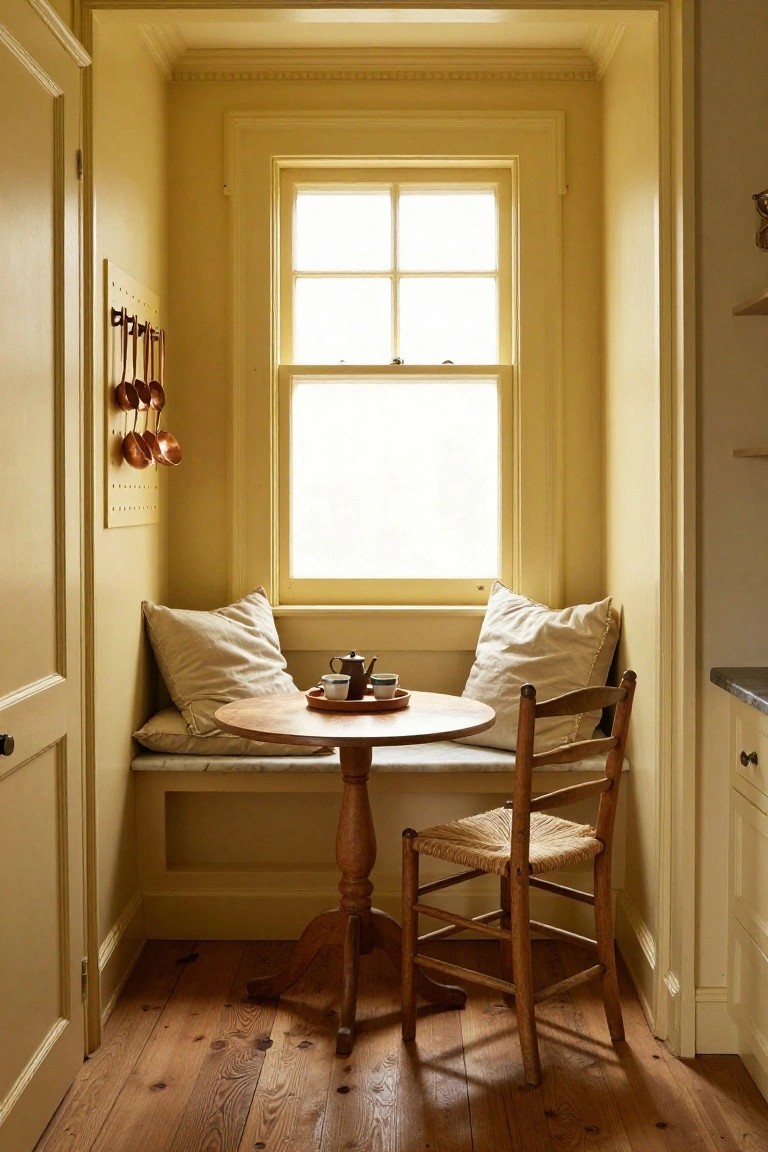
A built-in bench in a narrow alcove makes a quiet spot for coffee or a light meal. It fits right into the kitchen flow, with soft cushions on the seat and a small round table pulled up close. Copper pots hang nearby for that practical touch, and the pale yellow walls let sunlight pour in.
This kind of nook suits older colonial kitchens or any space with an unused corner. Build the bench low along the wall, add a sturdy little table, and pull up one chair. It keeps things simple… just right for everyday use without taking much room.
Frequently Asked Questions
Q: Can I pull off Colonial style in a small kitchen? A: Start with open shelving instead of bulky cabinets to make the space feel bigger and more airy. Add beadboard backsplashes for that classic texture without eating up room. You’ll love how it transforms tight spots into cozy gems.
Q: How do I blend modern appliances with Colonial vibes? A: Paint your fridge and dishwasher in a soft cream or muted green to match the era’s palette. Tuck them behind cabinet panels where possible. They fade right in and keep things functional.
Q: What’s the easiest update for a Colonial kitchen refresh? A: Swap out hardware for brass bin pulls and cup handles, they scream old-world charm instantly. Focus on the drawers and doors first. Your kitchen flips in an afternoon.
Q: Do Colonial kitchens need all-wood everything? A: Layer in painted cabinets with wood accents like islands or beams. But skip full wood if humidity’s an issue, it warps easy. Mix keeps it fresh and low-maintenance.
