

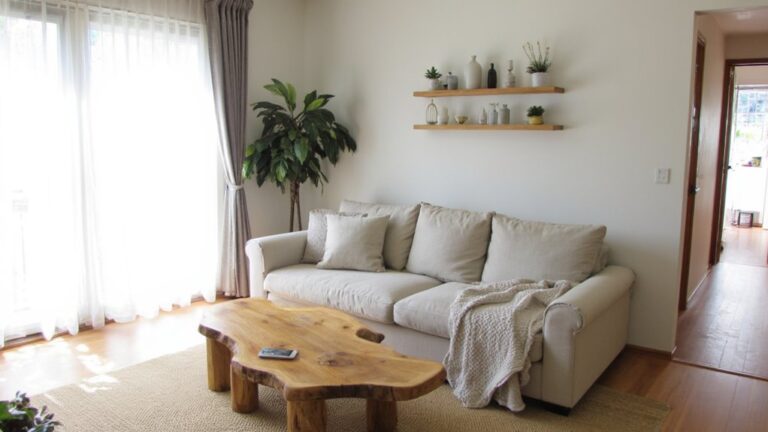
I’ve always been drawn to the calming essence of Japandi design, where Japanese minimalism meets Scandinavian functionality. This fusion creates spaces that feel both grounded and inviting, with an effortlessly stylish vibe. Clean lines and thoughtful use of natural materials are key, fostering a peaceful atmosphere. Achieving this serene aesthetic can be a challenge, but it’s certainly worth the effort. Let’s explore the key elements that define this harmonious style and how you can incorporate them into your home.
The Essence of Japandi Style
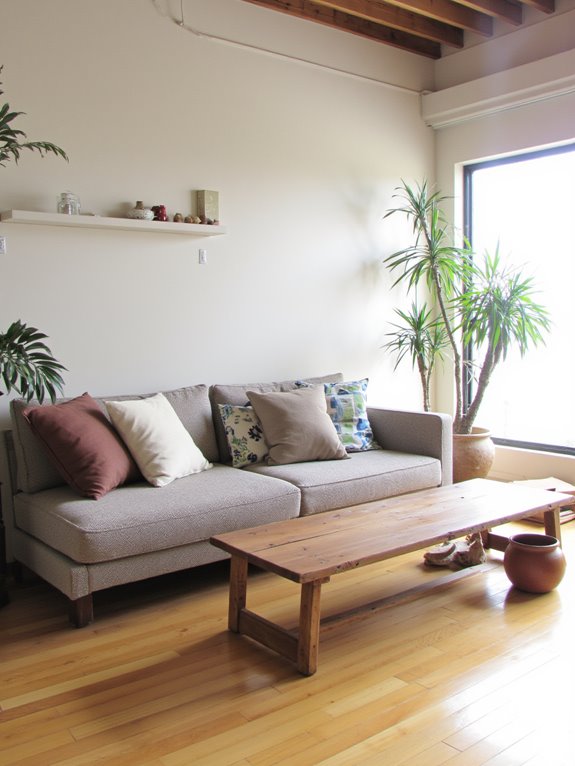
When I explore the essence of Japandi style, I find a beautiful blend of Japanese minimalism and Scandinavian functionality.
It’s all about simplicity and harmony, where every piece has purpose. The muted color palettes create calm spaces, while natural materials invite warmth.
I love how the design emphasizes quality over quantity, making each room feel intentional and serene.
It’s truly a comforting aesthetic.
Key Elements of Scandinavian Design
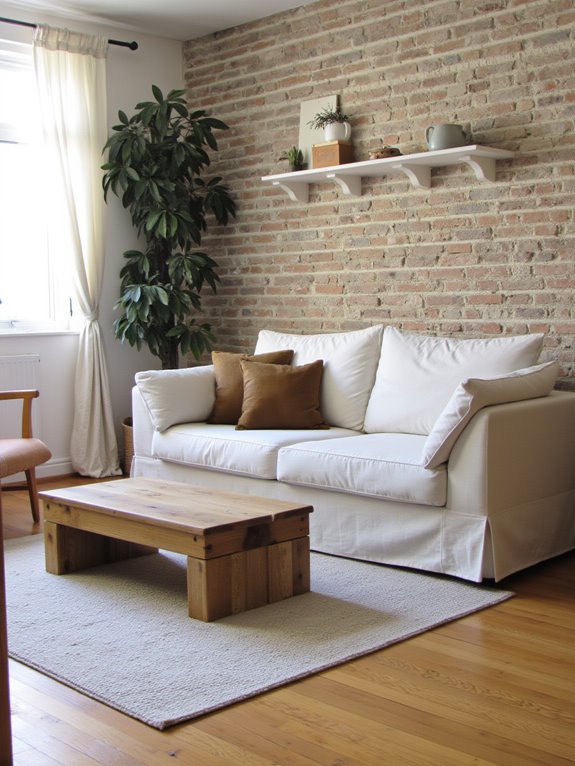
Scandinavian design captivates with its focus on functionality, simplicity, and a deep connection to nature.
I love how it embraces natural materials, like wood and wool, creating warmth and coziness.
Clean lines and minimalistic decor emphasize open spaces, allowing light to flow freely.Embracing clean lines and minimalism, Scandinavian design creates airy spaces that invite light and serenity into every room.
Muted color palettes bring tranquility, while thoughtful craftsmanship guarantees each piece serves a purpose, making every room feel inviting and grounded.
How Japandi Style Brings Calmness to Interiors
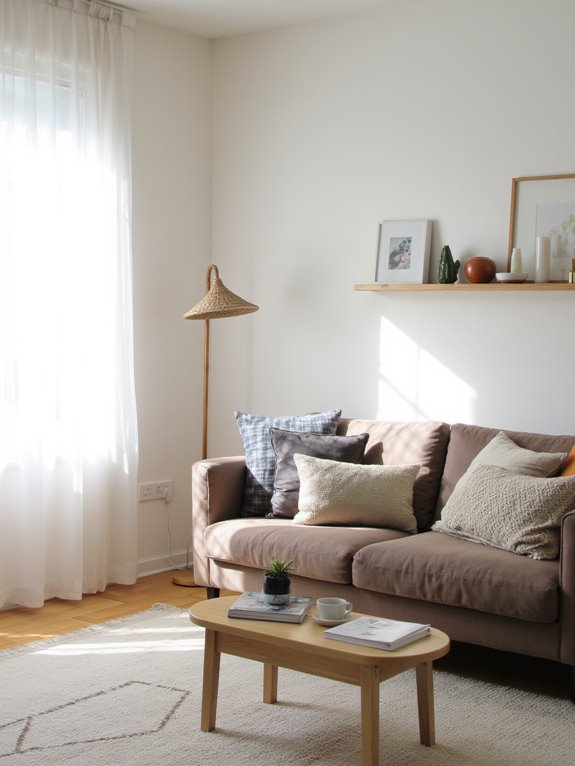
Combining the simplicity of Scandinavian design with the warmth of Japanese aesthetics creates a serene atmosphere that feels both calming and inviting.
I love how the muted color palettes and natural materials foster a sense of peace.
Every piece is thoughtfully chosen, contributing to a harmonious space that encourages relaxation.
Japandi style transforms my home into a tranquil retreat, perfect for unwinding after a long day.
The Importance of Minimalism in Japandi Scandinavian Homes
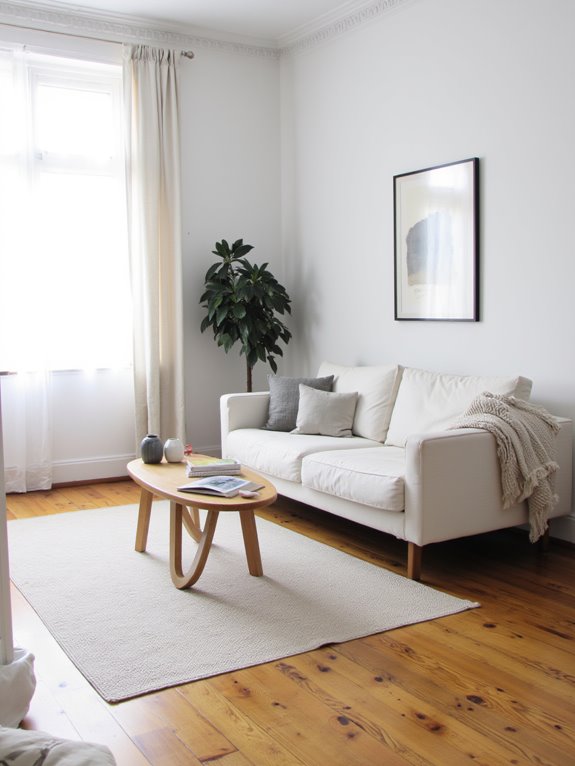
Minimalism plays an essential role in Japandi Scandinavian homes, as it strips away the unnecessary and highlights what truly matters.
I find that embracing minimalism creates a sense of peace and clarity in my space.
Color Palettes for Serene Spaces
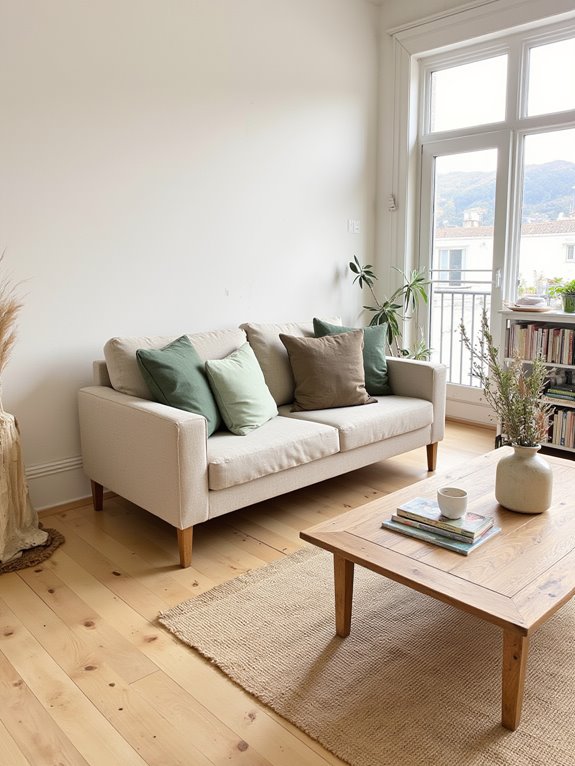
While I appreciate the calming effect of a well-chosen color palette, I find that selecting hues for a Japandi Scandinavian interior can transform a space into a serene retreat.
Soft neutrals like beige, muted greens, and cool blues create an inviting atmosphere. I love incorporating these shades to promote relaxation and balance, ensuring every room feels grounded and harmonious.
Natural Materials in Japandi Scandinavian Interiors
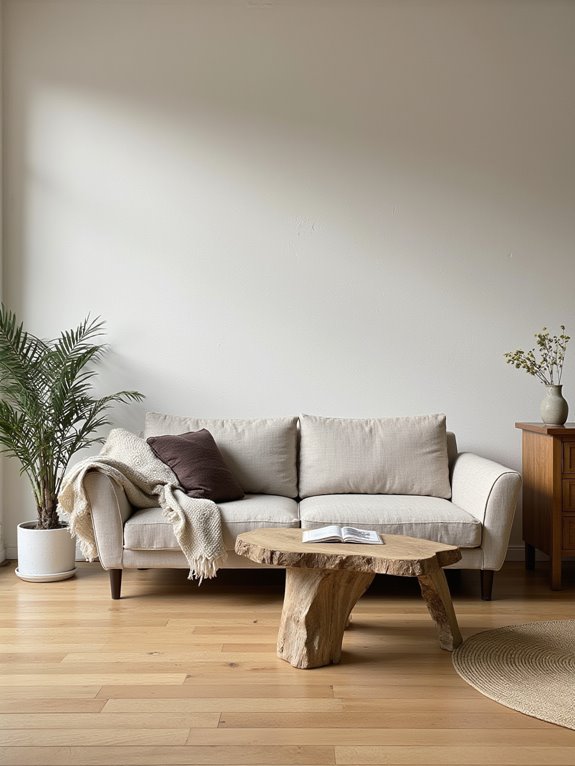
When I think about Japandi Scandinavian interiors, the use of natural materials stands out as a fundamental aspect that enhances the overall aesthetic.
Wood, stone, and textiles create a warm, inviting atmosphere. I love how these elements connect us to nature, bringing a sense of calm and balance.
Incorporating handcrafted pieces adds character, making each space feel unique and grounded.
How Light and Space Enhance Warmth in Japandi Interiors
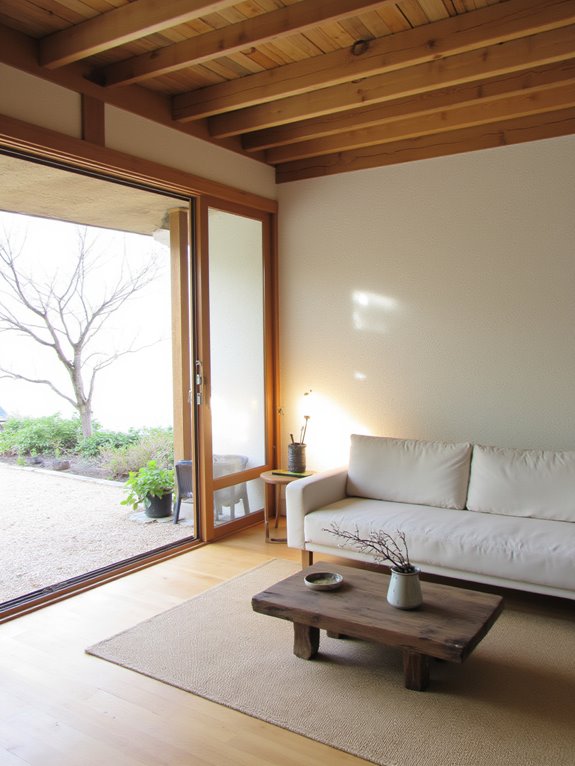
The interplay of light and space plays an essential role in creating warmth within Japandi interiors.
The harmony of light and space is key to achieving warmth in Japandi interiors.
I’ve found that maximizing natural light makes a room feel inviting and cozy. Open layouts enhance this effect, allowing light to flow freely.
Simple, unobtrusive furnishings further emphasize the spaciousness, making the atmosphere feel calm and grounded.
It’s all about striking that perfect balance between light and open space.
Bringing Nature Indoors: Biophilic Design in Japandi Spaces
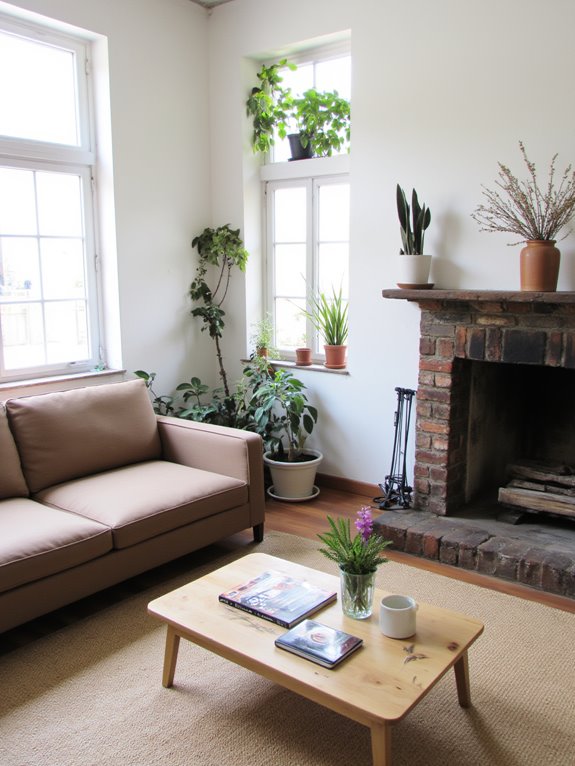
Incorporating natural elements into Japandi spaces not only enhances the aesthetic but also fosters a sense of tranquility that resonates with nature.
I love adding plants, wood textures, and stone accents to create a harmonious environment. These elements invite the outdoors inside, grounding the space.
Functional Furniture: Merging Aesthetics and Utility
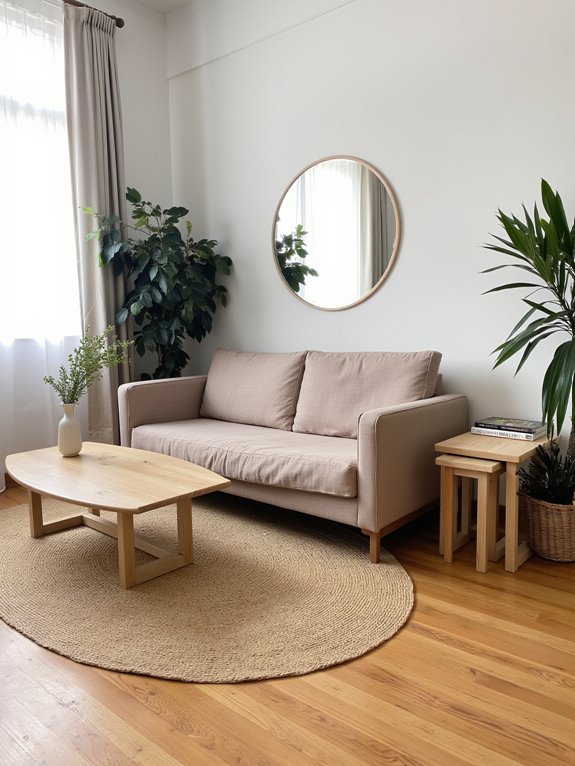
While I appreciate beauty in design, I also prioritize functionality in my Japandi spaces.
Each piece of furniture serves a purpose, from multi-functional coffee tables to storage solutions that blend seamlessly with the aesthetic.
It’s important for me that my surroundings aren’t only visually appealing but also practical, allowing for a harmonious balance between style and everyday use.
Textures That Add Depth to Minimalist Interiors
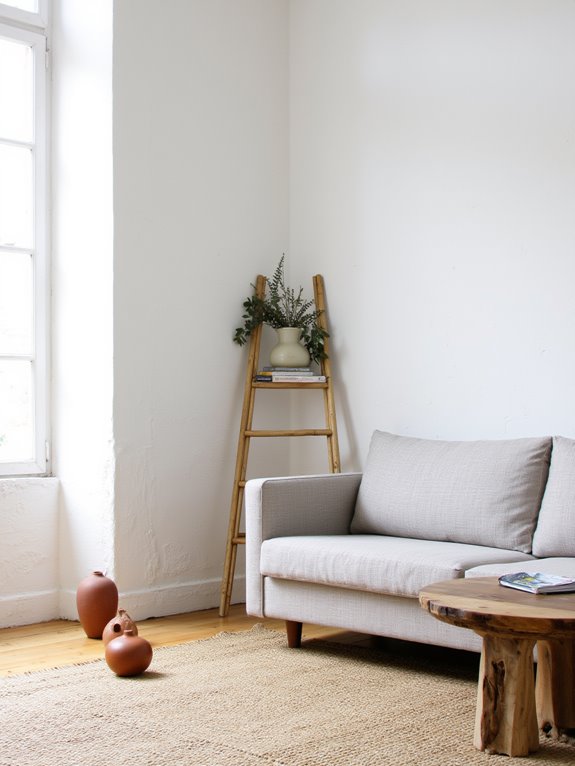
To create a truly inviting Japandi space, I find that layering textures is essential, as it adds depth and interest to minimalist interiors.
Incorporating materials like soft wool, smooth ceramics, and natural wood creates a tactile experience. Mixing matte and glossy finishes also enhances visual appeal.
These subtle details transform a simple space into a warm, inviting environment that feels both stylish and grounded.
Cozy Nooks in Open Spaces
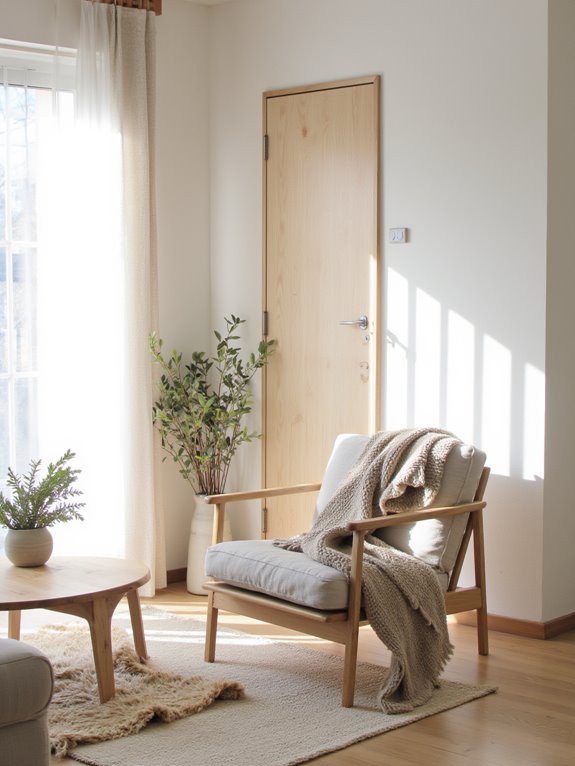
After layering textures to create depth, the next step is to carve out cozy nooks in open spaces.
I love to use a plush chair and a small side table, creating an inviting spot for reading or sipping tea.
Adding soft lighting enhances the ambiance, making it feel warm and welcoming.
It’s these little retreats that make a space truly feel like home.
The Influence of Traditional Japanese Craftsmanship
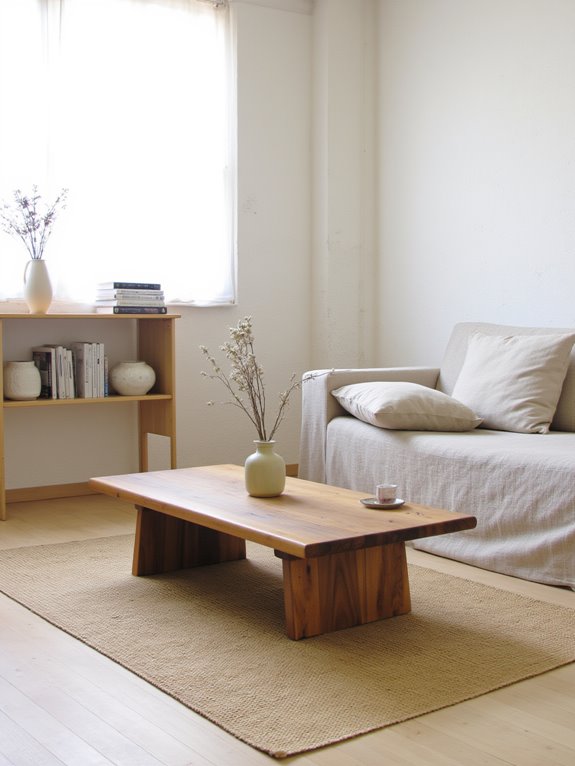
As I explore the world of Japandi design, I can’t help but appreciate the profound influence of traditional Japanese craftsmanship.
The meticulous attention to detail, natural materials, and timeless techniques resonate deeply within this aesthetic.
From handcrafted joinery to the delicate simplicity of pottery, each piece tells a story, grounding my space in authenticity and elegance that’s distinctly Japanese yet harmoniously balanced with Scandinavian elements.
Embracing Scandinavian Hygge for Comfort
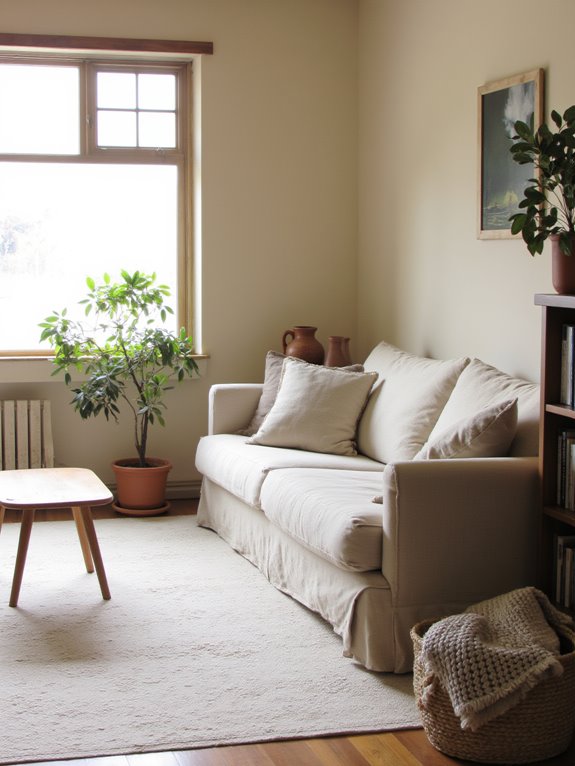
How can we create a space that feels inviting and cozy? I find that embracing Scandinavian hygge is key.
Soft textiles, warm lighting, and natural elements instantly transform a room. I love layering blankets and adding candles for that perfect ambiance.
Surrounding myself with personal touches and simple comforts brings a sense of well-being, making my home a true sanctuary.
Choosing Art for Japandi Interiors
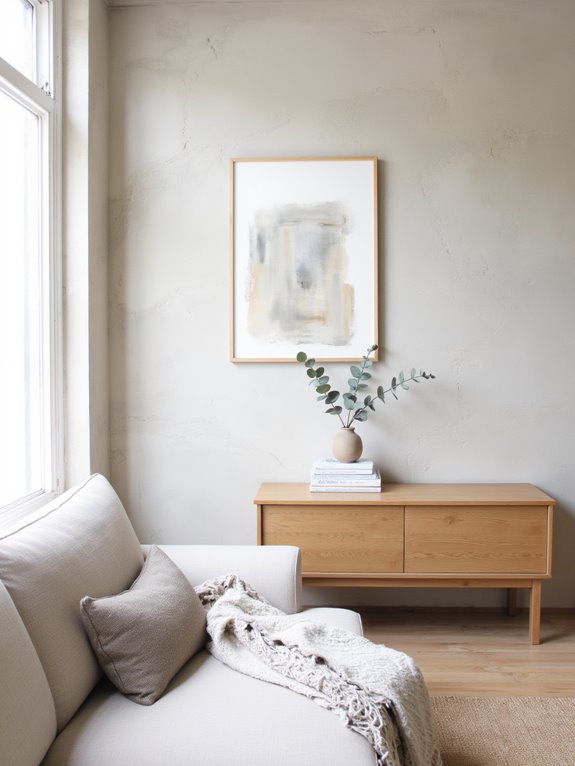
While selecting art for Japandi interiors, I focus on pieces that resonate with the minimalist aesthetic and natural beauty of the style.
I often choose simple, organic forms or muted colors that complement the overall design. Nature-inspired prints or handcrafted ceramics can add a personal touch, creating a serene atmosphere.
Each piece should harmonize with the space, enhancing the calming vibe I aim for.
Blending Indoor and Outdoor Spaces Seamlessly
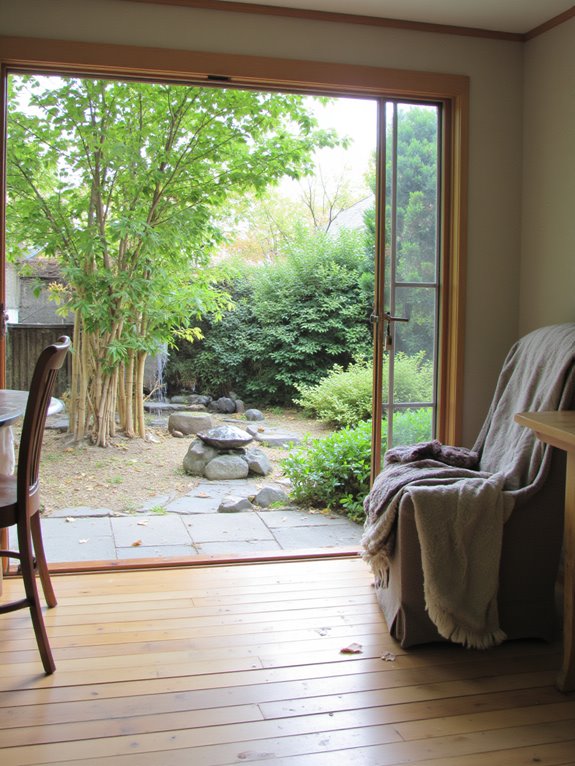
To create a seamless blend between indoor and outdoor spaces, I often incorporate large windows and sliding doors that invite natural light and views into my home.
Choosing natural materials like wood and stone helps maintain that connection, while plants placed strategically indoors enhance the feeling of unity.
This approach not only expands my living space but also fosters a calming, harmonious environment.
Accessorizing Without Clutter: Tips for Japandi Style
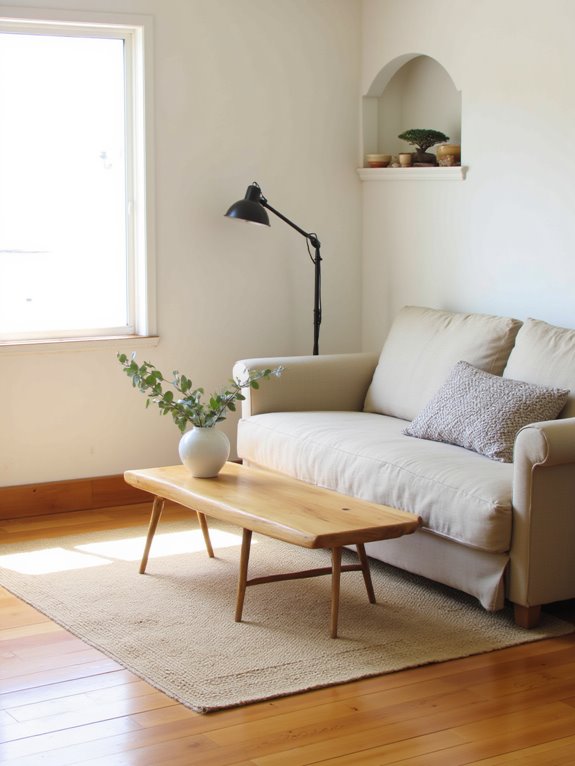
Creating a serene indoor-outdoor connection sets the perfect stage for a Japandi-inspired home, where minimalism and functionality reign.
To accessorize without clutter, I focus on a few key pieces that serve dual purposes, like decorative bowls or sculptural vases.
I also choose natural materials and neutral colors, ensuring each item contributes to the overall tranquility of the space while keeping it visually light.
The Role of Plants in Japandi Scandinavian Design
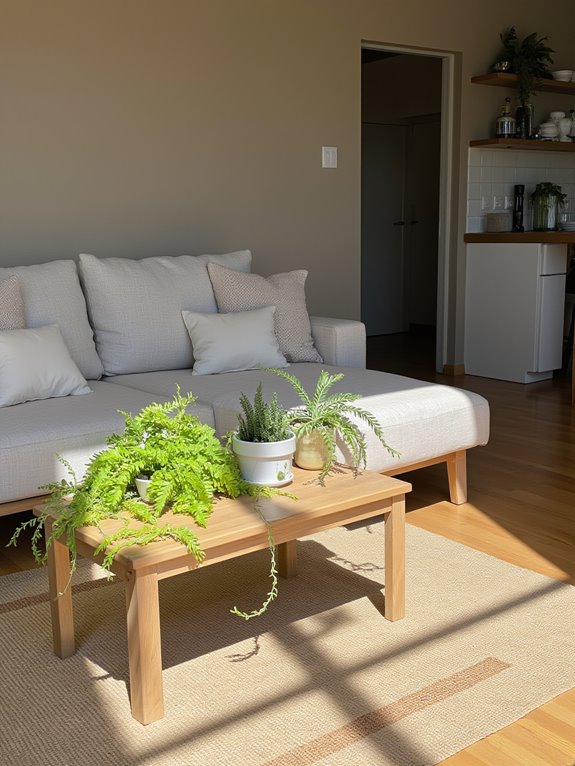
Plants play an essential role in enhancing the Japandi Scandinavian aesthetic, blending nature with minimalism.
I love how they bring life and warmth to a space, creating a calming atmosphere. Simple planters with green foliage complement the clean lines of the decor.
Choosing low-maintenance varieties adds a touch of serenity, reminding me to slow down and appreciate the beauty of nature.
Practical Steps to Achieve a Japandi Look
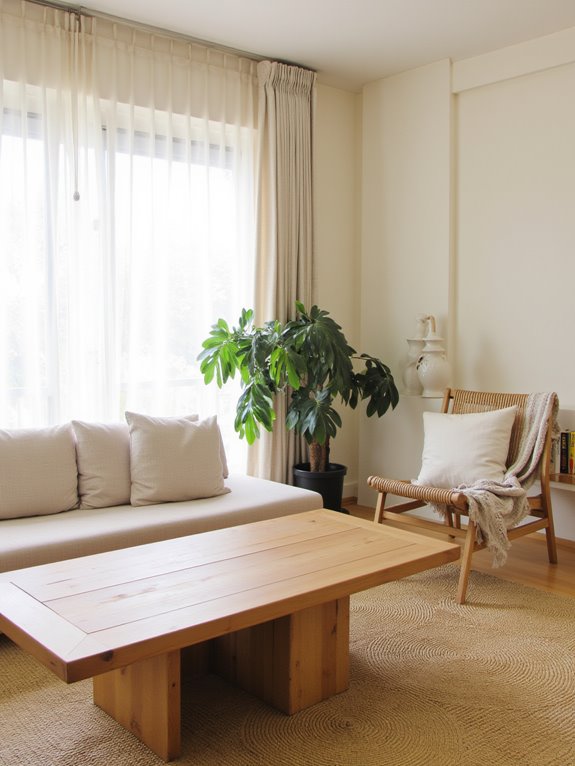
While achieving a Japandi look might seem challenging, it’s actually quite simple with a few practical steps.
Start by choosing a neutral color palette—think soft whites, beiges, and muted grays. Incorporate natural materials like wood and bamboo for furniture.
Keep decor minimal, using only essential pieces. Finally, add some greenery for warmth and life, creating a serene, balanced environment.
Common Mistakes to Avoid in Japandi Scandinavian Design
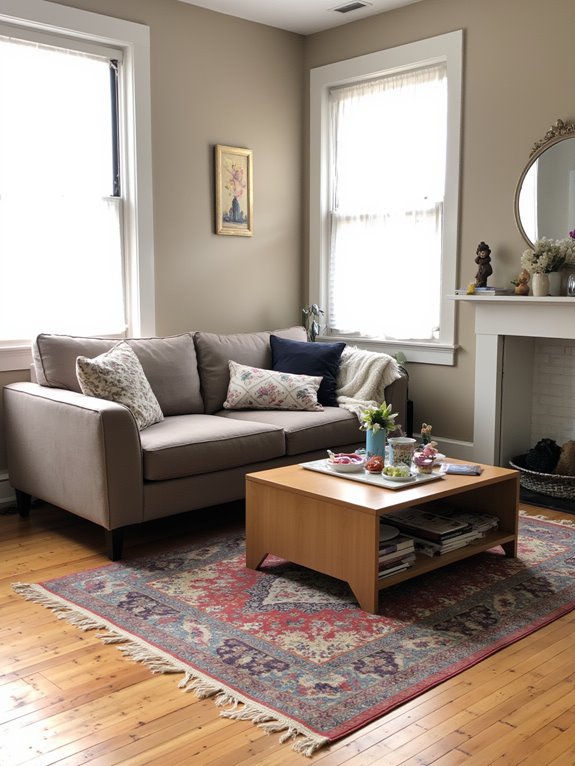
Although the Japandi style is celebrated for its simplicity and elegance, many people make common mistakes that can disrupt the intended harmony.
I’ve noticed that over-cluttering spaces with unnecessary decor or choosing mismatched colors can ruin the aesthetic.
Additionally, neglecting natural materials or poor lighting choices can also detract from the tranquil vibe.
Keeping it minimal and cohesive is key to achieving true Japandi beauty.
