

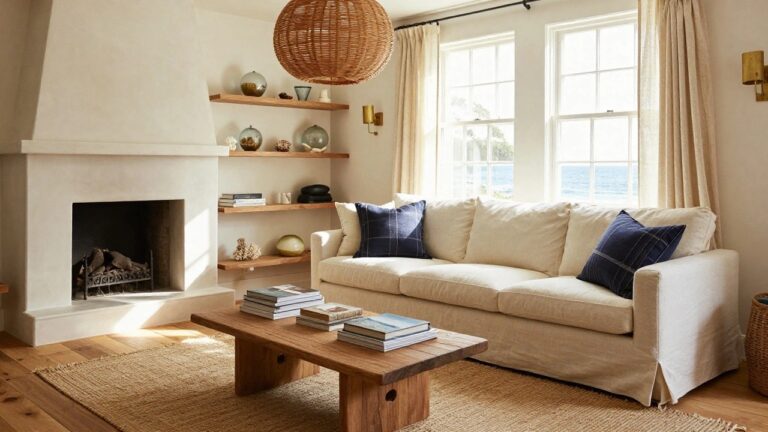
When I walk through homes that draw from the coast the ones that feel right always balance texture and light without crowding the space.
Scale matters more than people expect because oversized pieces can shrink a room instead of opening it up to that breezy feel.
I tested a few coastal touches in my living room last year and noticed how swapping heavy curtains for linen panels shifted the whole mood toward something lighter.
Details add up fast.
Paying attention to how furniture placement affects movement helps these ideas fit into real routines instead of staying on a mood board.
Adding Natural Wood Pieces to Coastal Rooms
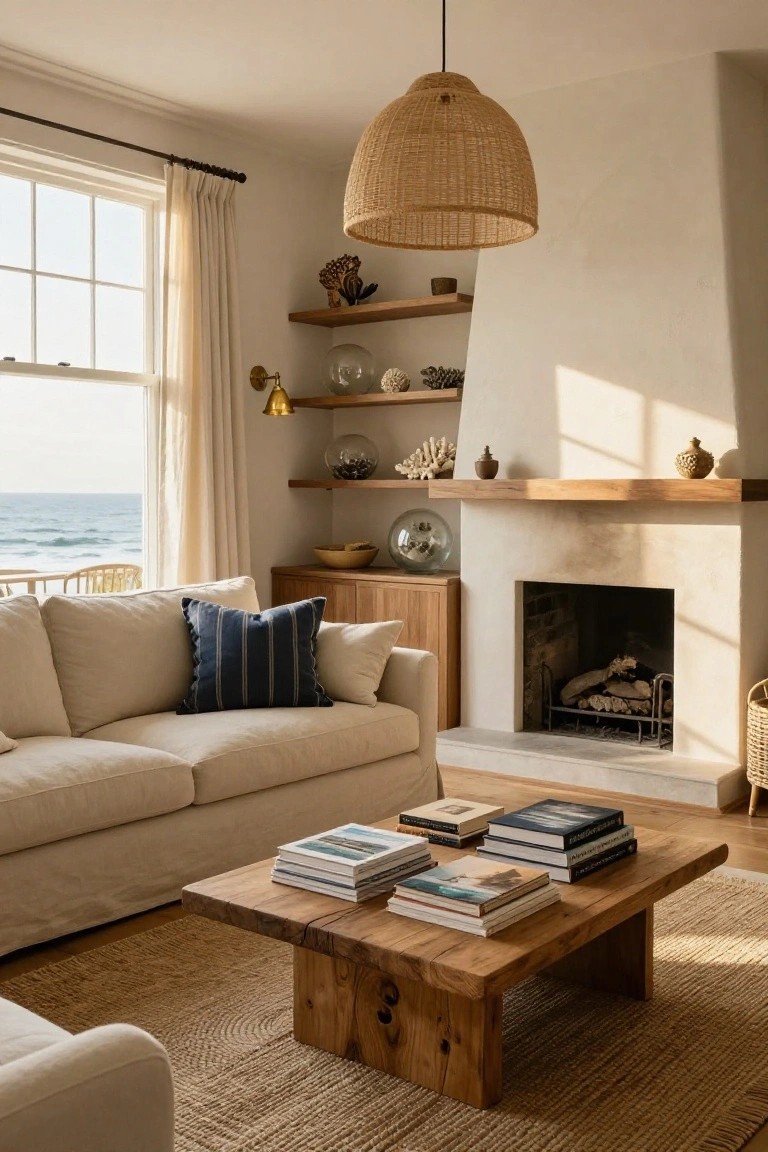
Natural wood furniture and shelving give a coastal room some needed weight. A solid coffee table and simple floating shelves keep the space from feeling too light while still letting the ocean view stay the main focus.
Place one or two larger wood items where they get daily use, like a low table in front of the sofa or open shelves beside the fireplace. This approach works best in homes that already have plenty of light and neutral walls.
Blue Textiles for Coastal Color

Blue textiles give a bedroom that easy coastal feel without needing a lot of extra pieces. A solid throw across white bedding paired with a patterned shade at the window keeps the color focused and the space feeling open and light.
This works best in rooms with plenty of natural light. Stick to one or two shades of blue and let the white and wood do the rest so the look stays simple rather than busy.
Blue Chairs With a Wooden Dining Table

Many coastal homes lean on light colors and pale woods, but adding deep blue chairs around a solid wood table gives the room more presence. The color feels fresh next to natural tones and still reads as relaxed rather than formal.
This works best in open dining areas that connect to a kitchen or bar, where the chairs can tie into other blue accents like tile or textiles. Keep the rest of the room simple so the chairs stand out without crowding the space.
Mosaic Tile In A Shower
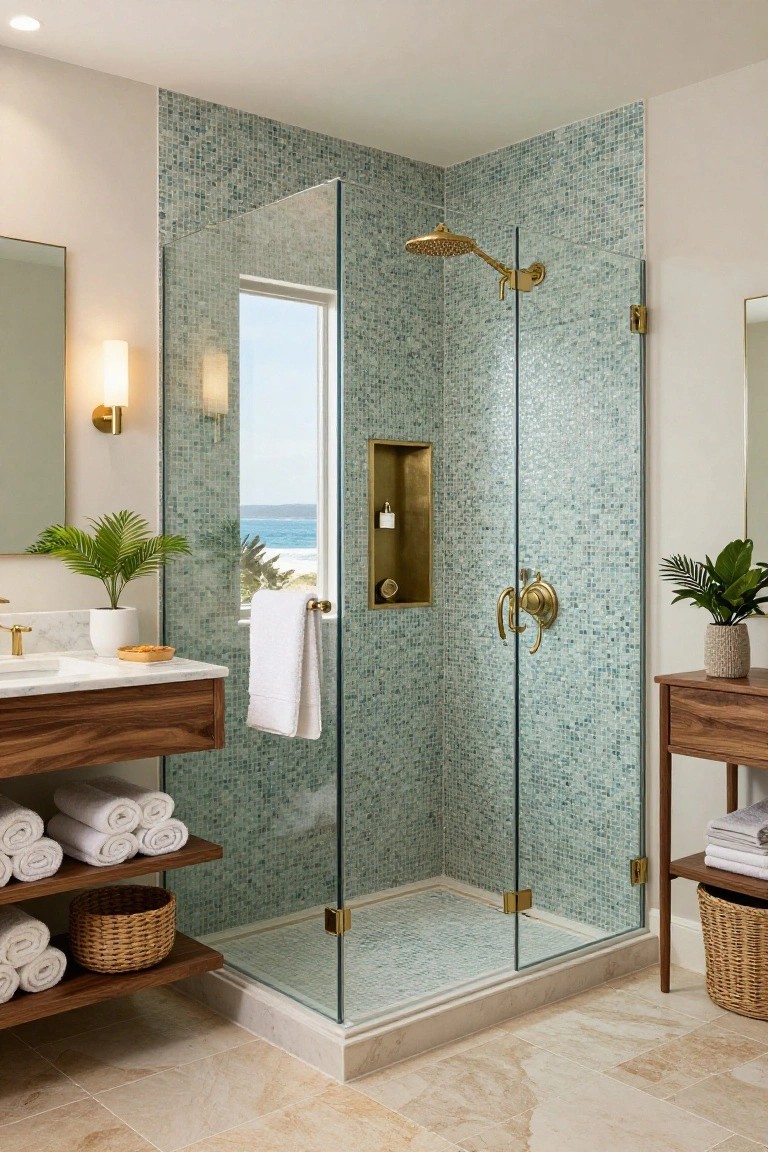
Mosaic tile works well in a coastal shower because the small pieces bring in color and texture without feeling busy. The blue-green tones pick up on the water outside and keep the space feeling calm and connected to the setting.
This choice works best in bathrooms with good natural light or a view. It suits homes near the coast or anyone who wants a simple material upgrade that lasts and does not rely on too many accessories.
Adding Natural Textures To A Home Office
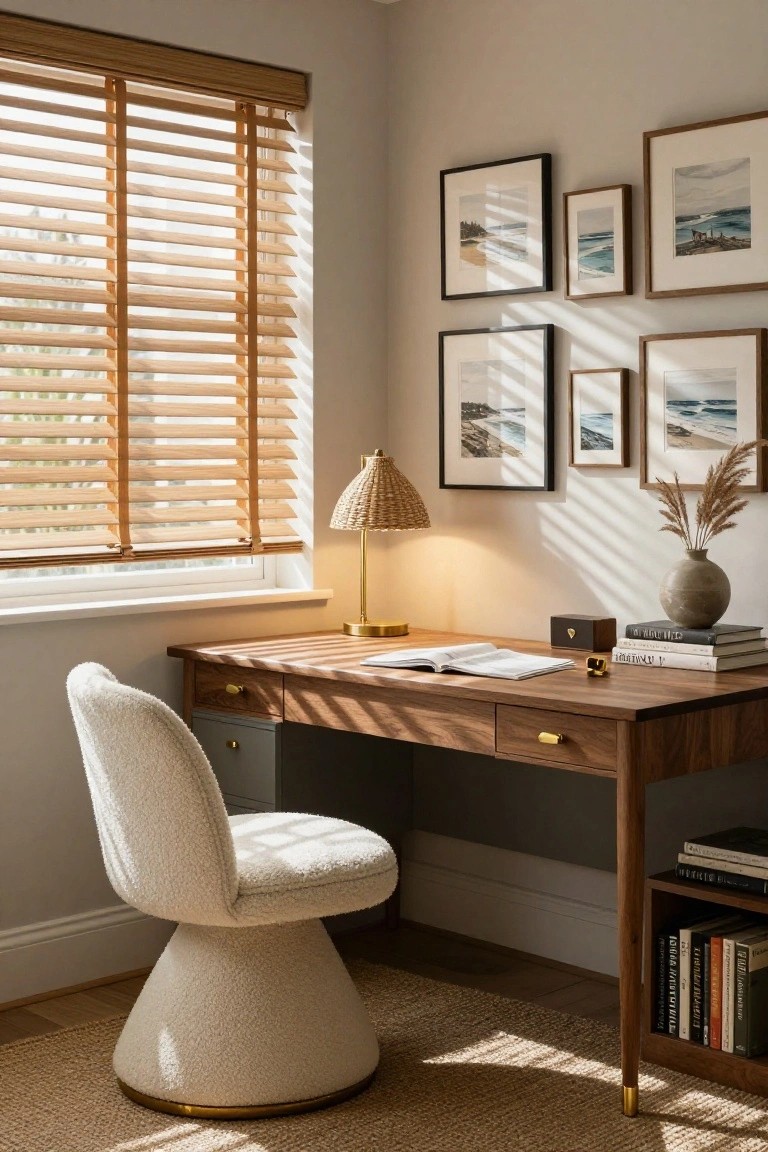
A workspace feels more inviting when you mix wood furniture with softer, organic pieces. The woven lamp and boucle chair bring in that coastal ease without needing seashells or obvious beach themes. It keeps the room functional while still feeling relaxed and connected to the outdoors.
This approach works well in smaller rooms or guest offices where you want calm rather than clutter. Stick to one or two textured items like a woven shade or a fabric chair, then let the wood tones and natural light do the rest. Too many soft pieces can start to feel heavy, so keep the balance simple.
Soft Blue Walls With Natural Wood Furniture
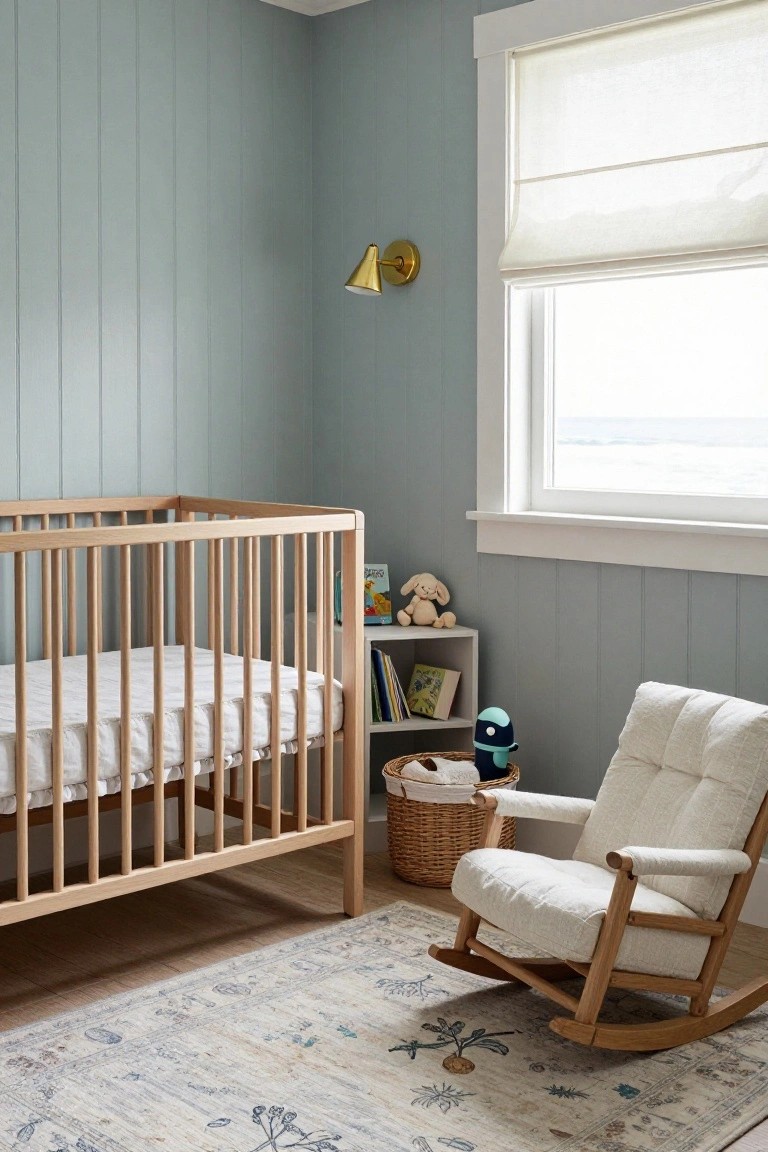
Soft blue gray walls give a room an easy coastal feel without needing lots of extra decoration. The color stays calm next to light wood pieces, which helps the space feel warm rather than chilly.
This works best in a beach house nursery or small bedroom where you want things to feel simple and restful. Stick with natural wood for the main furniture and keep other colors light so the walls stay the focus.
Built-In Cabinetry For Laundry Rooms

Built-in cabinetry works well in laundry rooms because it turns a purely functional space into something that feels finished and calm. The painted wood wraps around the washer and sink, creating one continuous surface instead of a collection of separate pieces. This approach hides the mechanical look of appliances while still leaving room for everyday storage.
It suits homes that already use painted cabinetry elsewhere, especially in coastal settings where a single soft color can run from the kitchen through to utility areas. Keep the countertop simple and use open shelves sparingly so the room stays practical rather than decorative.
Layer Blue and White Bedding for a Coastal Bedroom
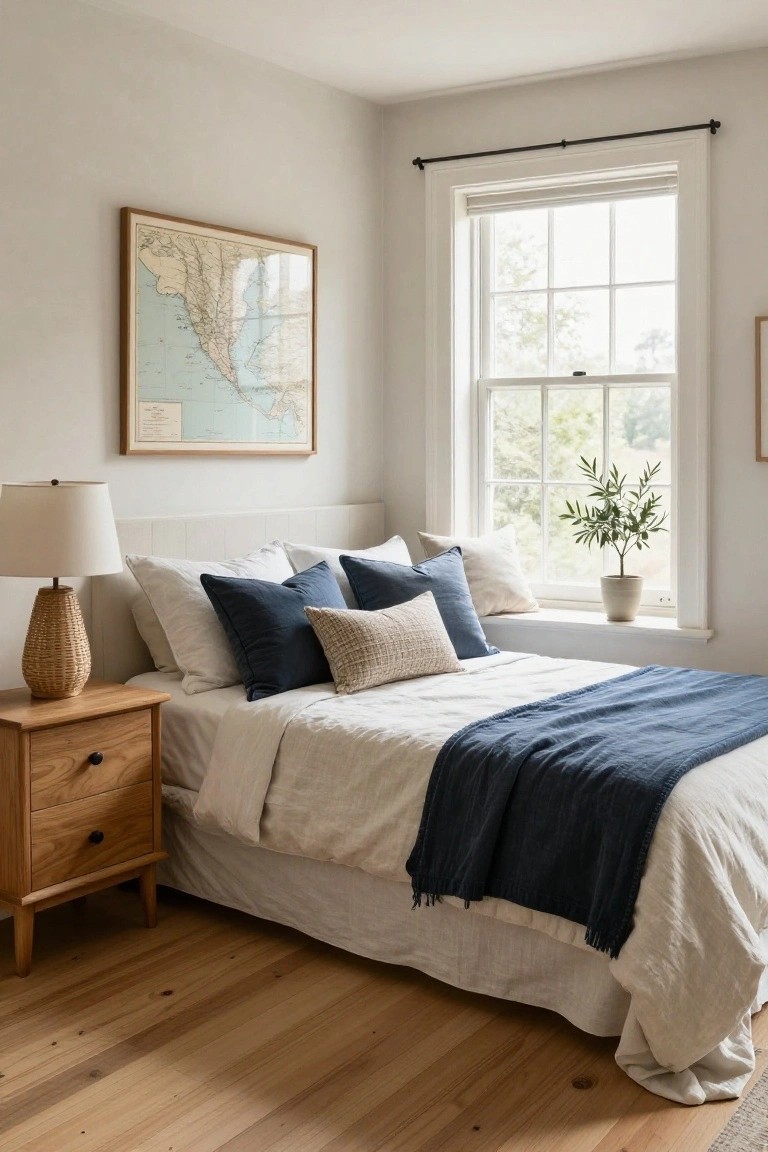
Many coastal bedrooms feel best when the bedding stays simple and light. Layering different shades of blue over white linens gives the room a soft, relaxed look that still feels pulled together.
This approach works well in spaces with plenty of natural light. Use cotton or linen fabrics and keep the mix to just a few pillows so the bed stays easy to make and comfortable to use every day.
Soft Seafoam Walls For Coastal Bathrooms
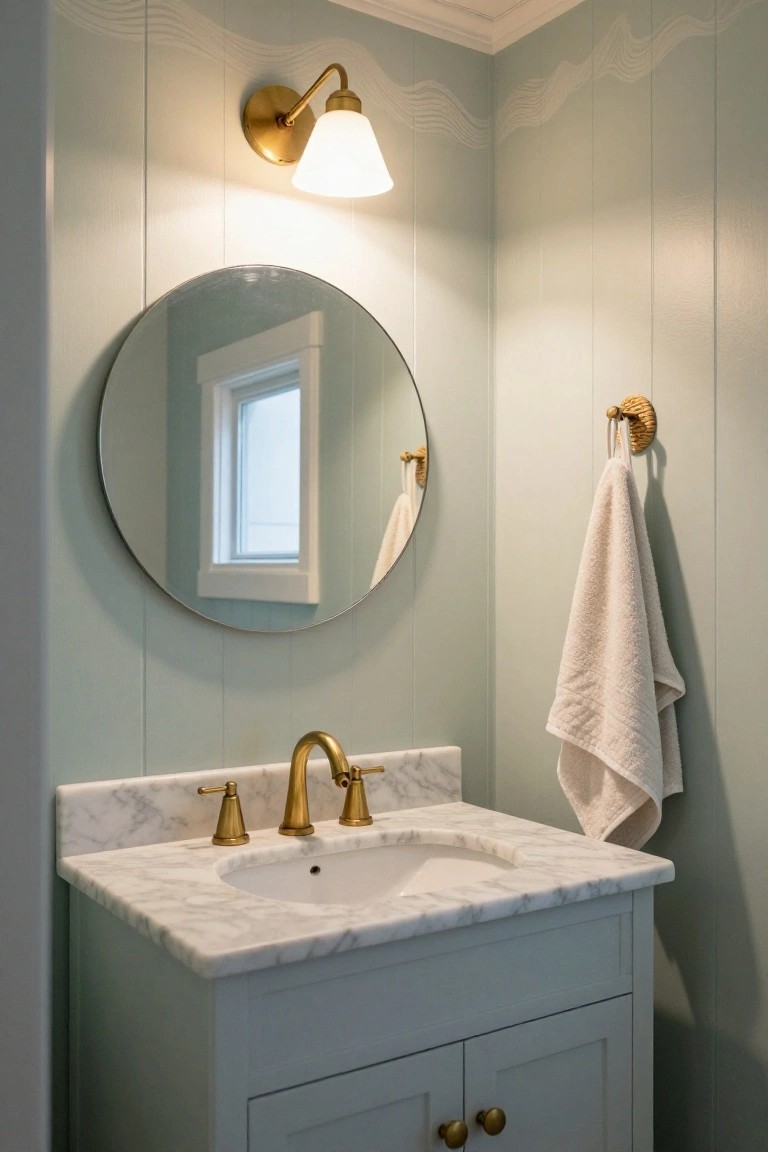
Soft seafoam walls give a bathroom that quiet coastal feeling without turning it into a theme. The color stays gentle on the eyes and works nicely with marble tops and brass fixtures to keep things feeling clean and a little elevated.
This approach suits smaller baths or powder rooms where you want the space to feel light and open. Keep the trim white and avoid heavy patterns so the color can do the main work.
Floating Vanities For A Lighter Bathroom Feel
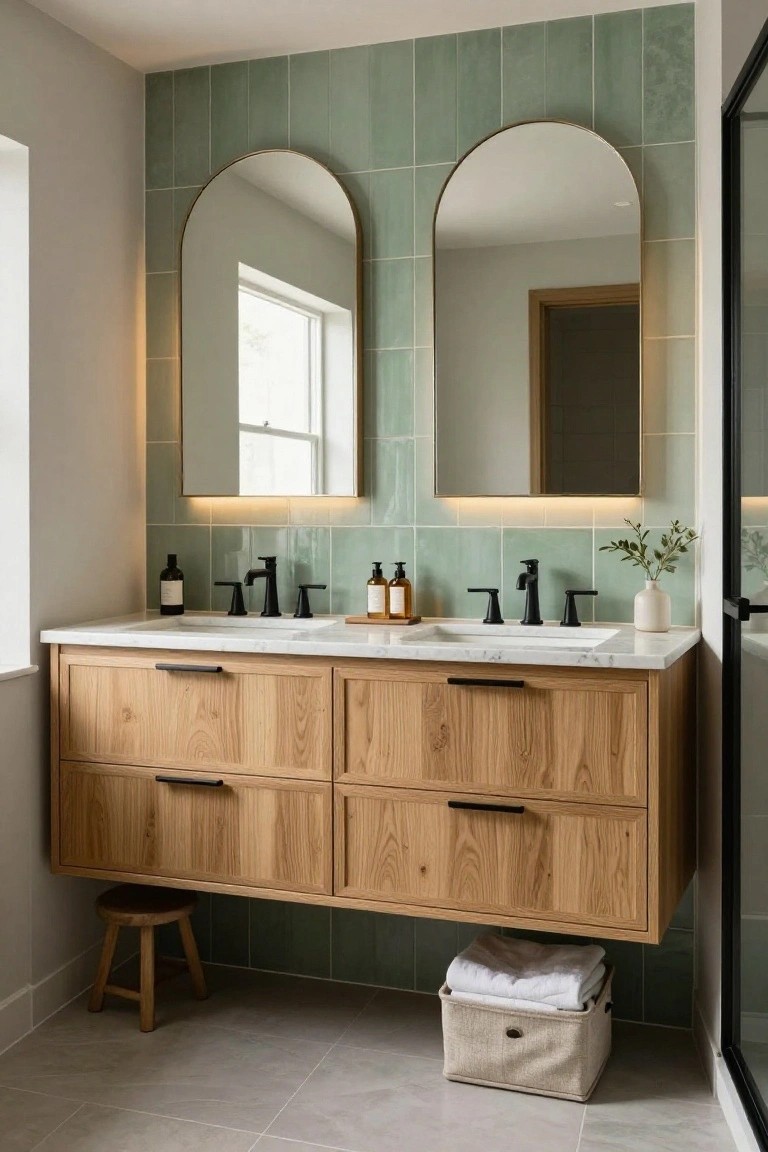
A floating vanity works well in coastal bathrooms because it leaves the floor open underneath. This keeps the space from feeling crowded even when you add storage below. The light wood also brings in some natural warmth that pairs nicely with cooler tile colors.
This setup works best in rooms that already have decent square footage or good natural light. It can make a smaller bathroom feel bigger, but it does mean you need to keep the floor area tidy. Make sure the mounting hardware is solid if you plan to store heavier items in the drawers.
Banquette Seating for Everyday Coastal Dining
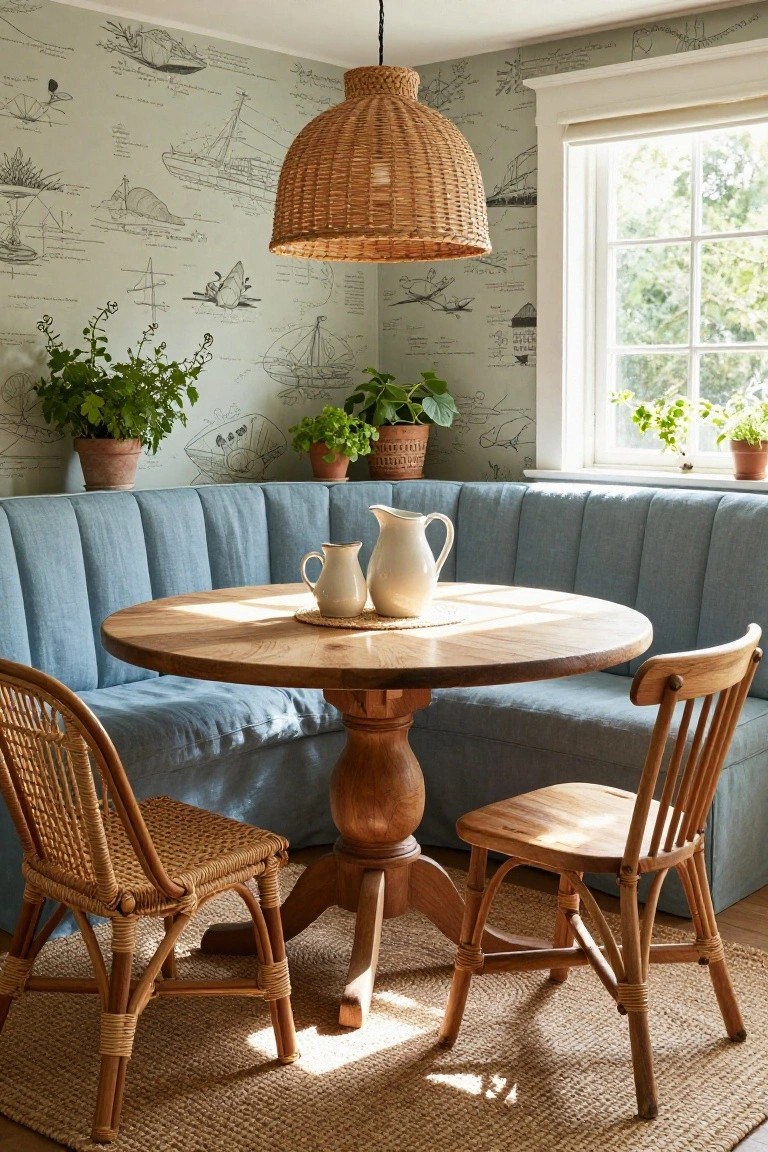
A built-in banquette makes a dining spot feel more relaxed and practical at the same time. It tucks neatly into a corner, frees up floor space, and gives everyone a comfortable place to linger without needing a full set of matching chairs.
This setup works best in smaller homes or open kitchens where you want seating that doubles as extra storage underneath. Pair it with a round table so the flow stays easy, and keep the fabric simple so it holds up to daily use near the coast.
Built-In Shelving For Warmth And Practical Storage
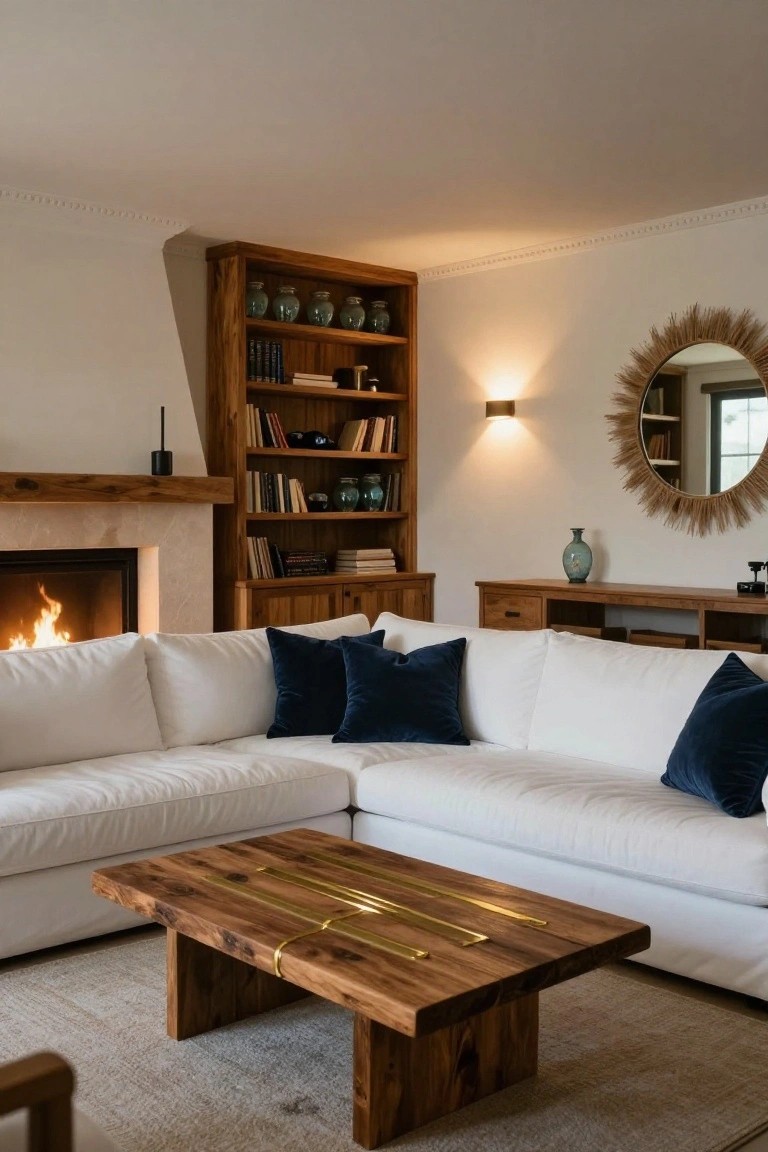
Built-in shelving brings useful storage into a living room without adding extra furniture that can crowd the space. The wood finish adds a natural layer that balances out light seating and keeps the room from feeling too plain or cold.
This works best in homes that want a simple coastal look with room for books and a few collected pieces. Place the shelving next to a fireplace or along a main wall so it anchors the seating area and makes the room feel more grounded.
Woven Baskets In Built-In Storage
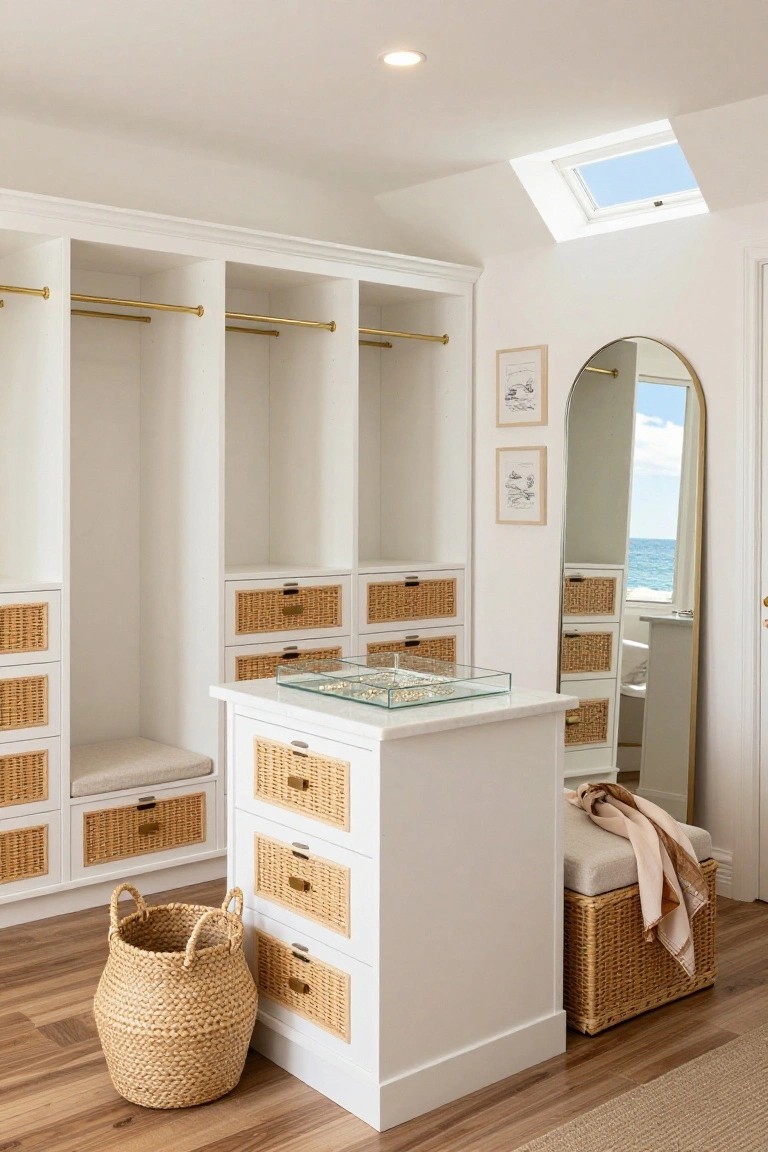
Woven baskets tucked into built-in drawers give a closet that relaxed coastal feel without looking messy. They keep things organized while adding natural texture that fits right in with beach-inspired rooms.
This setup works best in dressing areas or walk-in closets where you need plenty of hidden storage. Stick with white cabinetry and simple hardware so the baskets stay the main material choice.
Soft Blue Gray Cabinets For Coastal Kitchens
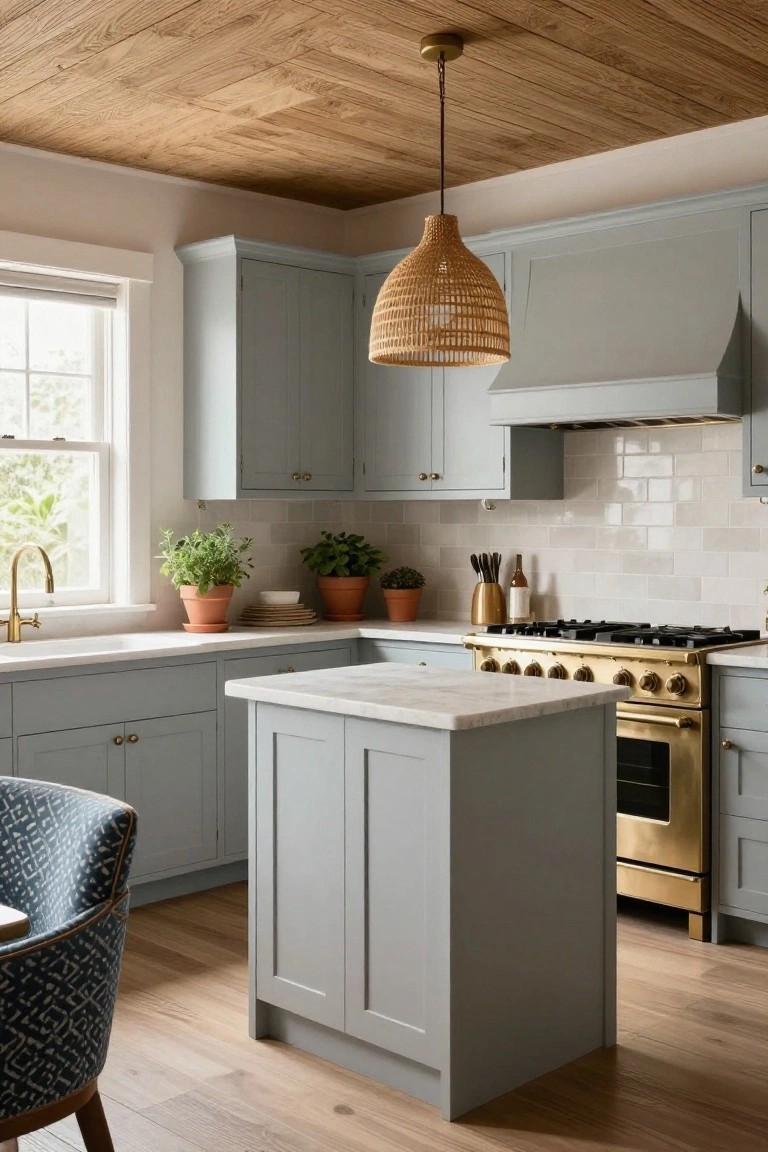
Soft blue gray cabinets give a kitchen that quiet coastal feel without leaning on shells or stripes. The color sits somewhere between gray and sea mist, so it stays calm even when the room gets plenty of light. It works especially well with white counters and warmer wood tones on the ceiling or floor.
This shade suits homes near the water that still want a polished look rather than a vacation-rental vibe. Keep the hardware simple in brass or matte black, and let the cabinets carry the color story. Too many competing tones can make the space feel busy, so stick with one main cabinet color and let natural textures handle the rest.
Striped Runners for Hallways
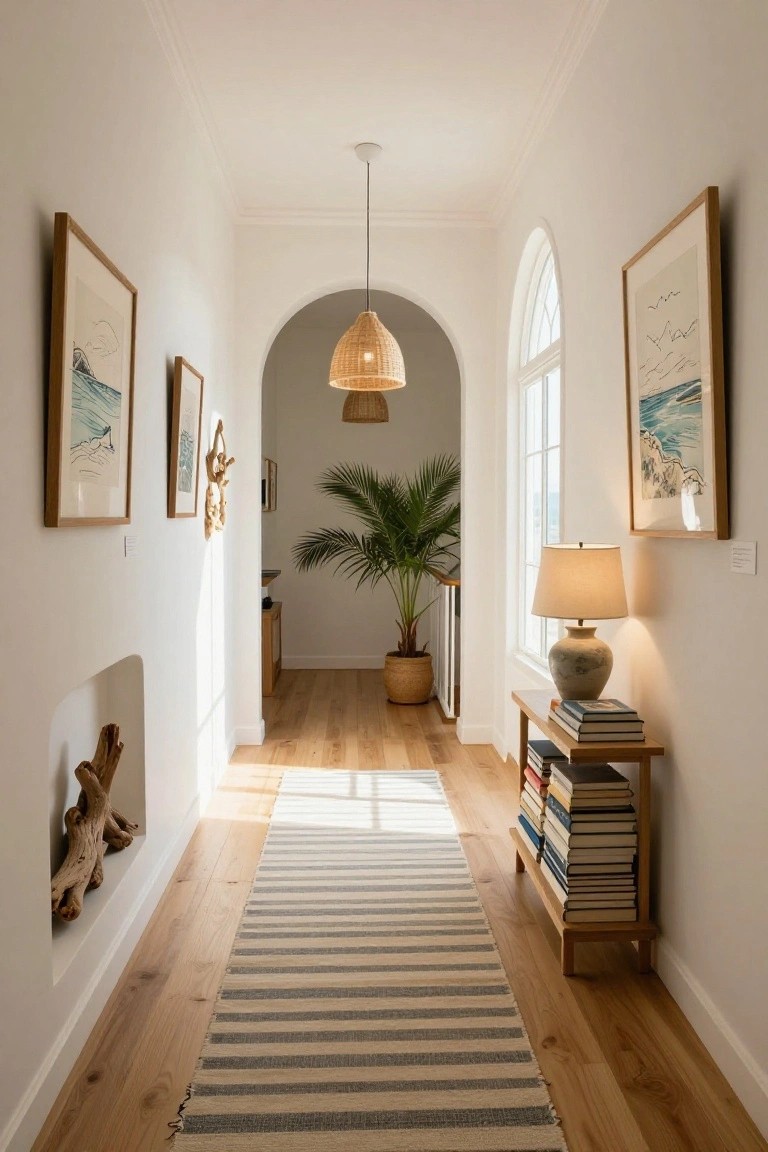
A striped runner gives a long hallway some texture and warmth without making it feel crowded. In coastal homes it helps soften the hard surfaces while still keeping the space light and easy to walk through.
It works best on light wood floors where the pattern can stand out but not overwhelm. Keep the stripes simple and neutral so they blend with other natural pieces like woven shades or driftwood details.
Wicker Furniture For A Sunroom Porch
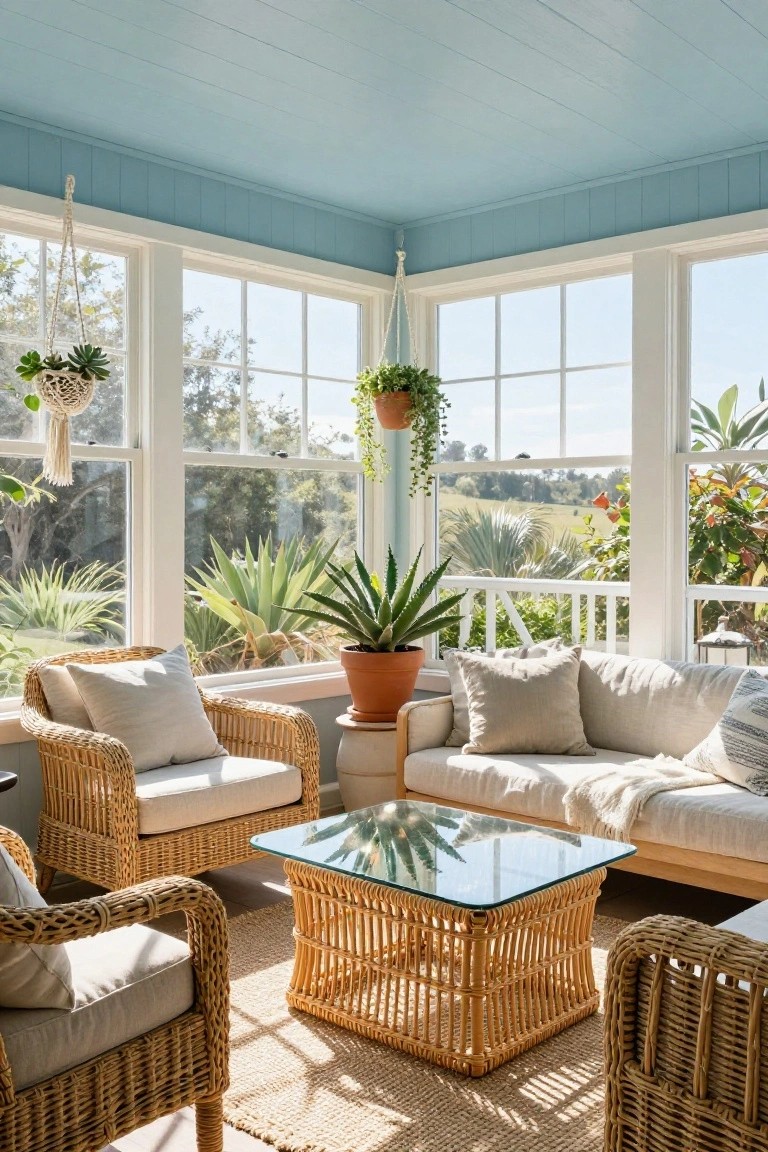
Wicker furniture keeps an enclosed porch feeling open and relaxed even when the space is filled with seating. The light frames and open weave let air and light move through without crowding the room.
It works best in coastal homes where you want something sturdy that still looks casual. Arrange a sofa and a couple of chairs around a low table so the layout stays simple and easy to use on warm days.
Built-In Benches With Hooks Work Well In Entry Spaces
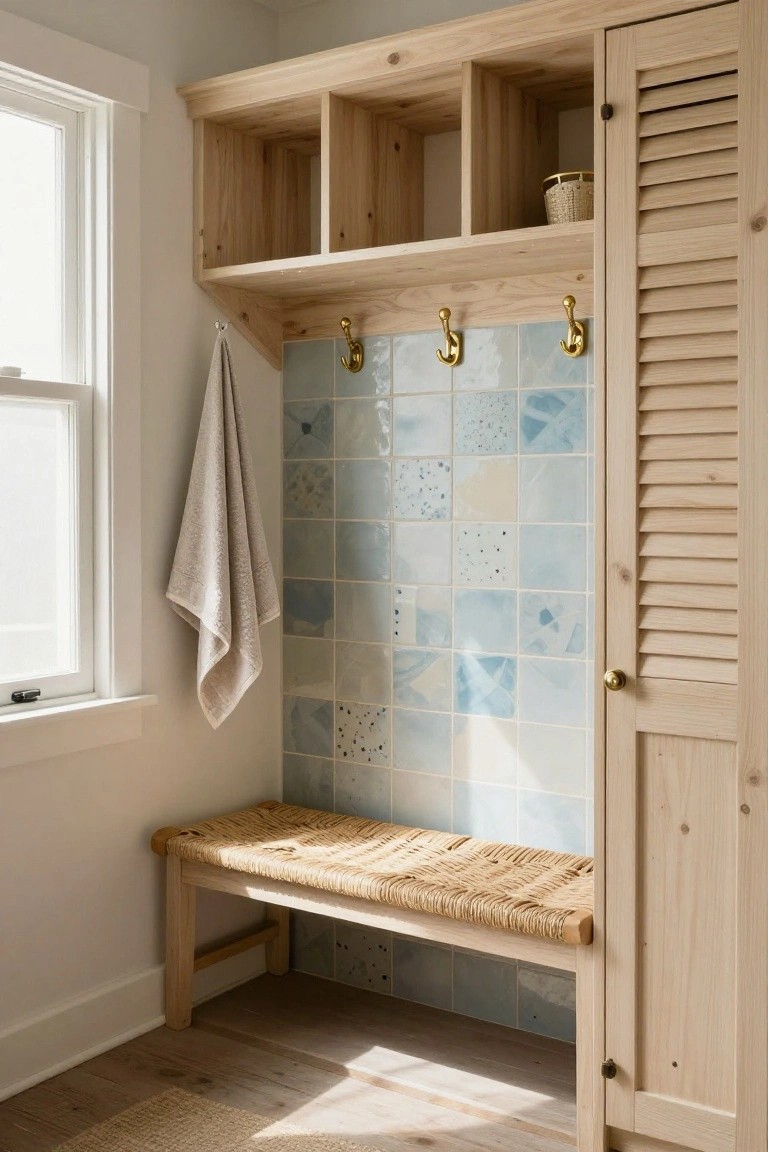
A bench built right into the wall gives you a spot to sit and deal with shoes or bags without blocking the floor. Hooks placed above it keep coats and towels within reach, and the whole thing stays neat even when things get busy.
This kind of setup fits homes that see a lot of coming and going, especially near the coast where people track in sand or wet gear. Light wood and simple tile behind the hooks help the area feel open instead of cramped, and the woven seat adds a bit of texture without extra fuss.
Add a Woven Screen for Natural Texture

A woven screen like the one behind the lamp brings in organic texture without crowding the room. It softens the corner, adds a bit of separation from the window, and keeps the coastal feel light and relaxed rather than themed.
Place it where you need a little visual break, such as beside a sofa or near a reading spot. It works well in smaller living rooms that already have plenty of light and simple furniture. Stick to neutral tones so the weave stays the main detail.
Canopy Beds Bring Softness To Coastal Bedrooms
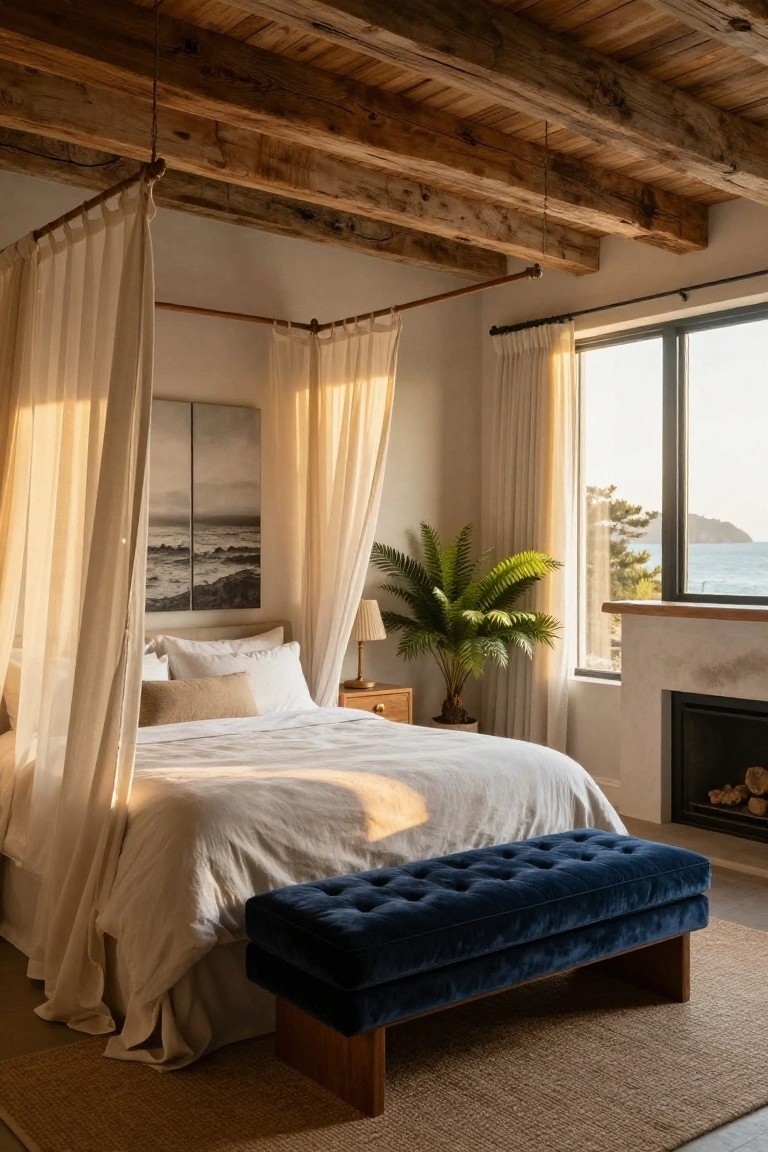
A canopy bed with light drapes gives the room a calm, enclosed feeling without making it feel dark or heavy. The curtains add movement and a bit of privacy while still letting sunlight and views come through, which suits the easy pace of a beach house.
This works best in bedrooms that already have good natural light and simple architecture. Keep the frame light in tone and the fabric sheer so the whole setup stays relaxed rather than formal.
Frequently Asked Questions
Q: How do I choose the right amount of seashells and driftwood without overdoing the theme? A: Start with just a few larger pieces as accents on shelves or tables. Let them stand out against neutral backgrounds. This keeps the space feeling refined rather than busy.
Q: Can these ideas work in a city apartment without natural light? A: Layer in plenty of mirrors to bounce light around your rooms. Choose light-colored woods and fabrics that reflect brightness. You will still capture that airy coastal feel even indoors.
Q: What fabrics hold up best if I want a luxurious coastal bedroom? A: Go for linen or cotton blends that breathe well and soften with age. They add texture without feeling heavy. Wash them regularly to keep everything fresh and inviting.
