

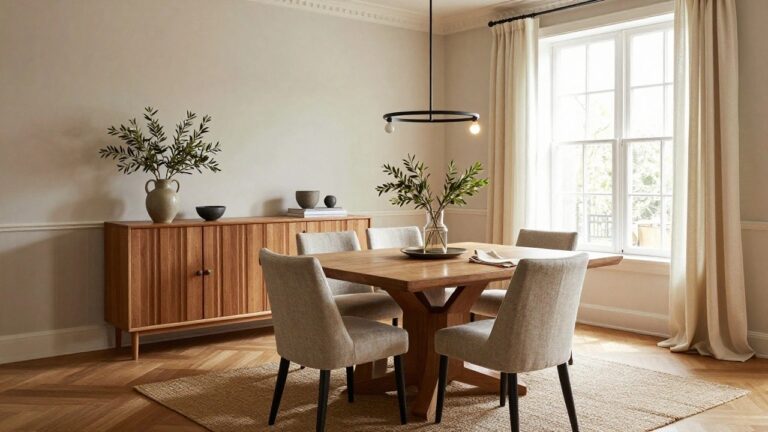
I’ve noticed transitional dining rooms really come alive when they mix clean lines with enough texture to make family dinners feel relaxed instead of formal. They work in actual homes because the layout pulls people in around the table without blocking paths from the kitchen or hallway. I once shifted a sideboard in mine to open up the flow, and it made the whole space breathe better during holidays. Folks usually spot the lighting setup first, how pendants cast a warm glow that highlights wood grains or fresh flowers on the table. A handful of these ideas feel right for tweaking in everyday setups.
Wood Table Paired with Upholstered Chairs

A solid wood dining table like this one sets a nice rustic base for meals. The natural grain keeps things feeling real and lived in. Pair it with chairs in a light gray upholstery and you get that softer side right away. No stiff formality here. The olive branch in a simple vase adds a fresh touch without much effort.
This setup works great in a sunny corner room where natural light pours in. It suits most homes, especially if you want everyday comfort over fancy dinners. Keep walls light and add sheer curtains to let the wood stand out. Just avoid dark chairs, they can weigh the space down.
Banquette Seating for Cozy Dining

A built-in banquette like this one turns a simple dining corner into something really comfortable. Tucked against the wall with soft tufted cushions, it gives you that extra coziness without taking up much floor space. Paired here with rattan chairs around a round marble table, it keeps things light and easygoing.
This works best in transitional kitchens or open living areas where you want meals to feel casual yet put-together. Go for neutral fabrics that hide everyday wear, and add a couple of throw pillows for pattern. It’s practical for smaller homes… just make sure the seating height lines up with your table.
Fireside Dining Table Setup

Pulling the dining table right up to the fireplace works well here. The solid walnut table sits flush against the hearth, with black velvet armchairs and rattan ones mixed around it. That setup draws the eye to the fire and makes meals feel more gathered, like you’re eating in a cozy living area instead of a separate room.
Try this in open-plan homes where dining blends into the family space. Pick a sturdy wood table that can handle the heat proximity, and layer in textured chairs for comfort. It suits transitional looks best, keeping things warm without crowding smaller spots.
Mint Green Farmhouse Dining Table

This dining setup takes a classic farmhouse table and gives it a soft coastal twist with mint green paint on the legs and matching chairs. The natural wood top stays rustic and warm, while the pale green keeps things light and fresh. It’s perfect for rooms with big windows looking out to the water. You get that beach house feel without going overboard on shells or stripes.
Try this in casual family spaces or sunlit breakfast nooks where you want color but nothing too bold. Stick to rush seats on the chairs for texture, and add a few potted plants or simple shell bowls on the table. It suits transitional homes blending old wood floors with white walls. Just avoid dark stains on the wood top. Keeps it clean and airy.
Wood Dining Table with Leather Chairs
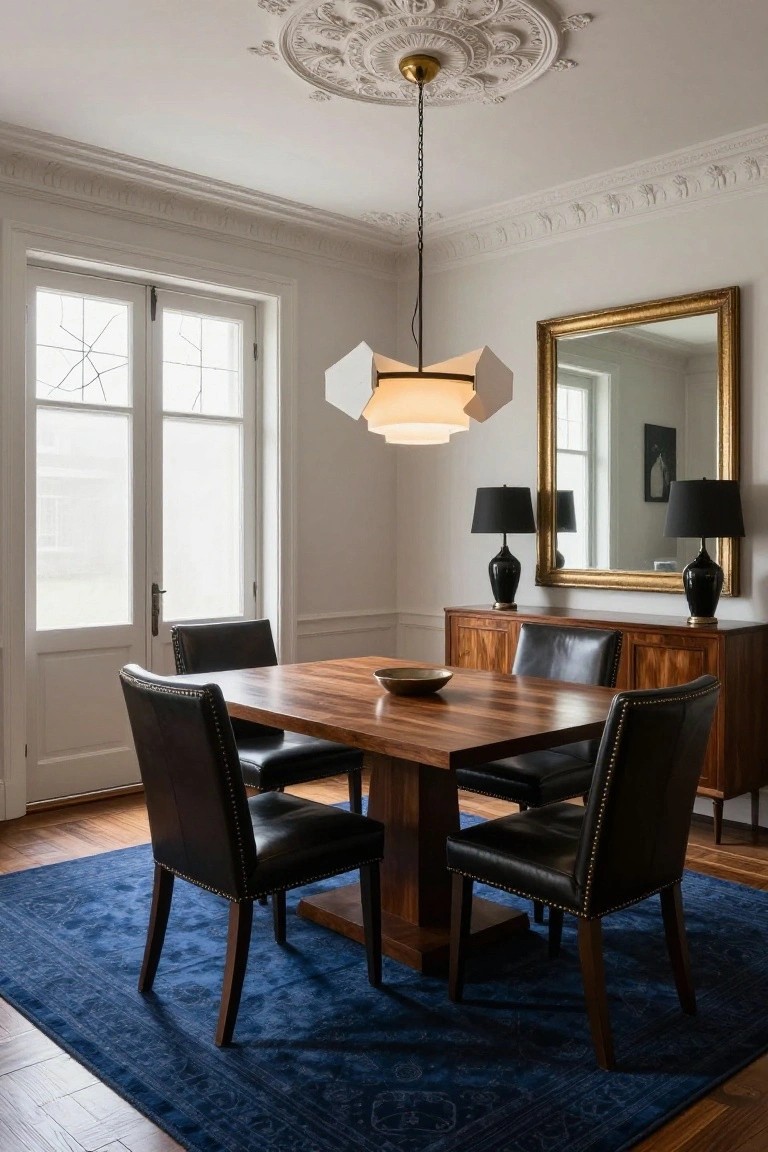
A solid wood dining table paired with studded black leather chairs gives this space a comfortable, pulled-together feel. The warm wood tones echo the credenza across the room, while the leather keeps things from feeling too rustic. It’s a simple way to mix textures that look good together.
This setup fits right into transitional homes, especially dining rooms with white walls and some molding. Center the table on a rug for definition, hang a modern chandelier overhead, and it works for everyday meals or guests. Just make sure the chairs aren’t too low if you have taller folks.
Exposed Brick Dining with Warm Wood
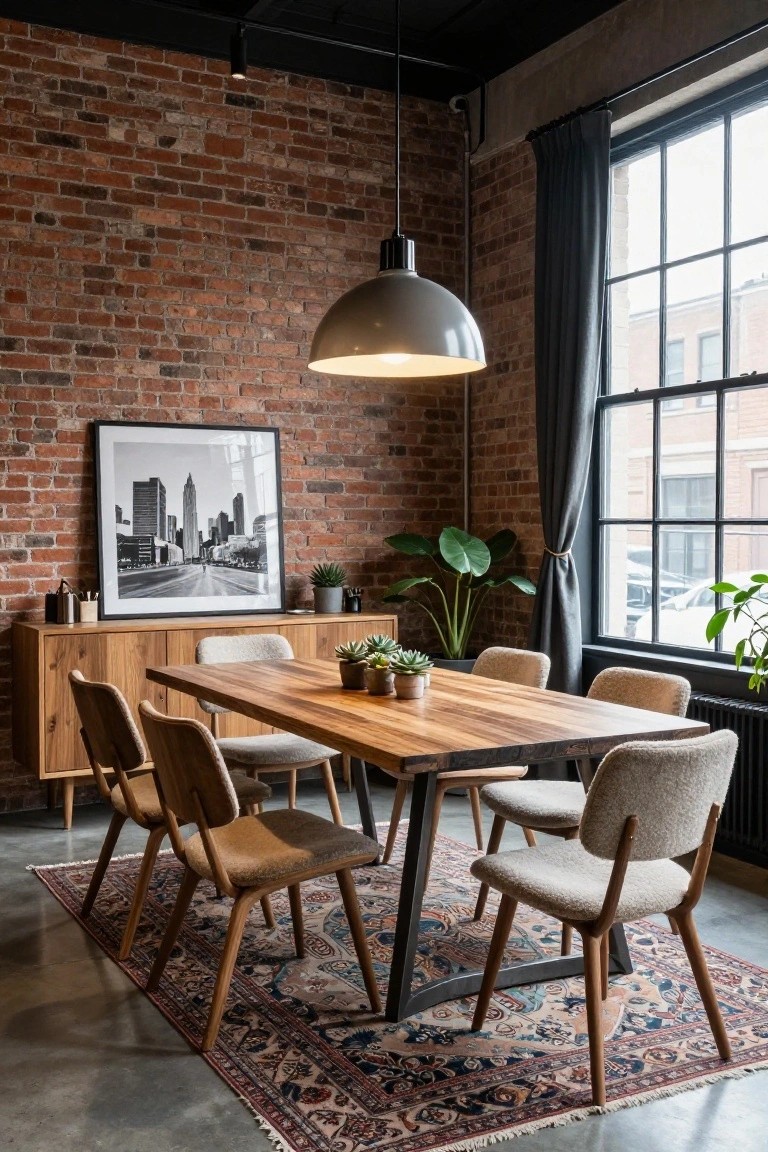
Exposed brick walls give a dining room that rugged, industrial edge. But here, a solid wood table and matching chairs soften things up just right. The natural grain pulls warmth into the space, making it feel lived-in and welcoming without losing the character of the brick.
This setup shines in urban lofts or renovated warehouses where brick is already there. Add upholstered seats and a few plants on the table to keep it comfy for family dinners. Skip overly fussy decor… it stays practical that way.
Black Marble Dining Table on Wood Base
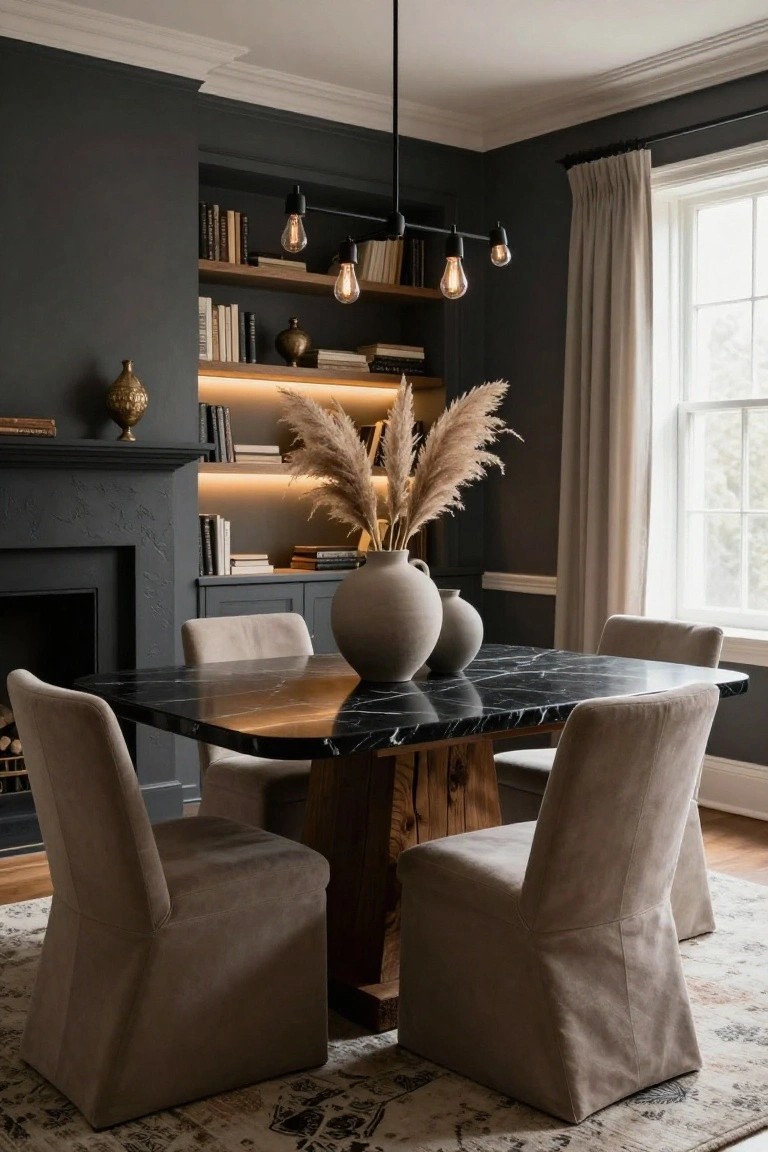
A black marble dining table like this one sits on a thick wood base that looks like reclaimed timber. The marble top has those white veins running through it, catching the light from nearby bulbs. Against dark walls, it adds shine and pattern without overwhelming the space. The wood keeps everything feeling solid and a little rustic, which softens the sleek stone.
This works best in dining rooms with some size to them, where you want a moody look but not too stark. Go for light chairs around it, like beige ones, to balance things out. It suits older homes updating to transitional style. One thing, pick a durable finish on the wood if you have kids or big meals.
Rustic Wood Dining Table Centers the Space
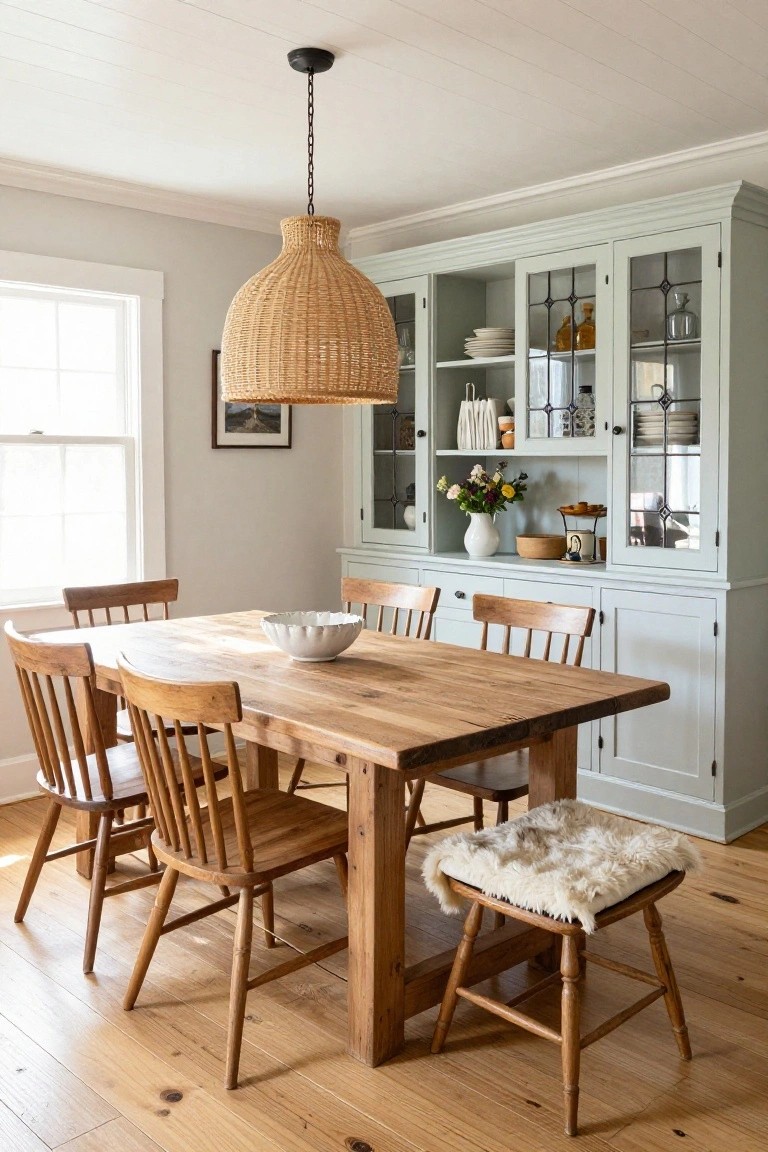
A solid wooden dining table like this one really sets the tone in a transitional dining room. With its thick planks and natural grain, it adds warmth and character against softer walls and cabinetry. The table pulls everything together, making meals feel more grounded and family-friendly.
This setup shines in everyday homes with open layouts or big windows. Go for a similar farm-style table if your room has pale colors or light floors. Add matching wood chairs for flow, and keep styling simple with a bowl in the center. It keeps things practical, not fussy.
Cozy Banquette Dining Nook
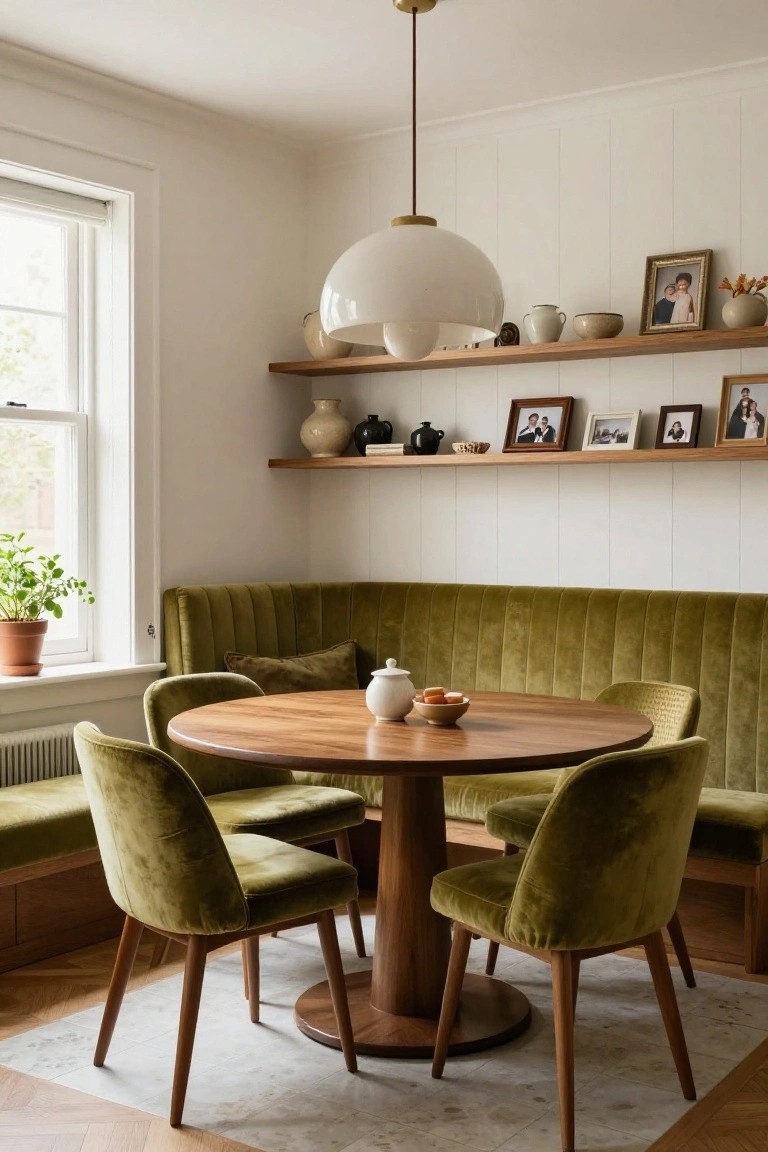
A built-in banquette like this one hugs the corner and turns a simple dining spot into something more inviting. The green velvet upholstery adds a soft touch that makes you want to linger over meals. Paired with a round wood table, it keeps things practical for everyday use without taking up too much floor space.
This works best in compact kitchens or breakfast areas where you need seating for four or more. Go for a color like this green against neutral walls to warm up the room. Just make sure the fabric holds up to family dinners.
Stone Fireplace Wall Adds Dining Room Character

A stone fireplace wall like this one brings real texture and a bit of rustic feel right into the dining space. It’s built from light beige limestone blocks that look natural and worn just enough, standing out against the white walls and high ceiling. That contrast makes the room feel grounded without being too heavy. Paired with a simple oak table, it keeps things balanced and easy on the eyes.
This setup works best in homes that mix old-school charm with cleaner lines, like transitional style. Put it in a room with big windows for light, and add wood furniture to echo the warmth. Skip dark stones if your space is small. It suits family dinners or casual gatherings, making the area feel more lived-in.
Wooden Dining Table with Black Chairs
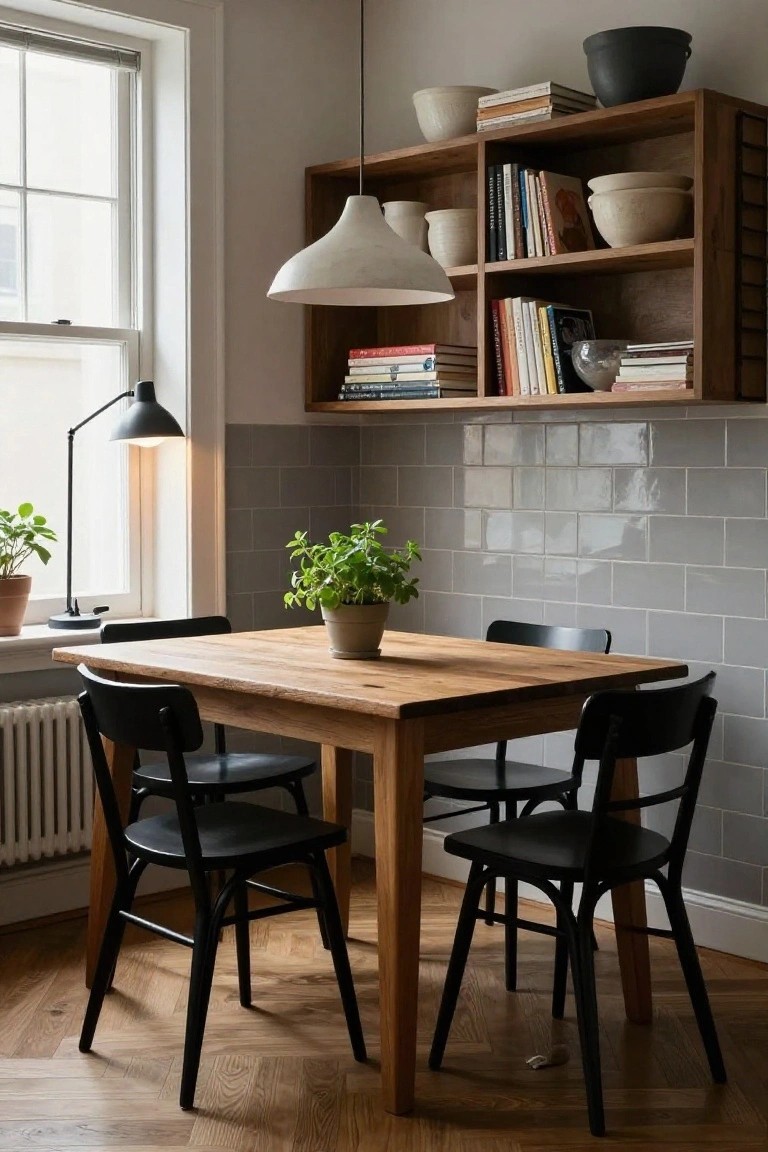
A plain wooden table like this oak one sits right in the center, with four black chairs tucked around it. The wood gives a warm, natural feel that fits older homes or apartments, and the black chairs add a clean edge without much fuss. A pot of herbs on the table keeps it lively and real.
This works best in a snug spot off the kitchen, where you want meals to feel easy and not too fussy. Try it against a tiled wall for contrast. Skip matching sets. Just make sure the chairs have that slight curve for comfort.
Blush Pink Velvet Chairs Soften Classic Dining Rooms

Those blush pink velvet chairs catch your eye right away around the round wood table. They add a plush, feminine touch that eases up the room’s traditional moldings and gold chandelier without overwhelming things. It’s a simple switch from standard seats that makes dinners feel warmer and more relaxed.
You can pull this off in older homes with wood furniture or paneled walls. Just pick chairs with a gentle curve like these tufted ones, and keep the rest neutral. It suits spaces that flow into living areas… watch for too much pink elsewhere, though, or it might tip too sweet.
Round Table for Open Dining Flow
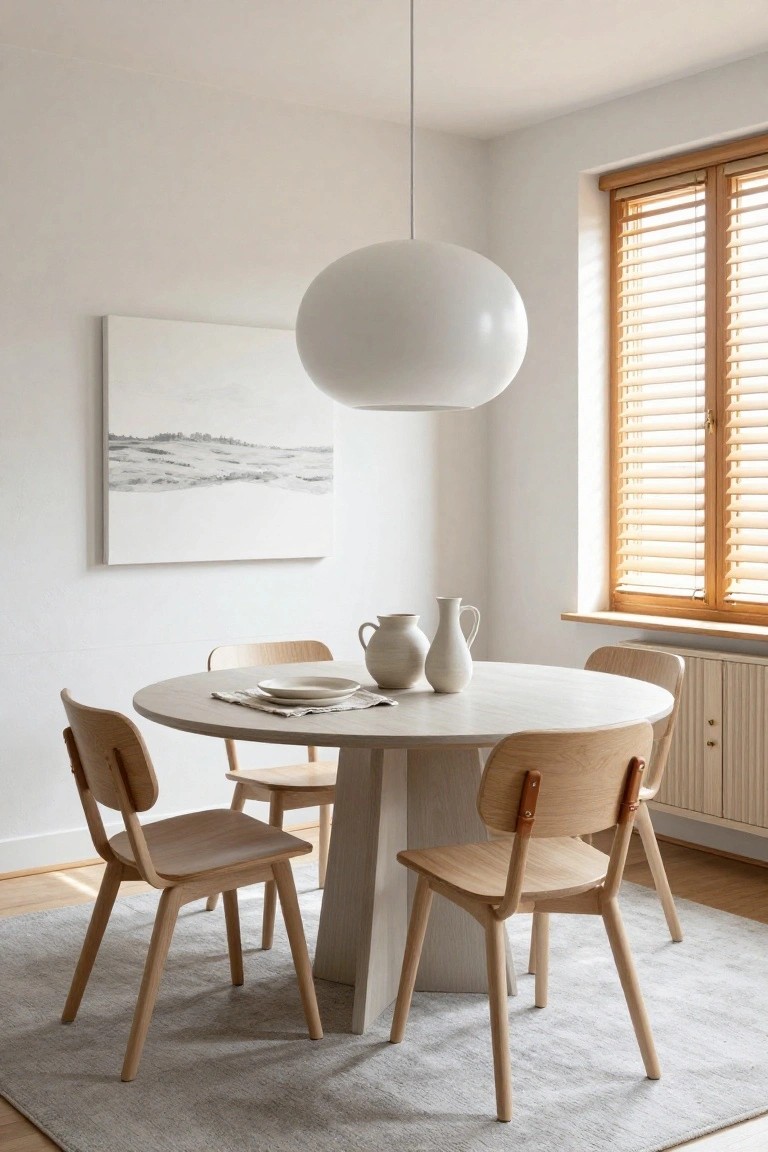
A round table like this one pulls a dining room together without crowding the space. The light wood finish matches the chairs nicely, and that big white pendant light right over the center keeps everything feeling balanced and easy. With neutral walls and a simple painting nearby, the whole spot stays calm and ready for meals any day.
This works best in smaller rooms or open layouts where you want flow between kitchen and living areas. Go for pedestal bases to skip leg bumps, and add a couple of ceramic vases for a touch of life. Skip heavy tablecloths… just a light runner if anything.
Black Walls and White Chairs
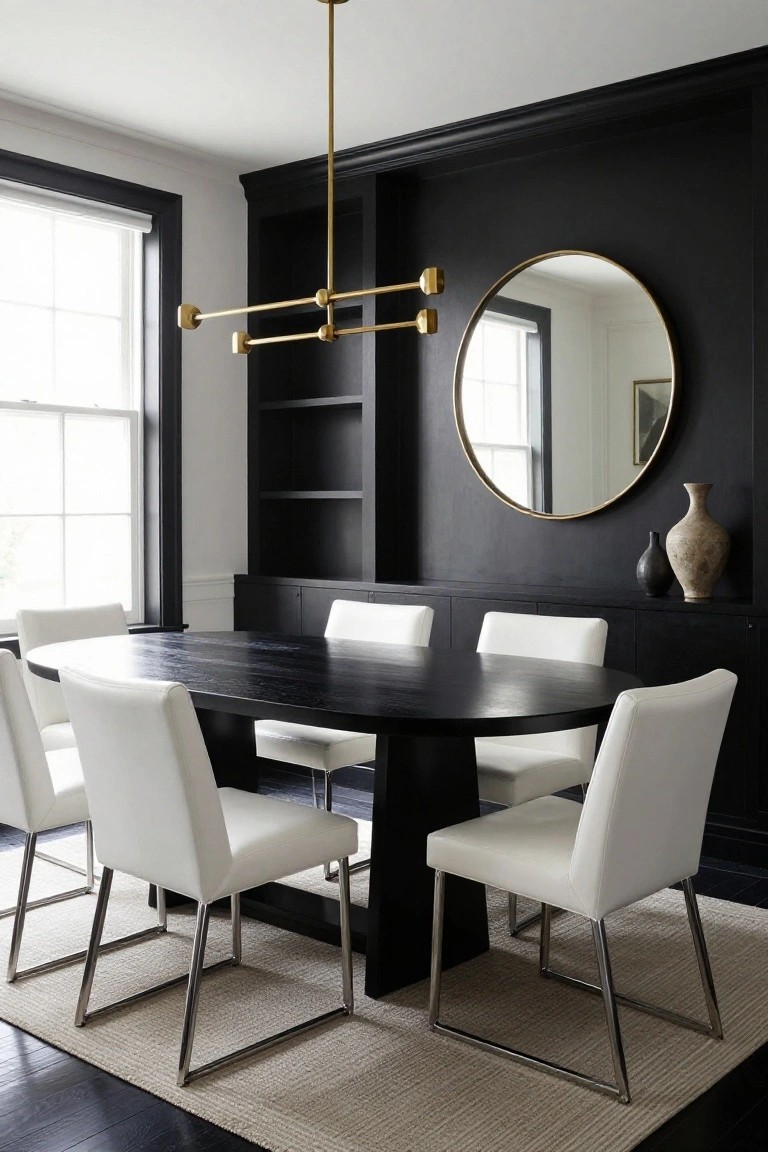
Black walls give this dining room a strong, moody look right away. White chairs around the black table keep it from feeling too dark. A gold chandelier overhead pulls in some light and warmth. That simple switch from dark to light makes the whole space pop without much fuss.
Use this in a room with windows for daylight. It works well in older homes getting a modern update. Just add a few metallic touches like that mirror or light fixture. Skip it in super small spots. Might close things in too much.
Rustic Brick Fireplace Dining Nook

A brick arched fireplace like this one makes a natural gathering spot for meals. The exposed bricks give some old-house charm, while the white plaster walls nearby keep things light. Pull up a sturdy farm table right in front, and you have a spot that feels both sturdy and easygoing. Pottery on the niche shelves adds a bit of everyday interest without much fuss.
This works well in transitional spaces where you want warmth but not too heavy. Fit it into a kitchen-dining combo or a sunlit breakfast area. Use cane-back chairs for comfort, and let natural light from nearby windows do the rest. Skip overly fussy decor. It suits homes with some character already, or ones you’re softening up.
Oval Dark Table with Green Velvet Chairs

This dining room centers on a smooth oval table in deep black wood, ringed by chairs in plush green velvet. The dark table gives a solid base. The green adds a cozy layer that pulls the eye without clashing against pale walls. It’s a straightforward way to make meals feel special.
Use this setup in rectangular rooms where you want some drama but not too much. It fits transitional homes with classic moldings. Add sheer curtains at the windows for softness. Keep other pieces simple, like a gold-trimmed cabinet nearby, so the table and chairs stay the focus.
Copper Lighting Adds Warmth to Neutral Dining Rooms
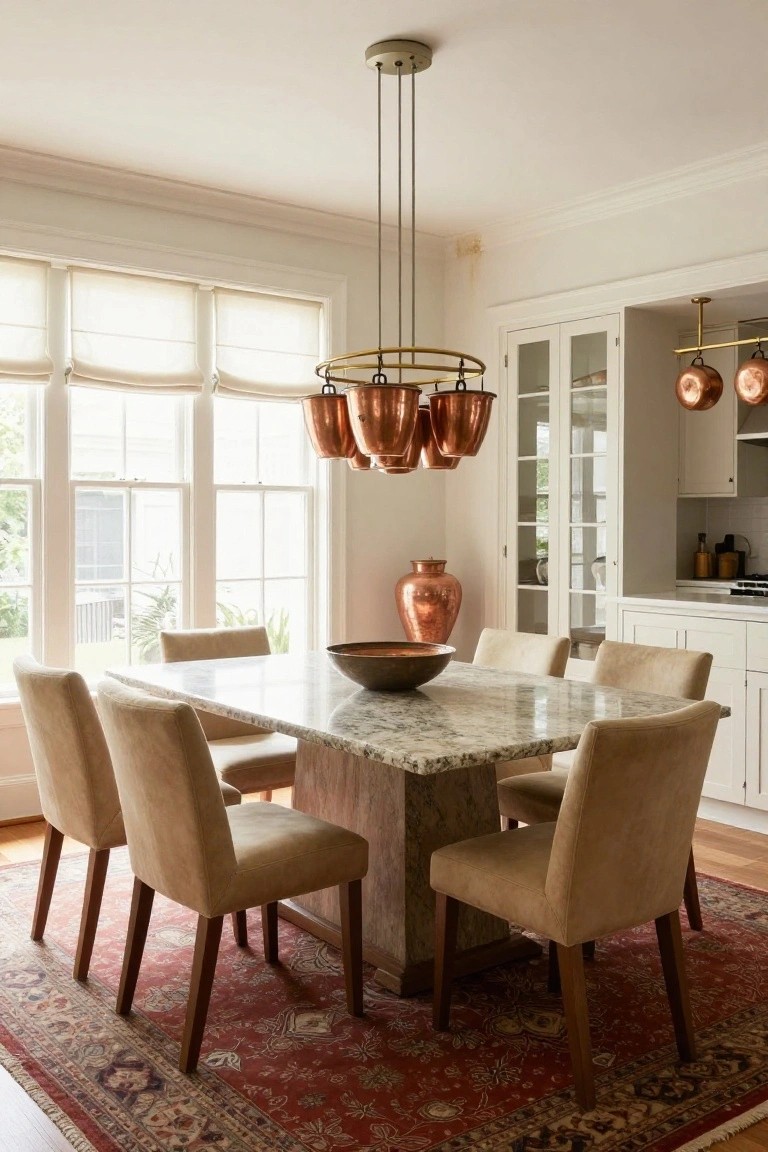
A standout copper chandelier with lantern shades hangs right over the dining table in this setup. Those warm metallic tones pop against the soft beige chairs and white walls, giving the room a cozy glow without much fuss. It’s a simple way to make a plain space feel more lived-in and special.
This look fits best in sunny spots with big windows, like breakfast nooks or open kitchens. Go for a stone-top table to echo the shine, and layer in a patterned rug below for balance. Skip busy patterns overhead. Keeps things transitional and easygoing.
Compact Corner Table for Casual Dining
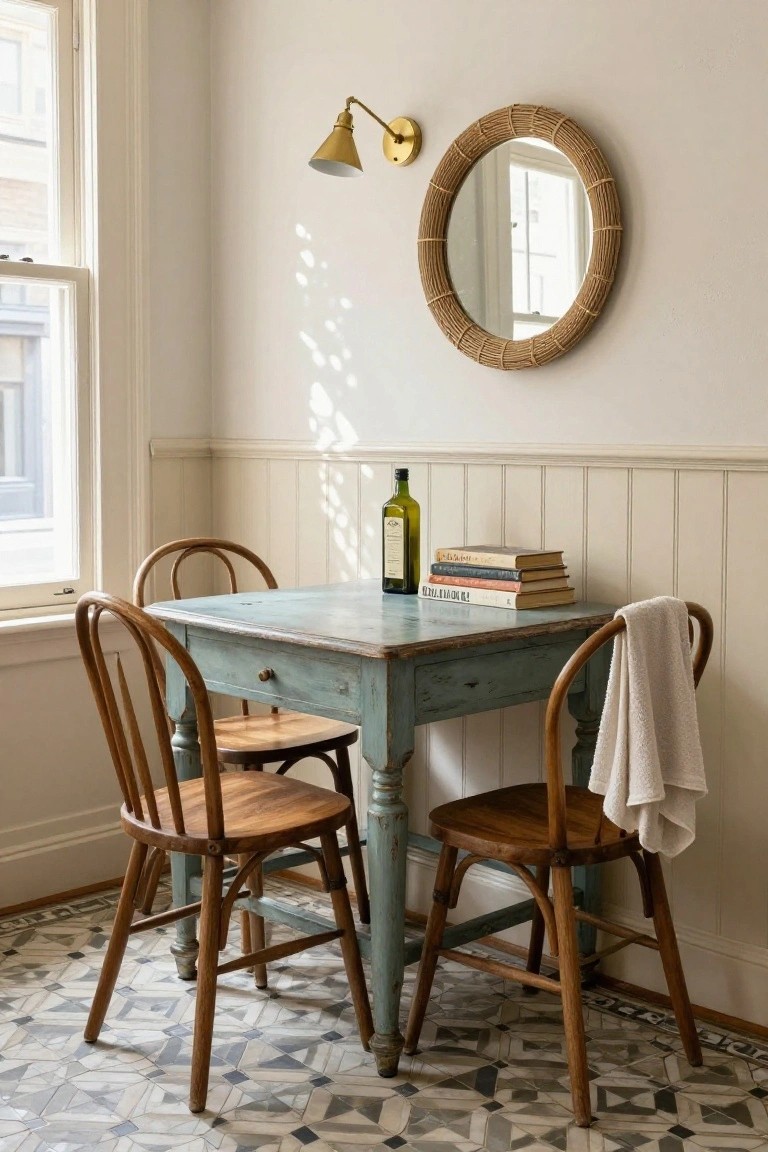
A small seafoam-painted wooden table tucked into a sunny corner makes everyday meals feel relaxed and easy. With its distressed finish and matching chairs, it brings a bit of vintage charm without taking over the space. The light wainscoting and wood tones keep things balanced and transitional.
This works best in apartments or older homes with tight kitchens. Hunt for a bistro-style table around 30 inches square, pair it with hoop-back chairs, and add a few books or a bottle for everyday use. Skip heavy centerpieces to let the light shine through.
Wood Panel Wall as Dining Backdrop
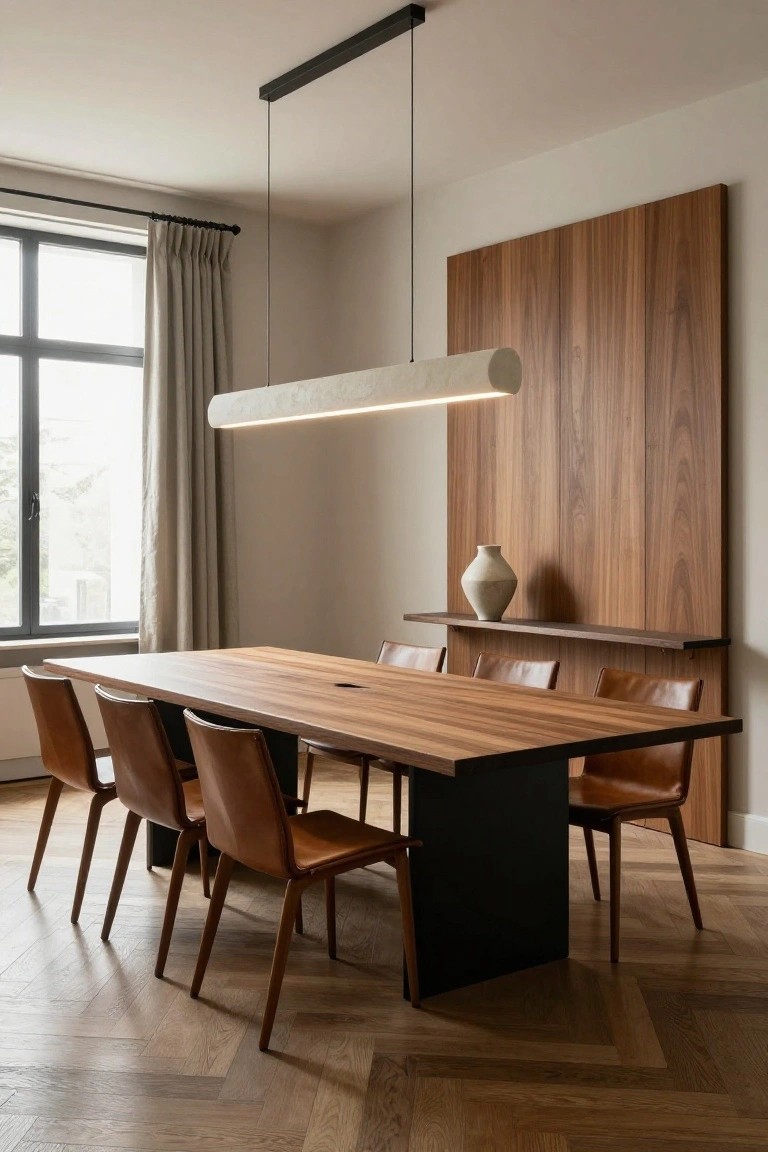
A full wall of vertical wood panels behind the dining table adds real warmth to a simple room. The planks here echo the table’s wood grain and pull the eye right to the seating area. It keeps things calm but gives that natural touch people notice.
This works best in open dining spaces with neutral paint and floors. Pick a wood like walnut that tones with your chairs or table. Skip it if your room’s already dark… you don’t want it closing in.
Leaded Glass China Cabinet in Dining Rooms

A wooden china cabinet with leaded glass doors like this one makes a nice focal point in a transitional dining room. It shows off dishes inside while the warm wood ties into the table and floors. Paired with light upholstered chairs, it keeps the space from feeling too heavy.
This kind of cabinet works well in rooms with plenty of window light. Place it in a corner near the table for easy access to serving pieces. It fits older homes or ones with some traditional details, but pick a scale that leaves room to move around chairs.
Concrete Top Dining Tables with Wood Bases
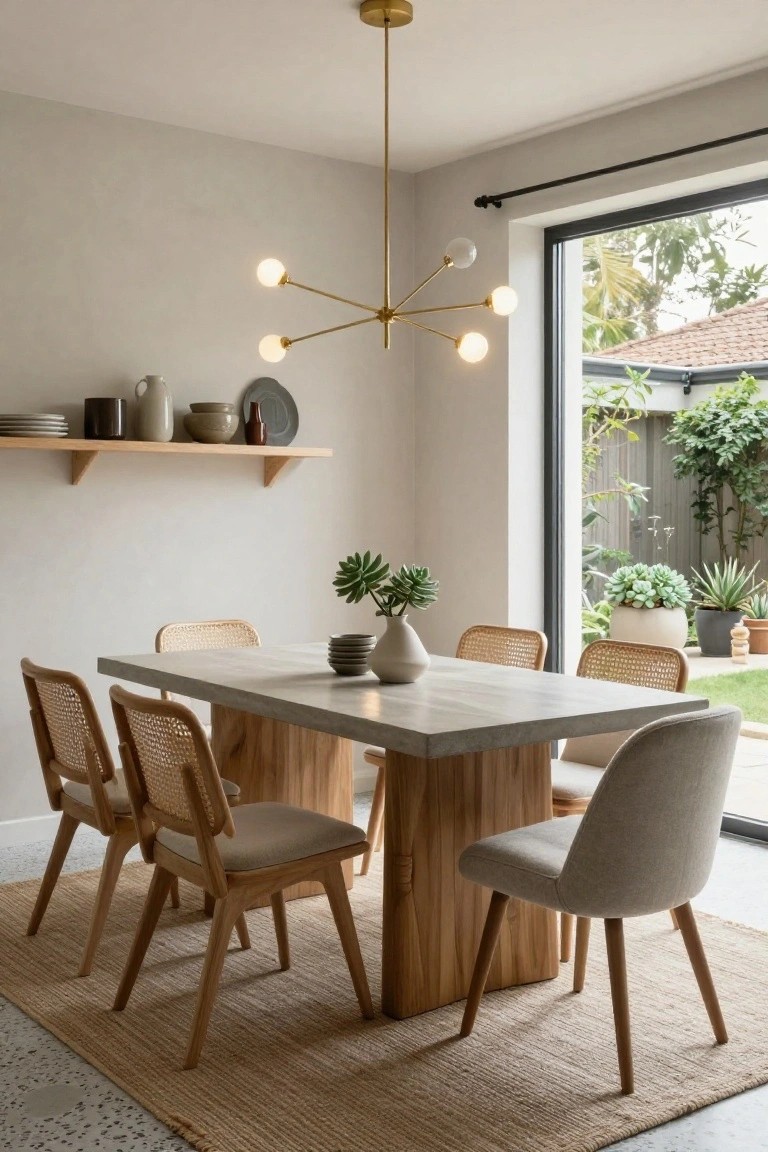
A concrete top on a dining table gives you that solid, modern feel without going too industrial. Pair it with chunky wood legs like these, and it warms right up. The light gray surface picks up the soft walls and lets the natural wood shine. Rattan chairs around it add even more texture. It’s a simple way to mix materials that feels relaxed and put together.
This works best in open dining areas with big windows or garden views, where you want casual family meals. It suits transitional homes that blend mid-century lines with natural vibes. Keep the top sealed to avoid stains, and balance it with lighter chairs so the space stays airy. Not ideal for super formal setups.
Mismatched Dining Chairs
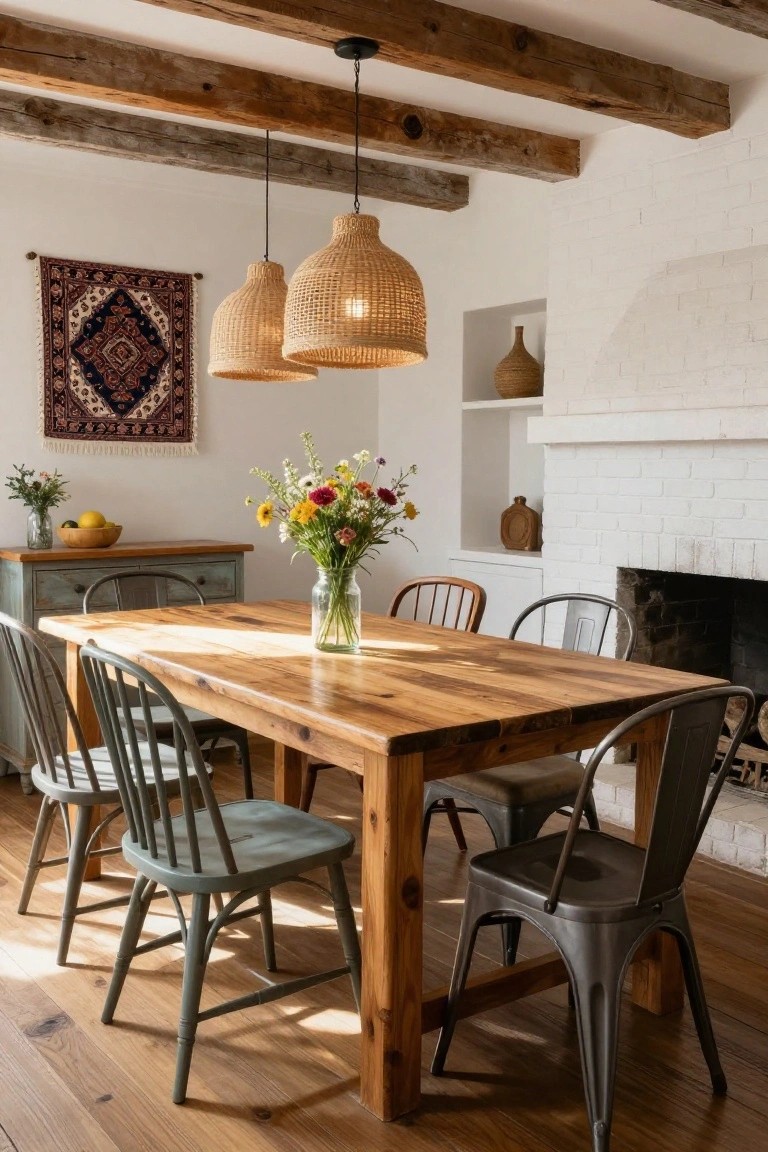
One easy way to give a dining room personality is mixing chair styles around the table. Here you see wooden ones with a soft green finish alongside metal Tolix chairs. That blend pulls in rustic warmth from the wood table and beams while the metal keeps it fresh and modern. It works without looking messy.
Try this in open dining spaces tied to living areas. It fits homes with a casual vibe, like farmhouses or older places getting a refresh. Pick chairs close in height so everyone sits comfortable. Skip it if your room feels too small already.
Round Table in a Light Dining Corner
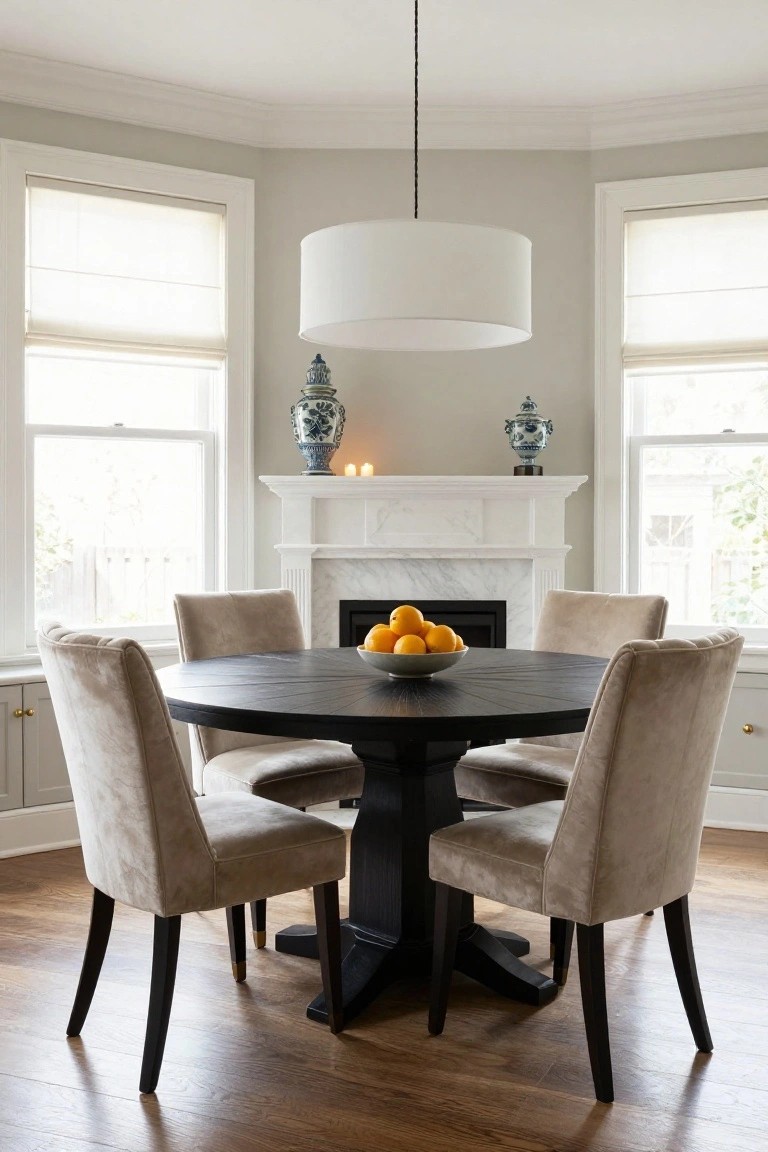
A round black wood table sits right in the middle of this sunny corner, pulling the eye with its strong dark tone against soft greige walls and beige velvet chairs. The fireplace nearby adds a bit of warmth, and that simple bowl of oranges keeps things fresh and lived-in. It’s a smart way to make a small dining spot feel like the heart of the room without overwhelming the space.
Try this in a bay window area or any underused corner. The round shape lets chairs tuck in easy, perfect for four people chatting close. Stick to neutral upholstery on the chairs so the table does the work, and keep walls light to let natural light bounce around. It suits older homes updating to transitional style… just watch the scale so the table doesn’t crowd the path.
Frequently Asked Questions
Q: How do I mix old and new furniture without it looking mismatched?
A: Pick one or two statement pieces from each era, like a sleek modern chandelier over a vintage wood table. Layer in textures that bridge the gap, such as a plush rug under metal chairs. Your eye pulls it all together naturally.
Q: What if my dining room is small—can transitional style still work?
A: Go for slim profiles and multifunctional pieces, like a drop-leaf table that expands when needed. Light colors on walls and reflective surfaces bounce space around. You gain room to breathe.
Q: How do I pick the right lighting for transitional vibes?
And here’s the trick. Layer pendants with warm bulbs over the table for intimacy, then add sconces for soft side glow. Skip harsh recessed lights—they kill the mood.
Q: Do I have to splurge on new decor to pull off transitional?
A: Hunt thrift stores for wood accents or brass hardware that nods to classic roots. Pair them with affordable linen curtains in neutral tones. Fresh impact hits your wallet lightly.
