

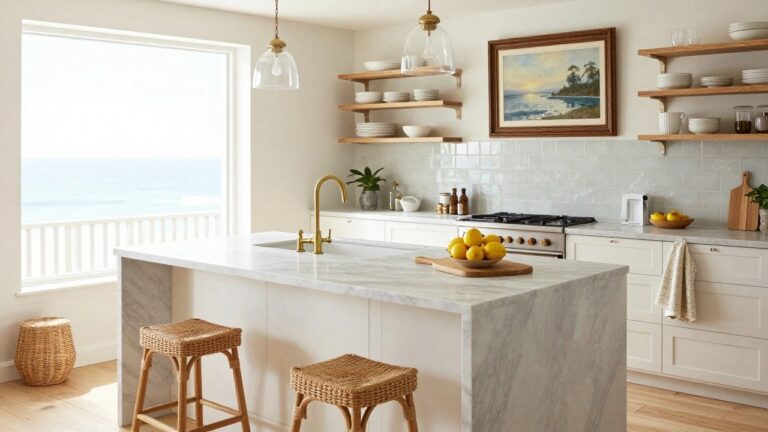
I’ve always noticed that coastal kitchens end up feeling brighter in real life only when the windows and surfaces work together to bounce light around the actual workspace.
The ones that last are those where open shelving or pale cabinets still leave enough room for daily cooking without constant rearranging.
Layout comes first.
I tend to test ideas that add storage near the main prep area because that single change often makes the whole room function better than any color choice alone.
Over time those small adjustments show whether a design will hold up once the family starts using it every morning.
Woven Stools Add Natural Texture
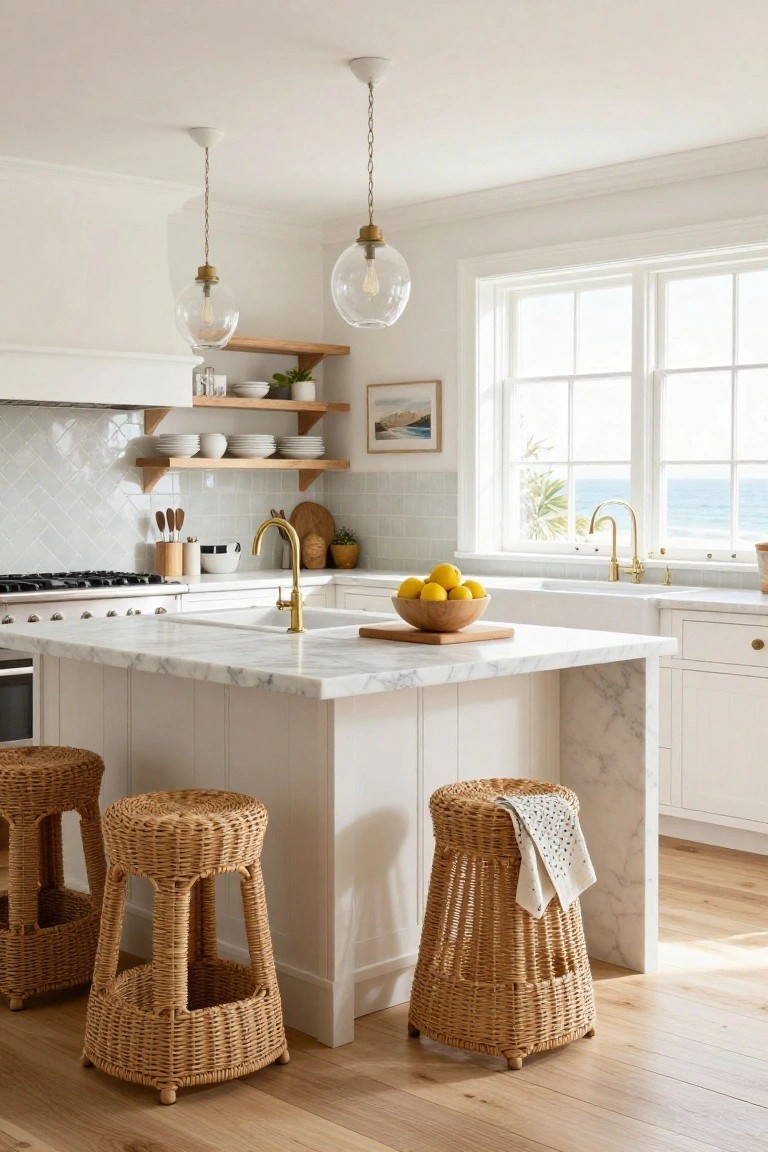
Woven stools fit a coastal kitchen because they bring in texture without crowding the space. The natural material keeps the room feeling open and simple, especially when everything else stays light and white.
They work best in homes that want a relaxed everyday feel rather than a formal one. Set two or three at the island for seating and the kitchen stays practical while still looking pulled together.
Blue Cabinets In A Coastal Kitchen
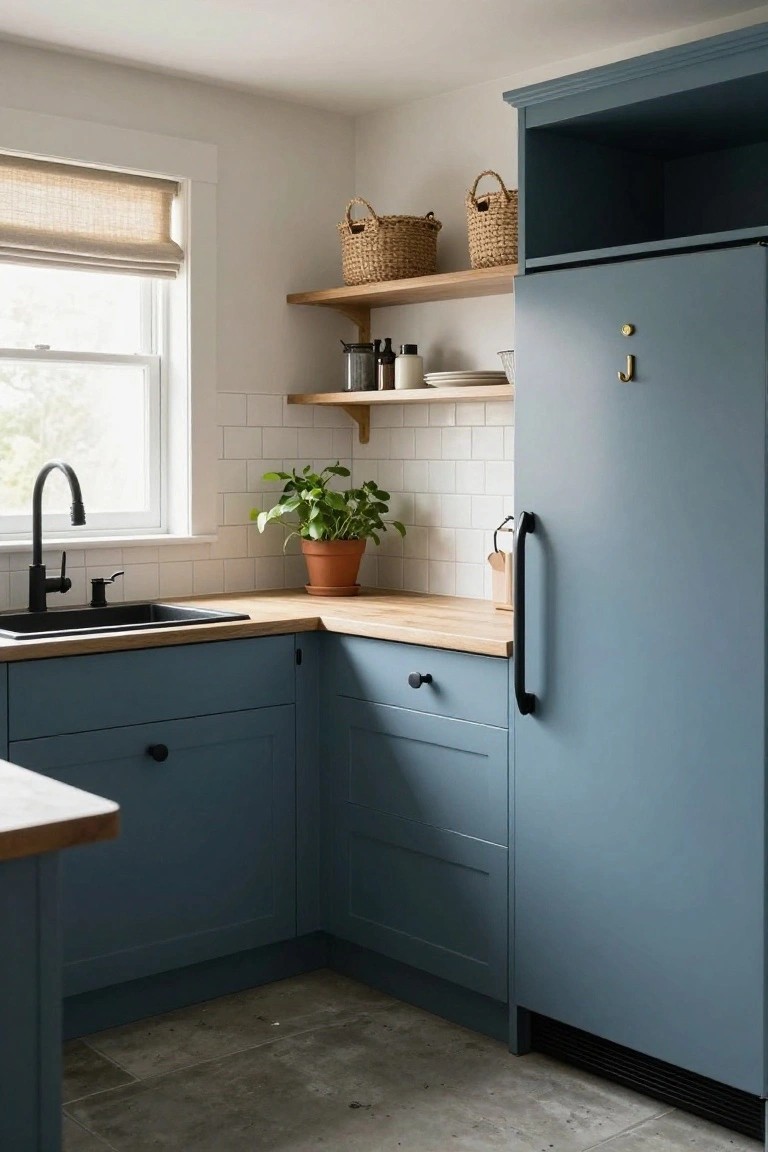
Blue cabinets bring a gentle color into the kitchen without making the space feel heavy. They pair nicely with light walls and wood tones to keep things bright during the day while still giving the room some character.
This approach works well in kitchens that get steady natural light. Choose a soft shade rather than a bold one, and keep the counters or open shelves in a lighter wood so the overall look stays practical and easy to live with.
Paint the Island a Soft Coastal Color
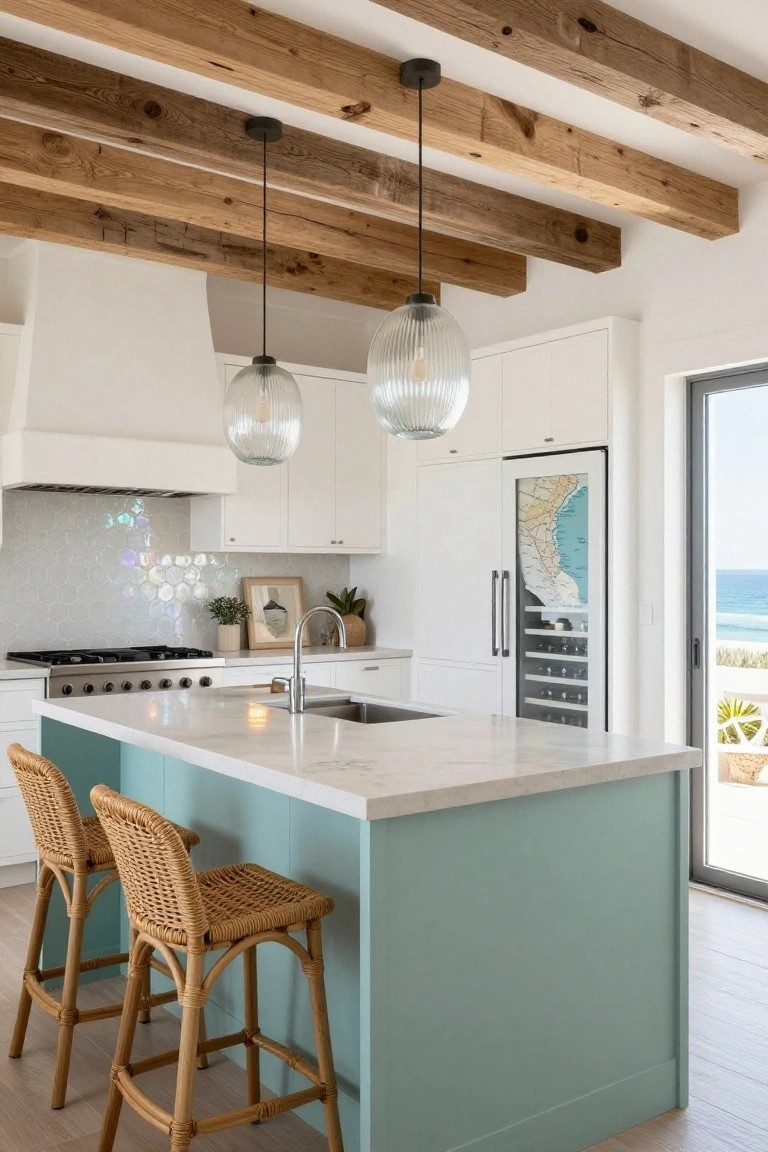
A soft color on the kitchen island can give a coastal kitchen just enough personality without losing the light, open feel most people want. White cabinets and walls keep the room bright, while the gentle hue on the island adds a quiet nod to the water and sky outside.
This approach works best in homes that already lean neutral. Stick with white or light wood elsewhere so the island color reads as an accent rather than the main event. It is also an easy update if you ever want to change direction later.
Navy Cabinets With Wood Counters
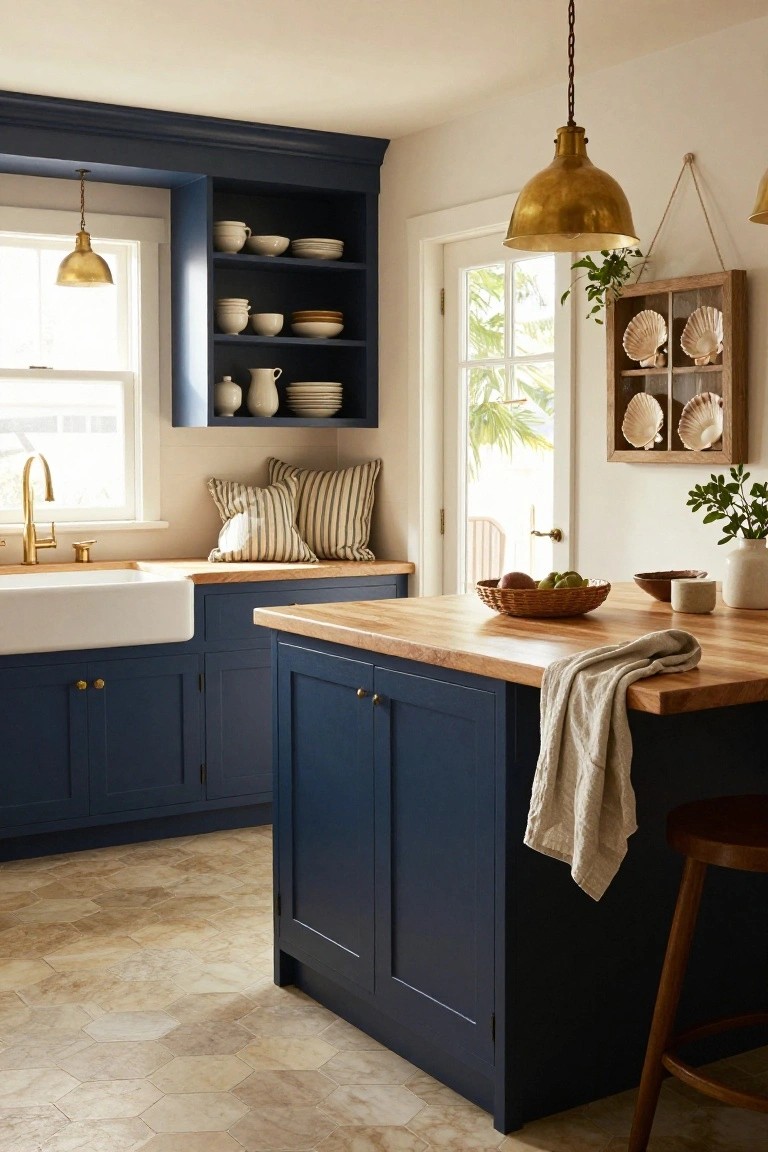
Navy blue cabinets give a coastal kitchen real presence without making the space feel heavy. The deep color anchors the room and lets the lighter wood surfaces and white elements do the rest of the work.
This approach works best in kitchens that get good natural light. Keep the counters in a warm wood tone and leave some upper space open for dishes so the room stays practical for daily use.
Large Windows That Brighten a Coastal Kitchen
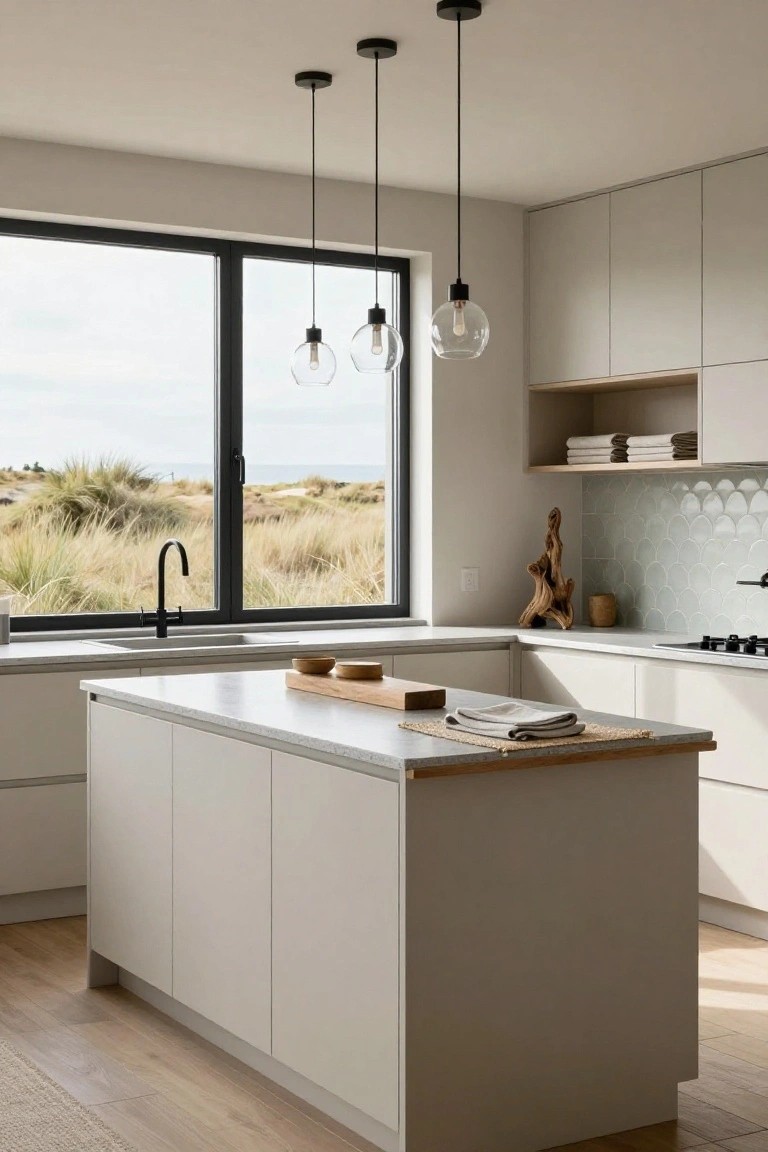
Large windows can make a coastal kitchen feel much more open and connected to the outdoors. In this setup the big panes let in plenty of natural light and give a clear view of the dunes and water, which keeps the space from feeling closed in even on cloudy days.
This approach works best in kitchens that already have a decent wall facing the coast. Keep the frames simple and the surrounding cabinets light so the view stays the main focus. Just make sure the windows are well insulated if you live in a cooler climate.
Connecting Your Kitchen To The Outdoors
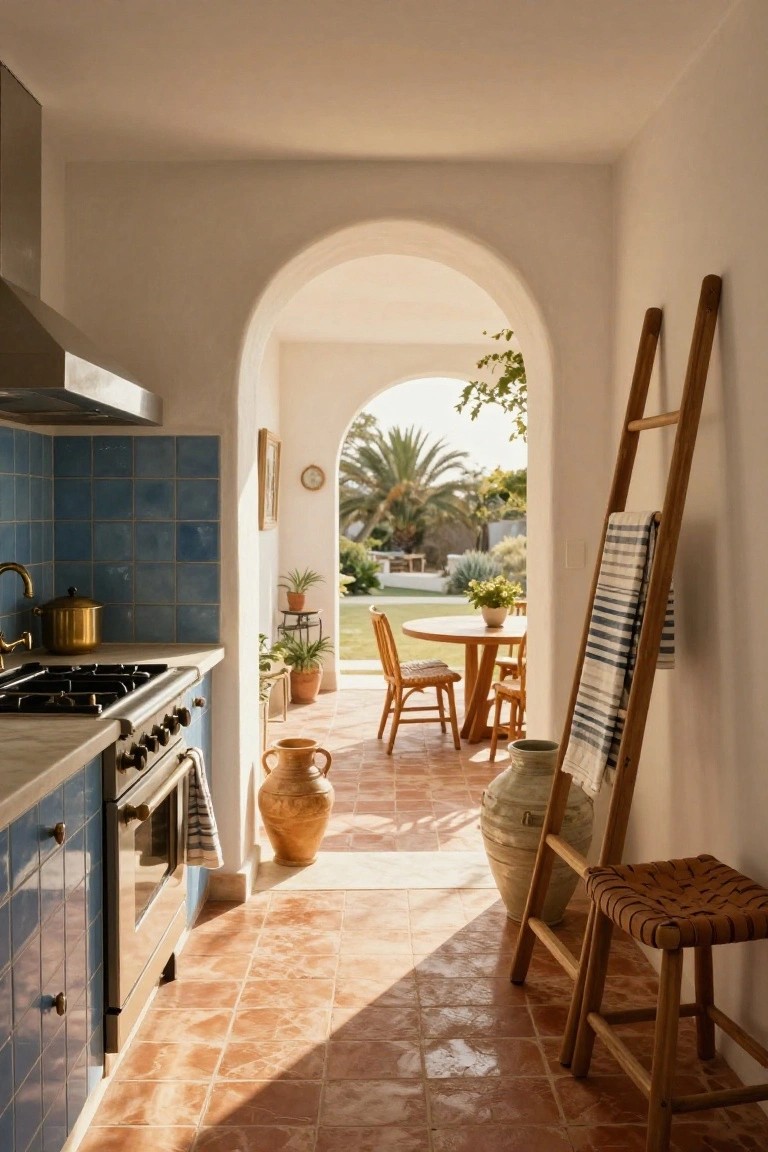
An arched opening between the kitchen and patio keeps the space feeling bright and usable all day. The terracotta floor runs straight through both areas, so the kitchen does not feel closed off even when you are cooking inside.
This setup works well in coastal homes where you want to move between indoor and outdoor tasks without extra doors in the way. Just keep the arch clear of heavy curtains or furniture so the light and airflow stay consistent.
Use a Navy Island in a White Kitchen
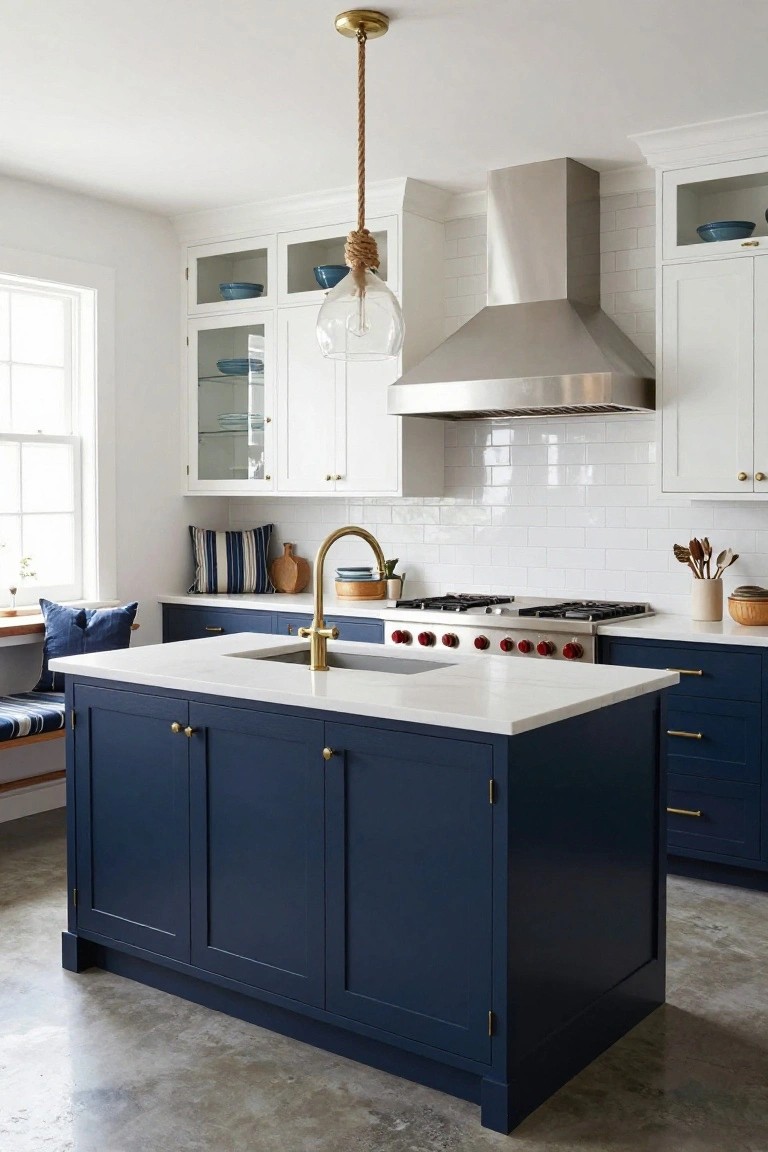
A deep navy island gives a coastal kitchen clear definition while the white cabinetry keeps the whole space feeling light. The contrast makes the island the natural center of activity without adding extra color elsewhere.
This works best in kitchens with open sight lines to other rooms. Keep the surrounding cabinets white and choose simple brass or brushed nickel hardware so the blue stays the main focal point.
Round Tables with Woven Stools
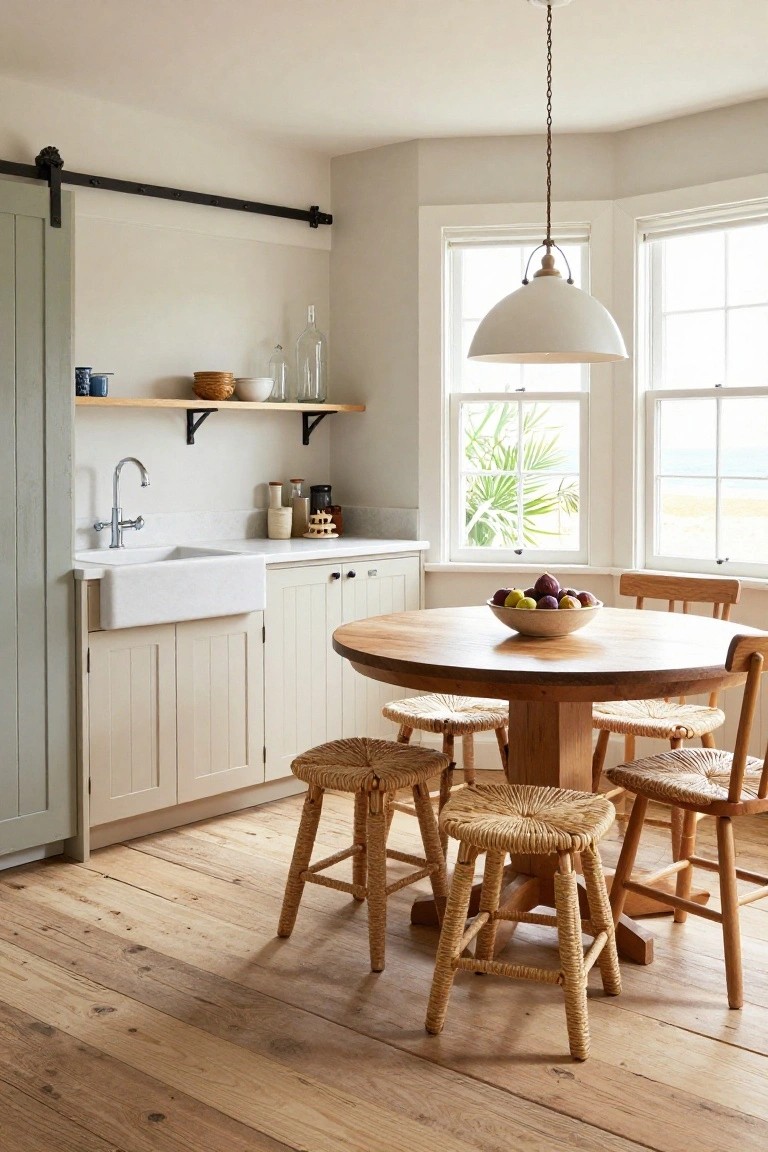
A round table with woven stools brings a relaxed dining spot right into the kitchen without taking up much space. The curved shape keeps traffic moving easily around it, and the natural texture of the seats adds warmth against white cabinets and wood floors. This setup works especially well in coastal homes where people want the kitchen to feel open and ready for everyday meals.
It suits smaller kitchens or open layouts that need one area to handle both cooking and eating. Keep the table size modest so the room does not feel crowded, and choose stools without backs if you want them to tuck away neatly.
Large Window Above the Sink
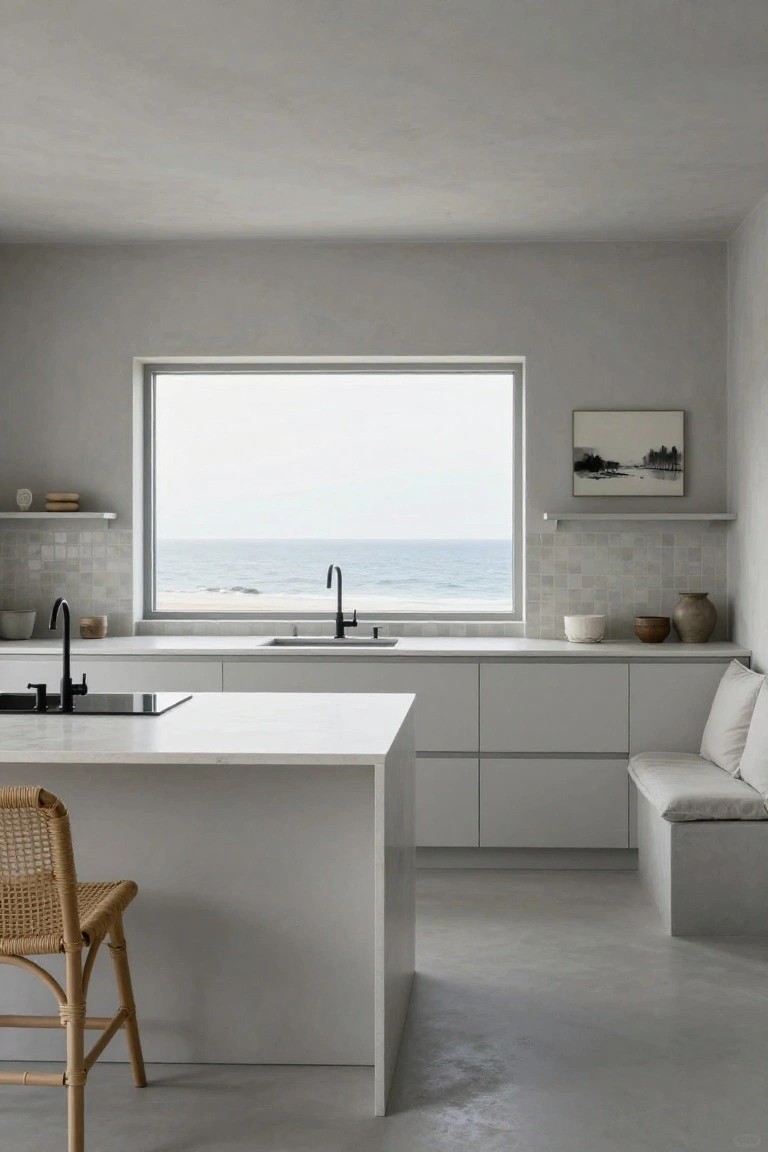
Placing a big window right over the sink is one of the simplest ways to make a coastal kitchen feel bright and open. The view becomes part of the daily routine, and natural light reaches deeper into the room without needing extra fixtures.
This approach works best in homes that sit close to the water. Keep the cabinets and counters light so the window stays the main feature rather than competing with darker tones or heavy details.
White Cabinets Brighten Up Coastal Kitchens

White cabinetry works especially well in kitchens that get plenty of natural light from the sea. It reflects the light coming in through the windows and keeps the whole space from feeling closed in, even when the room has darker floors or a busy backsplash.
This approach suits homes right on the water where you want the focus on the view rather than on heavy cabinet color. Stick with simple door styles and pair them with light countertops so the room stays easy to keep clean and functional year round.
Choose a Reclaimed Wood Base for the Island
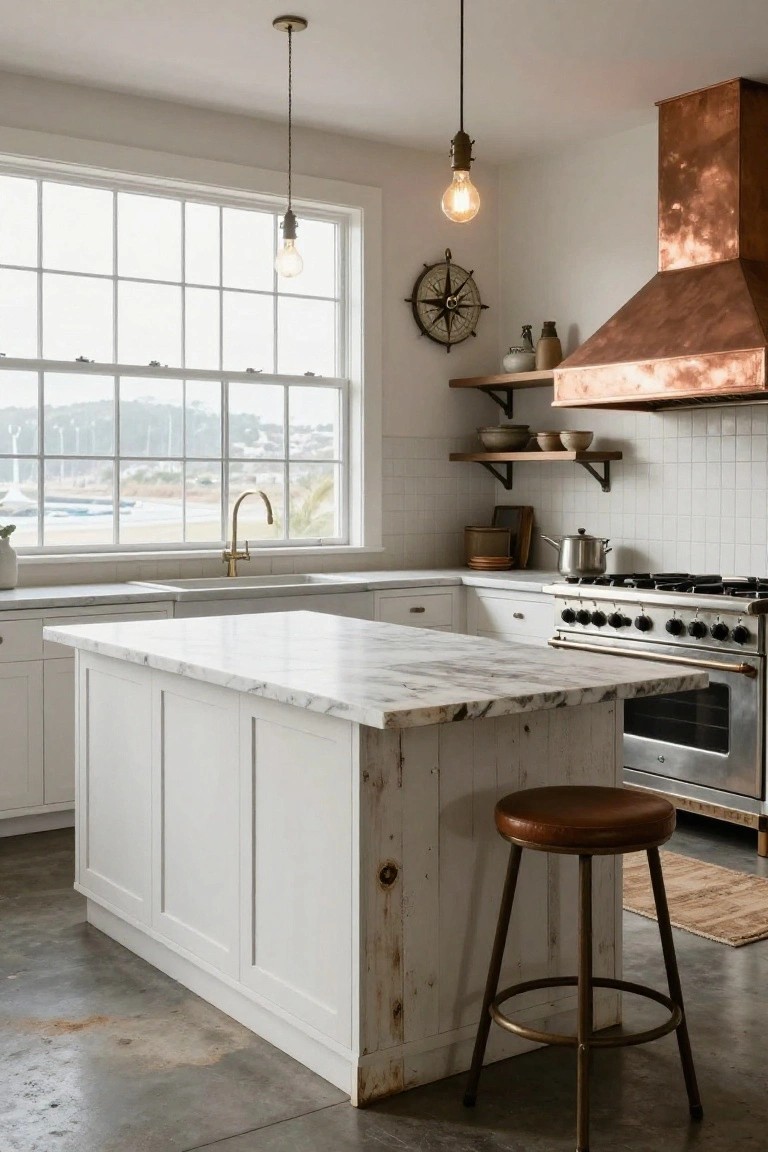
Many coastal kitchens lean heavily on white to stay bright, but a reclaimed wood base on the island brings in just enough texture and warmth. It keeps the room feeling open while adding that natural element that fits right in with a beach setting.
This works best when the wood stays light and worn rather than dark or heavily stained. Pair it with a simple marble top and keep the surrounding cabinets white so the island stands out without taking over the space.
Add Built-In Seating to Your Kitchen
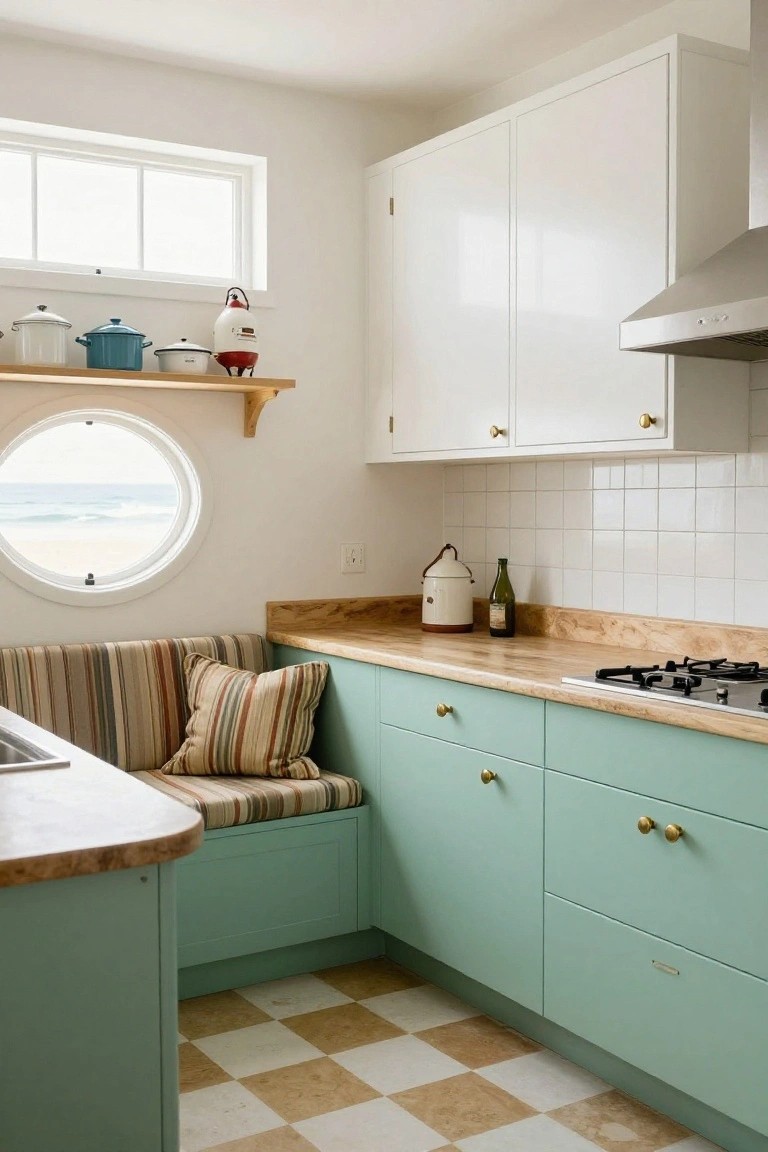
A built-in bench gives you extra seating without crowding the floor plan. It works especially well in coastal kitchens where you want a relaxed spot for meals or just sitting with a cup of coffee.
This setup fits best in homes that need the space to do double duty. Tuck storage under the seat and keep the cushions simple so the bench stays practical day to day.
Paint The Island In A Soft Blue

A soft blue island adds just enough color to a mostly white kitchen without taking over the space. It gives the room a gentle coastal nod while keeping everything bright and easy to work in.
This approach suits smaller or open kitchens where you want one clear focal point. Stick with light counters and simple stools so the blue stays fresh instead of feeling heavy.
Hang Cookware On Cabinet Fronts
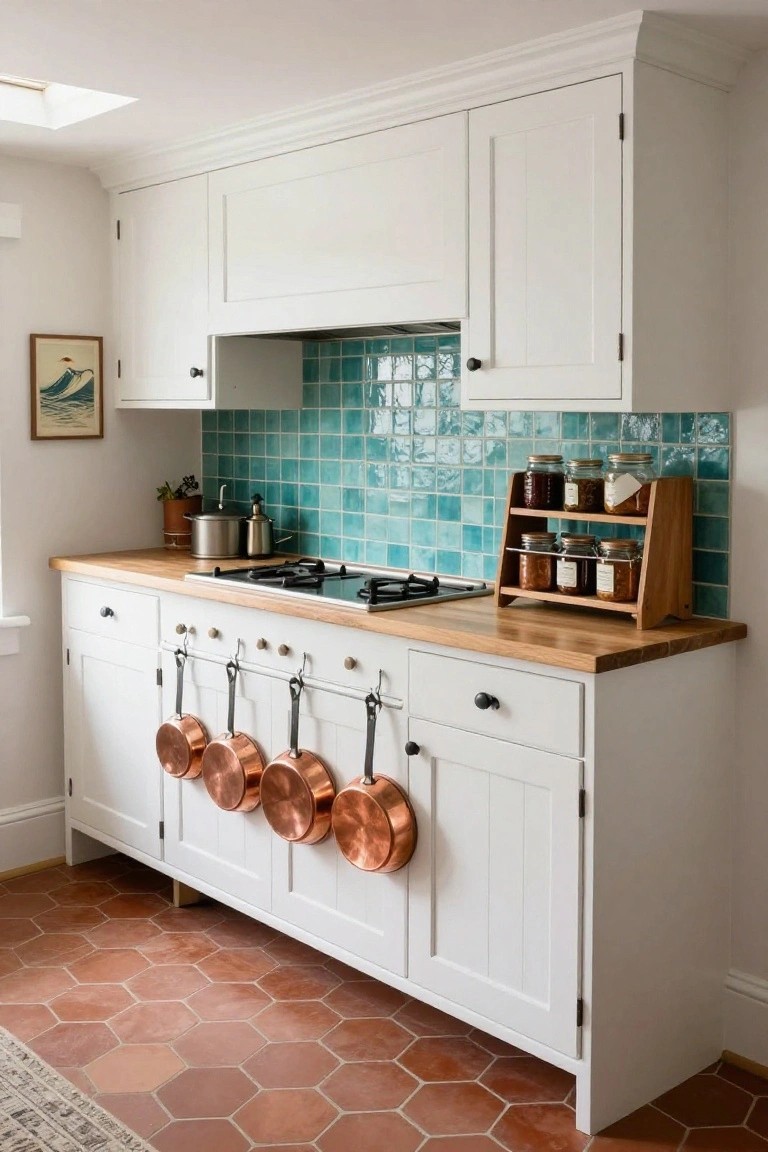
A rail mounted across the lower cabinets gives you a simple way to store pots and pans without taking up drawer space. It keeps the most used items within reach and adds a bit of texture to an otherwise plain run of cabinetry.
This works best in kitchens where you cook often and want things visible rather than tucked away. Just leave enough clearance so the handles do not bump into drawers or get in the way when you open the doors.
Try A Deep Blue Island With Gray Cabinets
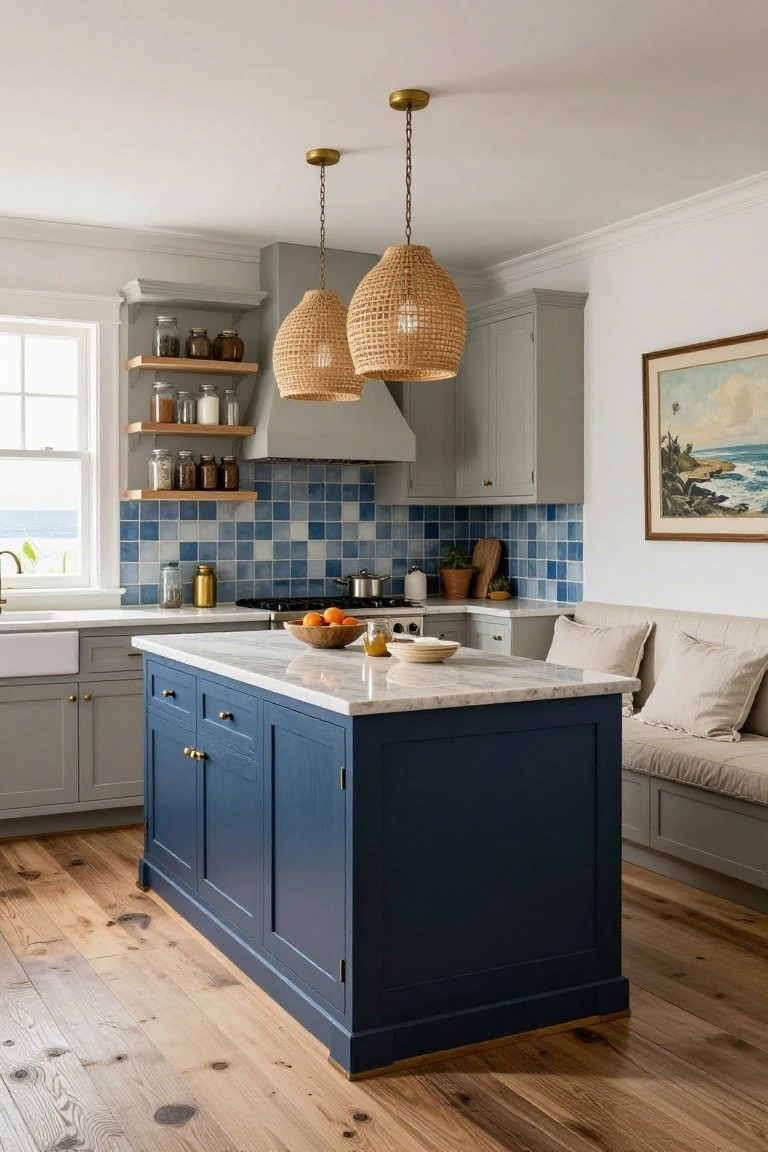
A deep blue island gives a coastal kitchen a clear focal point while the lighter gray cabinets around it keep the whole space feeling open and bright. This mix stops the room from looking too matchy and lets the blue tie into the nearby tile without taking over.
It works best in kitchens that get good natural light and already have some softer tones on the walls or trim. Keep the island finish simple and let the surrounding cabinets stay neutral so the color choice feels balanced rather than heavy.
Kitchen Islands That Add Everyday Seating
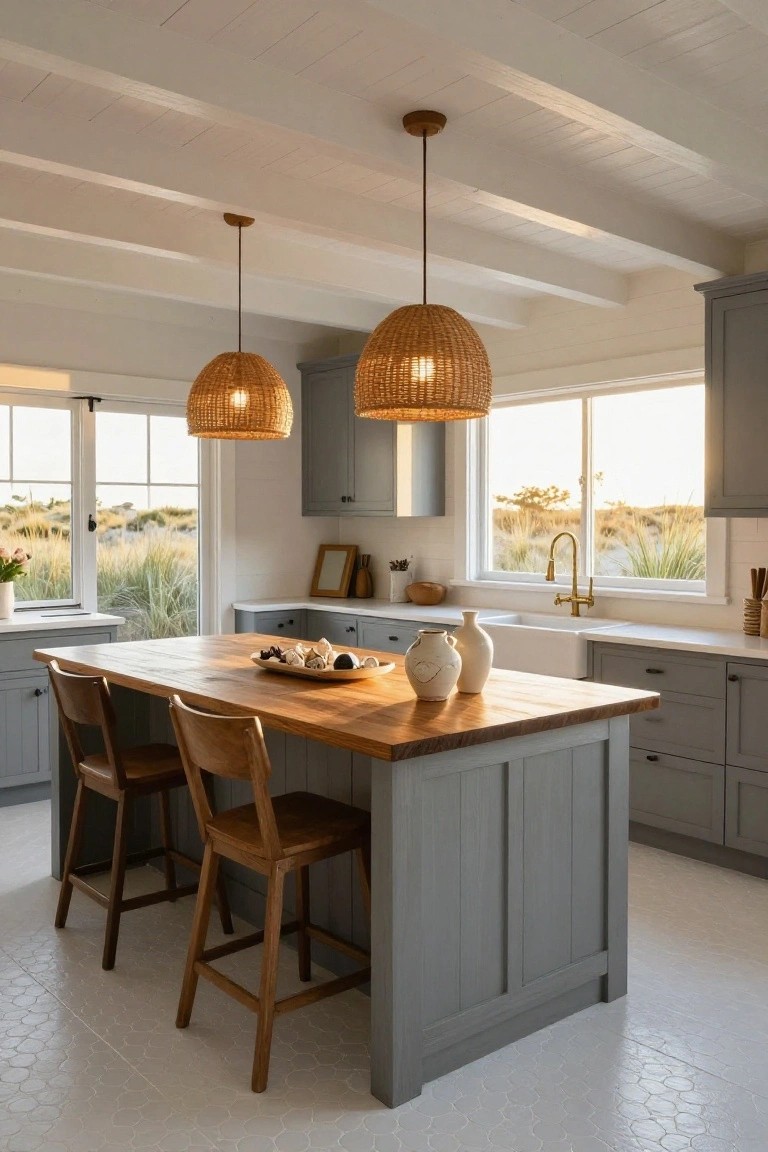
A big kitchen island with a couple of stools turns the space into more than just a cooking zone. It gives you room to prep meals and a place for people to sit without crowding the main counters, which fits the relaxed flow most coastal homes need.
Place the island so the seating faces the windows or the rest of the room. Keep the stools simple and sturdy, and make sure the island height works with standard bar stool sizes so it stays comfortable for daily use.
Blue And White Backsplash Tiles
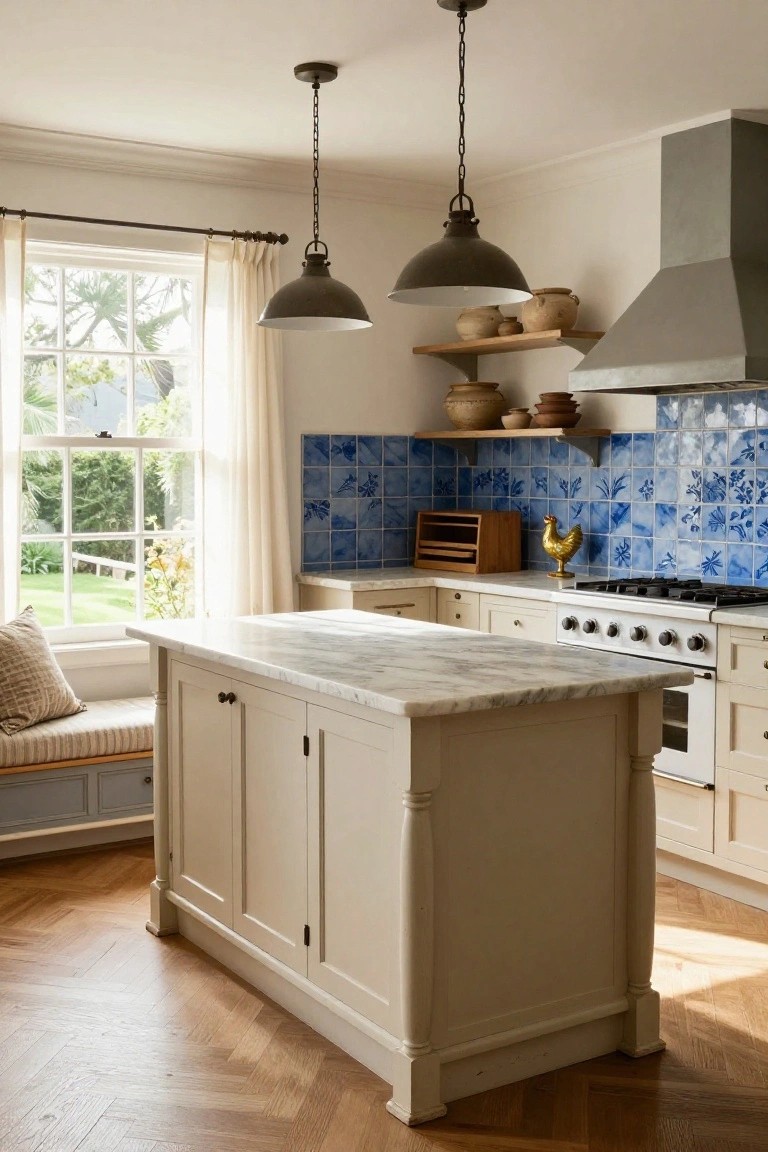
A blue and white tile backsplash gives a kitchen that coastal brightness without needing lots of extra color elsewhere. The pattern keeps things interesting while the soft tones still feel calm and open.
This works best in spaces that get good natural light and already have light cabinetry or wood floors. Stick to simple hardware and avoid adding too many other patterns if you want the tiles to stand out on their own.
Open The Kitchen To The View With Large Glass Doors

Many coastal kitchens gain a lot from a direct connection to the outdoors. Wide sliding doors pull in natural light and keep the space from feeling closed off, especially when the view is the main feature.
This approach works best in homes that sit close to the water. Keep the island low and the surrounding cabinets simple so the light travels through the whole room without much obstruction.
Woven Bases On Kitchen Islands
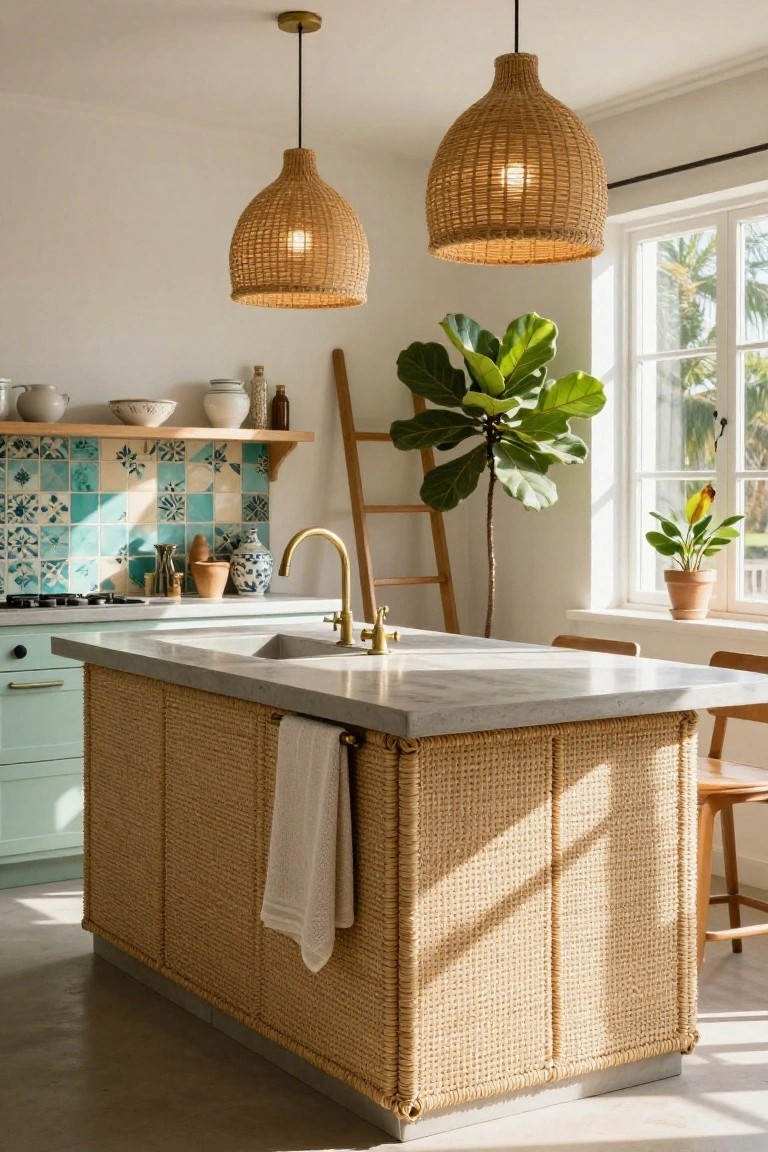
Woven material on an island base adds texture without making the kitchen feel busy. It gives a natural, slightly casual look that fits coastal homes especially well, and it works nicely with simple stone tops and light walls.
This choice suits spaces that need a bit of warmth but still want to stay bright and open. Keep the rest of the finishes fairly plain so the weave reads as a quiet detail rather than the main event.
Using a Central Kitchen Island for Prep and Seating
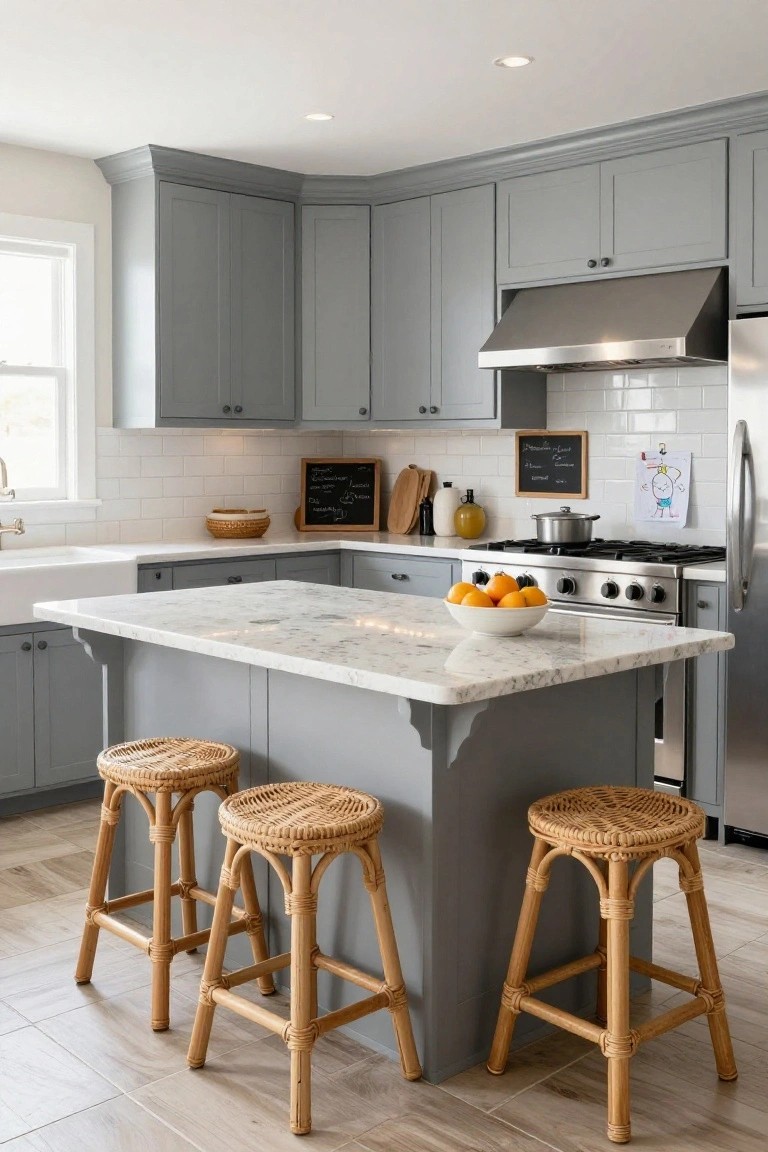
A kitchen island adds real function without crowding the room. It creates a clear spot for food prep while also giving people a place to sit and stay involved in the conversation.
This setup works best in medium to large kitchens where you want both workspace and casual seating. Keep the stools simple and low so they do not block the view across the room.
Muted Green Cabinets For Coastal Kitchens
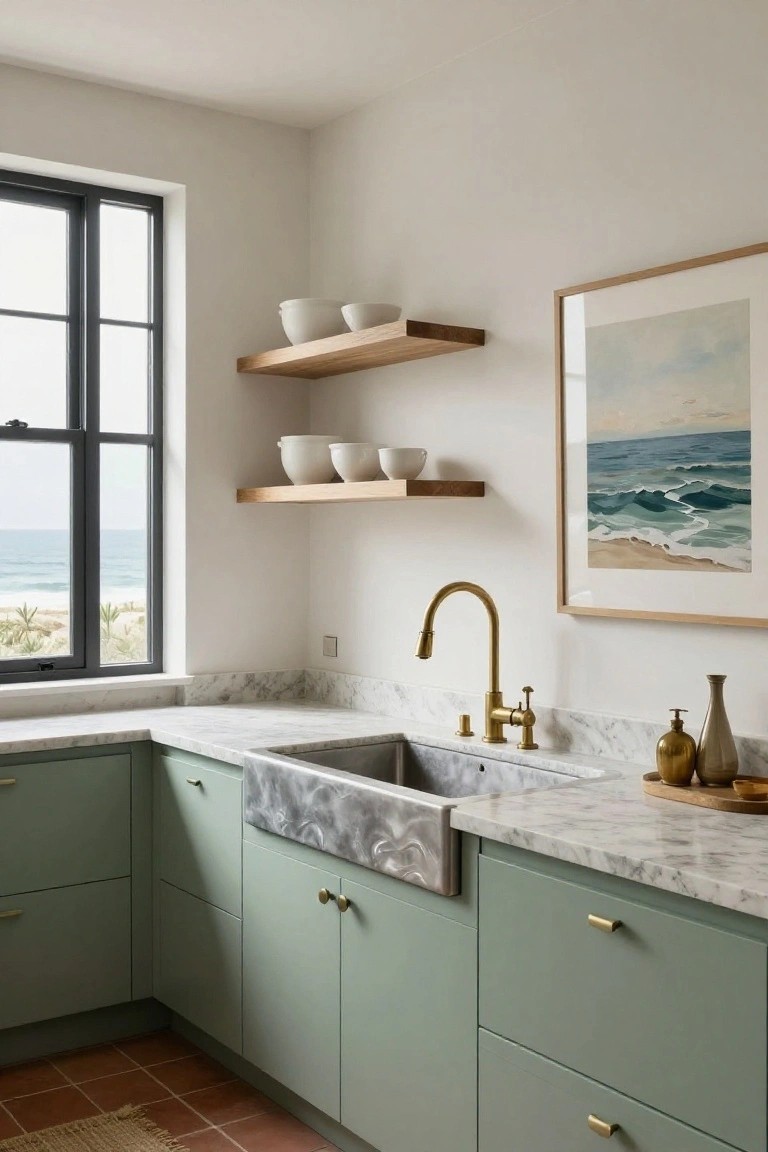
Soft green cabinetry gives a coastal kitchen a gentle color note that still keeps the room feeling bright. The shade works with white walls and stone surfaces to avoid any heavy look while adding a touch of the outdoors.
This color choice suits homes near the water where you want something calmer than white but not as bold as navy. Use it on lower cabinets only and keep the rest light so the space stays open and easy to work in.
White Cabinets With A Wood Island Top

White cabinets keep a coastal kitchen feeling open and bright. A wood island top adds just enough warmth so the space does not feel too stark or cold.
This mix works best in homes that get plenty of natural light. Choose a medium wood tone and keep the rest of the surfaces simple so the island stands out without fighting the white.
Frequently Asked Questions
Q: How do I pick countertops that stay bright but handle spills and daily use? A: Choose a light quartz with faint gray veins. It bounces light around the room and wipes clean fast after meals. Skip anything too porous if you cook often.
Q: Can I add wood tones without making the kitchen feel dark or heavy? A: Use one warm wood shade on open shelves or a small island. Keep the rest of the surfaces white or pale to reflect light. This mix adds warmth while the space stays open and easy to move around in.
Q: What’s a quick way to boost brightness if my kitchen gets little natural light? A: Paint the walls a soft white with warm undertones. Swap in under-cabinet lights that mimic daylight. These changes make the room feel bigger right away without major work.
