


I’ve noticed transitional kitchens really come alive in actual homes when they balance sleek surfaces with soft wood tones, letting the space feel open yet lived-in for cooking and casual chats.
I tried this myself a couple years back by refinishing cabinets in a muted gray, and it made mornings flow so much better without screaming for attention.
People usually spot the countertops and backsplash first, as those set the rhythm for how the room pulls together day to day.
What makes these work is thoughtful layering, like matte fixtures against glossy tiles that handle spills and still look sharp.
I’d bookmark the ones with smart island setups to test in my own setup someday.
Kitchen Island with Turned Wood Legs

Those turned wood legs on the kitchen island give this space a nice traditional touch without overpowering the clean lines. Paired with the gray shaker cabinets and that black veined countertop, they add just enough warmth to keep things feeling balanced and lived-in. It’s a simple way to nod to farmhouse style in a transitional kitchen.
You can pull this off in most open-plan kitchens, especially if you have hardwood floors nearby. Pick legs in a natural finish that echoes your wood tones elsewhere, and keep the rest sleek with brass hardware or subway tile backsplash. One thing… scale them right so the island doesn’t look too heavy.
Navy Blue Cabinets for Kitchen Depth
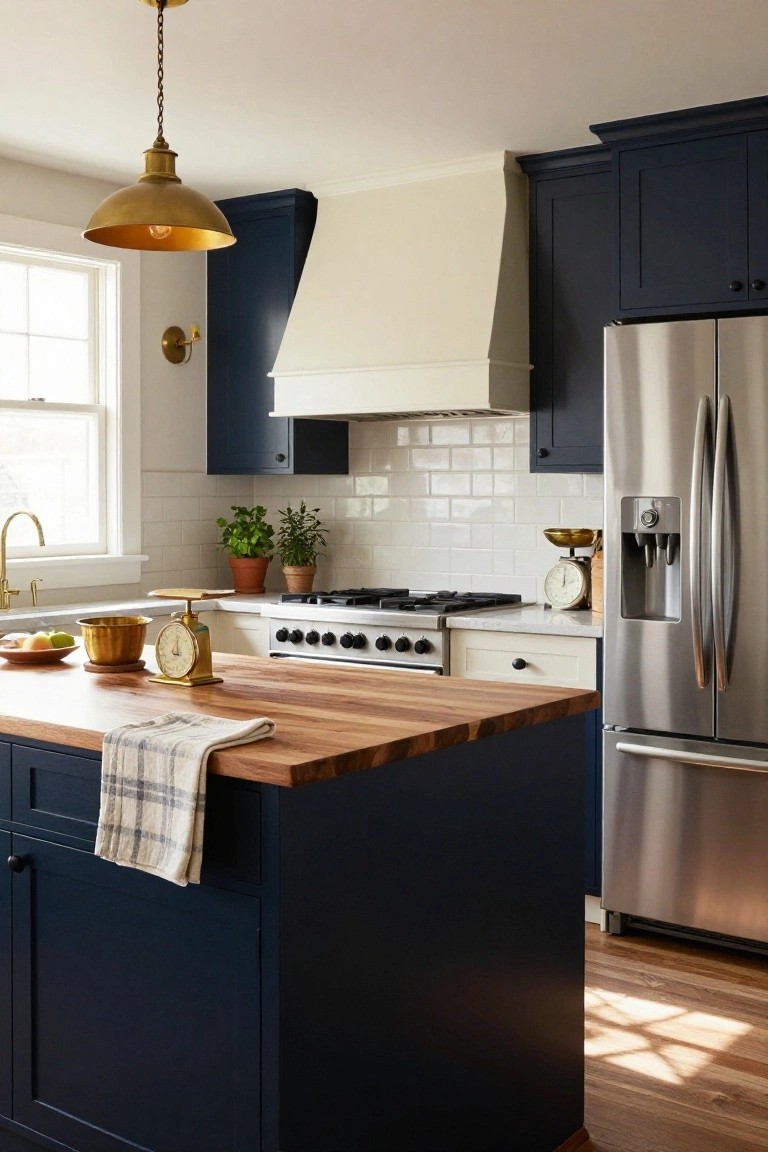
Navy blue cabinets stand out here as the main color move. They add real depth to the space without overwhelming it. The matte navy on the lowers and island pairs nicely with light walls and that butcher block top. It feels classic but fresh.
Try this in kitchens that get decent light. A big window helps keep it from feeling closed in. Go for quality paint or a solid finish, and balance with wood counters or brass pulls. It suits transitional homes that mix old and new styles.
Wooden Range Hood Adds Warmth
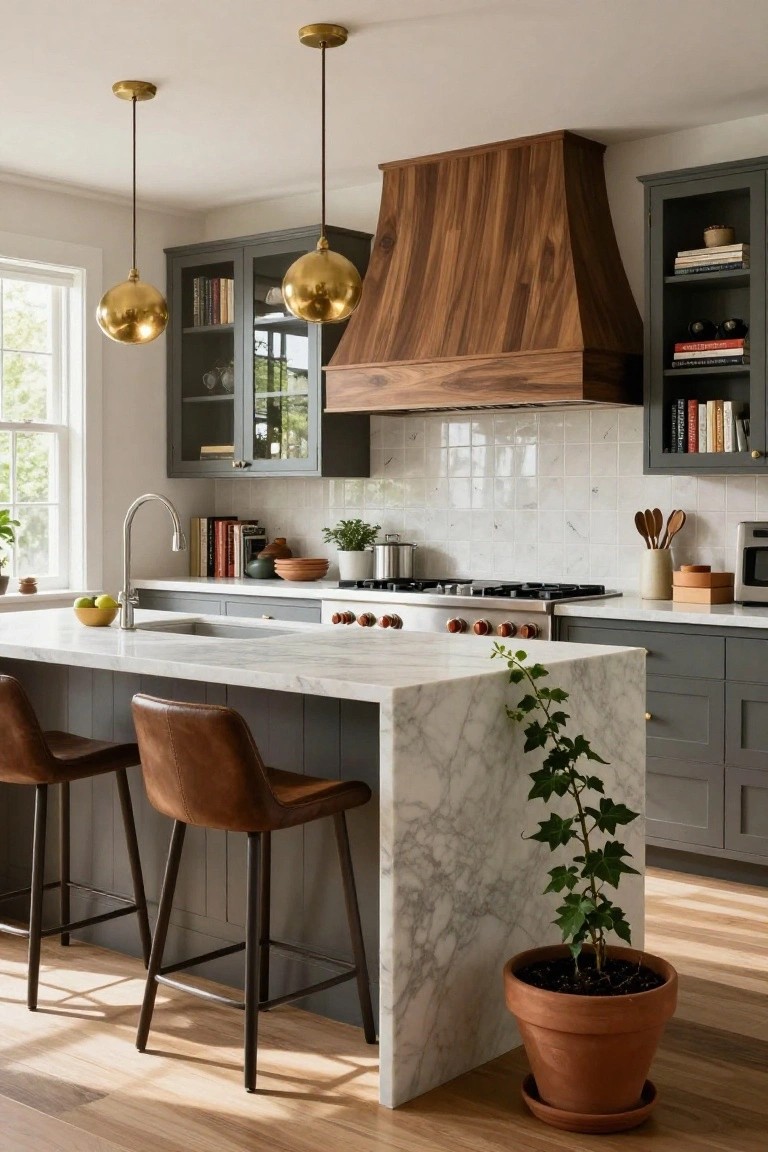
A deep wood range hood like this one brings needed warmth to kitchens with gray cabinets and white marble counters. It sits right over the cooktop and draws the eye upward without overwhelming the clean lines. Paired with brass pendant lights, it keeps things balanced and lived-in.
Try this in transitional kitchens where cool tones need a little contrast. It suits open layouts with islands for seating. Pick a wood like walnut that echoes floor tones, and keep the scale right so it doesn’t crowd the space.
Blue Shaker Cabinets with Butcher Block Tops

Soft blue shaker cabinets give a kitchen that easy, lived-in feel without much fuss. The color pulls in a bit of calm from the coast or sky, but it’s the butcher block countertops that make it all come together. That warm wood tone cuts the cool blue just right and nods to old-school workhorse kitchens.
Try this in a corner setup where you have windows nearby for light. It fits homes with white walls or trim, keeping things fresh yet grounded. Seal the wood extra well upfront. Spills happen.
Gray Cabinets with Wood Island
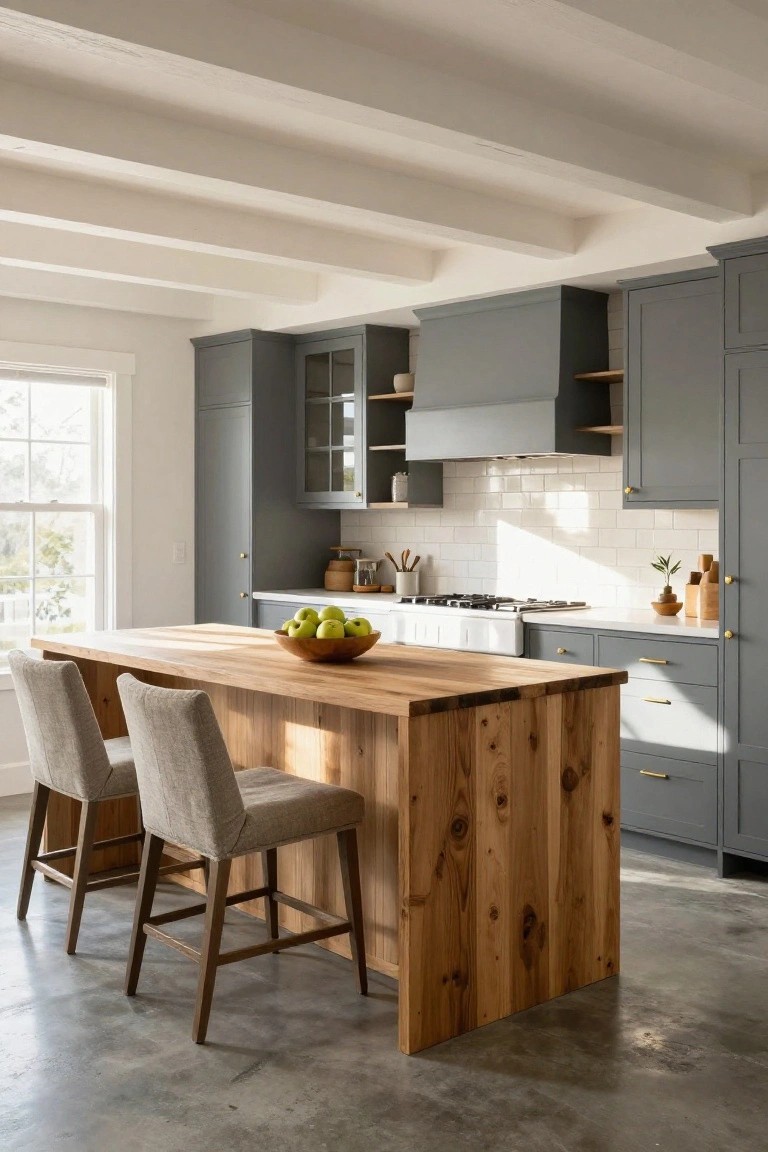
A wood island like this one pulls a gray kitchen together in a simple way. The thick planks with their knots and grain add real warmth next to those flat gray doors. It keeps things modern but livable. A bowl of apples on top just makes it feel used.
This setup fits open kitchens in older homes getting a refresh. Go for sealed live-edge oak if you cook a lot. It shines with white walls and concrete floors. Skip it if your space is tight; the island needs elbow room.
White Cabinets with Dark Countertops

White cabinets keep a kitchen feeling fresh and open. But adding dark countertops like this veined gray stone changes things up. It grounds the space without overwhelming it. Those brass faucets and copper pendants warm everything right back up.
This setup shines in rooms with plenty of light from a nearby window. It suits transitional homes near the water or anywhere you want easy cleanup on the counters. Just balance the dark tones so the room stays airy…stick to mostly white walls and simple floors.
Walnut Wood Kitchen Island
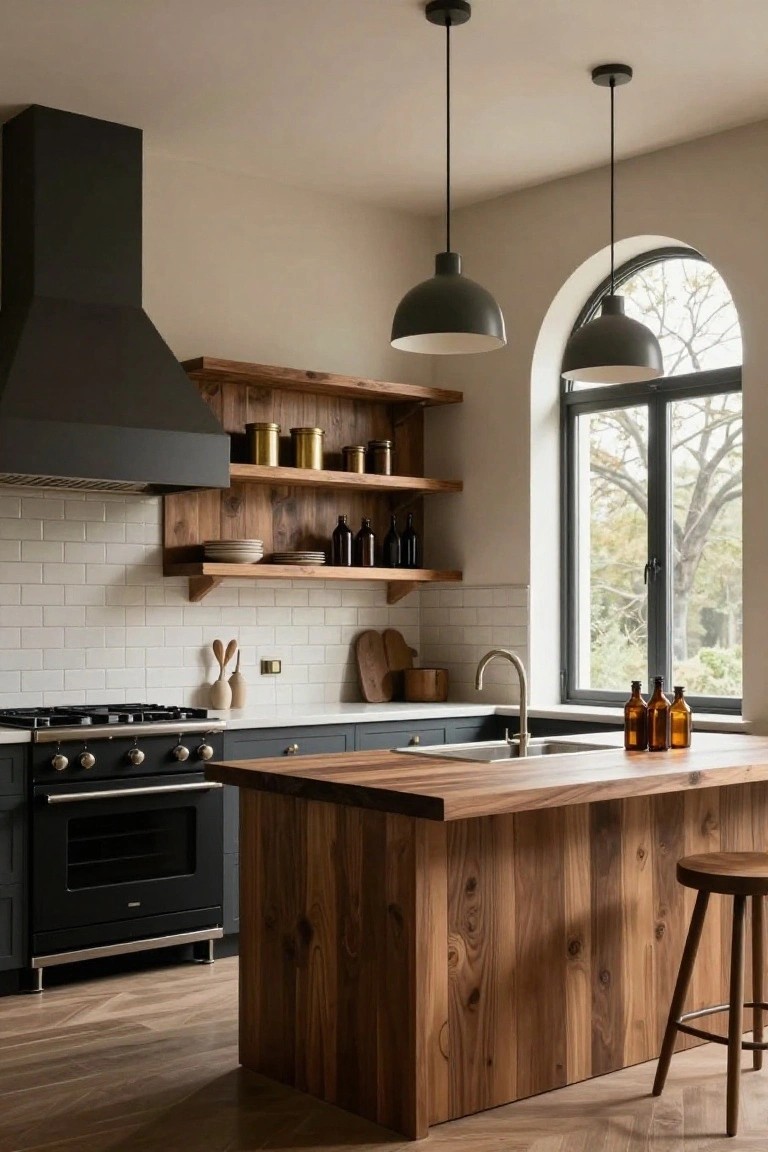
A thick walnut island like this one adds real warmth to a mostly modern kitchen setup. The natural grain and rich tone stand out against navy cabinets and a black range, softening things up without going overboard. It turns the center of the room into something you actually want to gather around.
This works best in open family kitchens where you mix sleek appliances with everyday comfort. Go for a butcher block style top on your island, maybe add a stool or two. Just seal the wood right so it holds up to cooking messes… suits transitional homes perfectly.
Woven Pendant Lights Add Easy Warmth
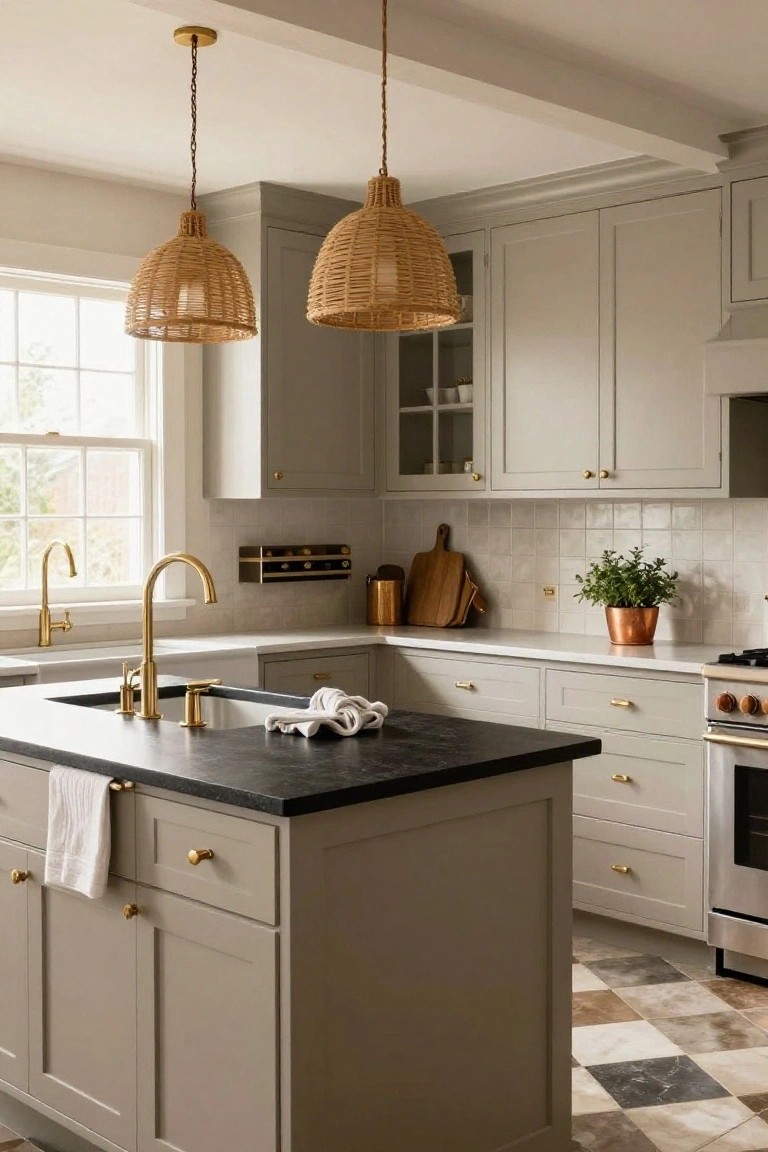
One simple way to make a neutral kitchen feel more inviting is hanging woven rattan pendants over the island. In this setup, the two basket-like shades catch the light softly and bring in natural texture without much effort. They play nicely against the gray cabinets and black countertop, keeping things calm but not stark.
These lights work best in transitional kitchens where you want subtle interest. Hang a pair like this over any work island, and pair them with gold faucets or pulls for a little shine. Skip them in super modern spaces, though. They suit homes with some traditional lines already.
Sage Green Cabinets for Kitchen Calm

Sage green cabinets give this kitchen a quiet, restful vibe that feels right at home in transitional spaces. The soft color on shaker-style doors pairs easily with white subway tile and marble counters. Brass hardware keeps things from going too flat, and the natural light from the window makes the green glow just right.
You can pull this off in older homes or additions with plenty of daylight. Pick a muted green to avoid it feeling too bold. Add wooden stools at the island for everyday use. It suits cooks who want practical storage without stark white or dated oak.
Exposed Wood Beams Warm Up Kitchens

Wooden beams like these stretch across the ceiling, giving the space a bit of old-house feel without going full rustic. They match right up with the oak cabinets below, so everything ties together nicely. That repeat of the wood pulls your eye around the room and makes it feel steady and lived-in, especially against the white uppers and clean counters.
You can pull this off in kitchens with higher ceilings, maybe 9 feet or more, where the beams won’t crowd things. Go for reclaimed or rough-sawn wood if you want that texture, but stain it lighter to keep it from darkening the room. It works best in open layouts connected to dining or family areas… just make sure they’re structurally sound if you’re adding them new.
Light Wood Cabinets Warm a Clean Kitchen
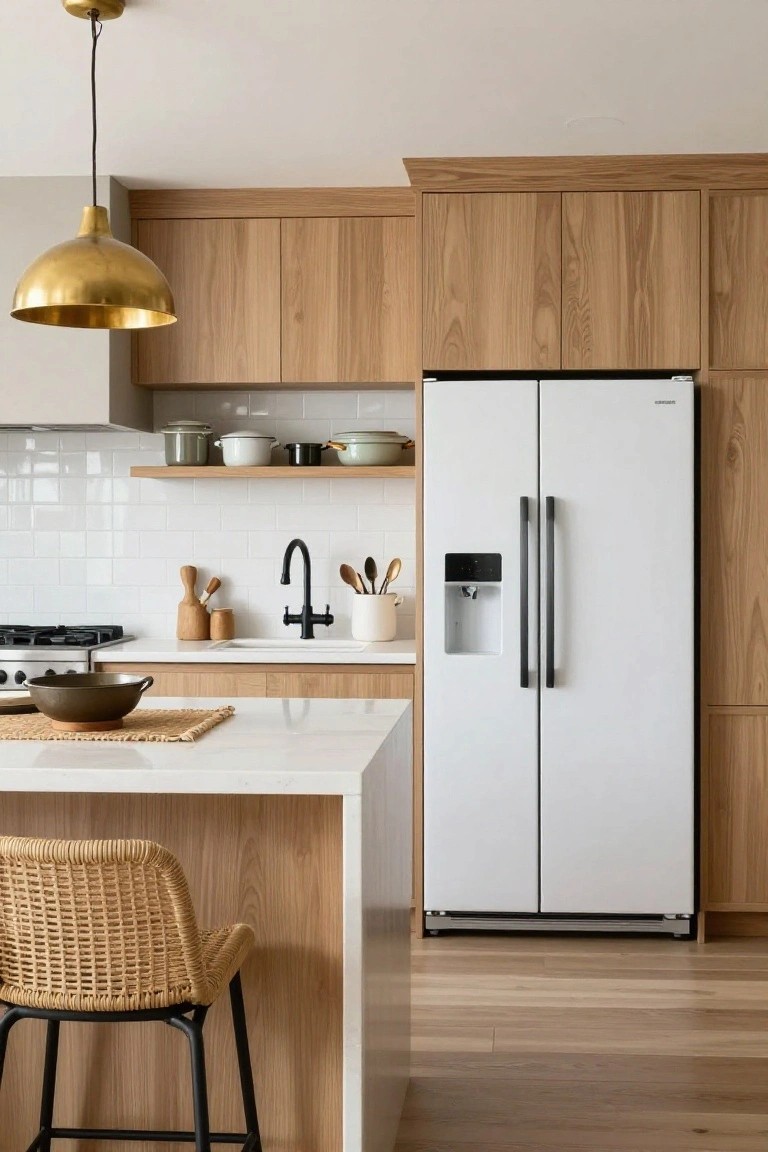
Light wood cabinets like these oak ones make a kitchen feel more inviting without much effort. They add subtle grain and tone next to white counters and appliances, softening the whole look. It’s a good pick for transitional styles where you want modern lines but not a cold space.
Try this in medium-sized kitchens with good natural light. It suits homes that mix old and new vibes. Go for a matte finish on the wood to keep dust low, and pair with black hardware like the faucet shown here. Just skip glossy paints nearby, or it might clash a bit.
Wood Island Warms a White Kitchen
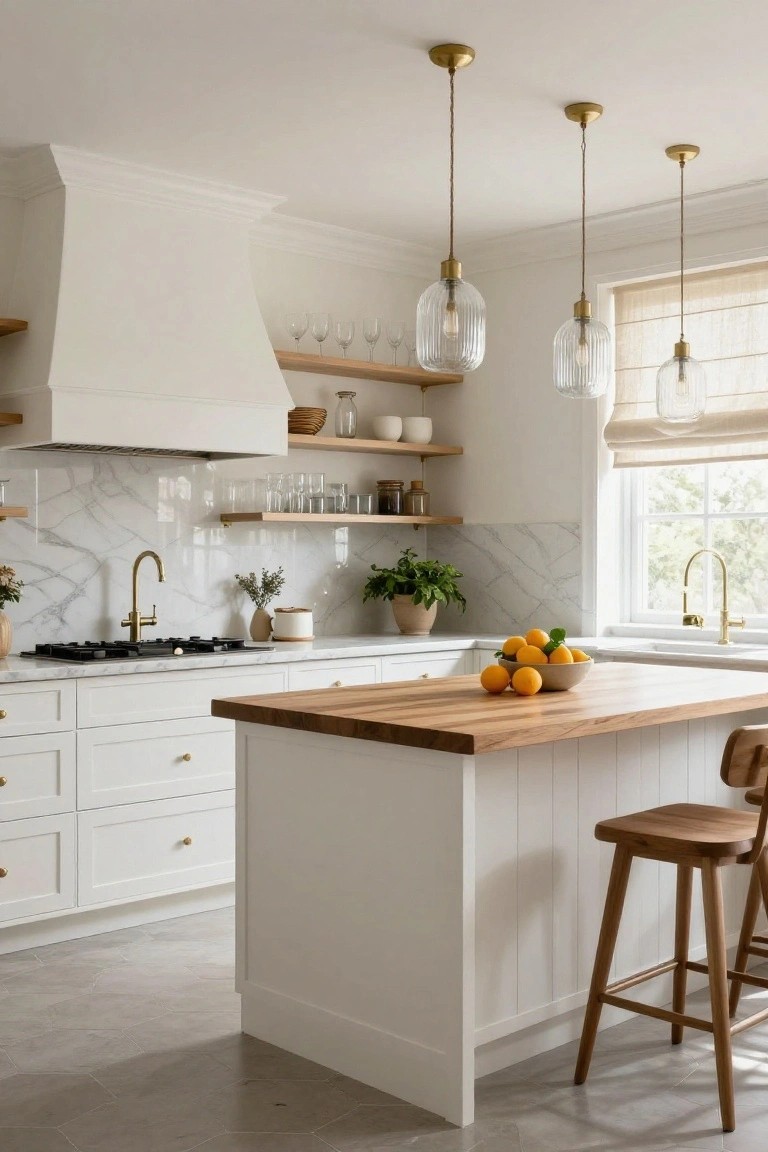
A solid wood island like this one sits right in the middle of crisp white cabinets and pulls the whole kitchen together. It adds that bit of natural warmth without overwhelming the clean lines. The butcher block top and matching stools make it feel ready for everyday meals, and those oranges on top show how it doubles as a casual display spot.
This setup works best in transitional kitchens where you want brightness but not starkness. Pair it with marble backsplash and gold faucets for easy contrast. It’s practical for family homes… just seal the wood well to handle spills.
Sage Green Cabinets Warm Up the Kitchen

Sage green cabinets like these on the lower section give a kitchen a gentle, lived-in feel without going too bold. They pair nicely with the white farmhouse sink and brass faucet, letting warm metals like the copper pots on open shelves pop just right. It’s a simple way to add color that feels fresh but not overpowering.
Try this in a smaller kitchen or one with good natural light from a window like the one here. It suits older homes getting a refresh, especially if you stick to matte finishes and mix in wood tones from a table or shelves. Just keep upper walls light to avoid closing in the space.
Navy Kitchen Island with Wine Storage
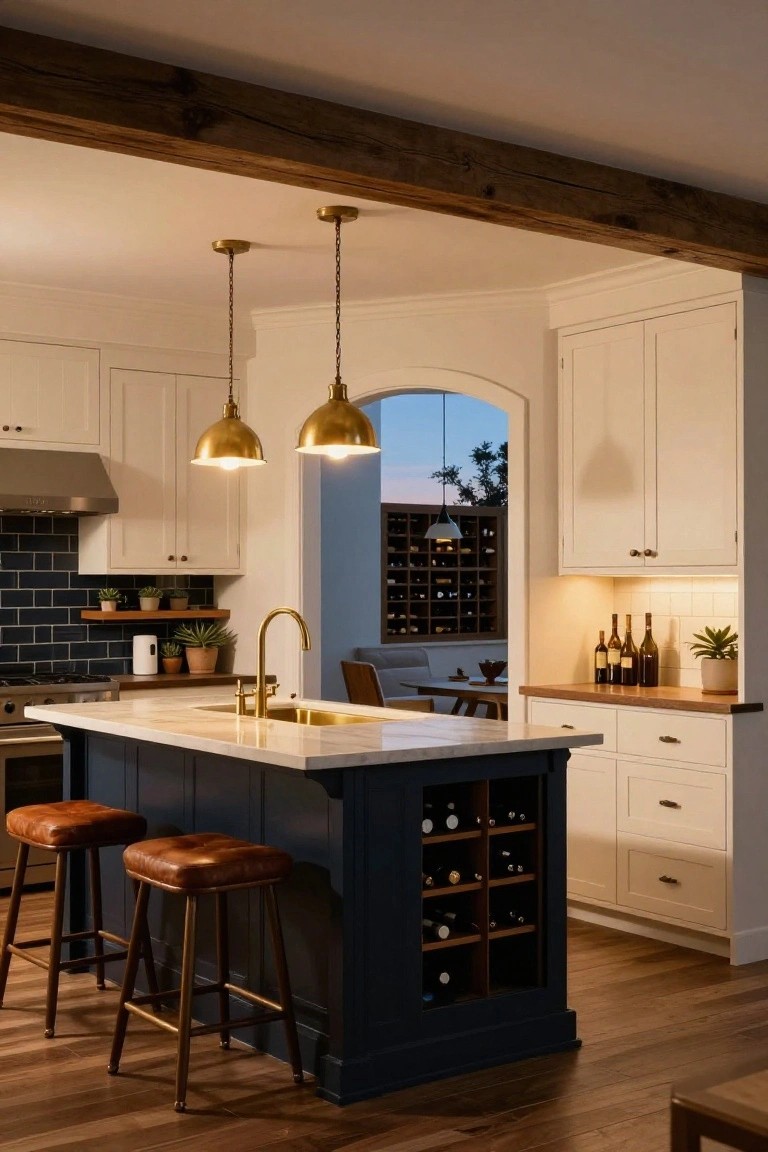
A navy island like this one pulls the kitchen together without trying too hard. The dark blue base contrasts nicely with white cabinets around it. Built right into the end are wine racks that hold bottles securely. Leather stools tucked under add a place to sit and chat while someone cooks.
Put this idea to work in homes with open layouts. It suits transitional styles that mix clean lines with a bit of warmth. Light wood floors keep things balanced. Make the island at least five feet long so there’s room for both storage and counter space.
Woven Pendant Lights Over the Kitchen Island

Those rattan pendant lights hanging right over the island catch your eye first. They add a bit of natural weave and warmth to the soft gray cabinets below. In a space like this, with clean white tile and matte finishes, the lights keep things from feeling too stark. It’s a simple way to mix in some organic texture.
Try this in kitchens with an island or eating bar. The pendants work best where you want light focused for cooking or gathering, maybe 30 to 36 inches above the counter. They suit transitional homes… older houses getting a fresh update. Just pick ones with the right scale so they don’t crowd the space.
Arched Shelving Nook Adds Kitchen Character
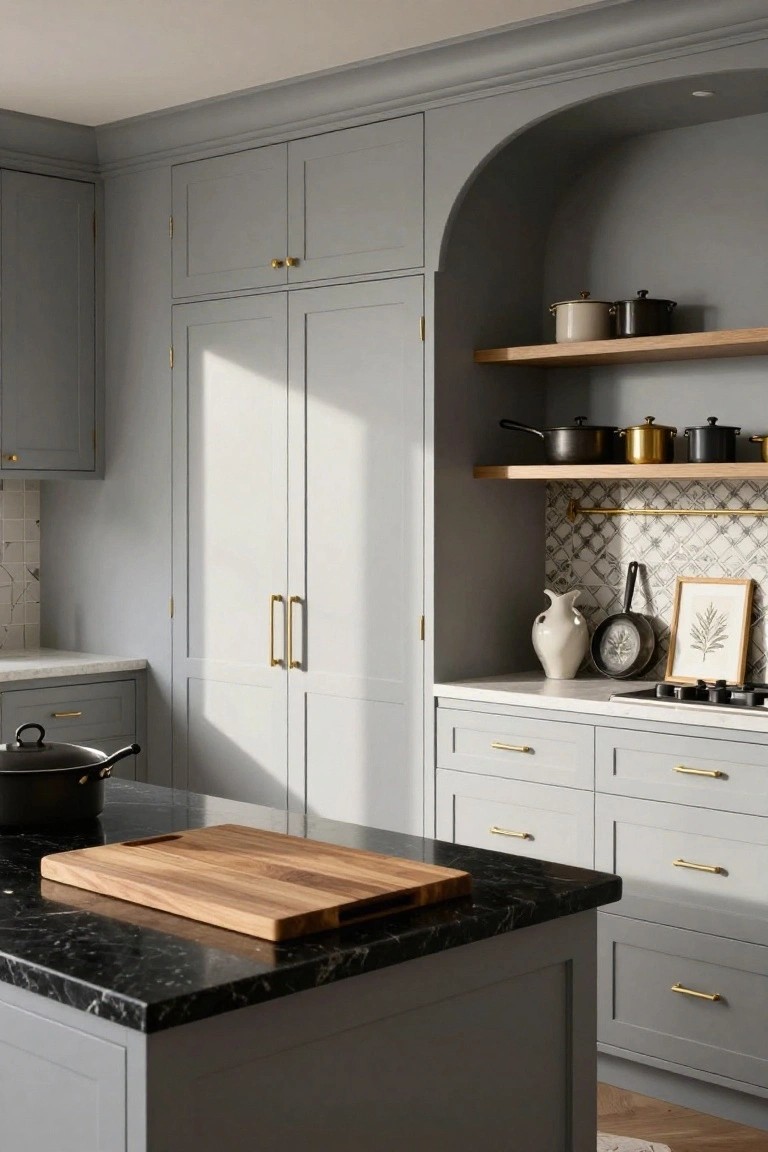
One nice touch in this kitchen is the tall arched nook built right into the gray cabinet wall. It has floating wood shelves that hold pots and pans, turning storage into a display that feels intentional. The soft curve breaks up the flat lines of the cabinets without overwhelming the space, and it catches the light well.
Try this in a kitchen with enough wall height, maybe ten feet or so. It suits transitional looks that blend clean lines with a bit of classic detail. Pick shelves that match your wood tones, and keep the items grouped by use so it stays neat… not cluttered. Works best where you want a focal point away from the cooking zone.
Herbs Freshen Up White Kitchens
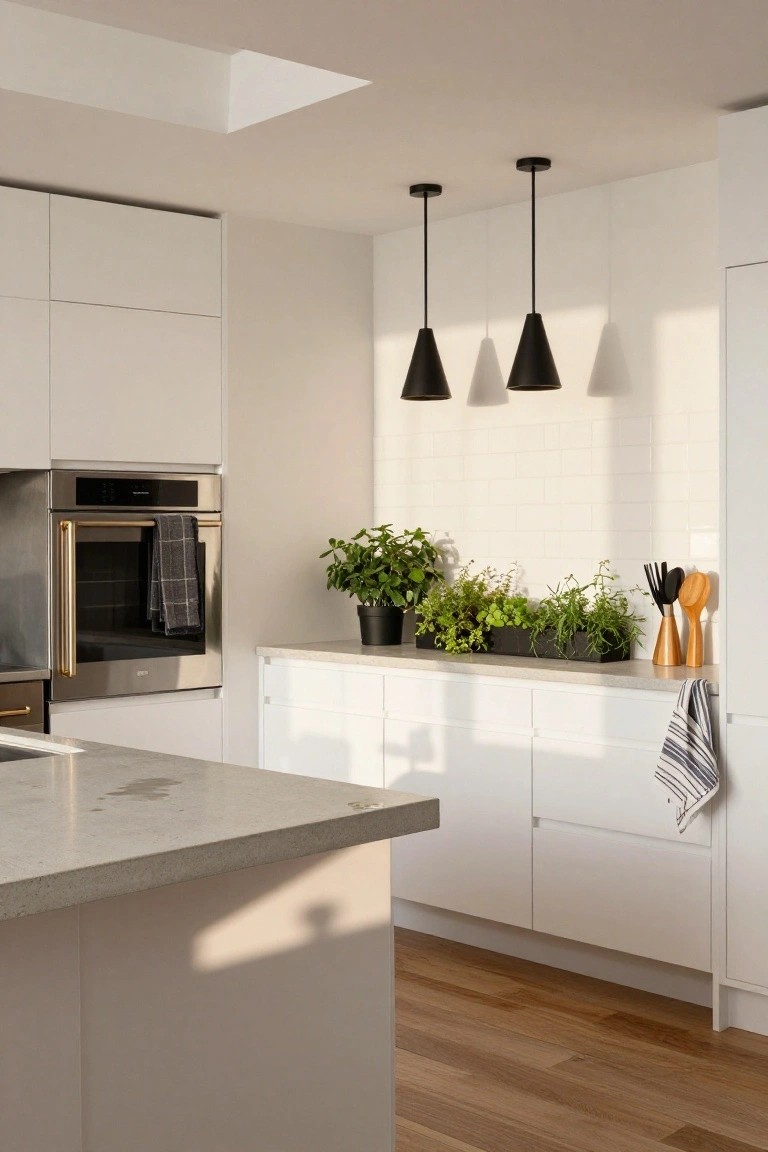
A black rectangular planter box full of different herbs sits on the shelf just above the counter, right by the oven. In a mostly white kitchen like this, it adds easy green without cluttering things up. It makes the space feel more lived-in and practical for cooking.
Put one in your kitchen if you have room on a counter ledge or can add a slim shelf. It fits transitional styles with clean cabinets and stone tops. Go for basics like parsley or thyme that don’t need much care.
Built-In Kitchen Bench for Casual Seating

One simple way to make a kitchen feel more like home is with a built-in bench along the counter or island. Here it’s tucked right into the corner, matching the warm wood cabinets so everything flows together. The green cushions add a soft spot to sit without crowding the room.
This setup works great in everyday kitchens, especially where space is tight but you still want a place for breakfast or homework. Add storage drawers underneath the bench for pots or linens. It suits transitional looks with wood tones and white counters… just keep the cushions wipeable if kids are around.
Wooden Kitchen Island with Lit Storage

Dark cabinetry can make a kitchen feel sleek and modern. But slipping in a warm wooden island like this changes things up nicely. The oak base adds natural texture right where you need it most. And that glass-fronted door with its soft inner light turns simple storage into a little display spot for oils or bottles.
This works great in transitional spaces that blend clean lines with cozy touches. Center the island for everyday use, top it with light marble to bounce around brightness, and keep the lighting subtle so it doesn’t overpower. It suits open homes where the kitchen flows into living areas… just right scale for most families.
Blue Patterned Tiles Add Kitchen Charm
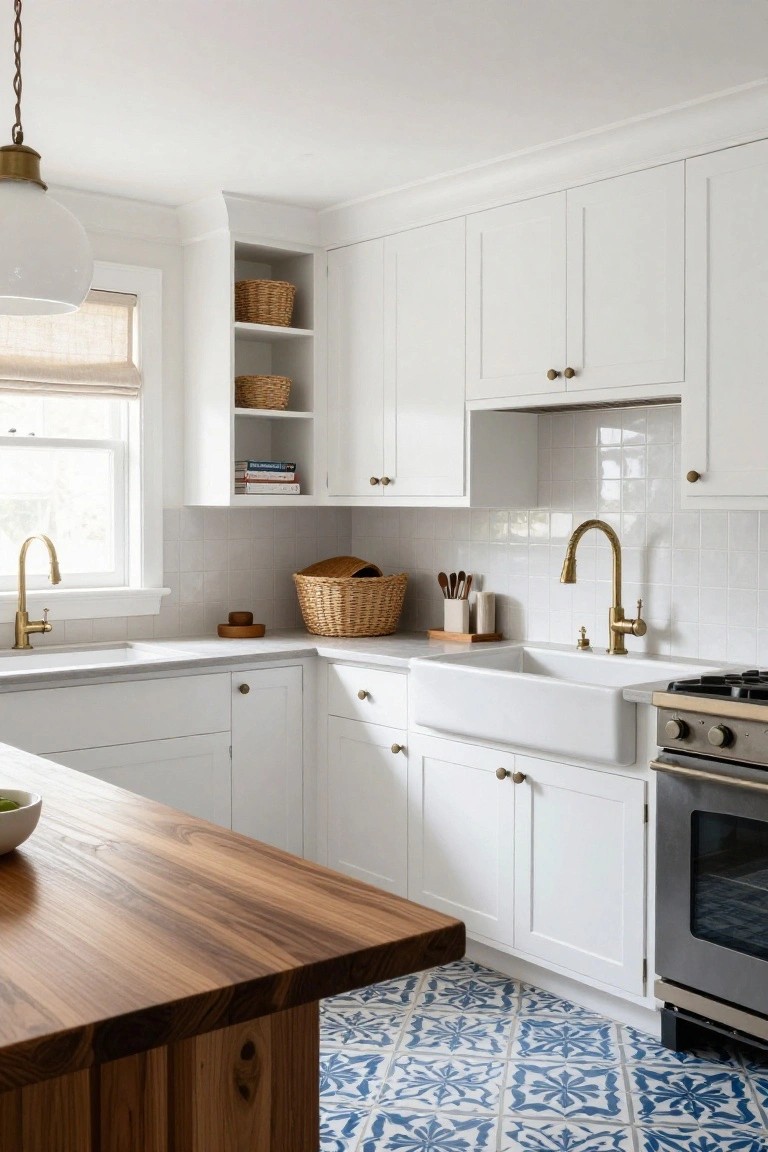
White kitchens can feel a little plain sometimes. But look at this one with those blue patterned tiles across the floor. They bring in color and a handmade feel that makes the whole room more interesting. The white cabinets and wood island keep things calm around it.
You can pull this off in older homes or any space with good light. Stick to one bold pattern like this on the floor and keep walls and counters simple. It suits families too since tile cleans up easy. Just make sure the pattern isn’t too busy if your kitchen’s small.
Navy Lower Cabinets with White Uppers

This setup uses navy on the base cabinets and keeps the uppers in a clean white. It makes the kitchen feel taller and more open right away. The dark lowers add some weight down low, so the room doesn’t float away. That marble island in the middle fits right in and gives a spot for quick meals.
Try it in a transitional kitchen where you want classic lines but a modern edge. It suits average-sized spaces best, especially with brass pulls and subway tile behind. Just don’t overload the counters, or it can feel busy.
Warm Wood Over White Cabinets

Kitchens that mix warm wood cabinets up top with white ones down below have a nice easy feel. The walnut uppers here, with their glass doors showing off dishes, bring some natural tone to balance all the light marble counters and floors. It keeps things fresh but not stark.
This setup fits right into everyday homes, especially ones with good natural light from windows like this. Go for it if you want storage that looks lived-in. Keep the white cabinets simple in style, and watch the wood grain so it doesn’t take over the whole room.
Frequently Asked Questions
Q: How do I mix wood cabinets with modern appliances without clashing?
A: Start with warm-toned woods like oak or walnut that echo the appliances’ stainless steel finishes. Layer in matte black pulls on the cabinets to tie everything together. This keeps the look balanced and fresh.
Q: Can I pull off transitional style on a tight budget?
A: Hunt for vintage-inspired finds at thrift stores or online marketplaces, then pair them with affordable matte finishes on new hardware. Swap out cabinet knobs and add open shelving with simple wood planks. You’ll see big changes fast.
Q: What if my kitchen is super small—does transitional still work?
A: Yes, go for slim profiles like shaker-style cabinets in light neutrals and floating shelves instead of bulky uppers. Mirrors on the backsplash bounce light around and make space feel bigger. Keep counters clutter-free.
Q: How do I add texture without overwhelming the room?
A: Pick one hero texture, like woven baskets under open shelves or a subtle linen roman shade. Let it play off smooth quartz counters. That single touch adds warmth right away.
