


Coastal living rooms often come together best when the layout leaves clear paths around the main seating so daily movement stays simple and unblocked.
I have found that swapping in lighter fabrics on the sofa and chairs changes how the space feels during long afternoons more than any single color choice ever does.
Most people notice the windows first and how they connect the room to whatever light comes in from outside.
Testing one new piece against what is already there tends to reveal quickly whether the overall balance will hold once everything is in place.
A few small adjustments usually matter more than a complete redo.
Natural Wood with a Light Palette
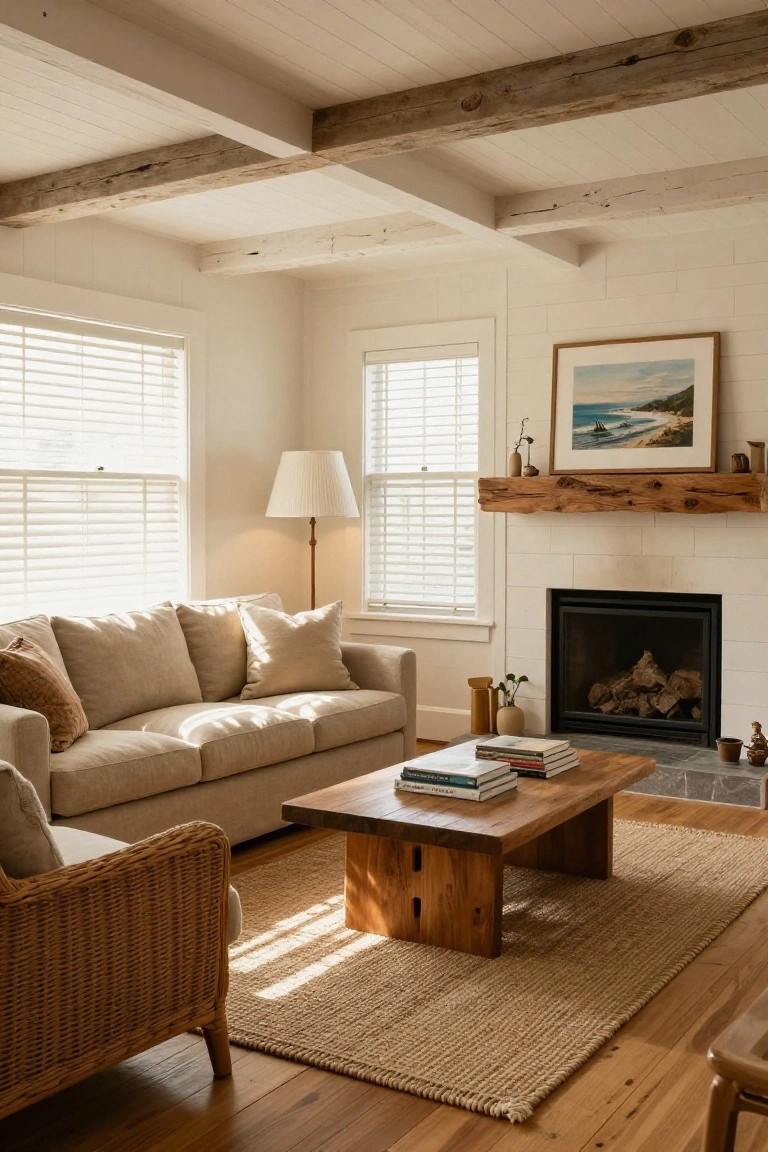
Many coastal living rooms stay relaxed when the walls stay bright and the wood tones handle the warmth. Exposed ceiling beams and a simple wood coffee table add just enough texture without crowding the space or darkening the room.
This mix suits homes that get plenty of light or any space that needs to feel open year round. Keep the fabrics neutral and add only a few woven pieces so the room stays easy to live with and simple to update.
Built-In Shelving Under Windows

Built-in shelving under a window gives a living room extra display space without crowding the floor. It keeps the area open and lets the view stay the main focus while still showing a few simple pieces.
This setup works best in homes that already have a wide window and need light storage for small items. Choose a soft color for the shelves so they feel like part of the wall rather than a separate piece of furniture.
Keep the Fireplace Wall Mostly White
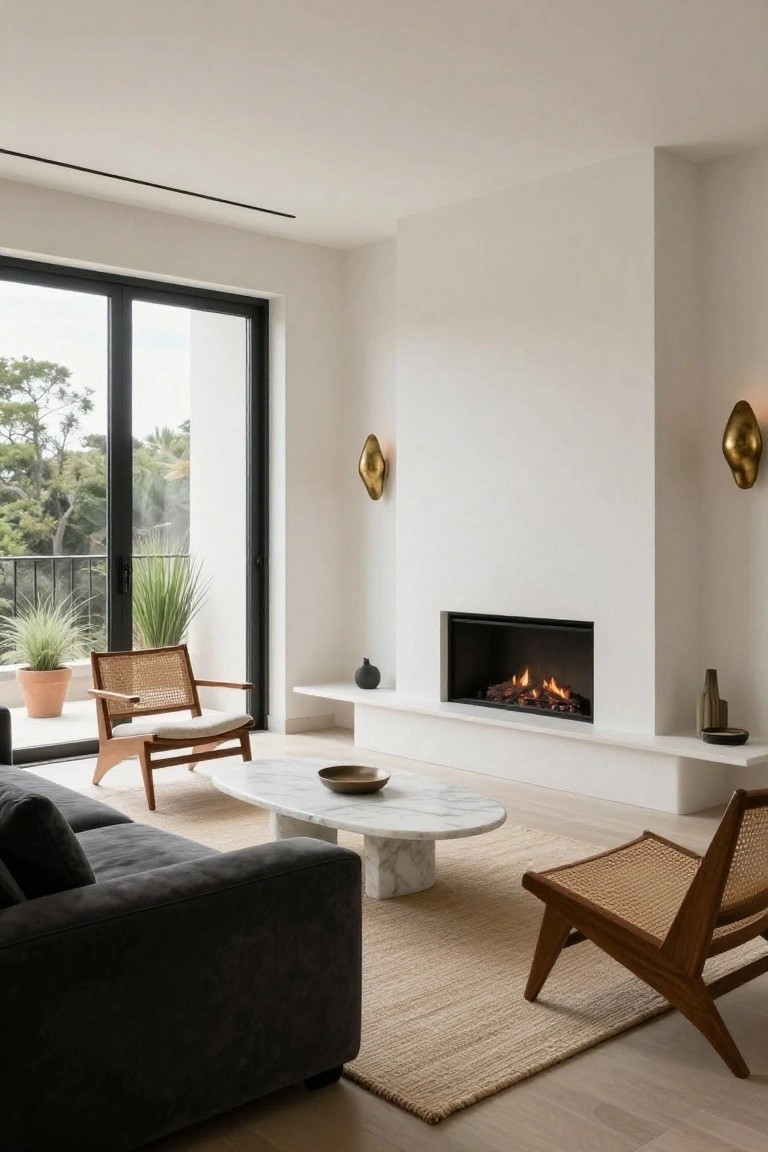
A plain white fireplace wall works well in coastal living rooms because it reflects light and avoids any heavy visual weight. The long low shelf that runs across it keeps the focus low and the whole area feeling open rather than boxed in.
This approach suits homes that already get good natural light and do not need extra trim or dark stone. Skip busy mantels and just let the wall stay simple so the room stays calm and easy to furnish around.
Navy Walls With Light Upholstery

A deep navy wall color can give a coastal living room more weight without making it feel closed in. The dark tone grounds the space and lets pale furniture and natural wood come forward.
This approach suits rooms that get steady daylight. Stick with light linens on the seating and keep accessories simple so the blue stays calm rather than heavy.
Place a Low Console Below Large Windows
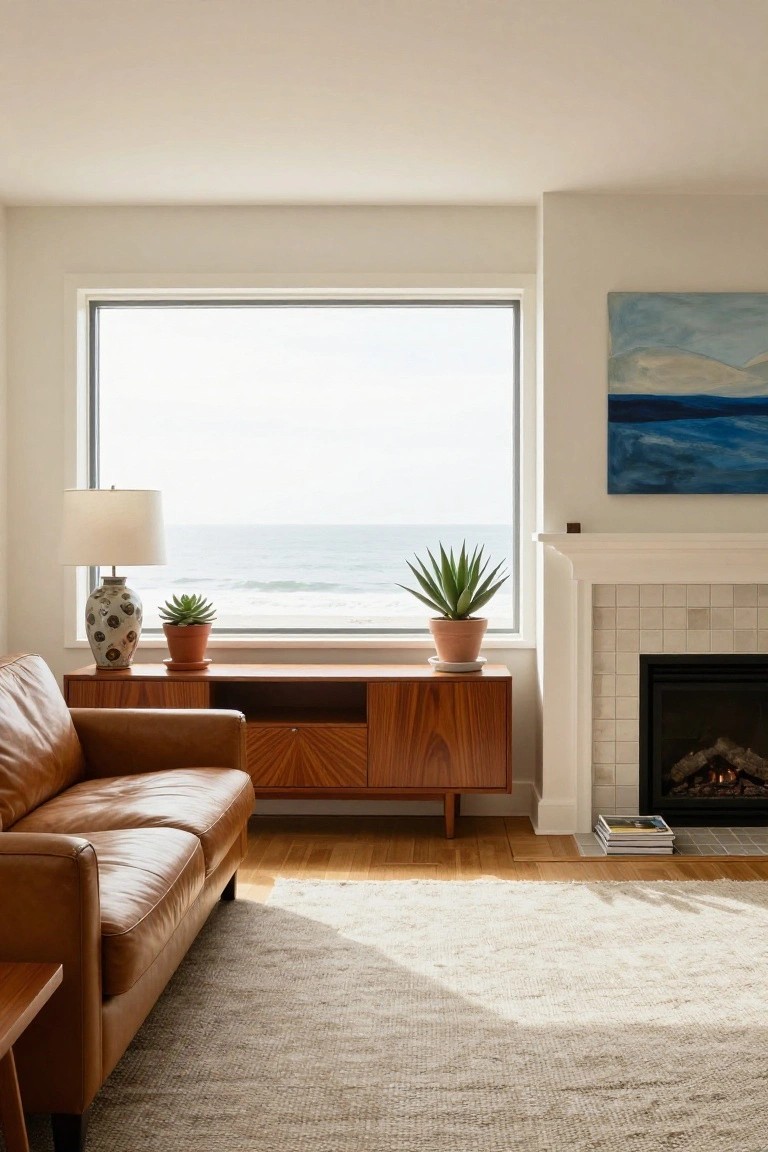
A low console under a big window works well in coastal rooms because it leaves the view open. The piece still gives you a place to set lamps or small plants without crowding the space or cutting off the light.
This setup suits homes where the outdoors is the main feature. Keep the console narrow and low so it stays out of the way, and use it for storage or just a few simple items rather than filling it up.
Mix Natural Materials with Soft Neutrals
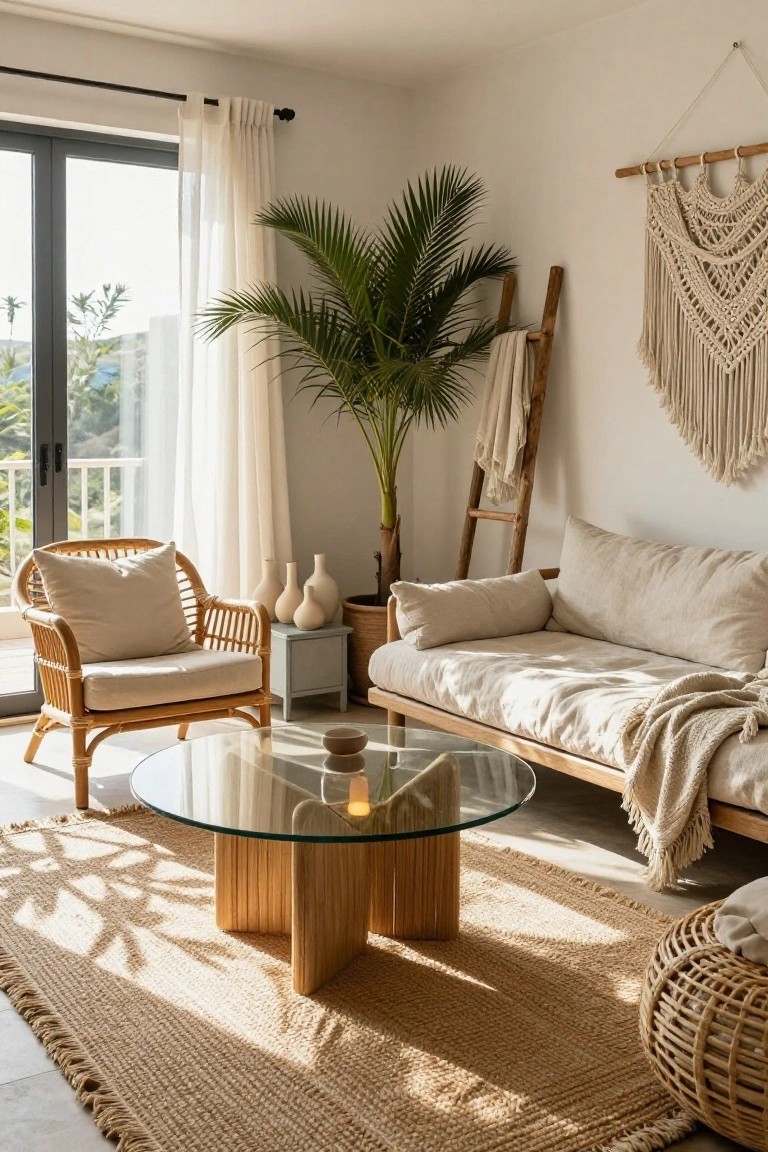
Light neutral fabrics on the sofa and chair let the room feel open even when the furniture is substantial. The rattan and wood pieces add texture without darkening the space, and the jute rug keeps everything grounded while still reflecting plenty of light.
This approach works best in rooms that get good daylight. Stick to one or two woven pieces rather than filling every surface, and let the walls stay plain so the textures can breathe.
Window Seats Add Comfort Without Crowding the Room

A window seat turns an empty wall into useful space. It gives you a place to sit and enjoy the light while keeping the floor clear for other furniture.
This setup works best in rooms that get steady daylight. Keep the cushions simple and the curtains light so the area stays open and easy to use.
Bring the Ocean View Into the Room With an Arched Window
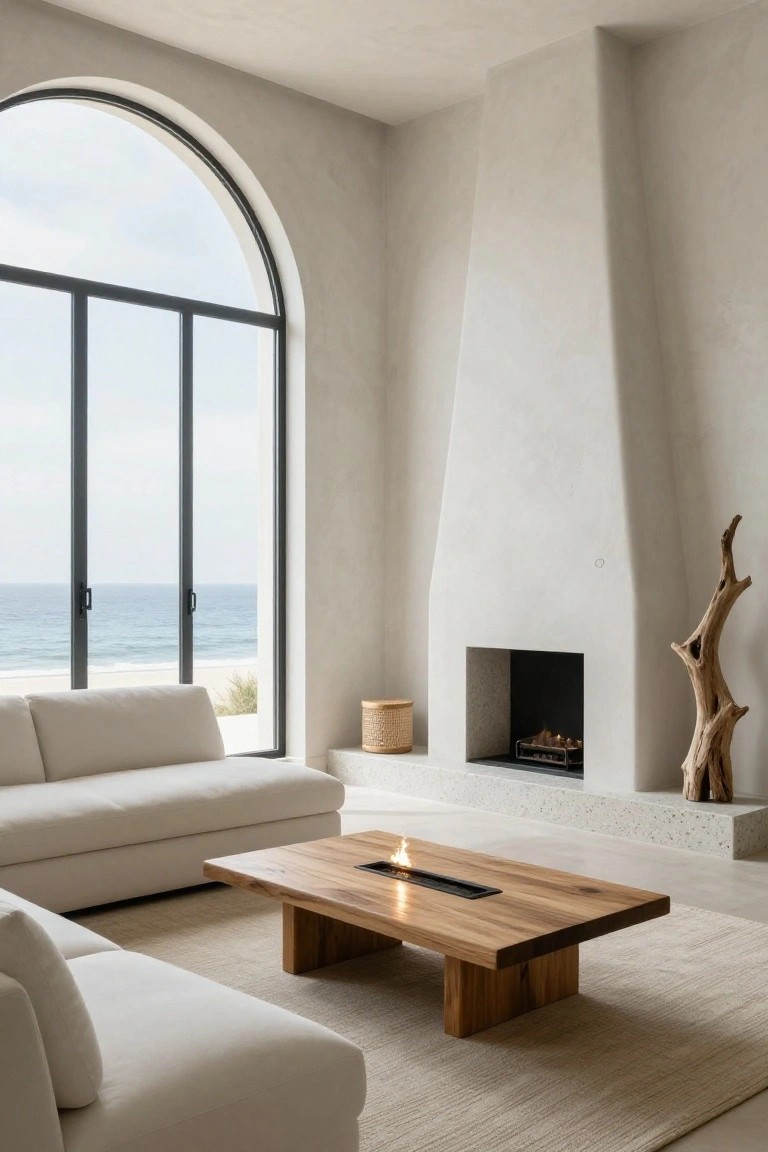
A large arched window can turn a simple living room into something that feels connected to the water. It lets in plenty of light and makes the space feel open without needing a lot of extra decoration or color.
This idea works best in homes that sit close to the coast. Keep the surrounding walls light and the furniture low so the view stays the main focus.
Built-In Seating With Storage Below
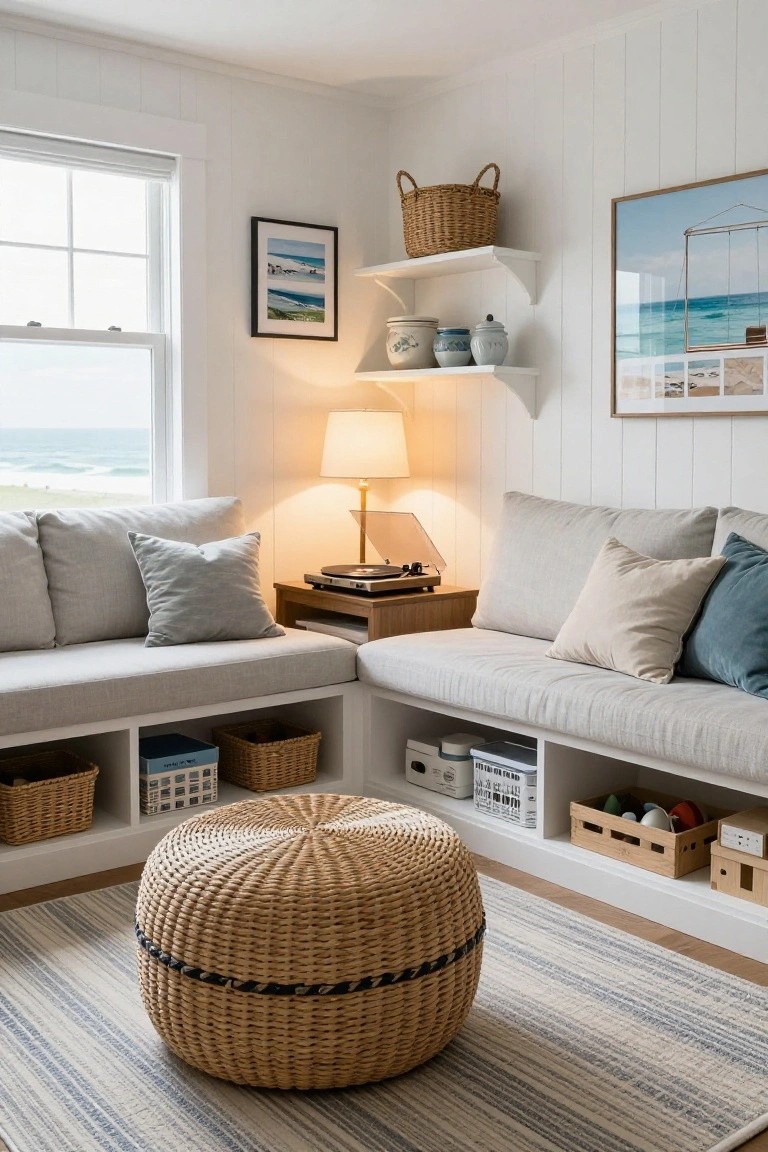
Built-in benches give a coastal living room plenty of seating while keeping the floor clear. The storage space underneath holds baskets and boxes so everyday items stay out of sight but still close at hand.
This works best in beach houses or smaller rooms that need to feel open. Use light cushions on top and add a simple woven ottoman if you want extra seating without adding more furniture.
A Large Round Mirror to Brighten the Room
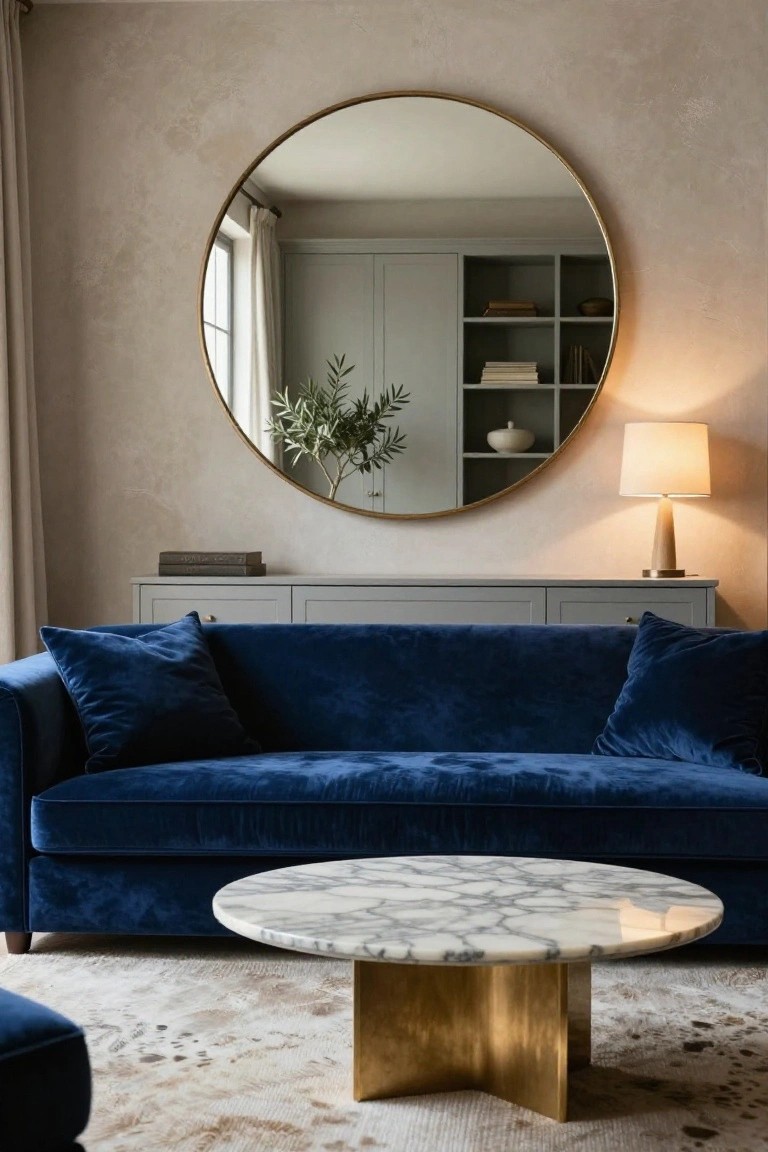
A round mirror above a console can help a living room feel more open. It catches light from nearby windows and lamps and spreads it across the space, which keeps the room from feeling closed in even when the walls stay neutral.
Try hanging one over a low cabinet or sideboard in a spot where it can pick up both daylight and a lamp. This works well in rooms with soft wall colors and a deeper sofa, since the reflection adds air without adding more furniture or pattern.
Stone Fireplaces In Coastal Living Rooms

A stone fireplace gives a coastal living room a solid center without making it feel heavy. The natural texture pairs well with ocean views and keeps the space from drifting into an all-light, all-soft look that can start to feel flat after a while.
This works best in rooms that already have strong natural light and open sightlines. Use simple wood furniture and low seating around it so the stone stays the main feature instead of competing with too many other materials.
Built-In Arched Shelving
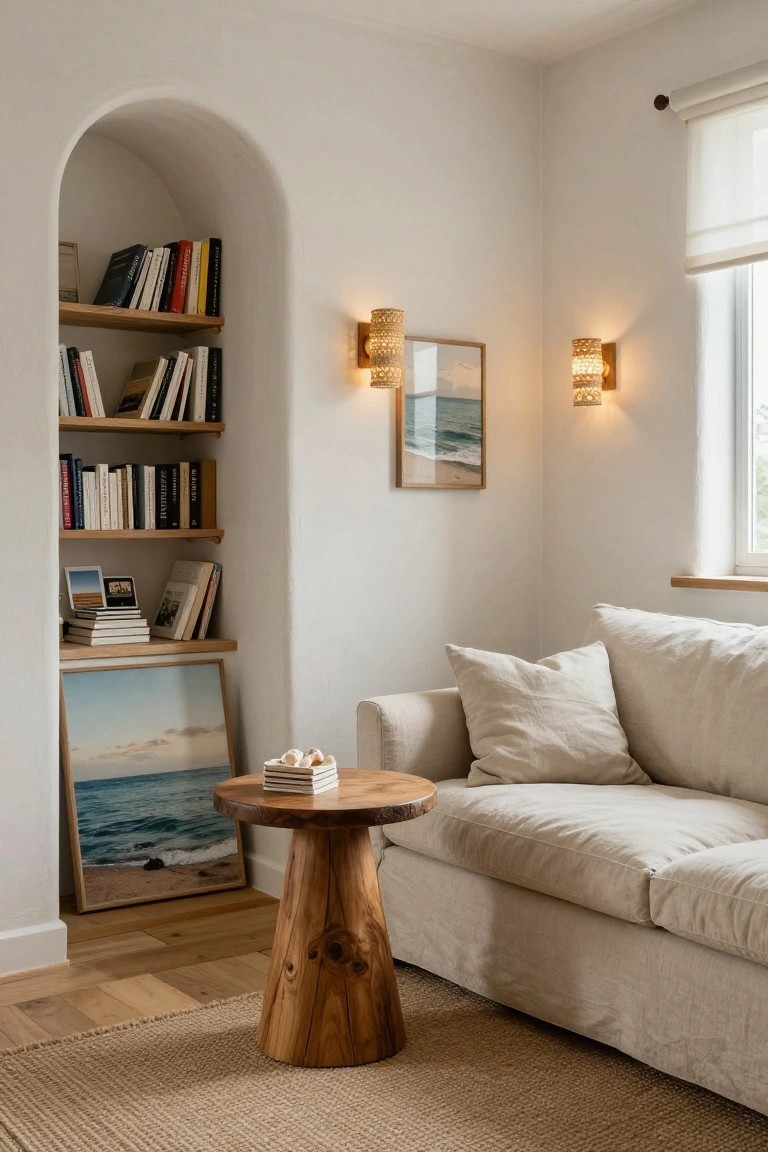
Built-in shelves tucked into an arched alcove give a coastal living room useful storage without adding extra furniture. The shape softens the look of the shelves and keeps the space feeling open and calm. It works especially well when the rest of the room stays light and simple.
This setup suits smaller homes or any living room where you want books and a few objects on display but not scattered around. Keep the shelves fairly full so the niche reads as part of the wall rather than a random hole. Natural wood tones on the shelves pair easily with pale walls and linen upholstery.
Abstract Art In Ocean Colors

A large abstract painting in soft blues and teals can pull the colors from the sea right into the room. It keeps the space feeling connected to the view without relying on seashells or obvious coastal prints. The neutral sofa and simple concrete bench let the artwork stand out.
This approach works best in rooms with big windows or lots of light. Stick to one strong piece rather than filling the wall with smaller frames. Keep the rest of the palette quiet so the painting can do the work.
Soft Blue Gray Walls For A Coastal Living Room
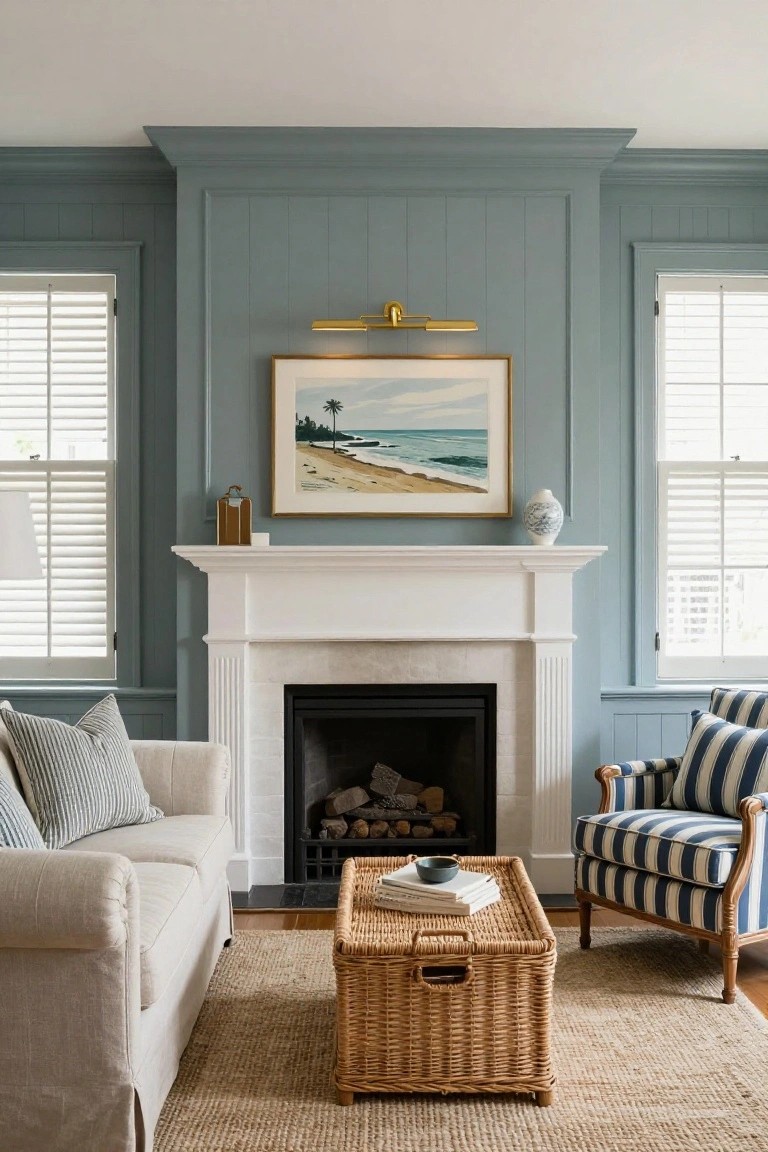
A soft blue gray on the walls gives a coastal living room that relaxed feeling without trying too hard. It works especially well behind a white fireplace because the contrast keeps the space feeling bright and open. The color also helps tie in the view of the water if you have one.
This approach suits homes that get good natural light and already have white trim or built-ins. Keep other colors simple, like light upholstery and a few striped accents, so the walls stay the main feature. Too many dark pieces can make the blue gray feel heavier than it needs to.
Built-In Shelving Around The Fireplace
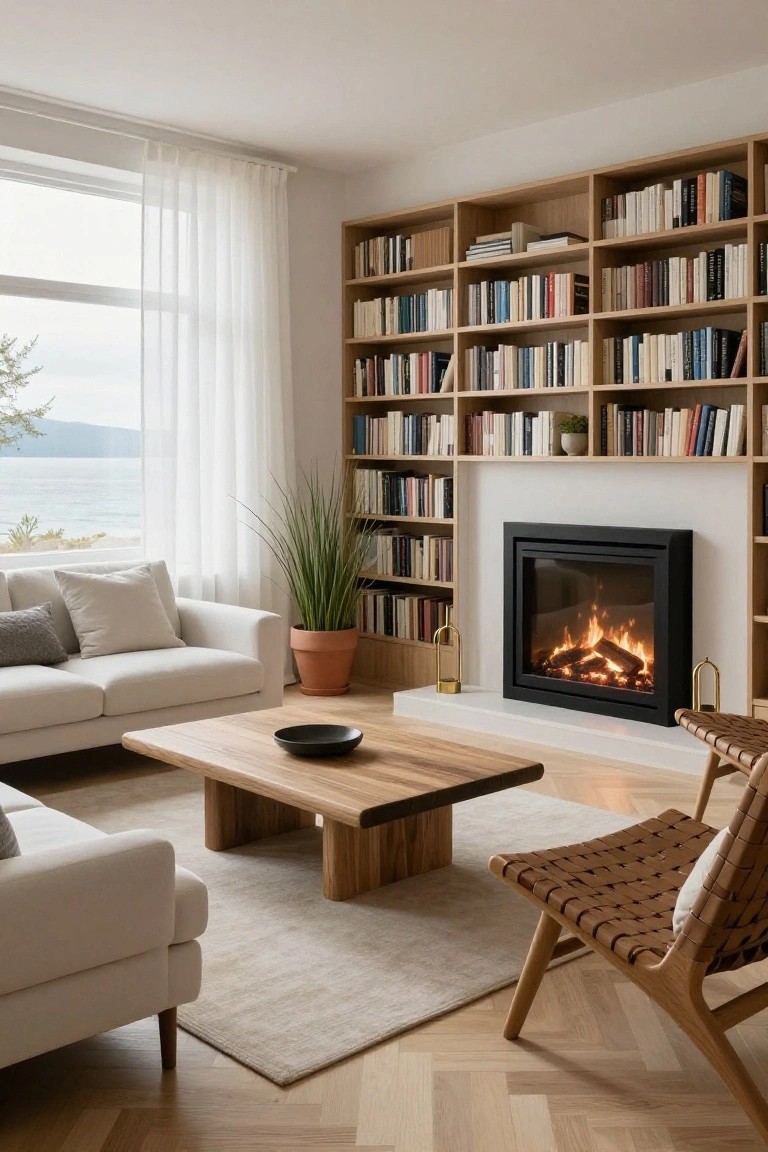
One way to keep a living room open and uncluttered is to run shelves right around the fireplace. This puts storage where the wall is already working hard as a focal point, so you do not end up adding extra pieces that crowd the floor.
It suits coastal rooms that need to stay light. A pale wood tone helps the shelves feel like part of the architecture instead of heavy furniture, and it leaves room for just a few plants or simple objects among the books.
Built In Niches For Nautical Charts

Built in wall niches give a coastal living room an easy way to show off maps and charts without crowding the space. They keep the display feeling intentional and let the art become part of the architecture rather than something hung on a flat wall.
This approach works best in homes that already have some trim detail or want a slightly custom look. Fill the niches with a small group of framed charts in matching frames, then paint the rest of the wall a soft green so the whole corner stays calm and tied to the view outside.
Rattan Furniture for a Light Coastal Feel

Rattan brings a natural texture that keeps a living room from feeling heavy. It works especially well in coastal spaces because the material stays airy and lets light pass through easily. A few woven pieces can set the tone without needing much else.
Place a rattan sofa or chairs where they catch the breeze from open doors or windows. This approach suits homes that want a simple, unfussy look rather than a lot of layers or bold color. Stick to light fabrics and wood tones so the rattan remains the main texture.
Round Coffee Tables With Sectionals
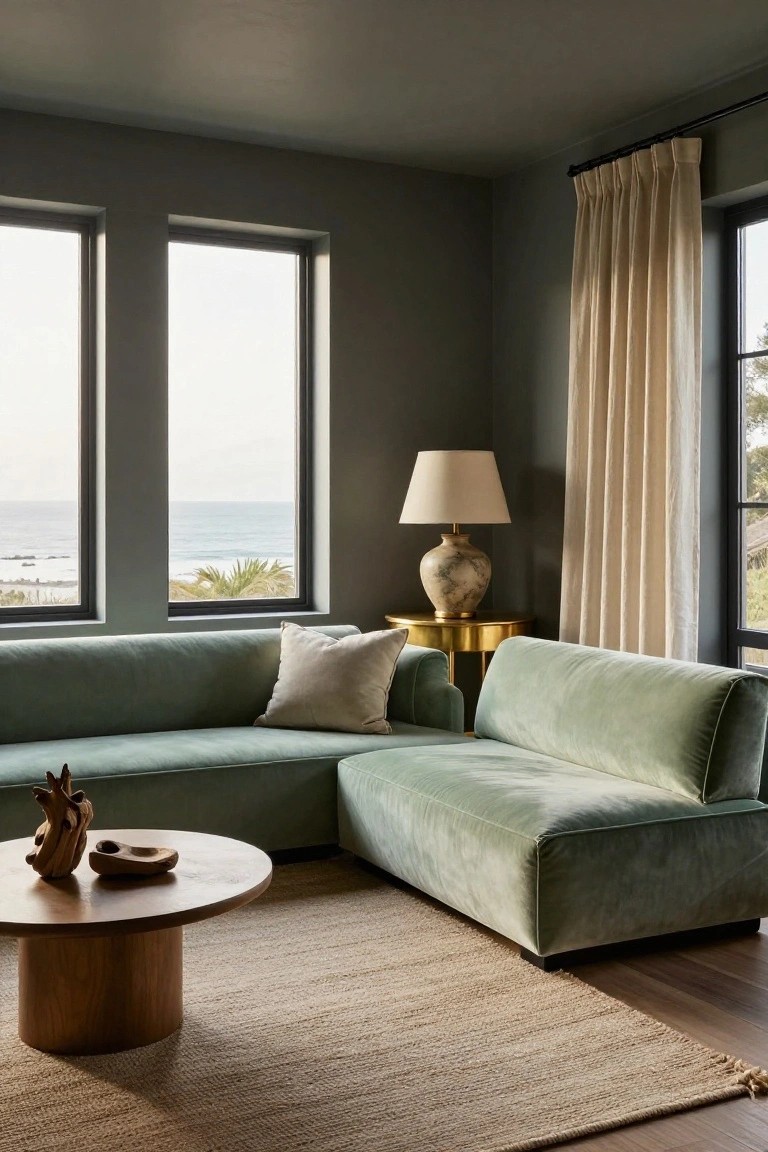
A round coffee table can make a sectional feel less heavy in the room. It softens the sharp corners and gives you more room to move around the seating area without bumping into anything.
This choice works best in coastal living rooms where you want an easy, casual layout. Keep the table low and fairly simple so it does not compete with the view or the soft colors on the walls and sofa.
Lean A Large Mirror To Bring In More Light
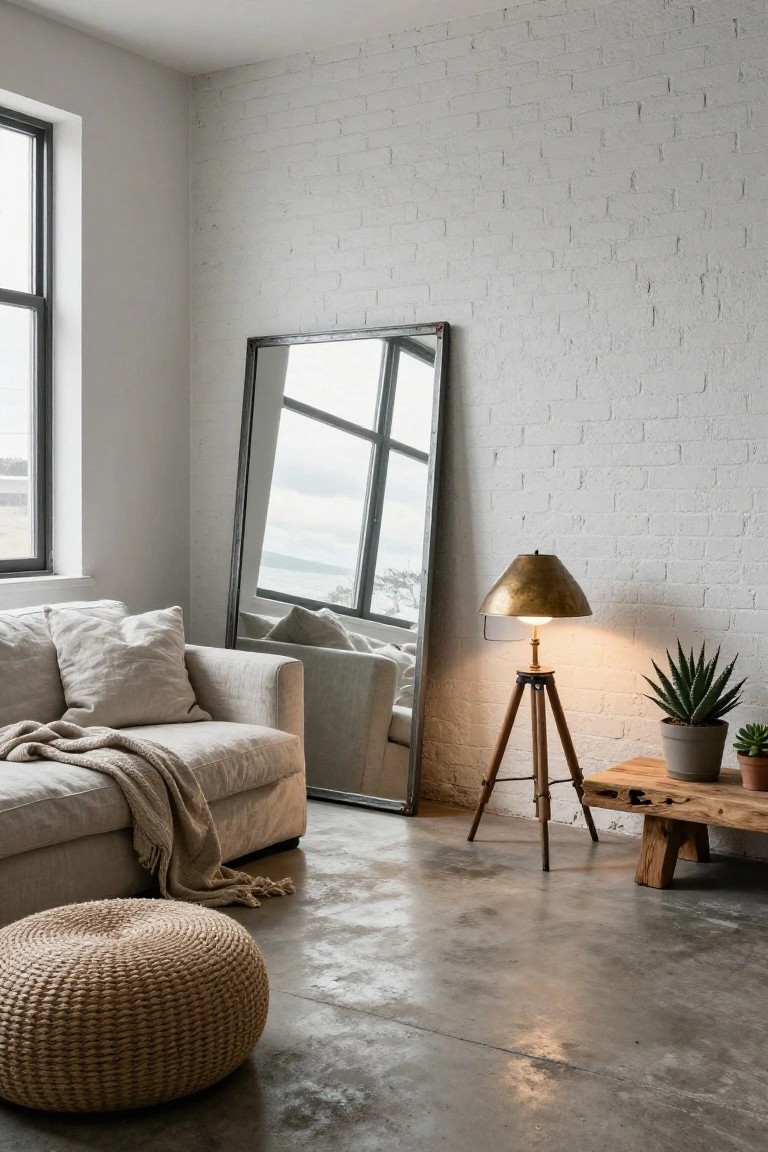
A big floor mirror leaning against the wall can make a coastal living room feel noticeably brighter and more open. It catches the light from nearby windows and bounces it across the space without adding any bulk or clutter.
Place it where it can pick up the best natural light, like near a window or across from a doorway. This works especially well in rooms with pale walls or simple textures, since the reflection keeps everything feeling calm and airy rather than closed in.
Use Woven Pieces To Keep The Room Light

Natural materials like rattan and unfinished wood help a coastal living room feel open rather than weighed down. They add texture while letting the space stay bright and simple.
A large woven pendant works well over the main seating area, especially when paired with a low wood coffee table. This approach suits most smaller living rooms that get decent daylight from nearby windows.
Large Windows with Simple Shades
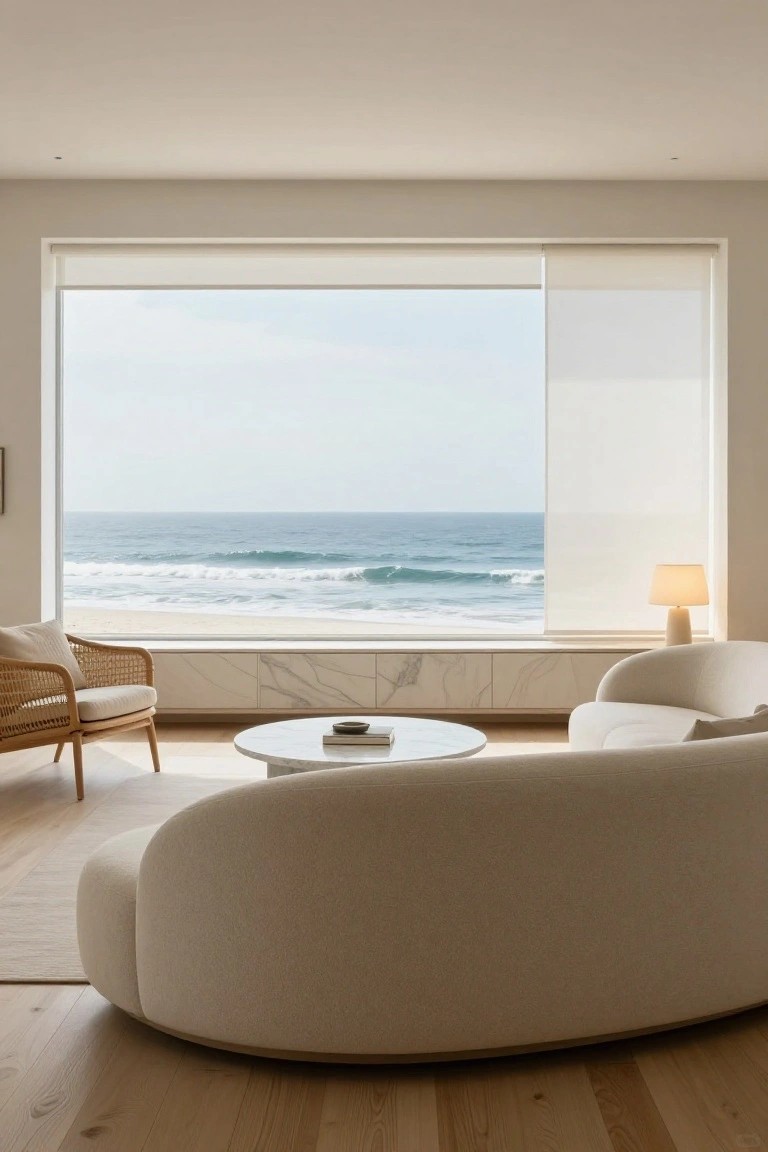
A big window with a roller shade that covers only part of the opening works well in coastal rooms. It lets in plenty of light and keeps the view of the water front and center without the space feeling too exposed or too bright at certain times of day.
This setup suits living rooms that face the ocean or a similar view. Position the shade so it can be adjusted on one side only, and keep the rest of the window open. It is a straightforward way to balance light control with the feeling of being close to the outdoors.
Blue Seating for a Simple Coastal Look

Blue chairs can do a lot in a coastal room without needing much else. They pick up the color of the water outside and give the space a calm, pulled-together feel while the rest of the room stays light and neutral. The soft shade works especially well when the view is right there, so the color feels like a natural extension rather than a bold choice.
This approach suits homes near the water where you want the connection to feel easy. Keep the walls and curtains light, then let the blue show up mainly in the seating. It stays relaxed even if the room gets plenty of sun.
Frequently Asked Questions
Q: How do I pick pillows and throws that feel coastal but still cozy for everyday use?
A: Go for linen or cotton in soft blues and sandy tones. These fabrics breathe well and wash easily after a day at the beach. Skip anything too stiff or shiny.
Q: My living room faces north so it gets less sun. Will coastal ideas still work?
A: Yes, lean into lighter shades and add a few mirrors to bounce what light you have. Layer in warm textures like jute or rattan to keep things inviting. The goal stays relaxed rather than stark.
Q: Can I mix my current sofa with new coastal accents?
A: Start small with a few throw pillows or a light coverlet in breezy fabrics. This lets you test the look without committing to big changes. Your sofa becomes the anchor while the accents bring in that airy feeling.
Q: How many shells or ocean pieces should I actually display?
A: Keep it to a handful grouped on a tray or shelf. Too many starts to feel like a souvenir shop. Focus on one or two bigger items instead for a cleaner effect.
