

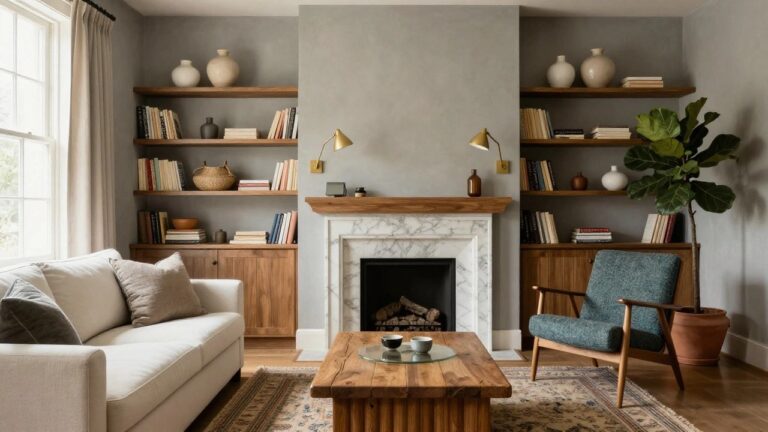
Living rooms done in transitional style pull off that rare mix of relaxed warmth and sharp edges, so the space hums without trying too hard.
I tried anchoring mine with a woven rug under low-slung sofas once, and it made TV nights feel more settled somehow.
Most people clock the furniture flow first, how paths stay open even when the room’s full.
Textures from linen throws to wood accents build depth that lasts through seasons of spills and sun.
The layout tweaks here are ones I’d borrow for whatever house comes next.
Wood Mantel Softens Marble Fireplace
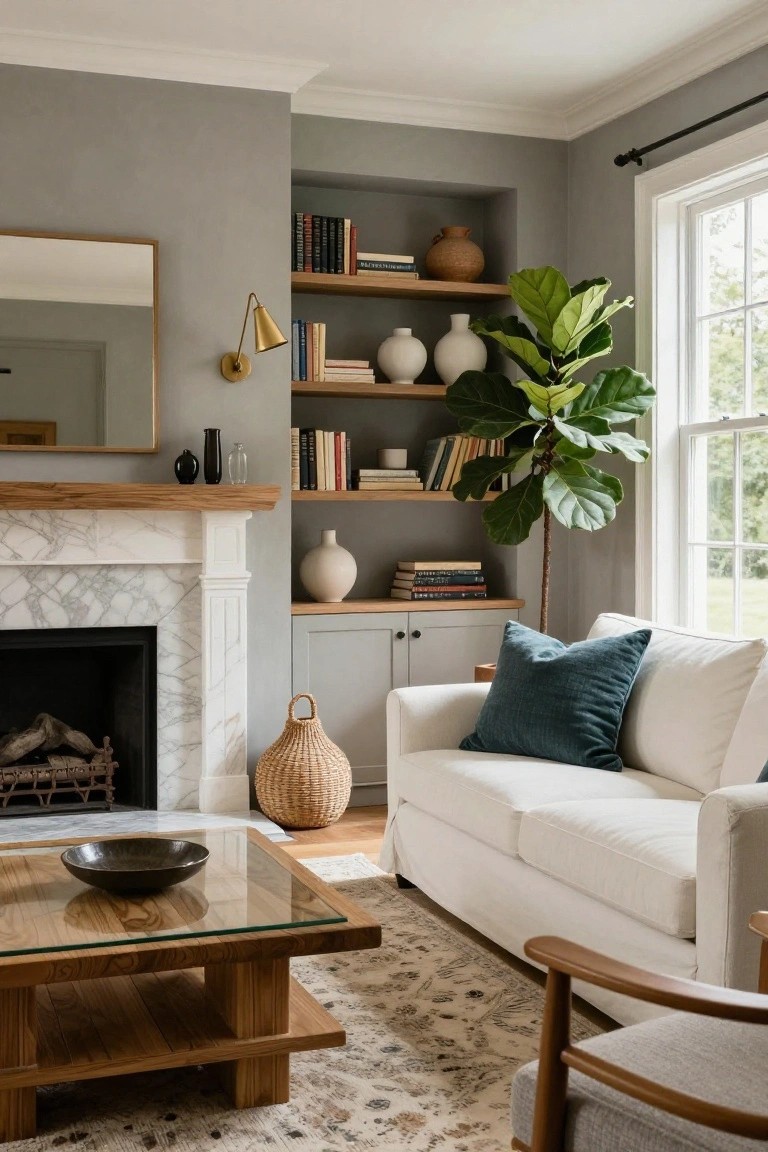
A white marble fireplace surround gives any room that clean, timeless look. But layering a warm wood mantel over it, like the oak one here, brings in just enough natural texture to make it feel lived-in and welcoming. It’s a simple switch that bridges old-school elegance with something more relaxed.
This works best in transitional living rooms with neutral walls and soft seating. Think gray tones, a white sofa, and a few plants nearby. Skip heavy ornate details. Keep the wood simple and let it highlight the stone below.
Soft Green Walls Warm Up Classic Rooms
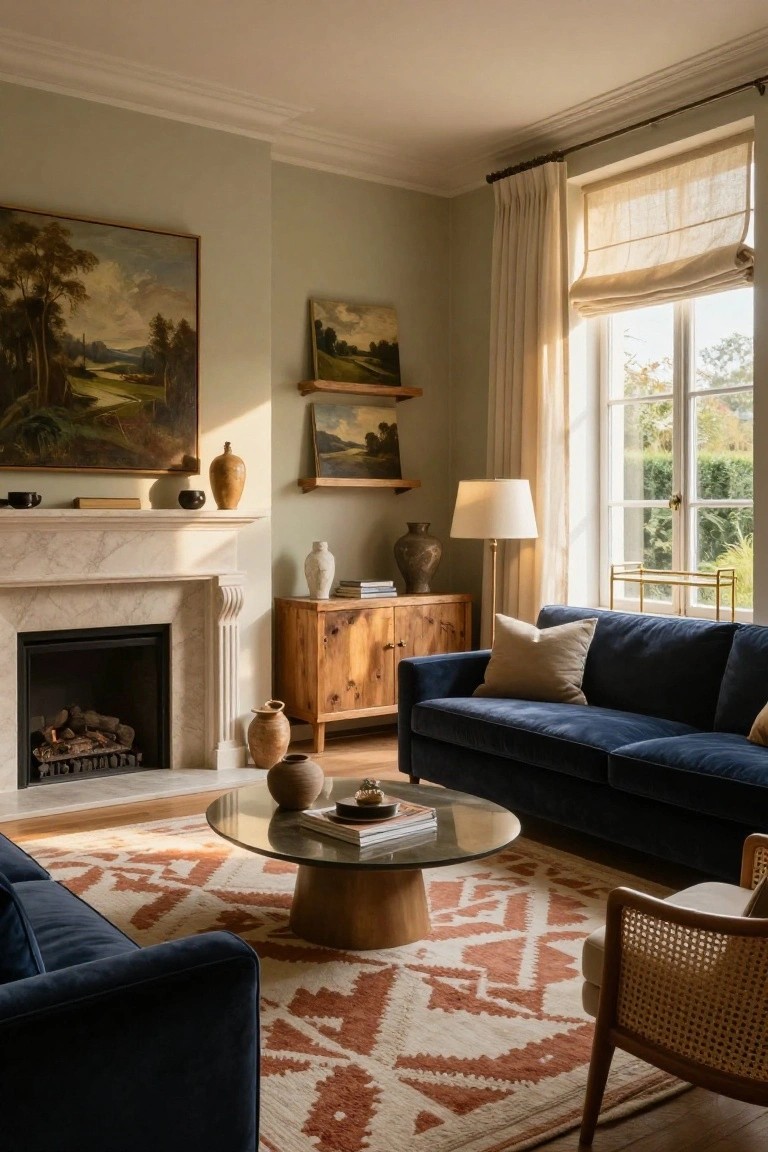
Soft green walls like these give a living room a gentle, timeless feel that fits right into transitional style. They play nice with traditional details such as crown molding and a marble fireplace, while letting navy velvet sofas pop. The color keeps things calm and fresh, especially with sunlight streaming through linen shades.
This works best in rooms with good natural light and some wood furniture to add warmth. Older homes or spaces with high ceilings suit it well, as the green softens formal architecture. Watch for balance though. Pair it with terracotta accents in rugs or pottery, or it might lean too cool.
Leather Sofas in Dark Living Rooms
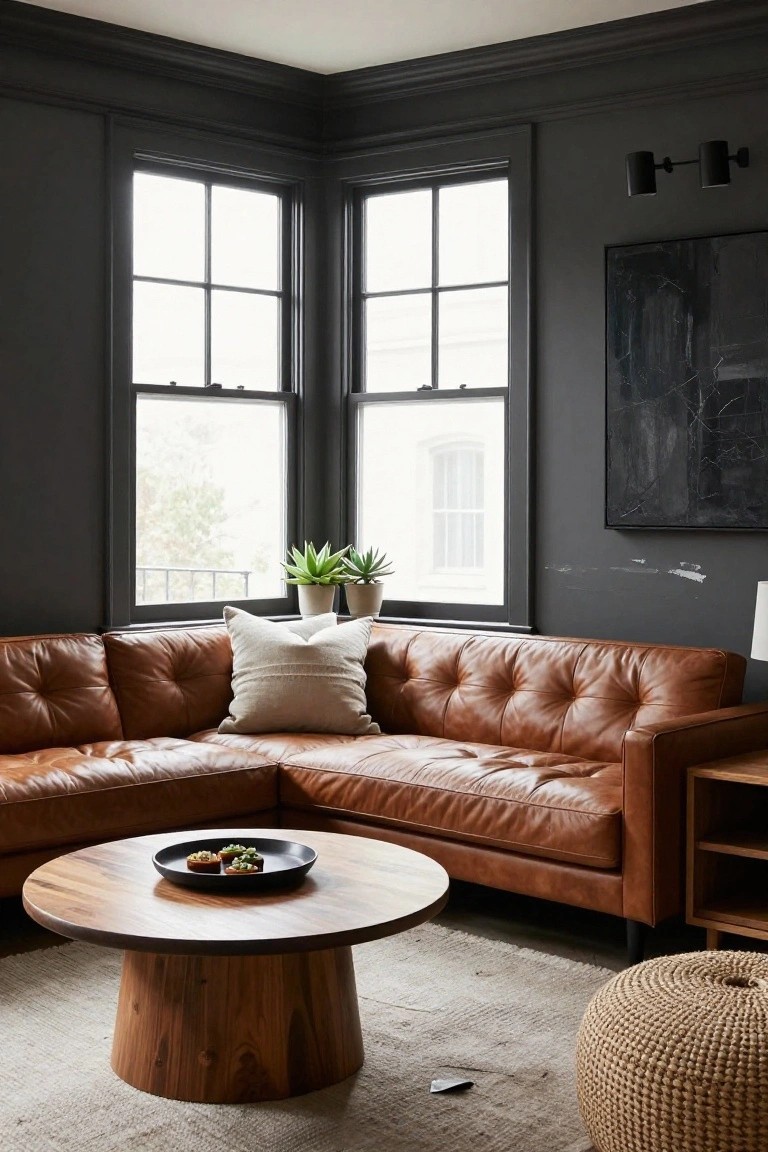
Dark walls like the deep gray ones here can turn a living room into a real cozy spot. They make the space feel wrapped up and intimate, especially with tall windows letting in light. But what keeps it from getting too cave-like is that warm tan leather sofa. The tufted cushions and L-shape pull you right in for relaxing, and it plays nice with the wood coffee table nearby.
This setup works great in older homes or apartments with high ceilings. Go for real leather if you can, since it ages well and adds that lived-in feel. Just add enough lamps or natural light, or the room might stay too dim. It’s a simple way to mix moody and welcoming without much fuss.
Exposed Wood Beam Ceilings
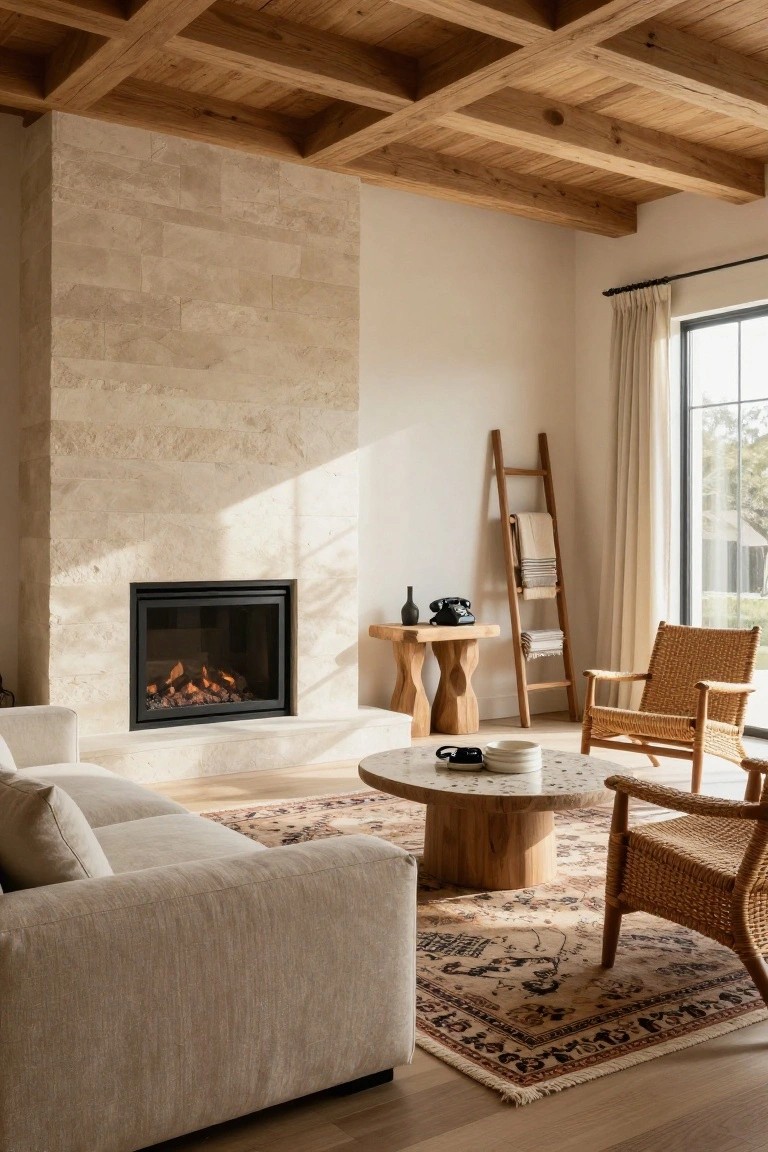
Exposed wood beam ceilings like these add real warmth to a living room without overwhelming the space. They show off the natural grain of the timber against white walls and a creamy stone fireplace, pulling everything together in a casual way. It’s that rustic touch that makes neutral rooms feel lived-in and comfortable.
You can pull this off in most homes with decent ceiling height, especially open living areas. Pair the beams with light furniture like a cream sofa and simple wood tables to keep it balanced. Just make sure the wood finish matches your floors so it doesn’t clash… works great in transitional setups aiming for cozy over fancy.
Warm Rattan Accent Walls
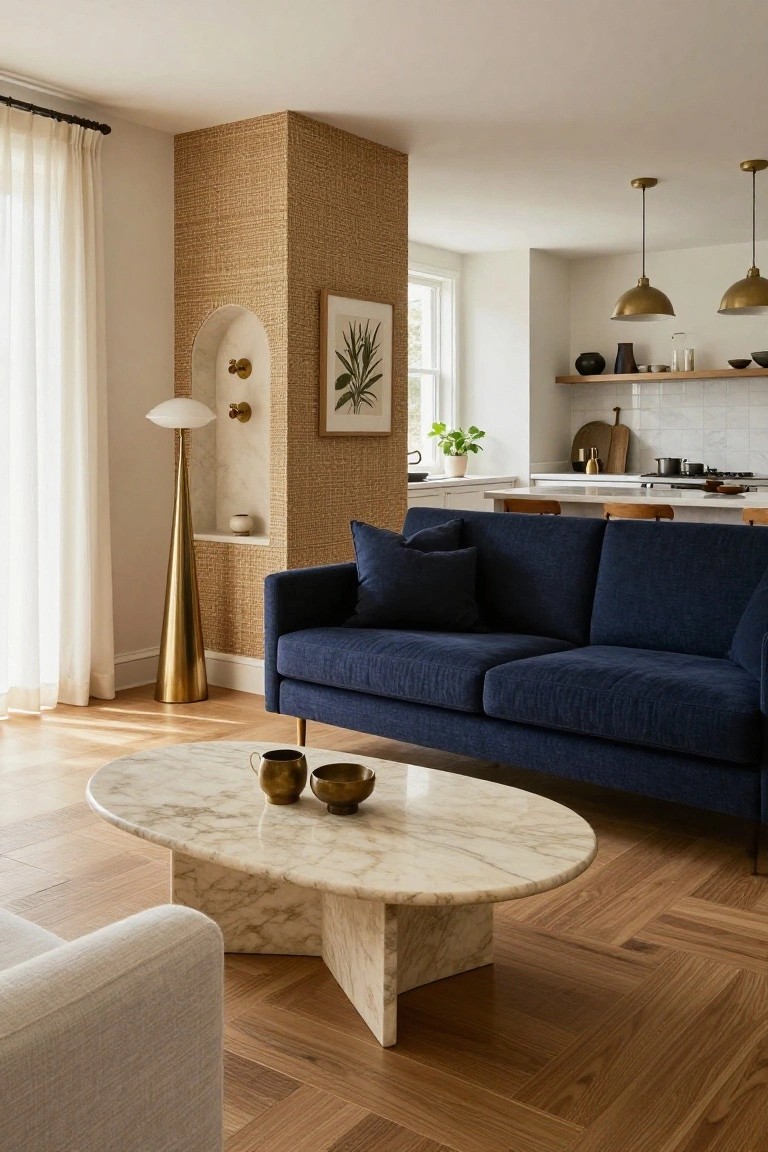
Rattan wallpaper on one wall brings a nice natural texture to living rooms that might otherwise feel too plain. Here it’s used behind the seating area, with an arched niche that holds a small vase and pulls the eye right in. That woven look softens things up without much effort, and it plays well against wood floors and neutral paint.
Try it in open-plan spaces where you want some character on a budget. Pair the texture with deeper colors like navy on the sofa, and add brass lamps nearby for extra warmth. It fits older homes getting a refresh, or new builds needing soul… just keep the rest of the walls light so it doesn’t overwhelm.
Dark Walls with a Wood Mantel
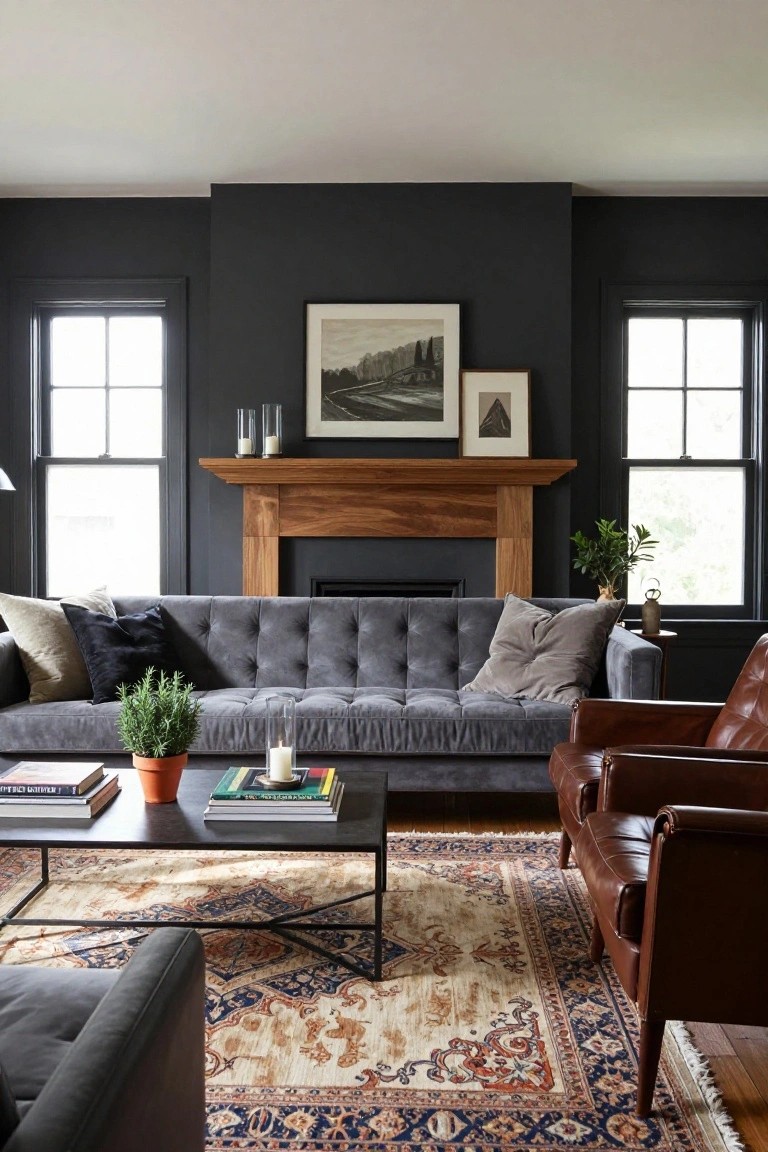
Dark walls like the charcoal shade here set a moody tone in a living room. They make the space feel intimate and pulled together without much effort. What keeps it from feeling too closed in is that rich wood mantel over the fireplace. It brings in warmth right where you need it, drawing the eye and giving the room some character.
Try this in a room with good natural light from big windows. Pair the dark paint with wood furniture pieces or a rug with reds and blues to keep things layered. It works well in older homes updating to something more modern. Just add enough texture on the sofa or chairs so it stays comfortable.
Wooden Coffee Table with Fire Feature
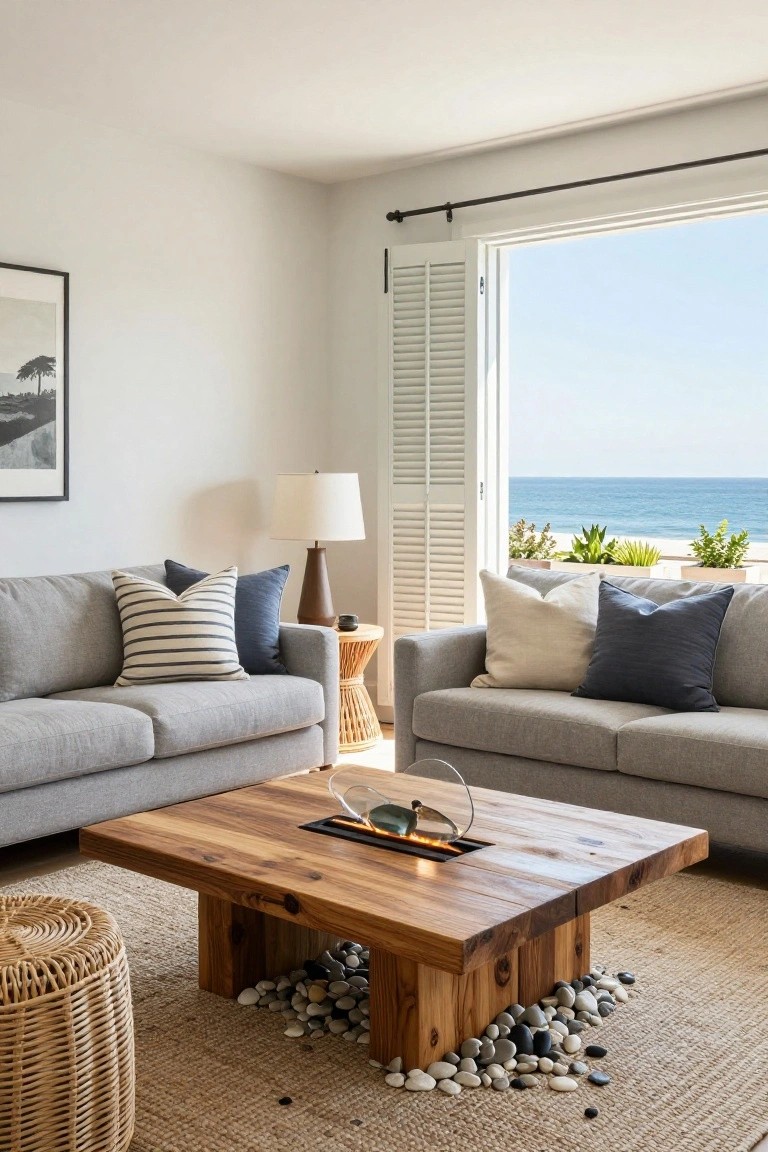
A low wooden coffee table like this one takes center stage in the living room. It’s got a simple acacia slab with a slim fire line running through the middle, and pebbles tucked under the edges for a natural touch. That setup draws people in for chats without overpowering the room. The wood keeps things grounded and beachy.
Put one in your own space if you have room for low seating around it. It suits transitional spots with ocean views or just a big window. Pair with neutral sofas and a jute rug, and skip anything too fussy on top. Works well year-round, but check your fire safety rules first.
Leather Sofas Warm Neutral Living Rooms
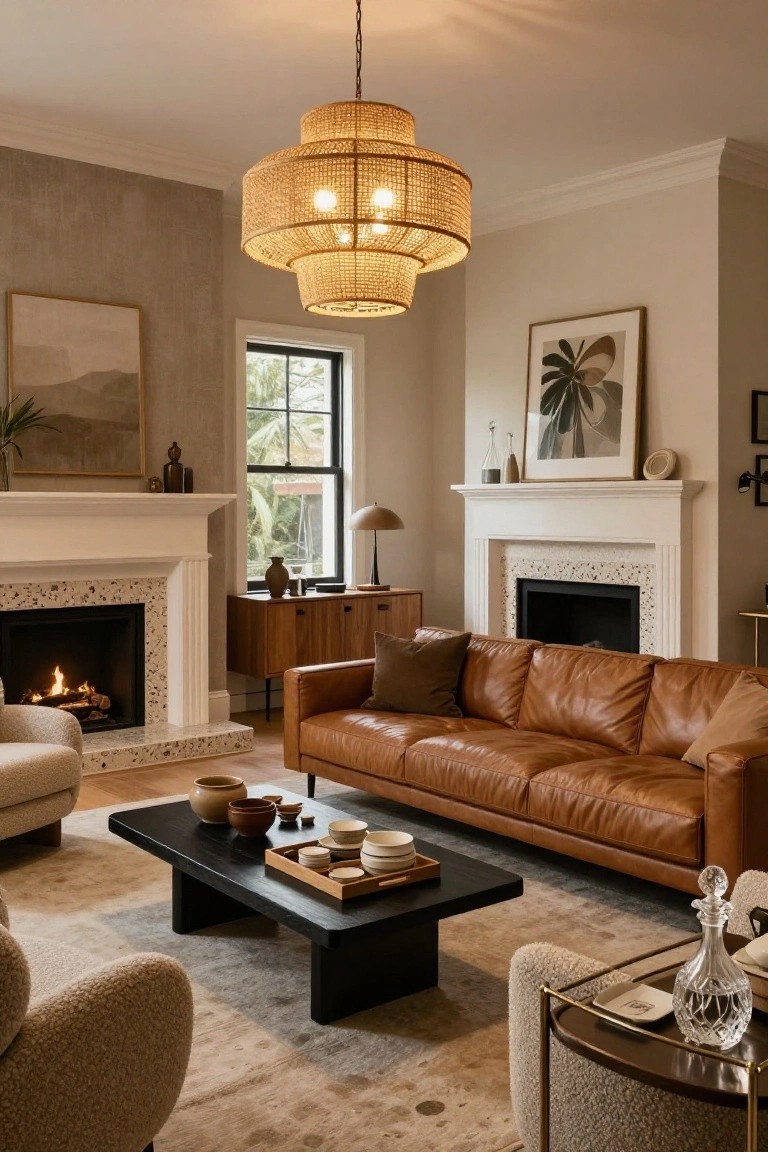
A tan leather sofa like this one pulls a transitional living room together without much fuss. It adds real warmth to pale walls and light floors, especially when you pair it with low-slung wood tables and a few ceramic pots. The leather holds up to daily life too, which makes it practical for family spaces.
Try this in older homes with white trim or fireplaces. Set the sofa facing the fire for easy flow, then layer in textured chairs nearby. It suits calmer rooms best…just skip slick finishes that fight the leather’s natural look.
Navy Fireplace Mantel in a Neutral Room
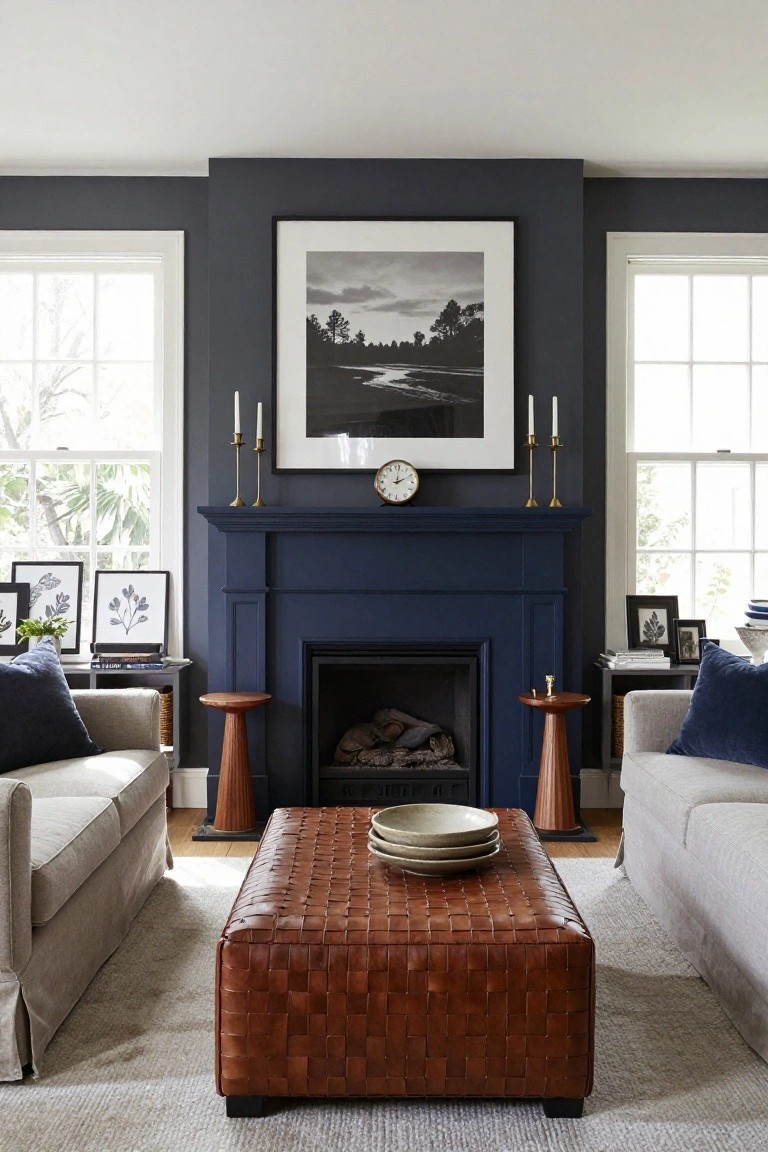
A deep navy paint on the fireplace mantel and back wall turns this living room into something special. The color pulls your eye right to the hearth, where the fire sits ready. Paired with cream sofas and wood side tables, it keeps things balanced and not too heavy.
This works best in spaces with plenty of window light, like this one with big sash windows on both sides. Use it in older homes or new builds aiming for that transitional look. Stick to light fabrics and natural wood to let the navy do its thing. Just make sure the room isn’t too small, or it might feel closed in.
Warm Woods Against Dark Walls
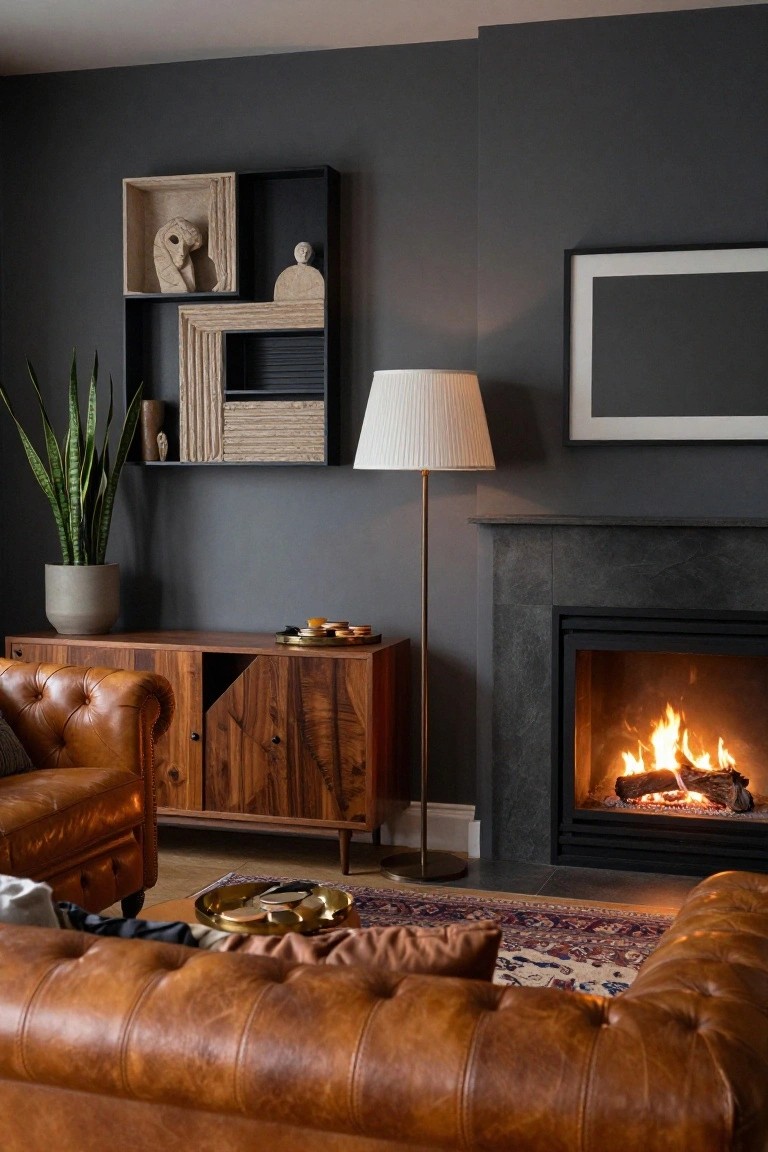
Dark walls like the charcoal gray here set a moody backdrop for a living room. But warm woods pull it together. That walnut credenza stands out with its rich grain, warming up the space without overwhelming it. Add tan leather sofas nearby, and you get real comfort around the fireplace.
This setup works best in rooms that need coziness, like those with less natural light. Pick furniture with visible wood grain, and limit extras to a plant or two. It suits transitional homes… just avoid too much pattern on the floor.
Assorted Mirrors as Wall Art
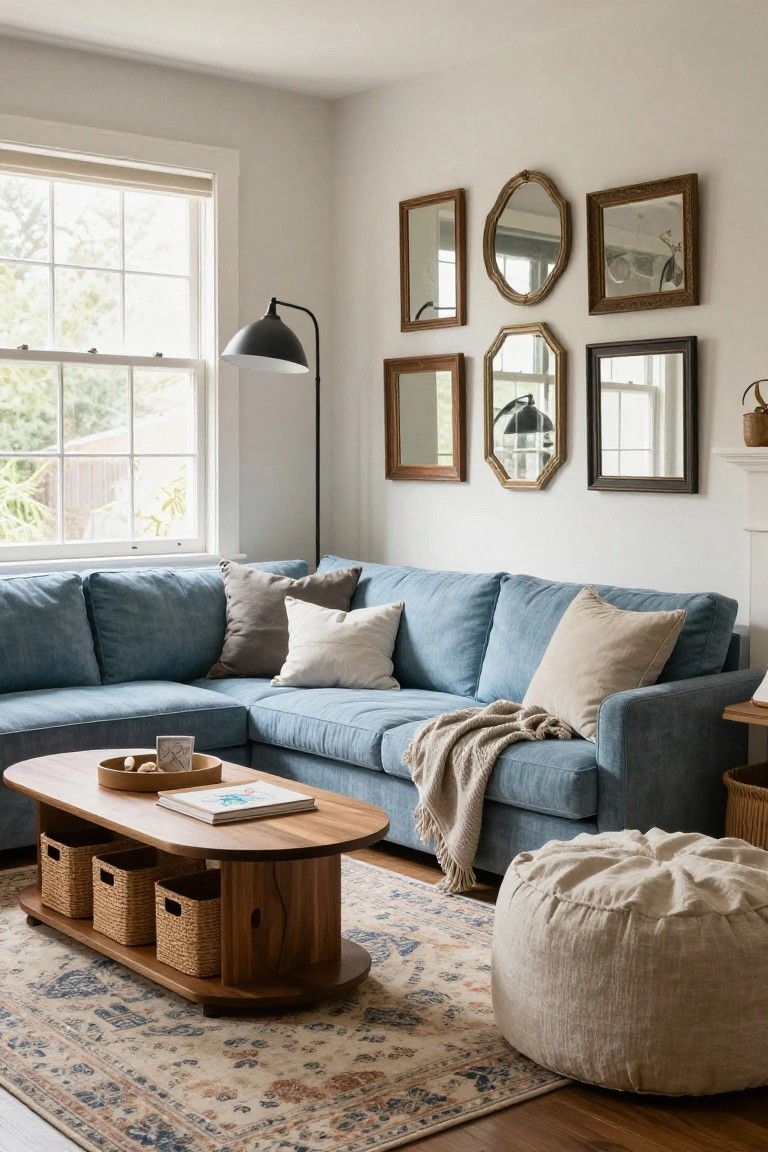
A simple way to add character to a plain wall is hanging a collection of mirrors in different shapes and frames. Here, they cluster above the blue sofa, reflecting light from the nearby window and drawing attention without overwhelming the space. That mix of round, oval, and rectangular ones feels collected over time, not too matchy.
Try this in a living room or entry where you want height without heavy artwork. Source affordable vintage finds at markets, then arrange loosely on the wall. It suits transitional rooms that blend old and new… just keep the frames mostly wood tones to stay grounded.
Herringbone Parquet Floors Warm Up Transitional Rooms
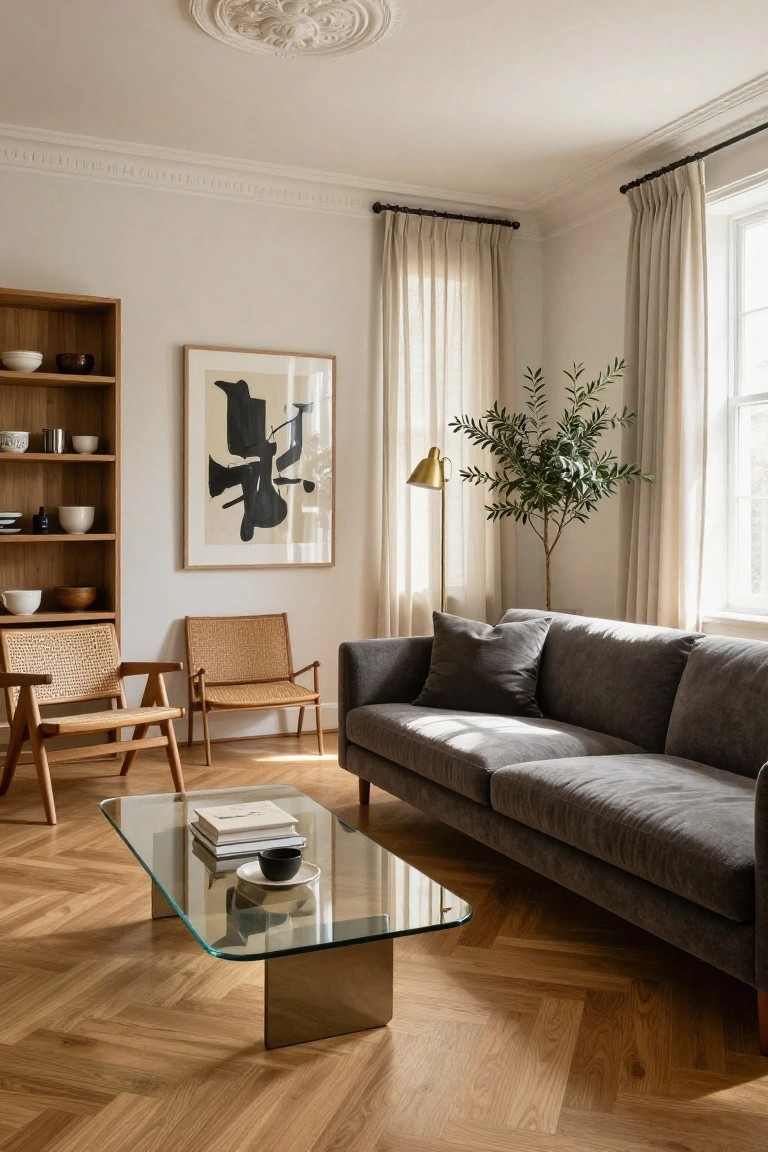
Herringbone parquet floors in light oak set a solid base here. They add subtle pattern and texture that feels classic but not fussy. With rattan chairs nearby and plenty of natural light, the floors keep the room grounded and easygoing.
These floors suit living rooms in older homes or apartments with high ceilings. They pair with soft furniture like a gray velvet sofa without overwhelming the space. Seal them well if you have kids or pets running around.
Wood Paneling Around a Stone Fireplace
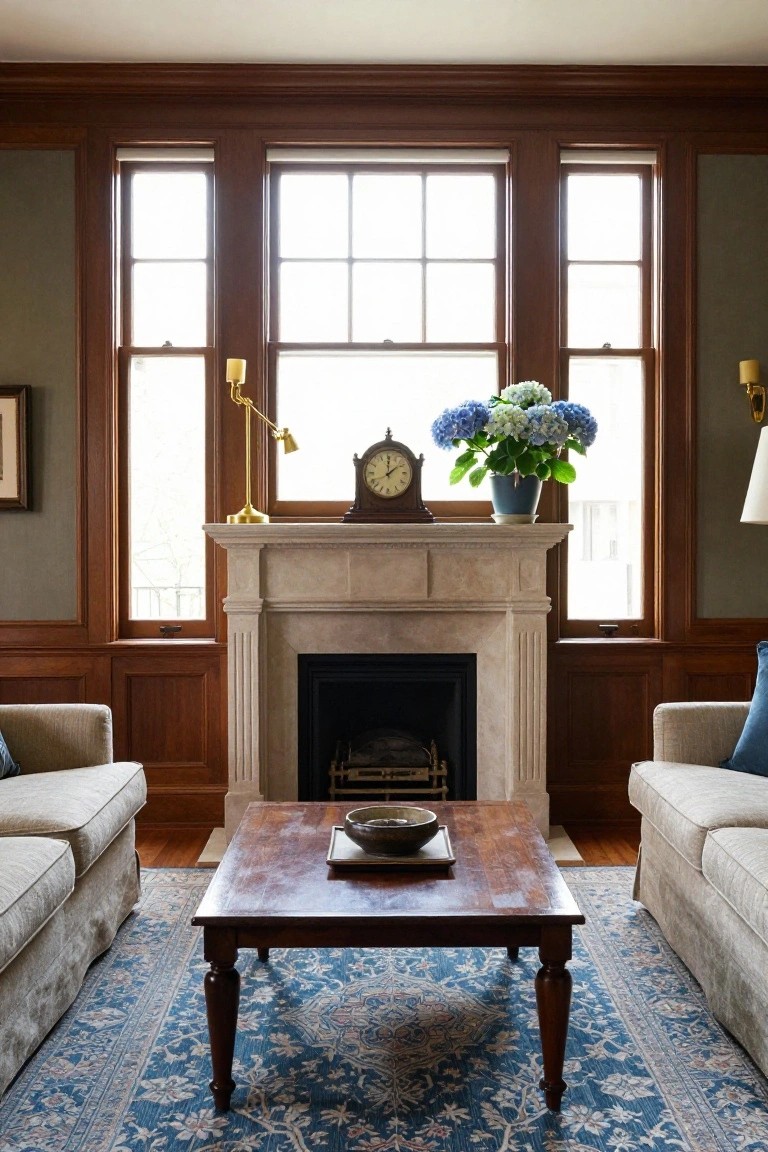
Dark wood paneling lines the walls and built-ins in this living room. A light limestone mantel sits right in the center with a simple clock and hydrangeas on top. That mix brings traditional warmth without making the space feel closed in.
It suits older homes or rooms with tall windows. Center seating around the fireplace like the cream sofas here do. Stick to neutral fabrics and wood tones on the floor. One thing… keep the mantel sparse so it stays the focus.
Sage Green Velvet Sofa
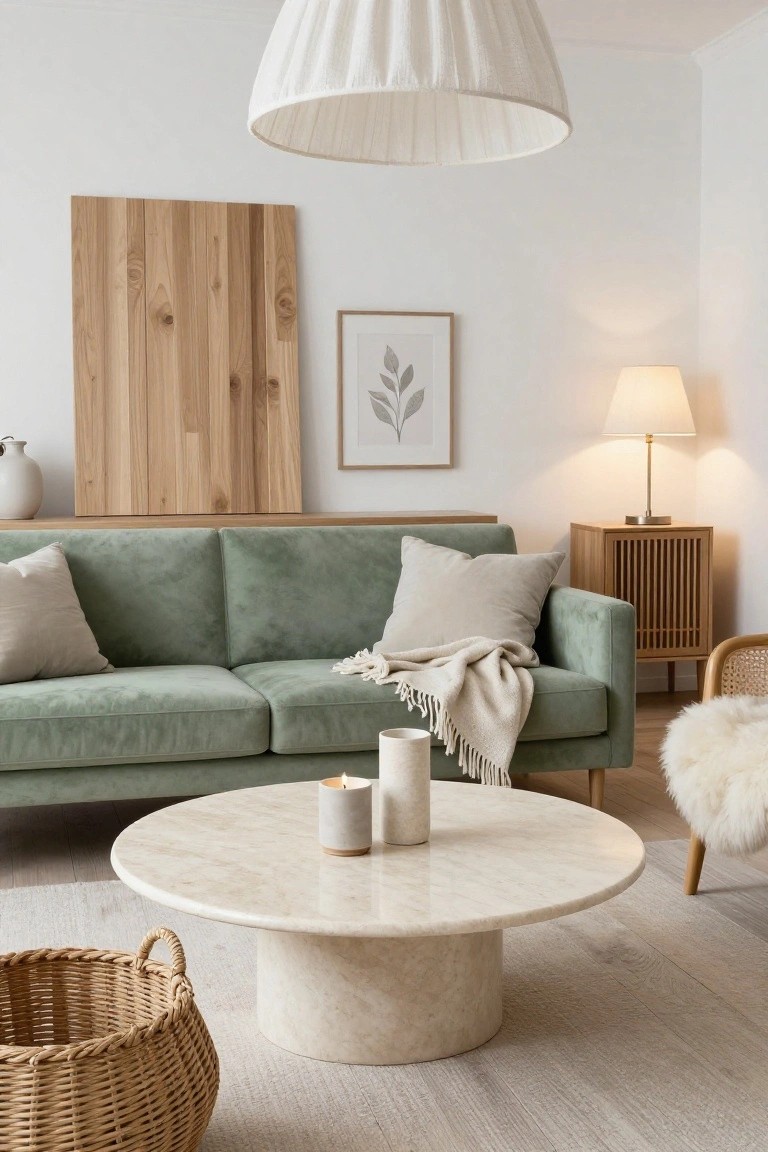
A sage green velvet sofa like this one stands out in a mostly neutral room. It adds a soft, touchable texture that makes the space feel lived-in and comfortable right away. Paired with light wood panels and a marble coffee table, it keeps things calm and balanced, without overwhelming the clean lines.
This kind of sofa works great in living rooms with plenty of natural light. Stick to pale walls and simple woods around it, maybe toss a cream throw on one arm. It suits transitional homes that mix modern and cozy… just avoid dark floors that might make the green feel too heavy.
Black Marble Coffee Table in Neutral Rooms
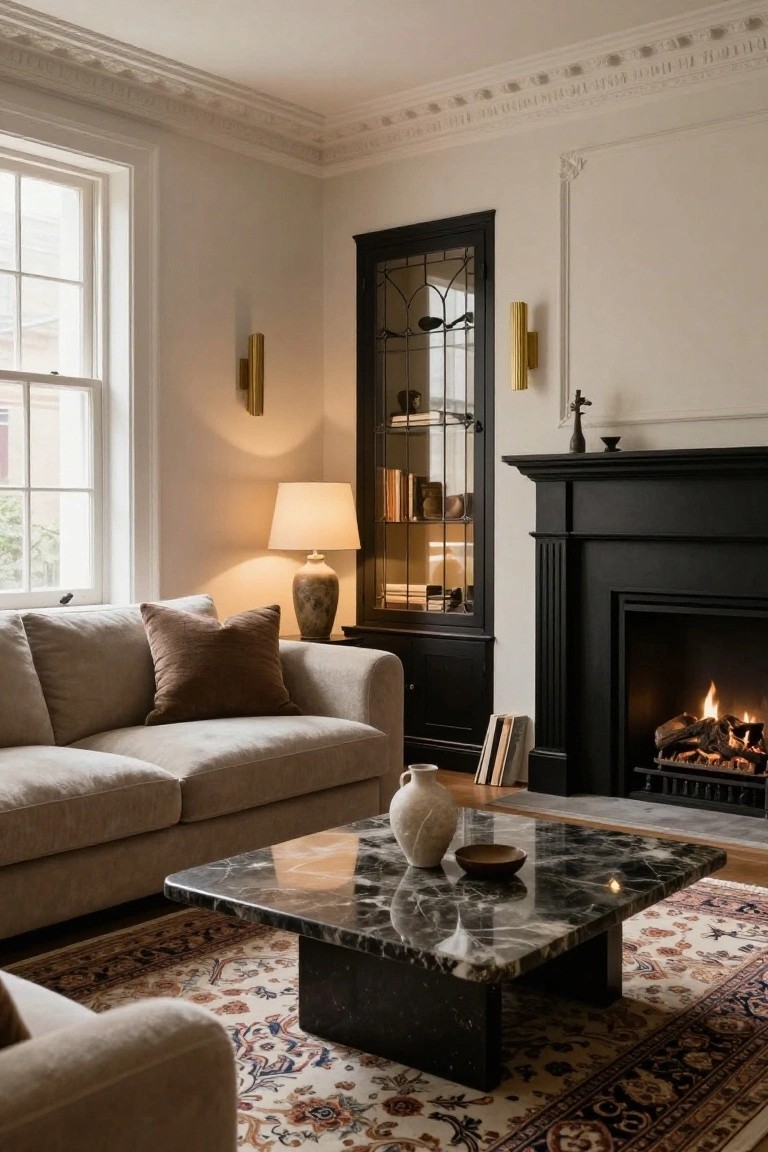
A black marble coffee table like this one sits low and bold right in the seating area. With its white veins catching the light from the nearby lamp and fire, it pulls focus without shouting. Paired with a simple beige sofa and that traditional rug underneath, it bridges old-school charm and something more current. Rooms feel steadier this way.
Put one in front of your main sofa where traffic flows easy. It suits taller spaces with windows and a fireplace best, like older homes getting a refresh. Scale it to the rug size so legs peek out a bit. Avoid glossy finishes if you want everyday use.
Stone Fireplace in a Light Living Room
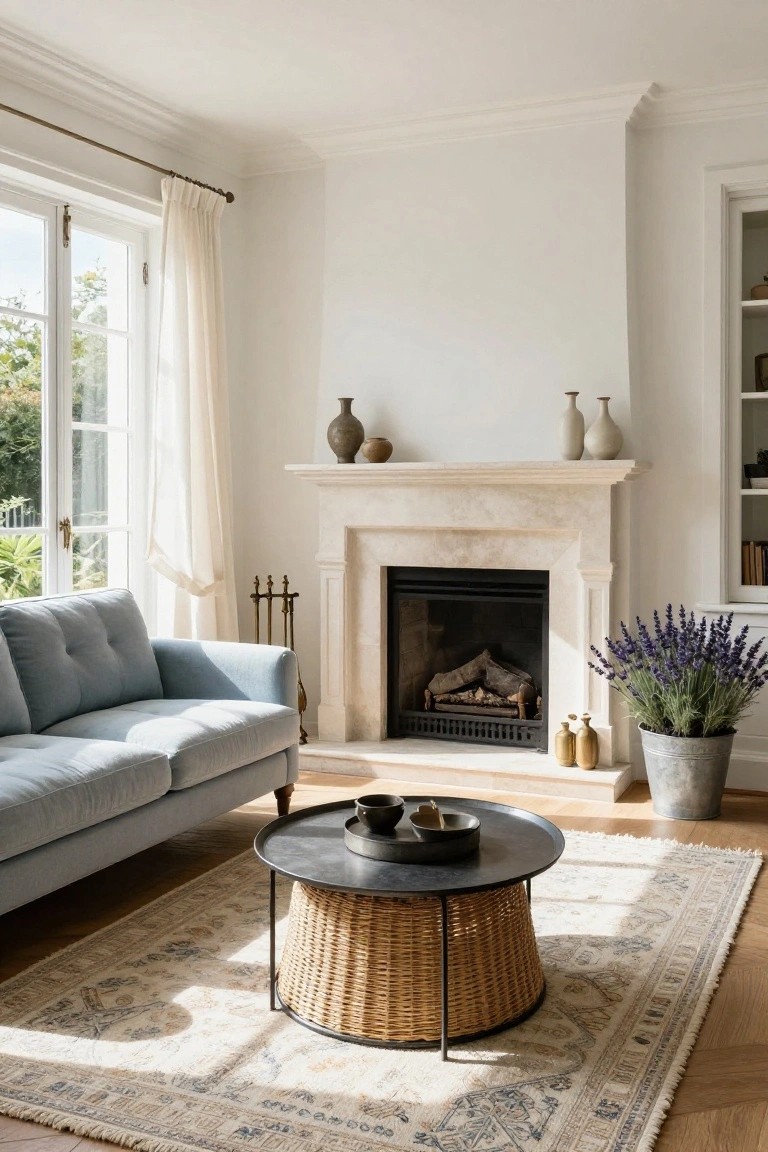
A limestone fireplace like this one makes a natural focal point in any living room. White walls and oak floors let it stand out without competing, while sunlight through sheer curtains on the French doors brightens the whole setup. The result feels classic but easygoing, perfect for transitional style.
Put one in a room with good natural light, and face a sofa toward it for conversation flow. Keep other pieces simple, like a low metal coffee table with rattan base for texture. This works best in older homes updating their look… just avoid dark walls that could make it heavy.
Wood Paneling with LED Backlighting
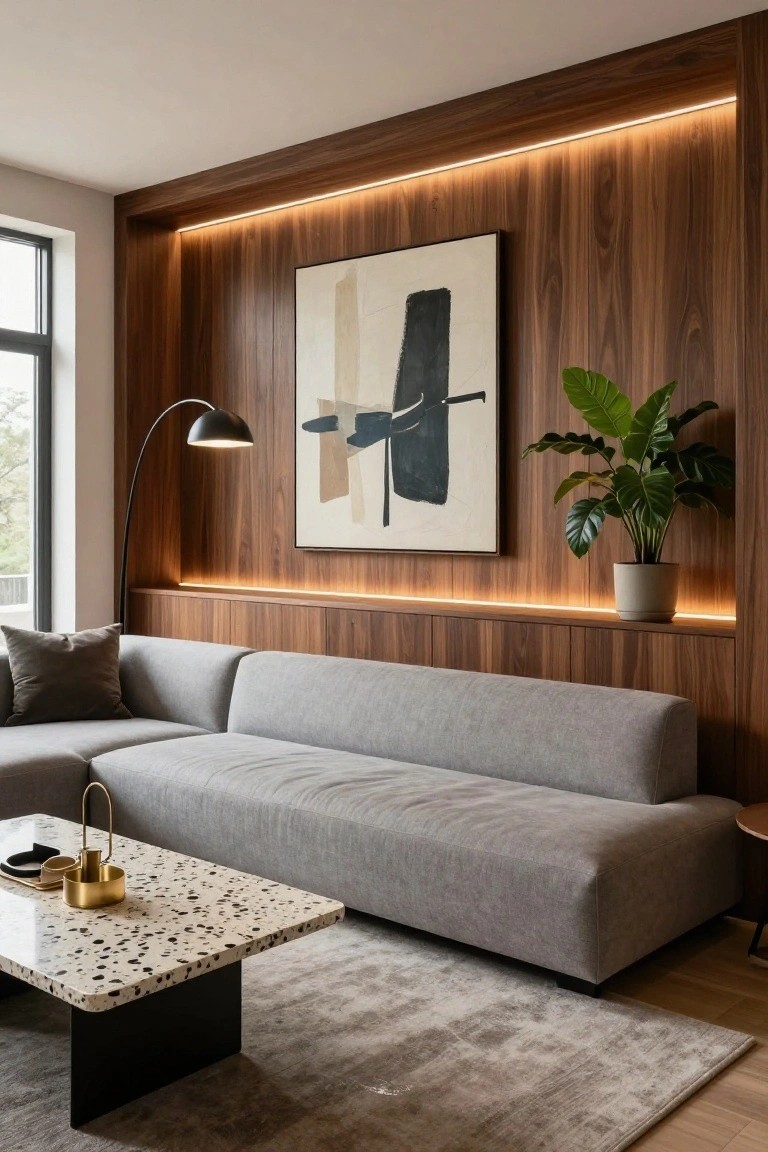
Wood paneling like this covers an entire wall in warm walnut tones. Thin LED strips sit right in the recesses, casting a soft glow that highlights the grain without overpowering the room. Paired with a big abstract painting and a simple plant shelf, it pulls the space together nicely. That warm light makes everything feel more inviting, especially in the evening.
You can pull this off in most living rooms that need a focal wall. Stick to one wall only, to keep it from closing in. It suits transitional setups blending modern and traditional. Just make sure the wood has some natural variation… keeps it from looking too flat.
Emerald Green Walls Warm a Living Room
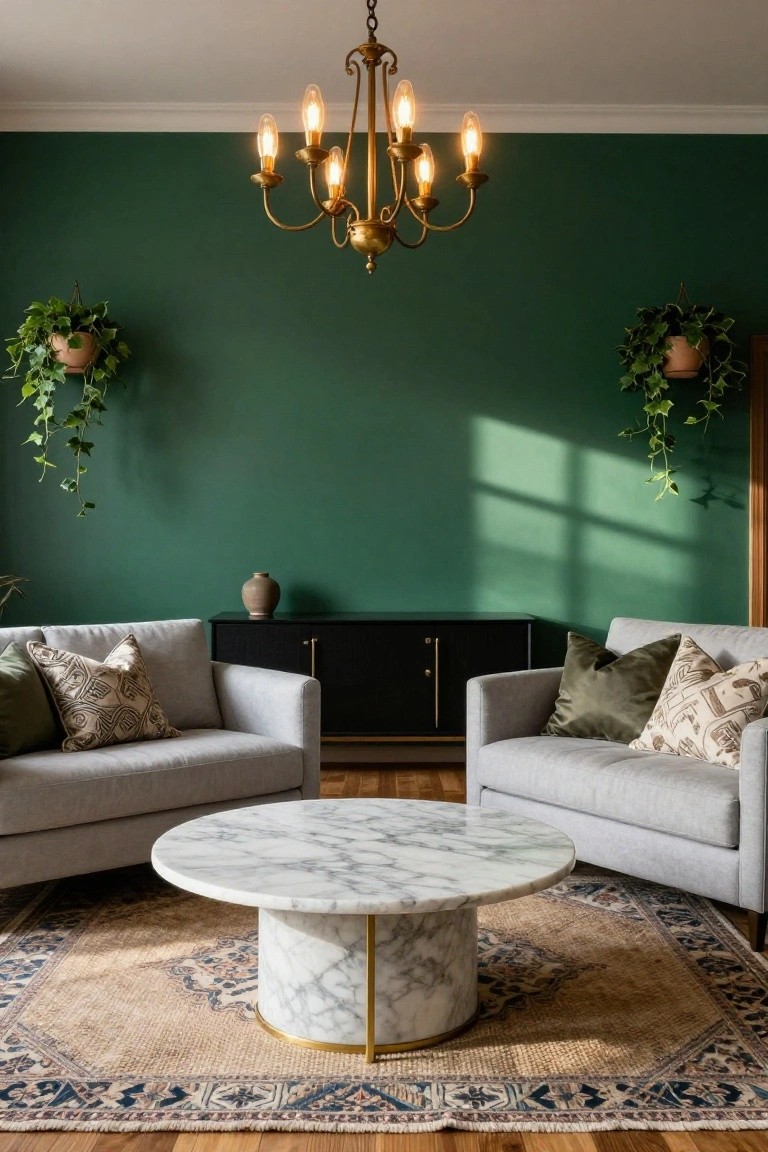
Deep green walls give any living room a cozy, grown-up feel that pulls the eye right in. They work well here because they balance out the light gray sofas and simple black credenza, letting natural textures like the woven rug and marble coffee table shine. It’s a straightforward way to add personality without clutter.
This color suits homes with decent sunlight, especially transitional spaces that mix modern lines with classic touches. Paint all four walls the same shade for impact, then layer in brass accents for warmth. Skip it in north-facing rooms though… it can feel too dark.
Rustic Wood Coffee Table Adds Organic Warmth
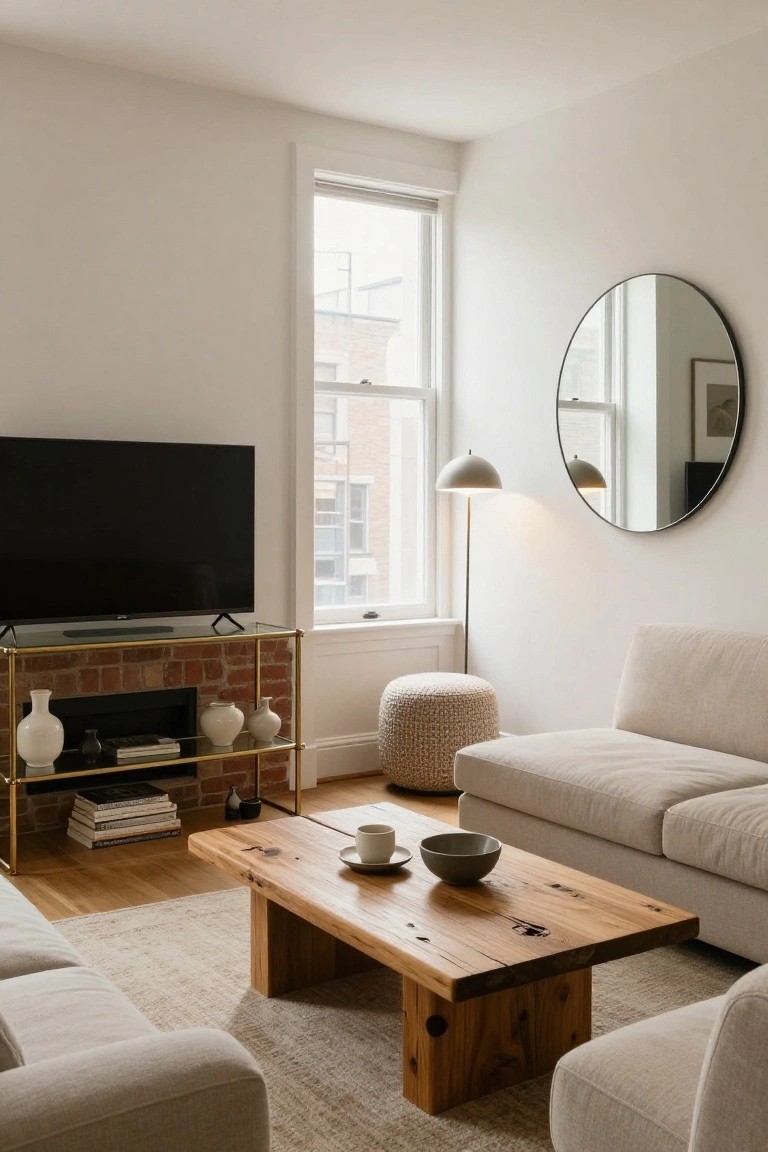
A solid wood coffee table like this one, with its live-edge top and natural knots, brings a bit of rough character to an otherwise soft living room. You see it right in the middle on that light rug, holding a simple teacup and bowl. Paired with creamy sofas and pale wood floors, it keeps things feeling light but adds real texture that makes the space lived-in.
This works best in transitional rooms where you want to mix modern clean lines with something earthier. It suits homes with brick accents or big windows letting in lots of light. Just pick a table big enough for the seating area, and keep the finish matte so it doesn’t compete with neutrals. Scale matters… too small and it gets lost.
Rustic Coffee Table in Neutral Living Rooms
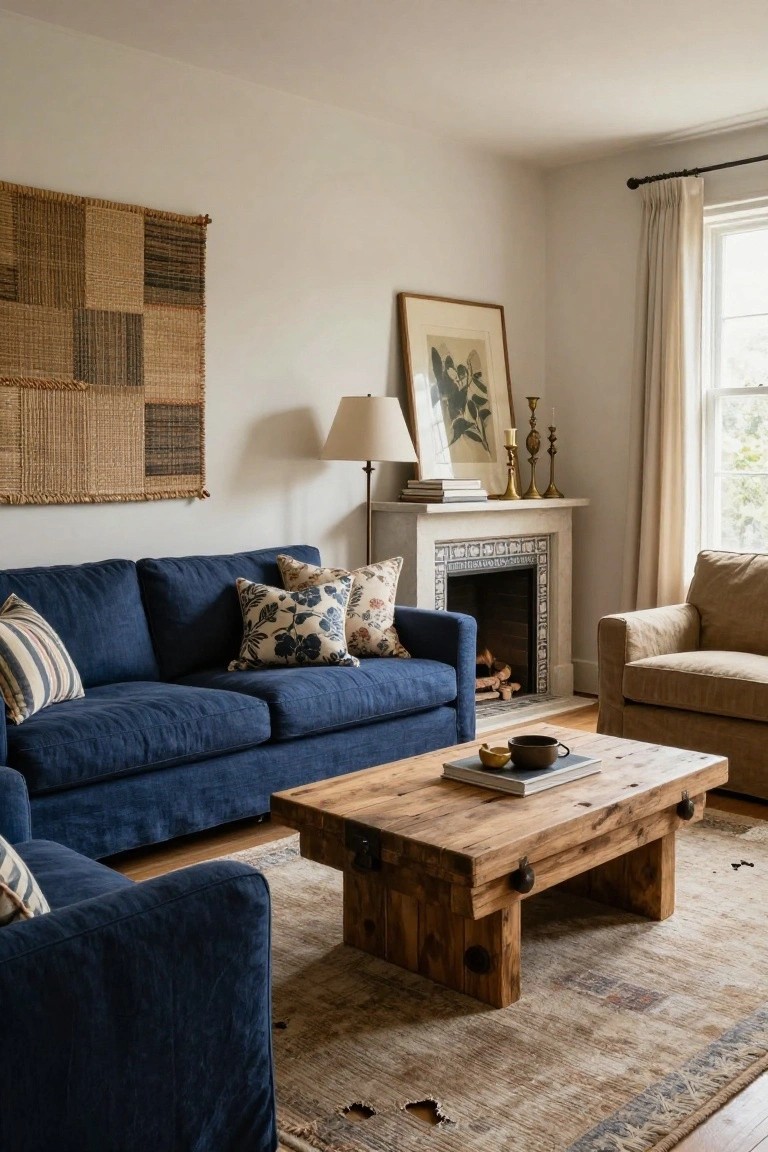
A chunky wooden coffee table like this one brings real texture to a living room with deep blue sofas. The rough, reclaimed wood contrasts nicely with the soft velvet upholstery and smooth neutral walls. It keeps things feeling casual and warm, especially with a tiled fireplace nearby.
This kind of table works best in open family spaces where you gather around it for coffee or board games. Go for one that’s low and sturdy, about the same height as your sofa seats. It suits older homes with classic details… just make sure the wood finish matches your floors so it doesn’t stick out too much.
Warm Wood Accents in Neutral Rooms
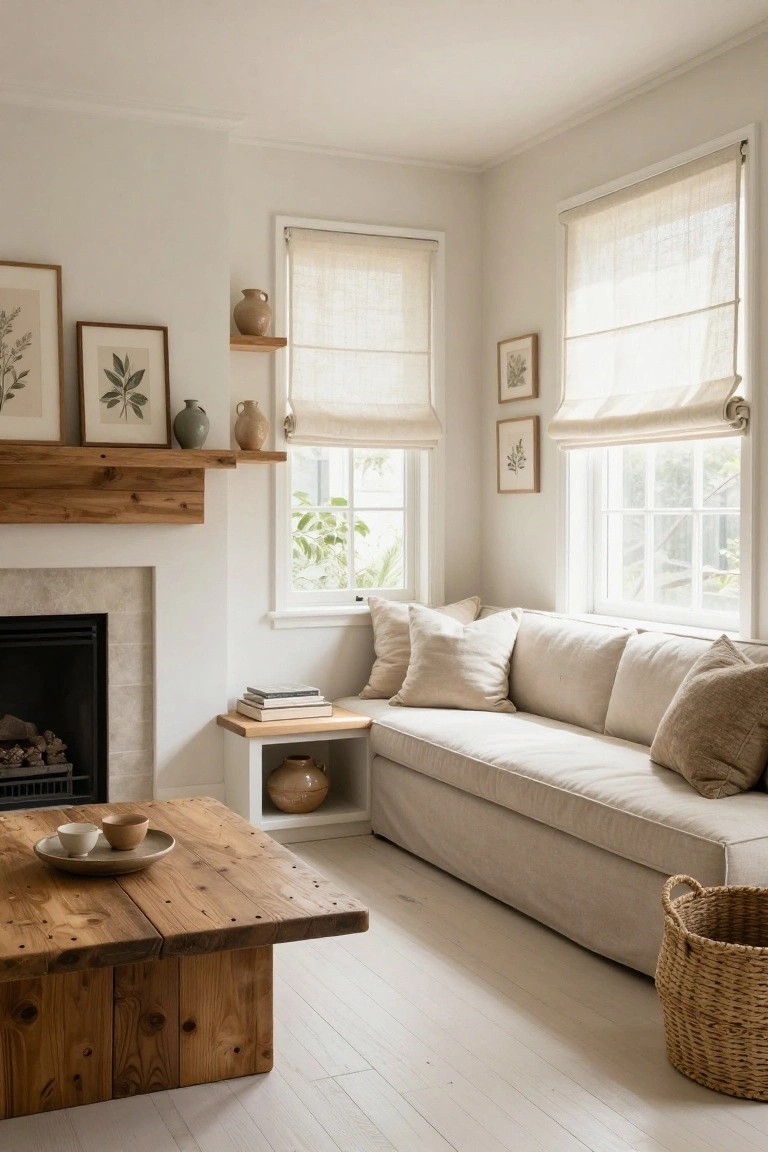
A thick wooden mantel shelf sits right above the fireplace, holding framed botanical prints and a couple of earthy pottery pieces. Nearby, a rugged live-edge coffee table echoes that texture on the floor. These wood elements cut through the soft white walls without making things feel heavy.
This approach works great in sunny living rooms that need a bit more personality. It fits older homes or rentals with plain trim. Go for matte finishes on the wood, and keep surrounding fabrics light… like those linen pillows. Steer clear of overly polished pieces that clash.
Frequently Asked Questions
Q: How do I mix old and new furniture pieces without the room feeling off?
A: Anchor everything with a large neutral rug that ties the styles together. Pull similar wood tones from both pieces to create flow. Rearrange until the boldest item sits comfortably in the center.
Q: What wall color goes best with transitional living rooms?
A: Go for warm greige. It softens modern lines while nodding to classic warmth. Paint a sample board and live with it for a day in different lights.
Q: How do I add texture without buying a ton of new stuff?
A: Drape a chunky knit throw over your sofa. Layer pillows in linen and velvet. Hunt thrift stores for woven baskets to tuck under side tables.
Q: Can I sneak in some color in a transitional space?
A: Yes, pick one accent like a deep blue vase on the coffee table. Keep the rest neutral so it breathes. And swap it seasonally if you crave change.
