

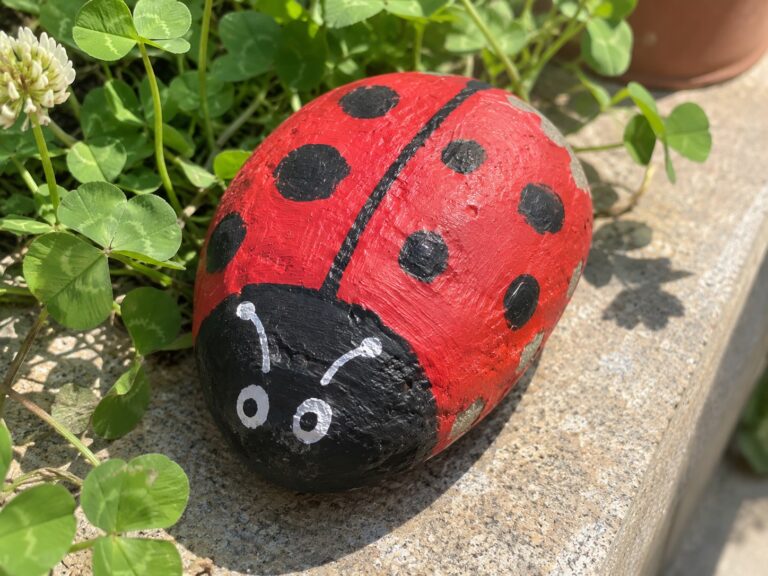
I enjoy rock painting because it’s an easy way to make something creative with a few simple supplies.
For these ideas, I’m using just two colors for each design, so there’s no need to build up a big collection of paint.
Some are simple enough for a first project, while others offer a little more detail to try.
I hope you find a design that feels fun to make with your own rocks and paints.
Paint a Ladybug Rock with Two Colors
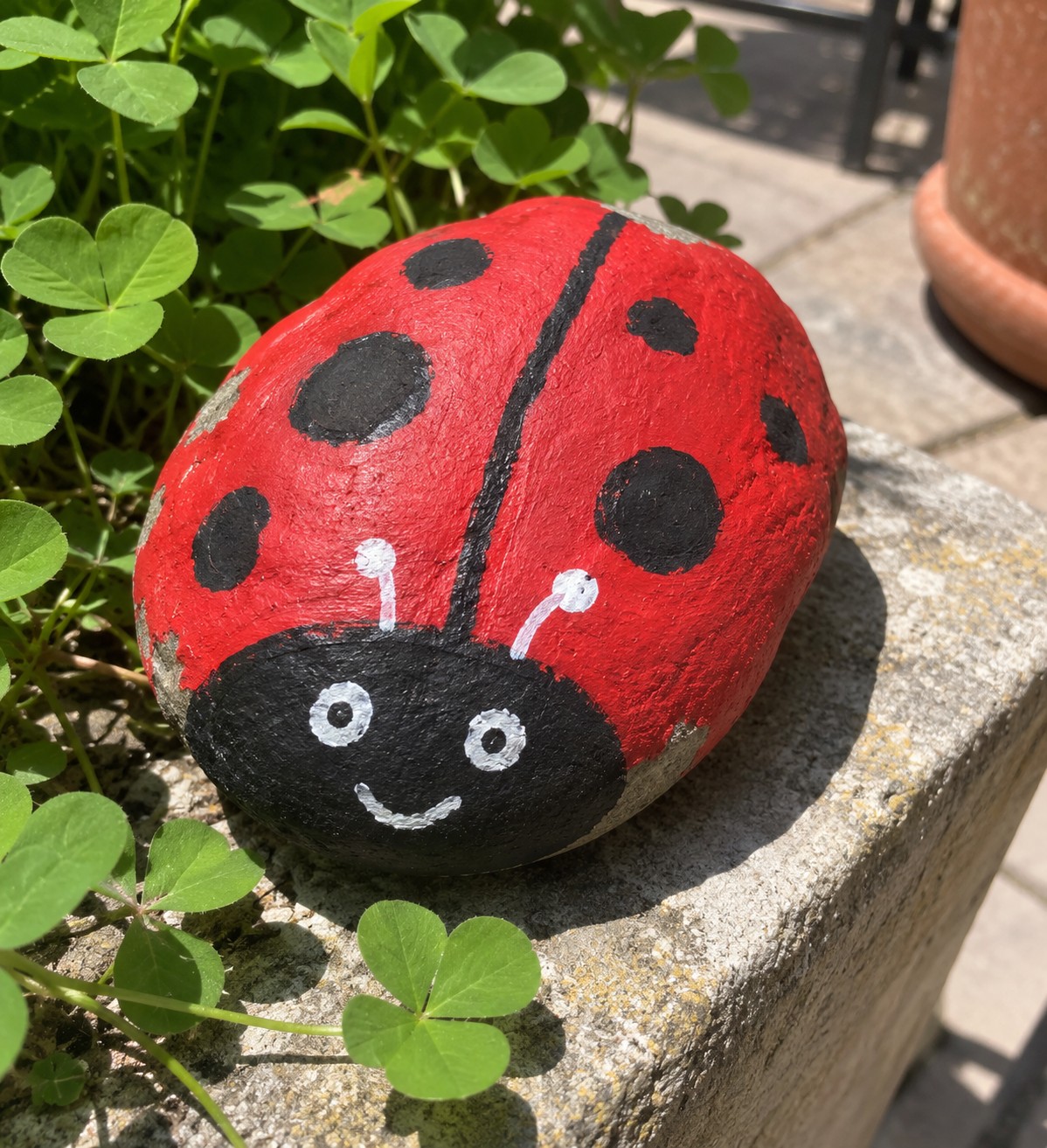
A ladybug painted on a rounded physical rock makes a clear bug-themed craft with just red and black as the main colors. The curved stone suits the rounded body, while a dark face, central line, and simple spots make the design easy to recognize; small white facial details add a finishing touch.
A painted ladybug rock would stand out in a planter, flower bed, or on a porch step, where the bright red contrasts with greenery and stone. To simplify it, use fewer spots and skip the facial details, or adapt the pattern to a flatter pebble for a small table display or gift.
Paint a Two-Color Rainbow and Sun on a River Rock

A rainbow and sun make a cheerful painted rock design using just two colors: red and yellow. On a broad, rounded river rock, simple curved bands and short sun rays are easy to place, while the stone’s natural texture keeps the color blocking looking handmade.
The clear shapes make this idea easy to adapt for a planter, porch step, or garden display. Use a smaller pebble for a simpler rainbow, or change the band and ray colors while keeping the two-color limit for a coordinated painted rock set.
Two-Color Smiling Frog Rock
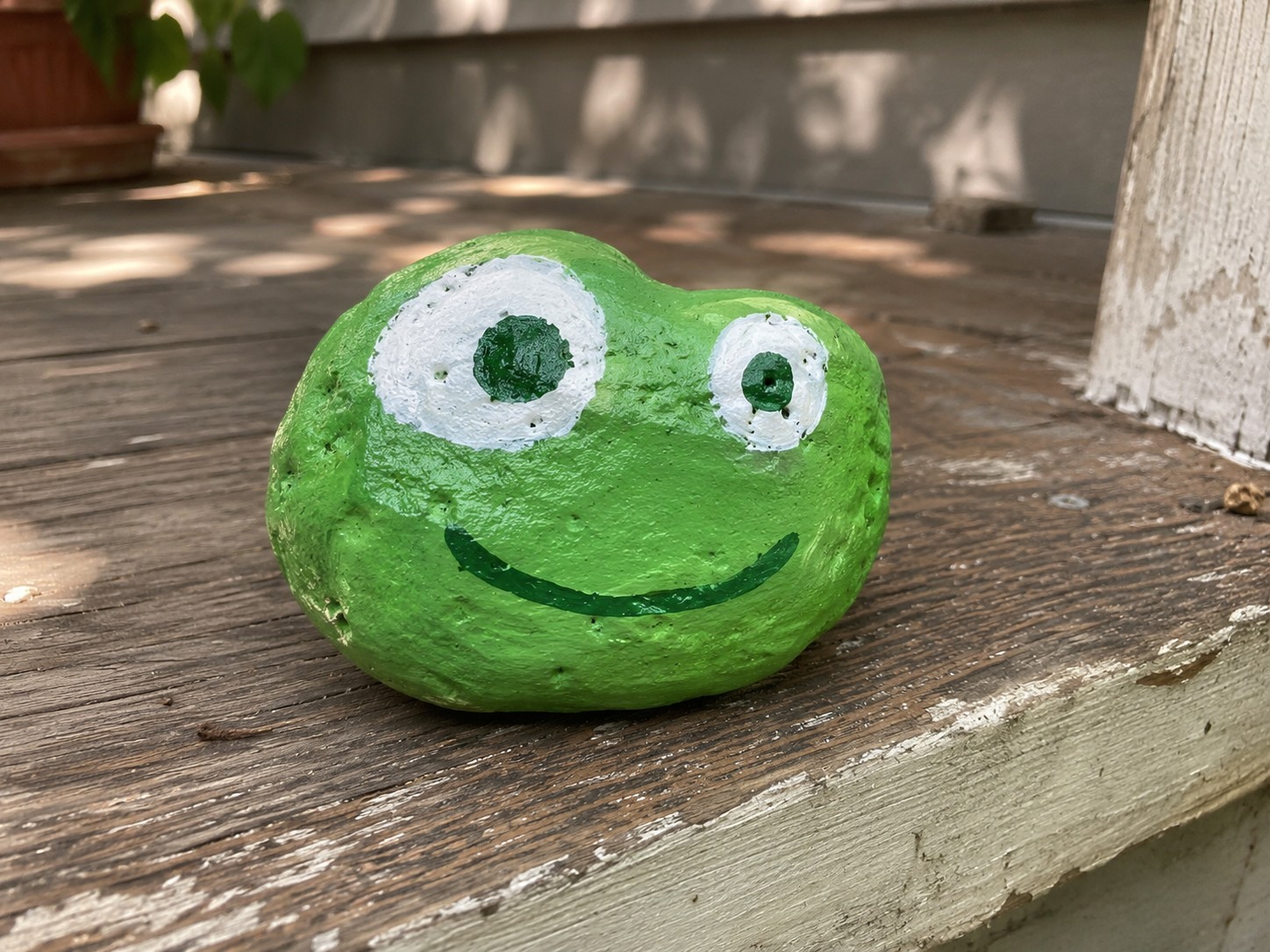
A rounded physical rock painted green with a simple frog face makes a playful animal rock project. The large and small white eyes, dark green pupils, and curved smile use clear color areas that are easy to adapt without adding much detail.
A painted frog rock could sit in a planter, on a porch step, or among garden stones, where its bright green face stands out. Keep the eyes and smile on a broad front surface, or change their size and placement to suit a smaller or flatter rock; using just two paint colors keeps the design simple.
Blue Daisy Painted Rock
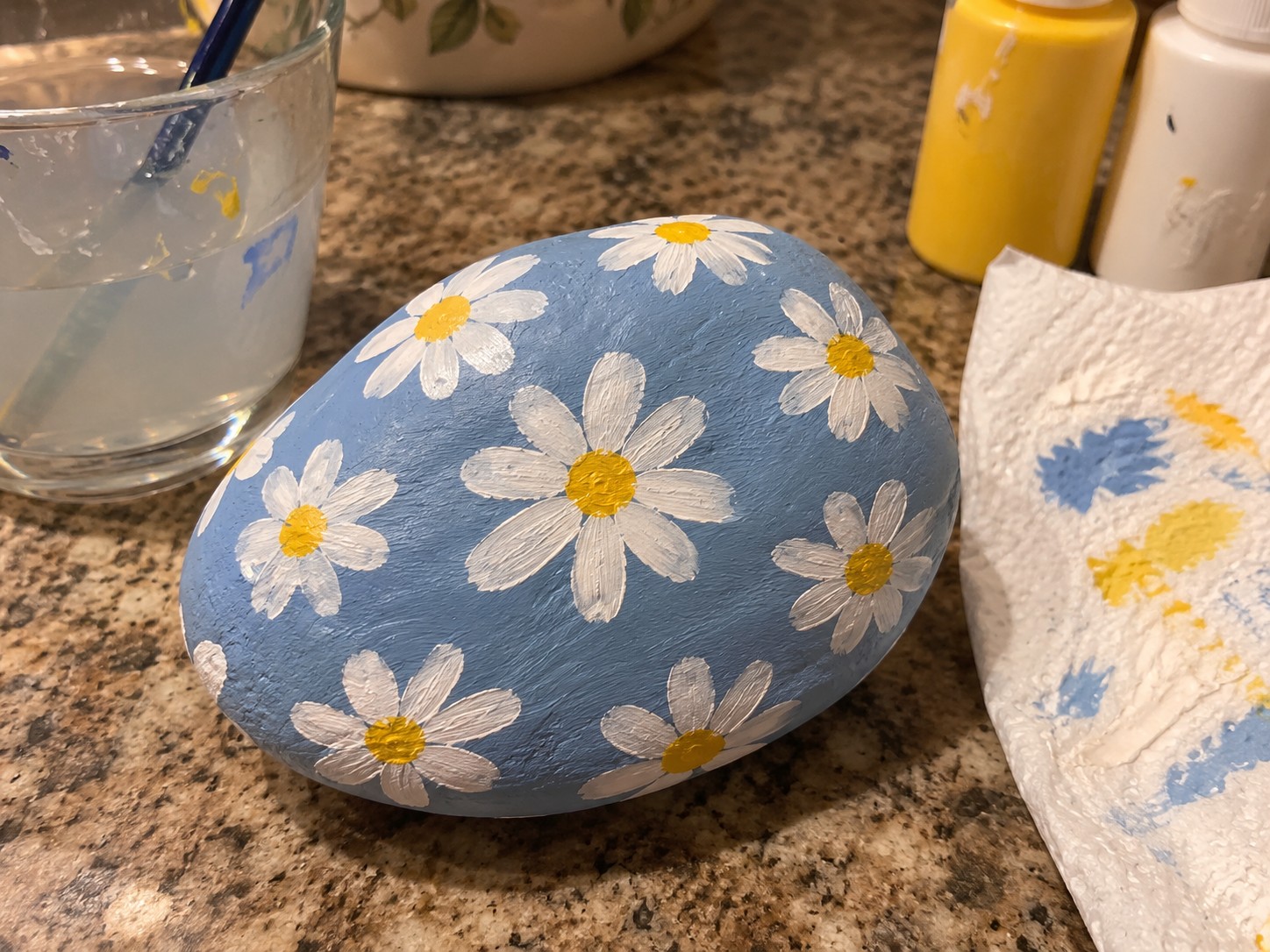
A rounded physical rock painted blue becomes a simple flower rock with loose white daisies and yellow centers. The broad petals and visible brush strokes keep the pattern clear across the curved surface, while the two-color flower design fits a decorative stone craft that’s easy to vary.
The repeated daisies would suit a planter, patio table, or shelf, and the blue background helps the white petals stand out in a small display. Keep the flowers large on a smaller stone, or add more simple blooms to a longer rock for garden decor; the bold color contrast also makes the design easy to spot in a Pinterest craft collection.
Paint a Two-Color Cat Face Rock
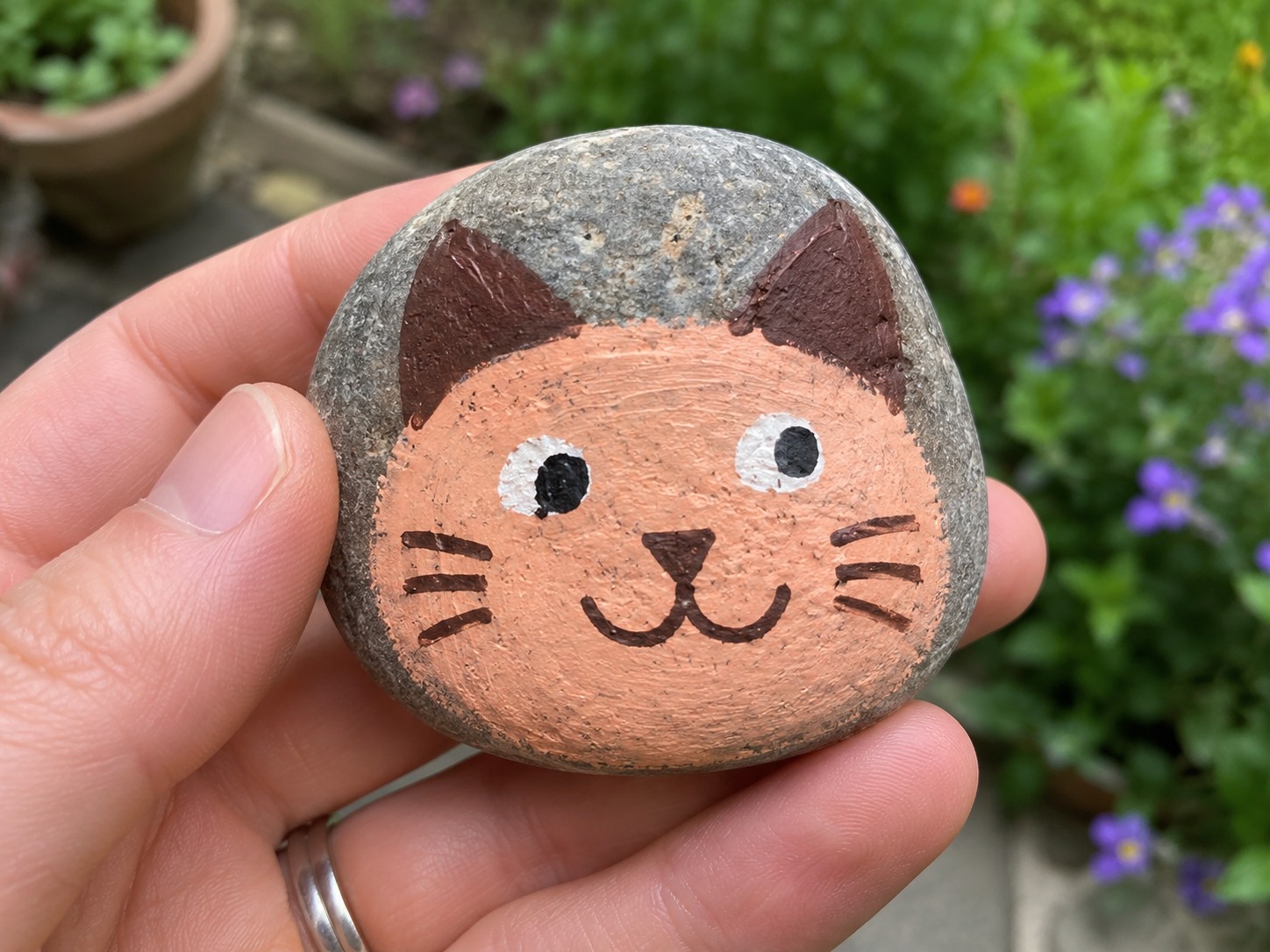
A cat face painted on a rounded physical stone makes a simple animal rock design with clear color blocking. The peach face and dark ears, nose, and whiskers stand out against the rock’s natural gray texture, while the large eyes make the motif easy to recognize.
The rounded shape gives the face room to fit without needing a detailed background, so you can adapt it to a larger or smaller pebble by simplifying the whiskers or facial features. Display the painted rock on a porch shelf, beside a planter, or in a garden pot, where its contrasting colors will catch the eye; for a two-color version, use one shade for the face and another for the features.
Paint a Watermelon Rock for Garden Decor

A watermelon-painted physical rock turns a broad, rounded stone into a simple fruit-inspired garden accent. The design uses two main color areas, with a curved green rind beneath the pink-red fruit and a few dark seed shapes for contrast, so the motif reads clearly without detailed linework.
The wide, slightly flattened shape gives the color blocks room to spread across the stone, making this a useful idea for a flower bed, planter, or patio display. Keep the seeds as simple dots or teardrops, or adjust the rind and fruit colors to suit another garden stone; the bold fruit motif also makes a clear, eye-catching Pinterest project.
Paint a Two-Color Bumblebee Rock

A rounded physical rock makes a natural base for a bumblebee, with yellow and black bands defining the body and a simple pair of white wings completing the bug design. Small black dots create the face, while the loose, brushy edges let the stone’s texture show through and keep the pattern from needing precise linework.
The bold stripes make this bee rock easy to spot in a planter, on a porch, or tucked into a flower bed. Adapt the bands to a longer or smaller stone, and simplify the wings or face if you want fewer details; the clear yellow-and-black pattern also reads well in a small Pinterest craft photo.
Paint a Three-Tulip Garden Rock
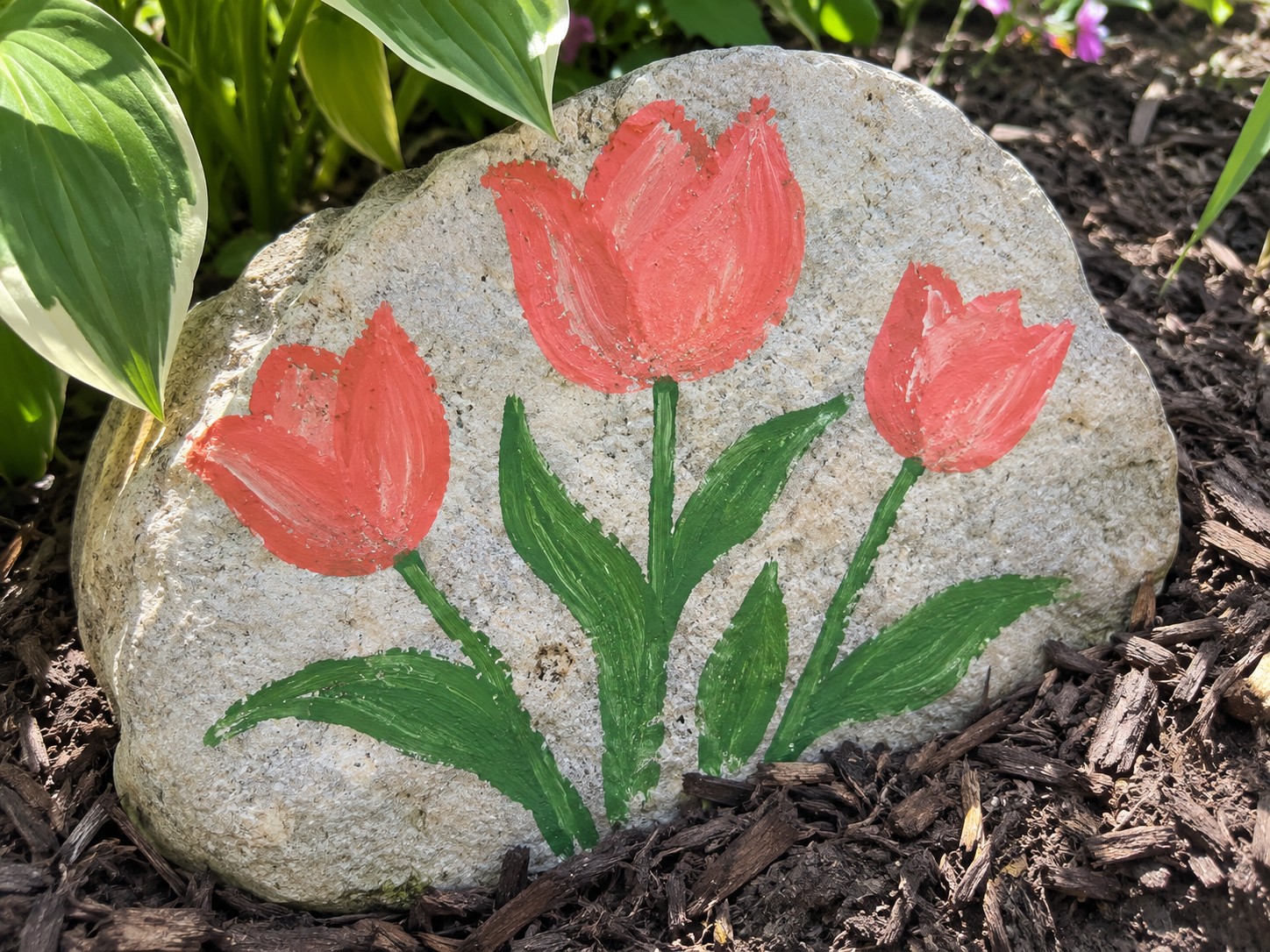
Paint three simple tulip blooms and green stems on a broad, rounded garden stone for a two-color flower rock that suits the “simple rock painting” theme. The large flower shapes and loose brushwork keep the design readable against the stone’s naturally speckled surface.
A painted tulip rock can sit in a flower bed, mulch, or a patio planter as garden decor. Keep the three blooms for a balanced layout, or simplify the design to one larger tulip if your stone is smaller; changing the flower color gives the same idea a fresh look for another season.
Paint a Two-Color Penguin Rock
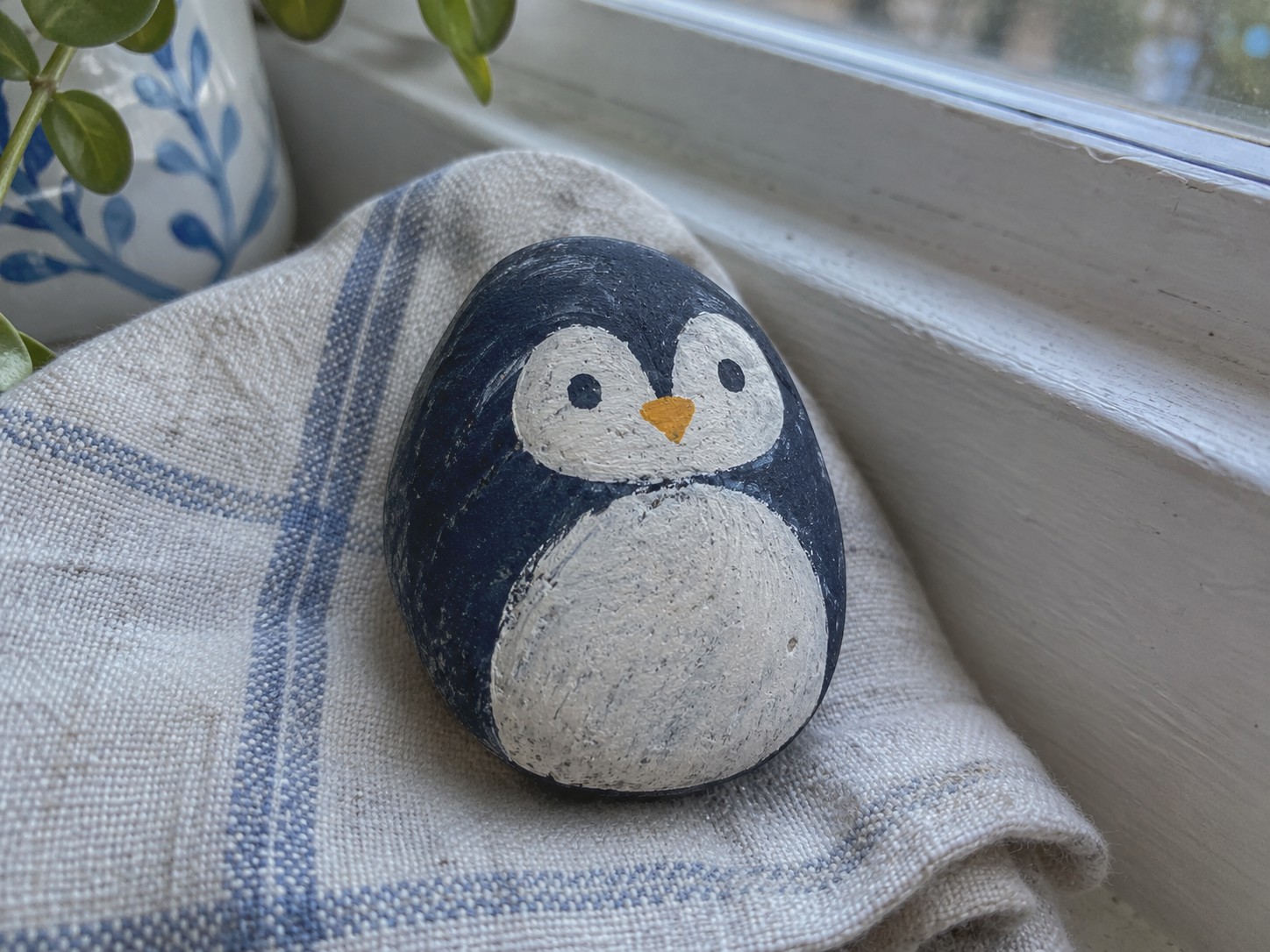
Turn a smooth, rounded physical stone into a penguin rock with dark blue-black paint and a light belly and face, plus a small orange beak. The broad, simple color-blocked shapes make this a recognizable animal rock, while the stone’s natural oval form helps suggest the penguin’s body.
The rounded shape makes this design easy to adapt for a shelf, planter, or porch display, and a smaller pebble could become a simple penguin chick. Keep the same dark-and-light contrast, or change the body color to personalize the animal; the clear face and bold color blocks also make it easy to spot in a collection of painted rocks.
Paint a Two-Color Moon and Stars Rock

A rounded physical river rock becomes a night-sky decoration with a deep blue background and a pale crescent moon, two stars, and scattered dots. The broad color areas and simple celestial shapes make this a clear two-color decorative stone craft, while the stone’s natural edges keep the painted design grounded in its handmade form.
The moon and stars could be simplified to one crescent and a few dots on a smaller pebble, or rearranged to fit a flatter stone. Display the painted rock on a shelf, porch table, or in a covered patio planter, where the high contrast makes the motif easy to spot and photograph for a craft collection.
Paint a Strawberry Rock with Two Colors

A strawberry painted on a rounded physical rock makes a simple fruit-inspired craft for a garden or small display. The red body, green leafy top, and pale seed marks create a recognizable motif, while the stone’s natural texture gives the painted areas a handmade look.
The berry shape is easy to adapt to a smaller pebble or a broader garden stone, and the seed marks can be kept loose rather than carefully uniform. Place the finished rock in a planter, on a porch step, or among garden stones; for a two-color version, use red and green paint and leave the seeds as small unpainted marks or add them with one of those colors.
Paint a Smiling Sun Rock with Two Colors
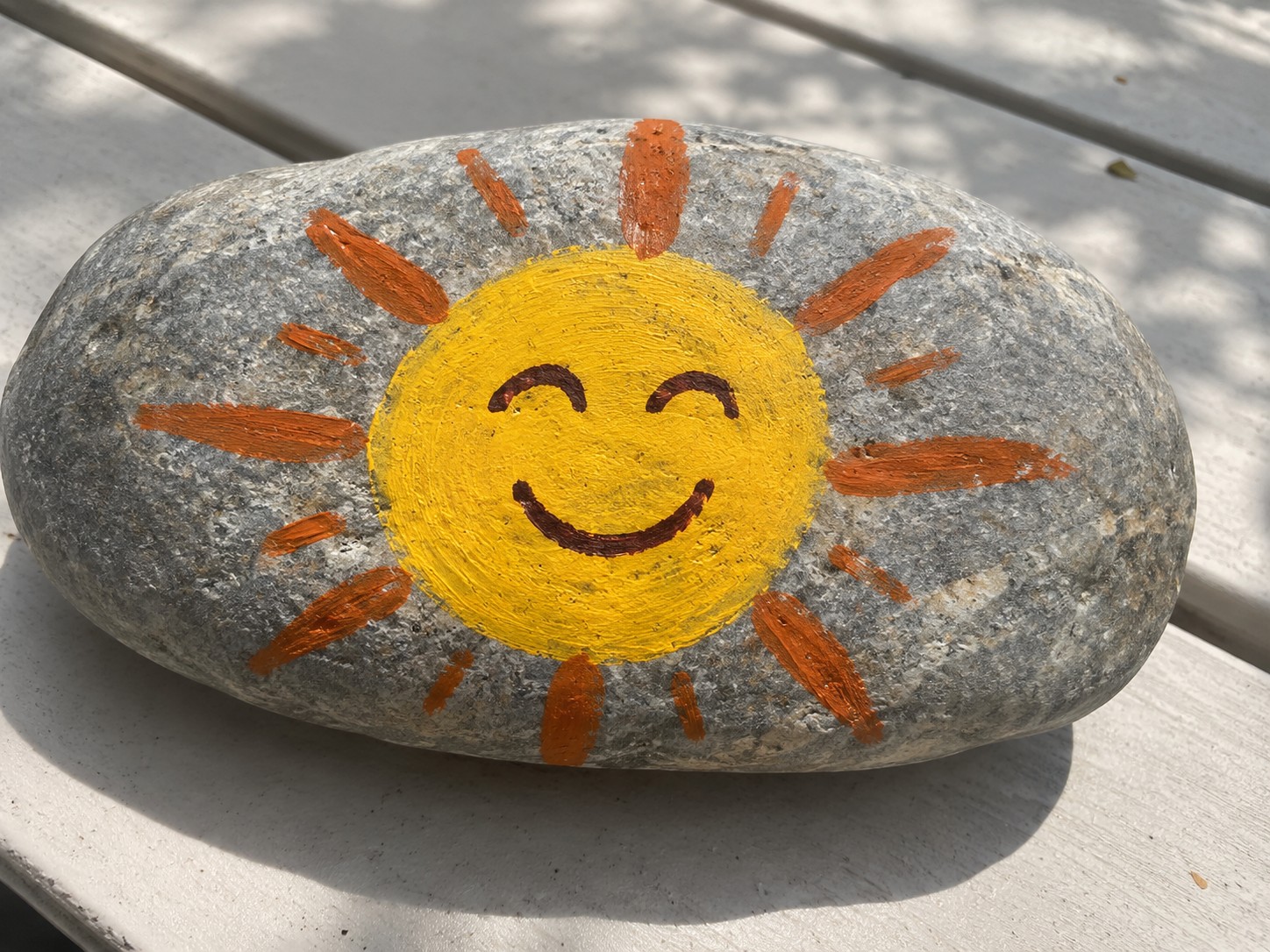
A sunny face makes a simple painted rock design that’s easy to recognize: a yellow circle, a few orange rays, and a curved smile with closed eyes. The large, rounded river rock gives the sun room to stand out while its natural gray texture remains visible around the painted shapes, making this a cheerful garden decor rock.
The clear color blocking keeps the design easy to adapt for a porch step, patio planter, or sunny spot in a flower bed. Use a smaller pebble for a compact version, or change the face and ray shapes to personalize it while keeping the same two-color palette. Its bold, readable motif also makes a useful idea to save for a simple, colorful painted rock craft.
Paint a Two-Color Toadstool Rock

A rounded physical rock becomes a simple toadstool decoration with a red cap and pale spots above a cream-colored stem. The broad color blocks and dotted cap make this a clear, food- and nature-inspired garden rock idea, while the stone’s curved surface gives the painted mushroom a natural, rounded shape.
The straightforward motif is easy to adapt to a different pebble by changing the cap color or using fewer, larger spots. Set the painted rock in a planter, on a porch shelf, or among garden stones, where its bold red-and-cream design will stand out; for a two-color version, make the cap and stem the main colors and leave the spots as small details in one of them.
Paint a Two-Color Turtle Rock
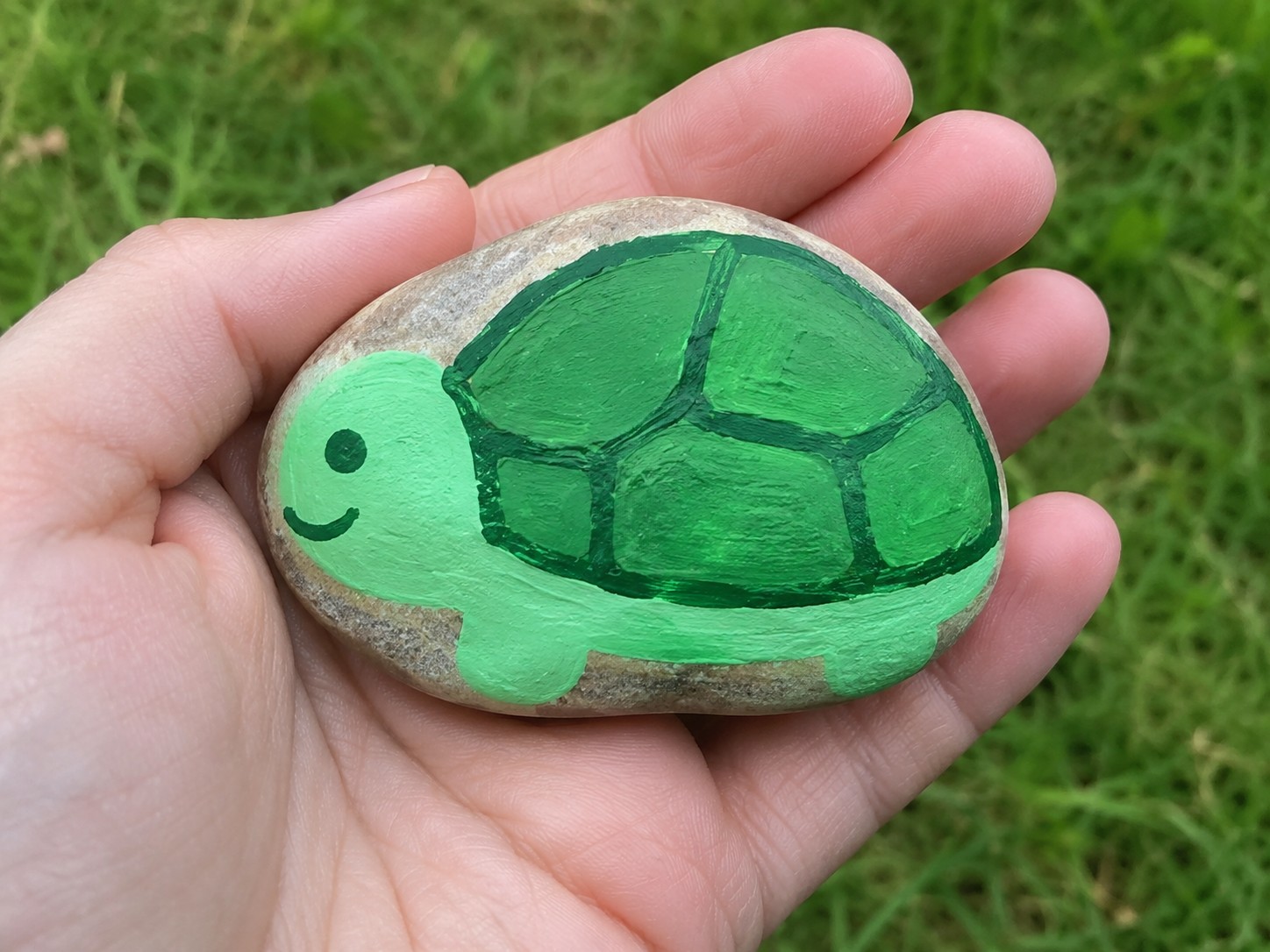
A painted turtle rock turns a smooth, rounded stone into a simple animal design, with a bright green body and darker green shell sections. The shell’s broad color blocks and visible outlines make this a recognizable animal rock, while the small face keeps the motif clear on a compact surface.
The rounded shape suits a turtle because it gives the shell a natural place to sit, and the design could be adapted to a flatter or larger stone by changing the number of shell sections. Try it as a garden or planter accent, or simplify the shell to a few outlined patches for a small handmade gift. The strong green contrast and easy-to-recognize motif also make it stand out in a collection of painted pebble ideas.
Paint a Two-Color Heart Flower Rock
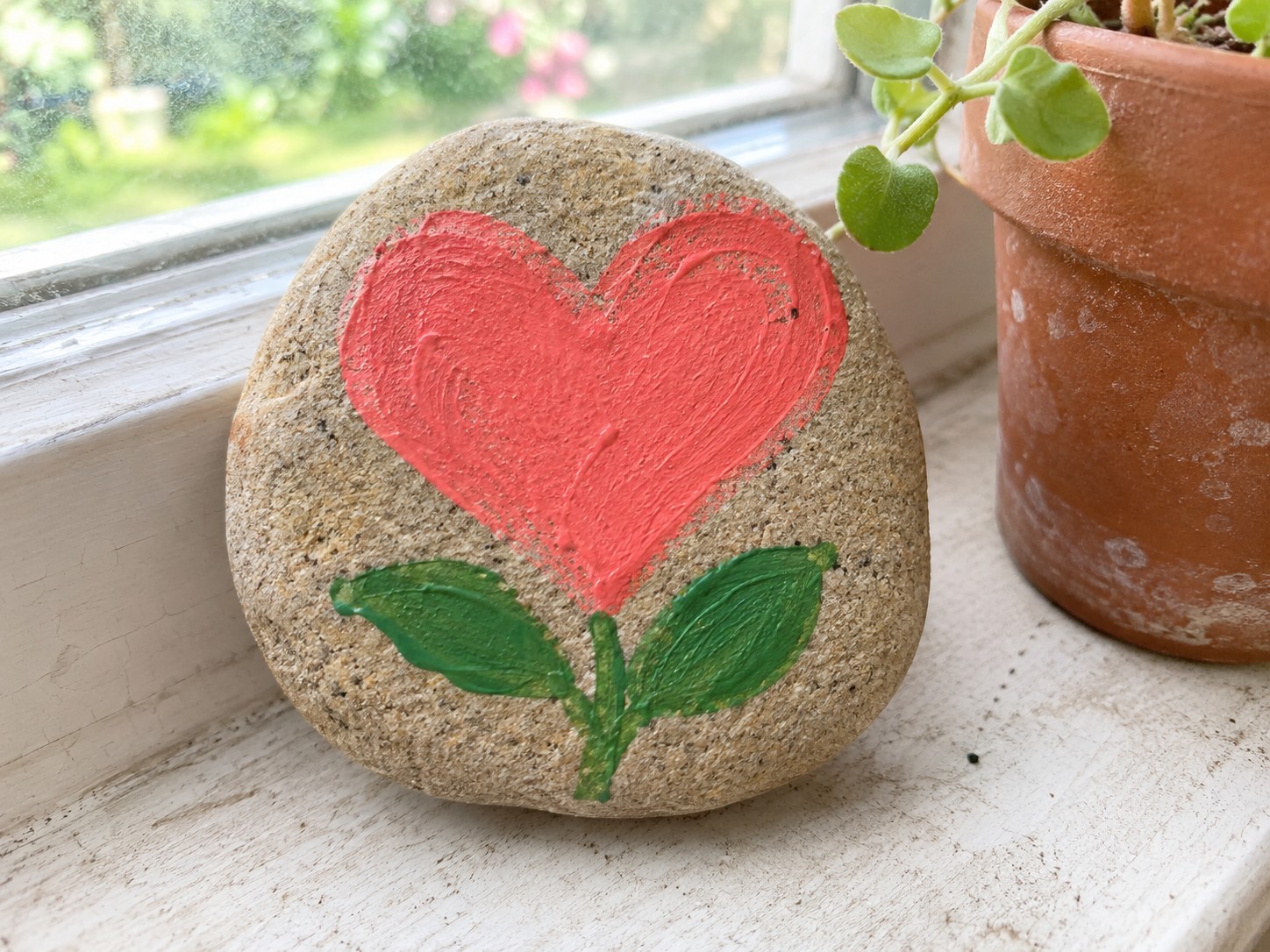
A heart-shaped flower makes a simple positive-symbol design for a painted physical rock: use one color for the heart and another for its stem and leaves. A rounded, textured stone gives the bold shapes a natural backdrop, while loose edges and visible brush strokes keep the design handmade rather than overly precise.
The broad heart and a few leaf shapes are easy to adapt to different pebble sizes, and the motif can be simplified further by painting just the heart and stem. Set the finished rock beside a planter, on a porch shelf, or among garden pots, where the bright color stands out against greenery and stone. Its clear shape and limited palette also make it an easy idea to save or personalize as a small gift.
Paint a Two-Color Fox Face on a Rounded Rock

A fox-face painted rock uses the stone’s broad, rounded front as a natural space for a simple animal design. Orange paint forms the main face, while cream-colored patches define the muzzle and inner ears; a few dark lines and dots complete the expression. The large color blocks make this a recognizable animal rock without relying on a detailed outline.
The rounded shape gives the face room to spread across the stone, so this idea can be adapted to a flatter pebble or a smaller garden stone by simplifying the muzzle and features. Place it on a porch shelf, in a planter, or among garden stones, where the warm orange-and-cream contrast will stand out. For a two-color version, keep the fox shapes in orange and cream and use a dark marker only for the small facial details.
Paint a Three-Color Flower Rock Set

Paint simple tulip-like flowers on smooth, rounded physical rocks to make a small garden decor set. Each design uses broad petal shapes, green leaves, and small dotted centers, with the natural stone texture showing through around the brushy paint. The repeated flower motif ties the stones together while different petal colors give the set variety.
The rounded stones are easy to arrange in a planter, along a garden path, or on a porch display, and the flower shapes can be simplified into fewer petals and dots. To adapt the idea for a two-color project, paint each flower in one color and use the second for its leaves or center, or repeat the same color pairing across several rocks. A coordinated painted rock set also makes a clear, colorful Pinterest craft idea.
Paint a Two-Color Chick Face on a Rounded Rock
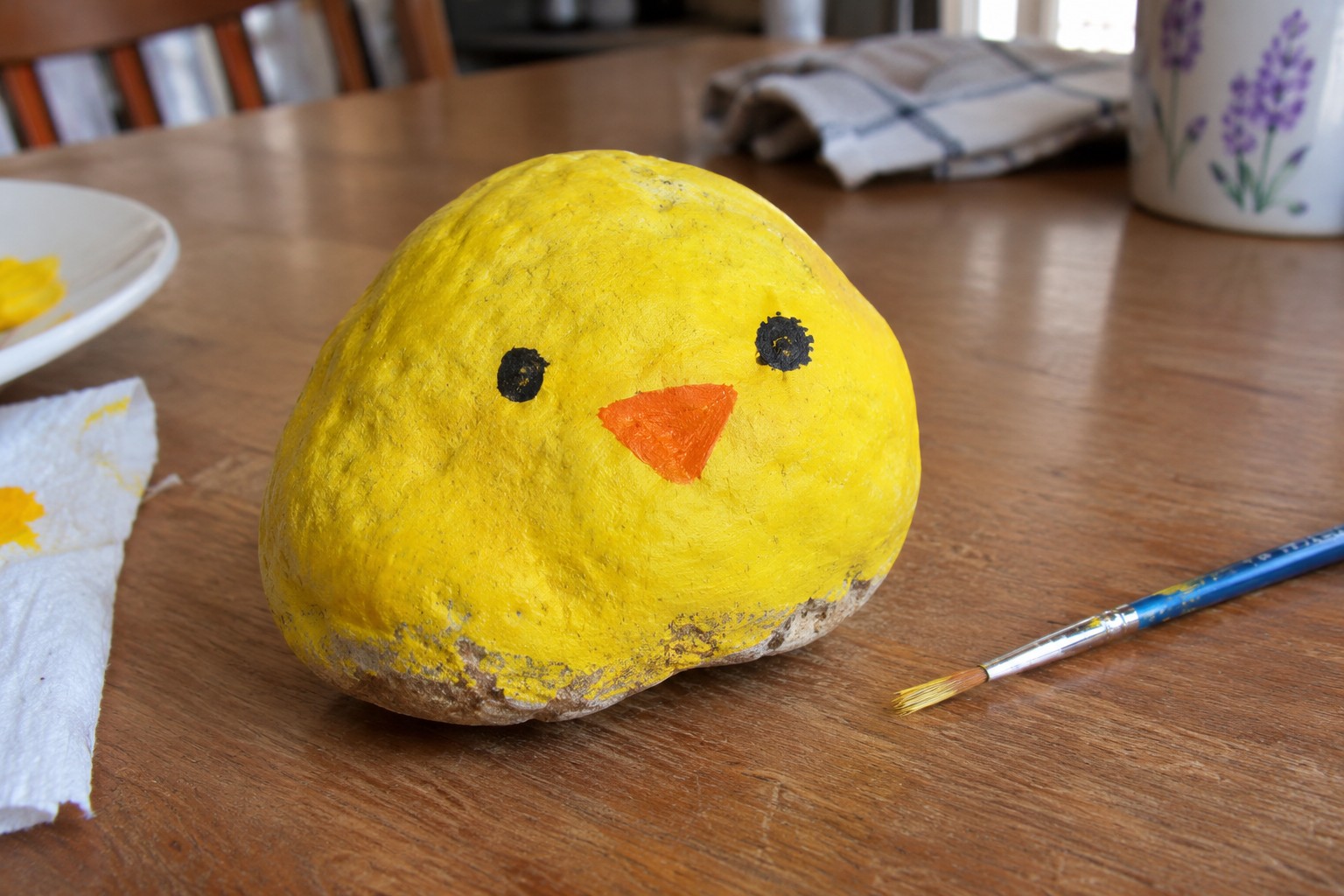
A rounded physical rock painted yellow with simple black eyes and an orange beak becomes a cheerful chick-face design. The broad curved surface gives the face room to read clearly, while the natural rough texture and uneven painted edges keep this animal rock looking handmade.
The simple color blocking makes this idea easy to adapt for a small table display, porch accent, or a cluster of painted rocks in a planter. Keep the face minimal, or change the beak shape and eye placement to give each rock its own expression; a bright yellow character also stands out clearly in a craft roundup or Pinterest pin.
Paint a Two-Color Leafy Vine on a Flat Rock
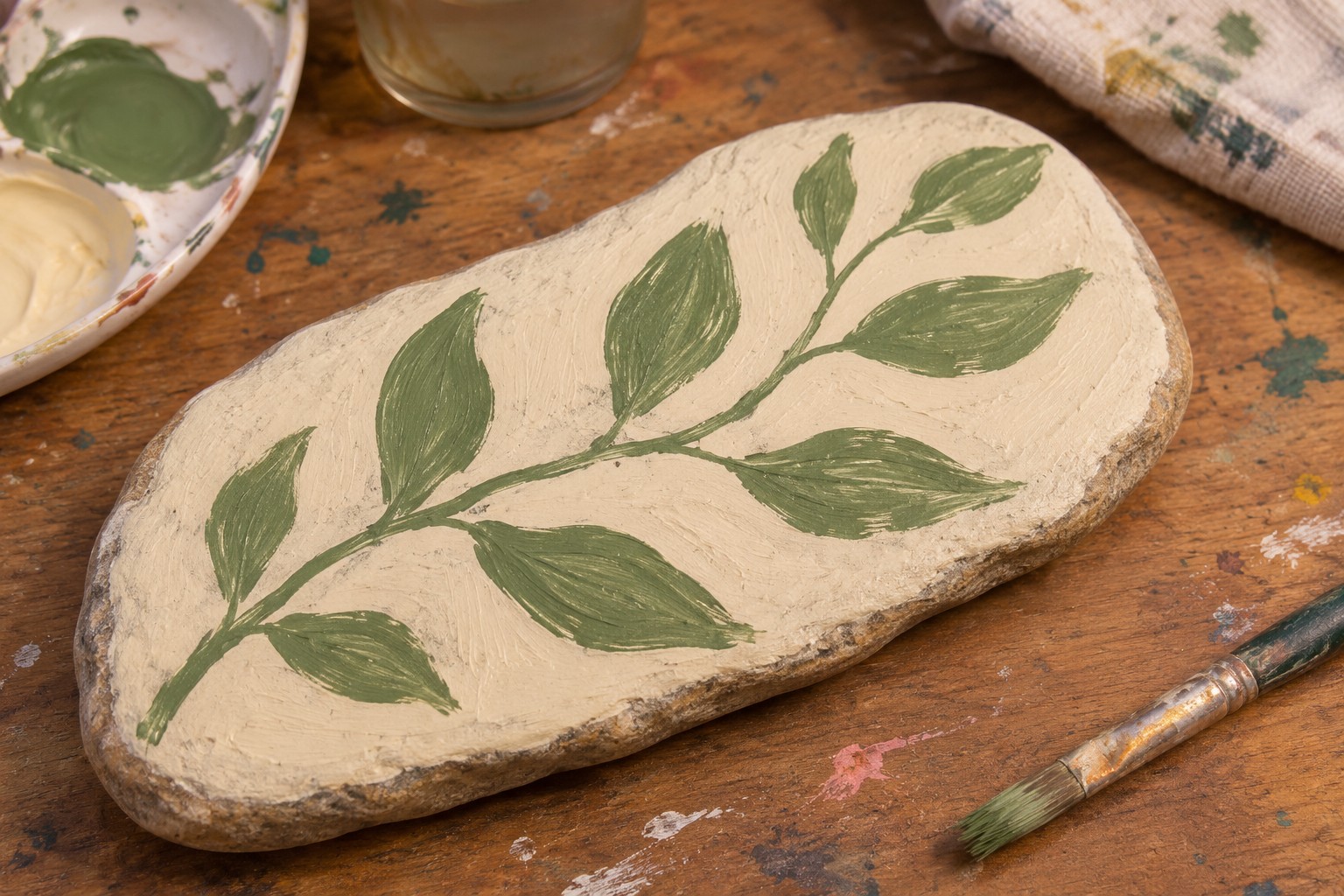
A leafy vine is a simple botanical design for a real flat-faced rock, using green leaves against a light background. The curved stem and brushy leaf shapes make an appealing pattern while keeping the color palette to two main colors, so the design fits naturally into a collection of beginner-friendly decorative stone crafts.
The elongated shape gives the vine room to spread across the rock, making it a useful accent for a planter, porch shelf, or garden display. Keep the leafy pattern loose for a simpler version, or change the leaf size and stem direction to suit a smaller or rounder stone; its clear contrast and recognizable motif also make it easy to spot in a Pinterest craft roundup.
Paint a Smiling Cloud Rock in Blue and White
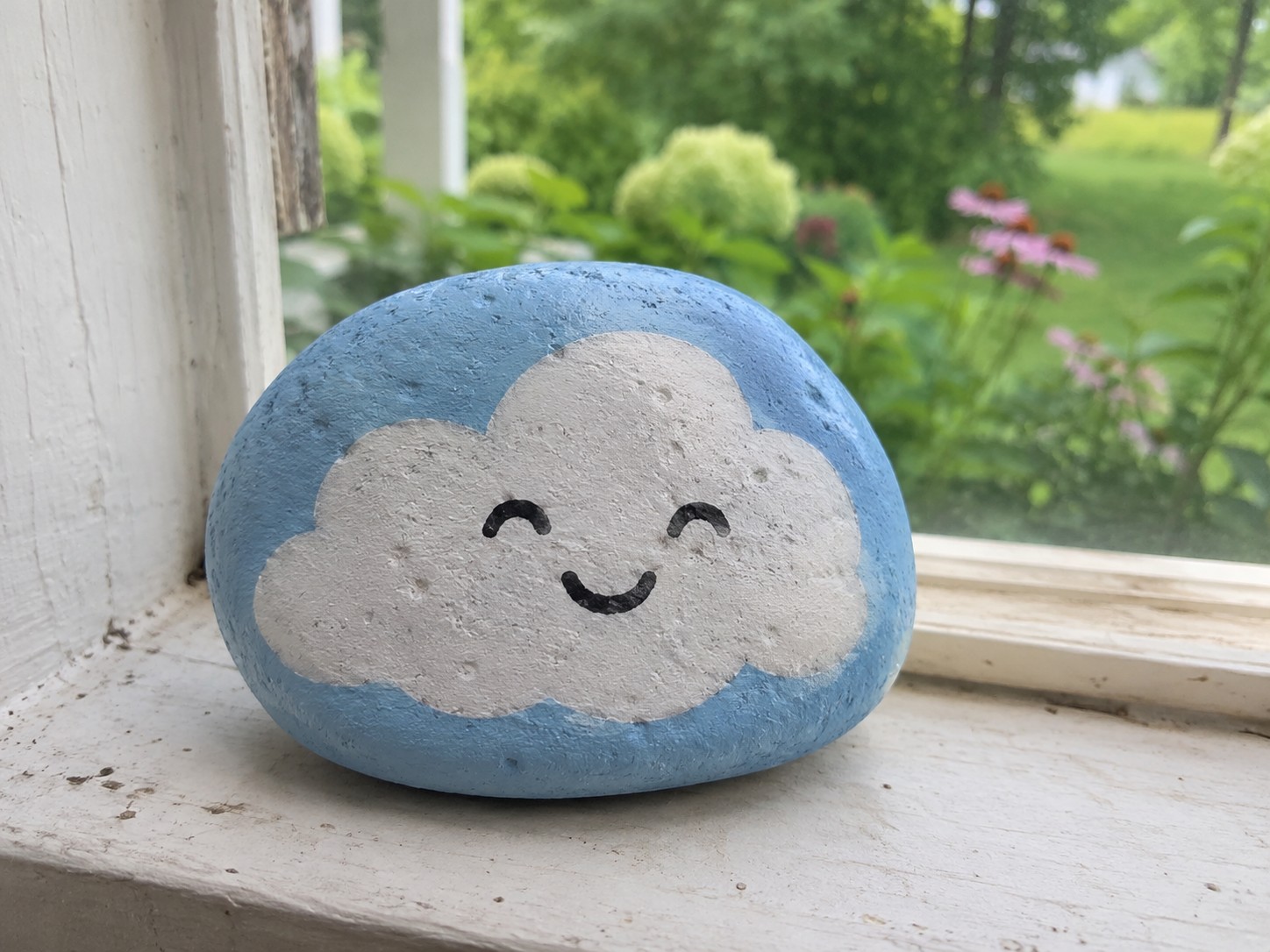
A smooth, rounded physical rock becomes a simple cloud rock with a blue background, a white cloud, and a small smiling face. The broad color areas and minimal black linework make this a clear two-color painting idea, with the face as a small detail on a decorative stone craft.
The rounded shape gives the cloud plenty of room and makes the rock easy to display on a windowsill, porch, or shelf. Keep the blue-and-white design, or adapt the cloud outline and face to a smaller pebble; its bold contrast and cheerful expression also make it easy to spot in a Pinterest collection of painted rock ideas.
Paint a Two-Color Butterfly Rock

A butterfly painted on a small, rounded physical rock makes a colorful bug-rock craft with a clear, graphic design. Dark blue and yellow areas separate the wings and body, while simple dots, antennae, and large eyes give the painted motif its recognizable shape.
The bold color blocking makes this idea easy to adapt to a smooth pebble or a slightly larger garden stone: keep the wing shapes simple, then change the colors or dot placement to make each butterfly different. Set one in a planter, flower bed, or on a porch step, where the bright pattern will stand out against soil and greenery.
Paint a Two-Color Pumpkin Rock for Fall Decor

A broad, rounded physical rock makes a sturdy base for a pumpkin design, with orange color blocking and dark green lines defining the segments. A simple green stem and leaf finish this fall-themed decorative stone craft without needing a detailed background or lettering.
Use it as a seasonal accent on a porch, shelf, or table, or tuck it into a planter for a bit of autumn color. The design can be simplified to a few curved segment lines and a stem, then adjusted to fit a smaller pebble or a flatter stone; keeping the pumpkin to orange and green makes the idea easy to adapt for a two-color project.
Paint a Two-Color Bluebird Rock
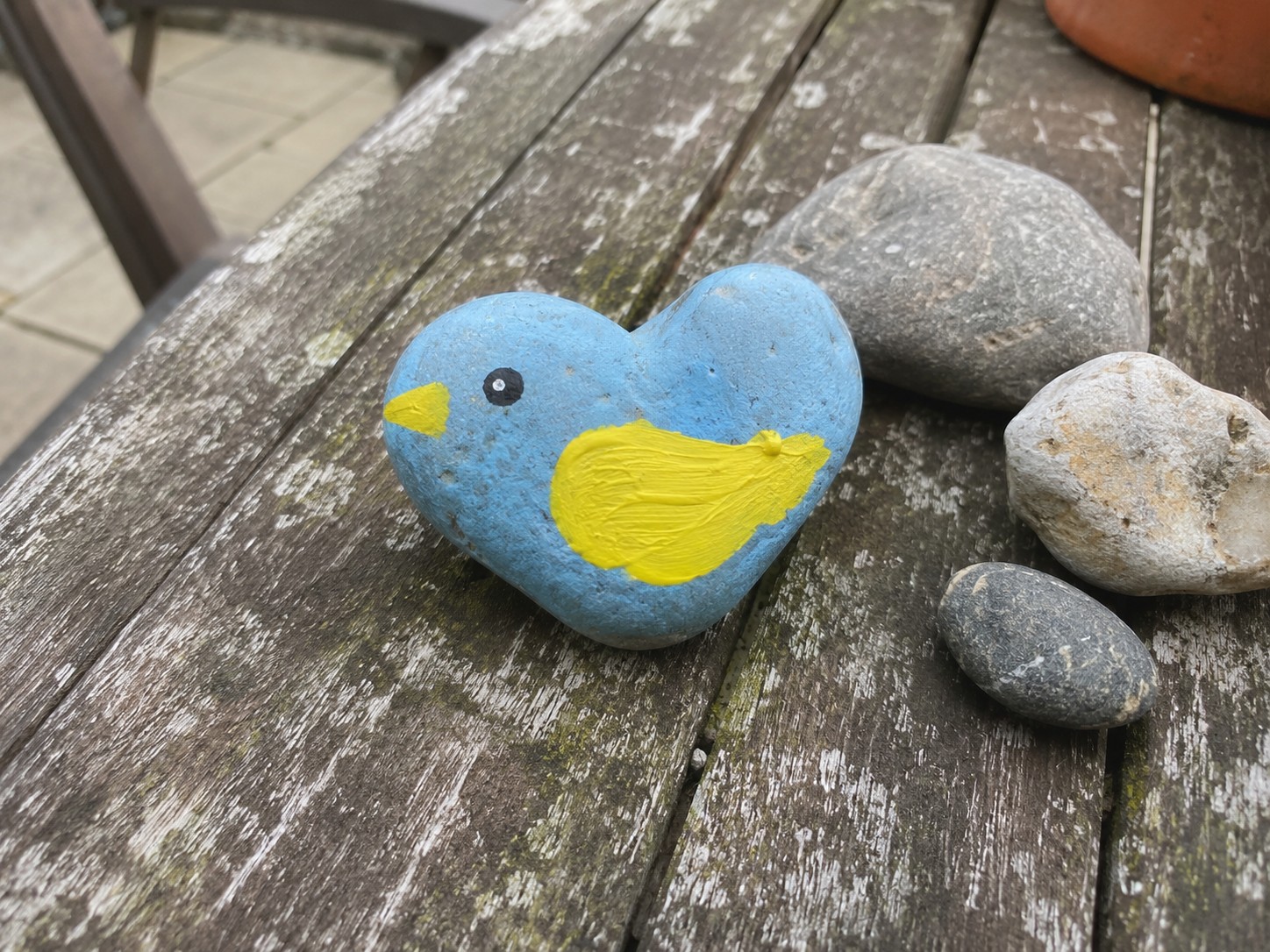
A rounded physical stone painted as a bluebird makes a simple animal rock with clear, easy-to-read color blocking. The blue body follows the stone’s curved shape, while yellow wings and a small beak give the bird its recognizable form without needing detailed linework.
The bird motif could be simplified to a blue body and yellow beak, or adapted with different colors to make another kind of bird. Place the painted rock in a planter, on a porch shelf, or among garden stones, where its bright colors stand out against natural textures. The bold bird shape also makes a clear, eye-catching idea to save for a two-color craft project.
Paint a Two-Color Checkerboard Rock

A broad, rounded physical rock makes a good base for a simple checkerboard stone craft. Alternating lavender and cream blocks create a clear pattern, while their slightly uneven edges and visible brushwork follow the rock’s curved surface rather than looking machine-perfect.
The two-color layout is easy to adapt: use larger blocks for a smaller stone or switch the palette to match a planter, porch display, or table arrangement. Set the finished rock on a shelf or among garden pots, where the contrasting checks stand out in close-up craft photos without needing extra details.
Frequently Asked Questions
You’ll need clean, dry rocks, two colors of acrylic paint, a few brushes, and a protective sealant. Acrylic paint is beginner-friendly and works well on smooth stones. A pencil can help you sketch a design first, and a toothpick or cotton swab is useful for adding small dots and details. Choose one base color and one contrasting color to keep each design simple and clear.
Pick colors that are easy to distinguish. Black and white create bold patterns, while blue and white work well for waves, stars, or clouds. Red and white are great for hearts and flowers, and green and yellow suit leaves or simple garden designs. You can also use light and dark shades of the same color for a softer look. For the best contrast, pair a light color with a darker one.
Wash the rock with soap and water to remove dirt, then let it dry completely. A smooth, flat surface is easiest for beginners, but you can paint textured stones too. If the rock is very dark or uneven in color, apply a thin coat of one of your two paint colors as a base. Let it dry before adding the design in your second color.
Try dots, stripes, hearts, stars, simple flowers, waves, checkerboards, or geometric shapes. You can also paint a two-color ladybug, a smiling face, a crescent moon, or a basic leaf. Start with large shapes and repeat a simple pattern rather than attempting lots of tiny details. If your lines aren’t perfectly even, add more dots or turn the design into an intentional pattern.
Let the paint dry fully, then apply a clear sealant suitable for painted stones. Follow the product instructions and use it in a well-ventilated area. Sealing helps protect the design from scuffs and moisture, but it doesn’t make every painted rock completely weatherproof. For rocks you plan to leave outdoors, choose an outdoor-rated sealant and check the label to make sure it’s compatible with acrylic paint.
