

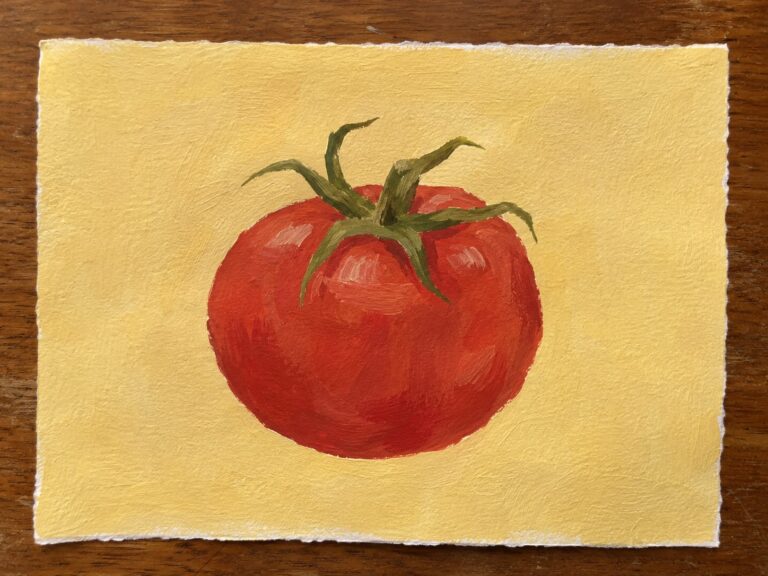
I’ve always liked the simple charm of vintage food illustrations, especially their muted colors and hand-painted look.
Gouache is a nice fit for this style because it’s easy to layer and forgiving when I want to adjust a shape or color.
I put together these ideas as a starting point for painting everything from fruit labels to old-fashioned pantry tins.
I hope a few of them inspire you to pick up your paints and try one of your own.
A Classic Red Tomato Still Life
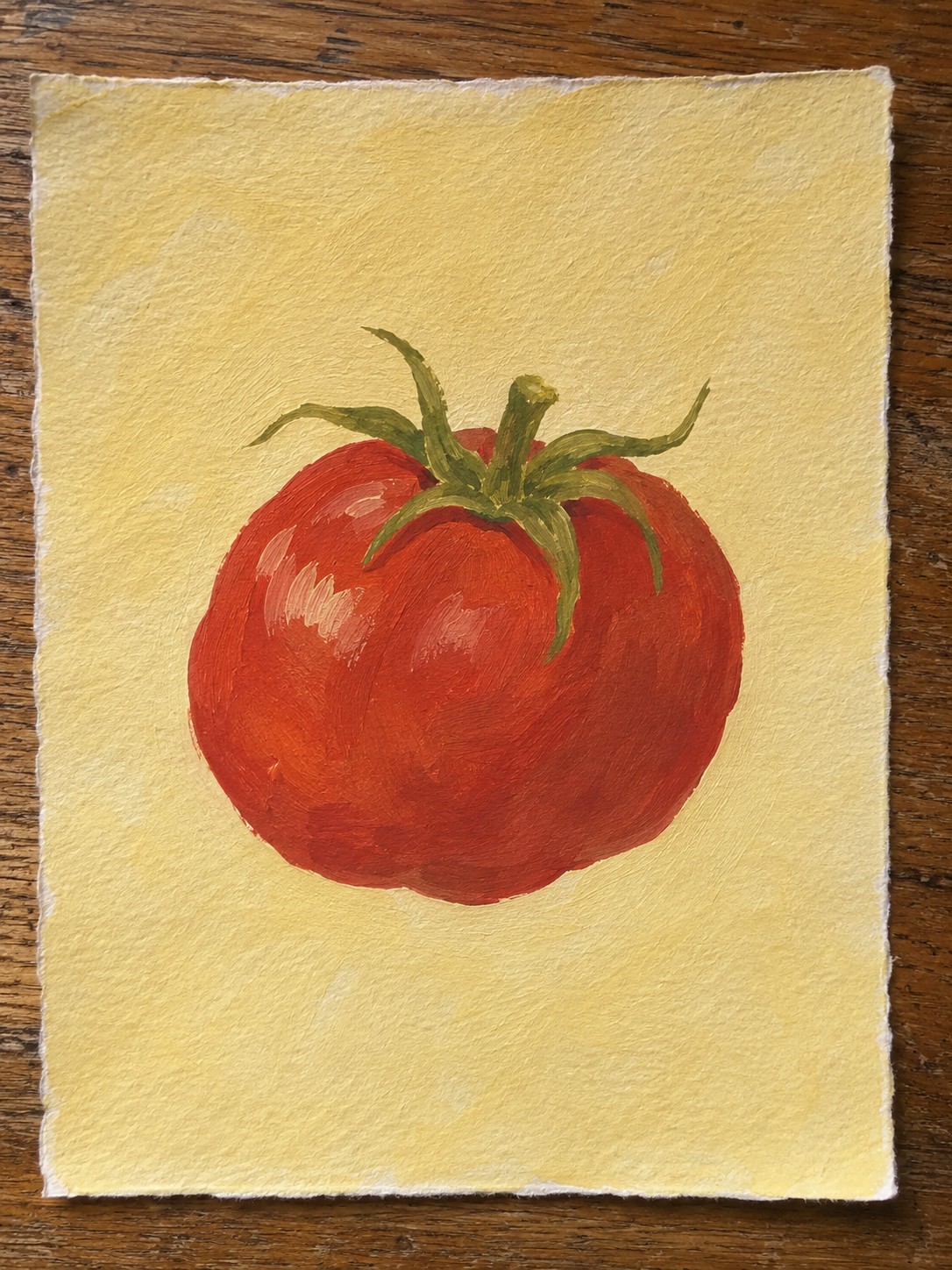
A single red tomato makes a strong subject for a retro food illustration, with its rounded lobes and green stem giving the composition a clear silhouette. Warm red brushwork against a pale yellow background keeps the focus on the fruit, while visible strokes add texture without needing many small details.
The simple layout is easy to adapt: change the background color, add a thin border, or paint a few tomatoes together for a fuller still life. Its bold colors and centered subject also make it a practical choice for a small kitchen print or a Pinterest-friendly painting study.
A Vintage Bowl of Strawberries

A bowl of strawberries with a few berries arranged beside it makes a strong vintage-inspired food still life. The red fruit, leafy green tops, and cream bowl create clear color contrast, while the broad shapes and small seed marks keep the composition readable against the plain background.
The bowl gives the fruit a simple focal point, and the loose arrangement leaves room to adjust the number or size of the berries. Try changing the bowl’s decorative pattern or using a softer palette for a different retro look. This compact subject also makes a useful Pinterest reference for kitchen prints or handmade cards.
Retro Orange Soda Bottle Still Life
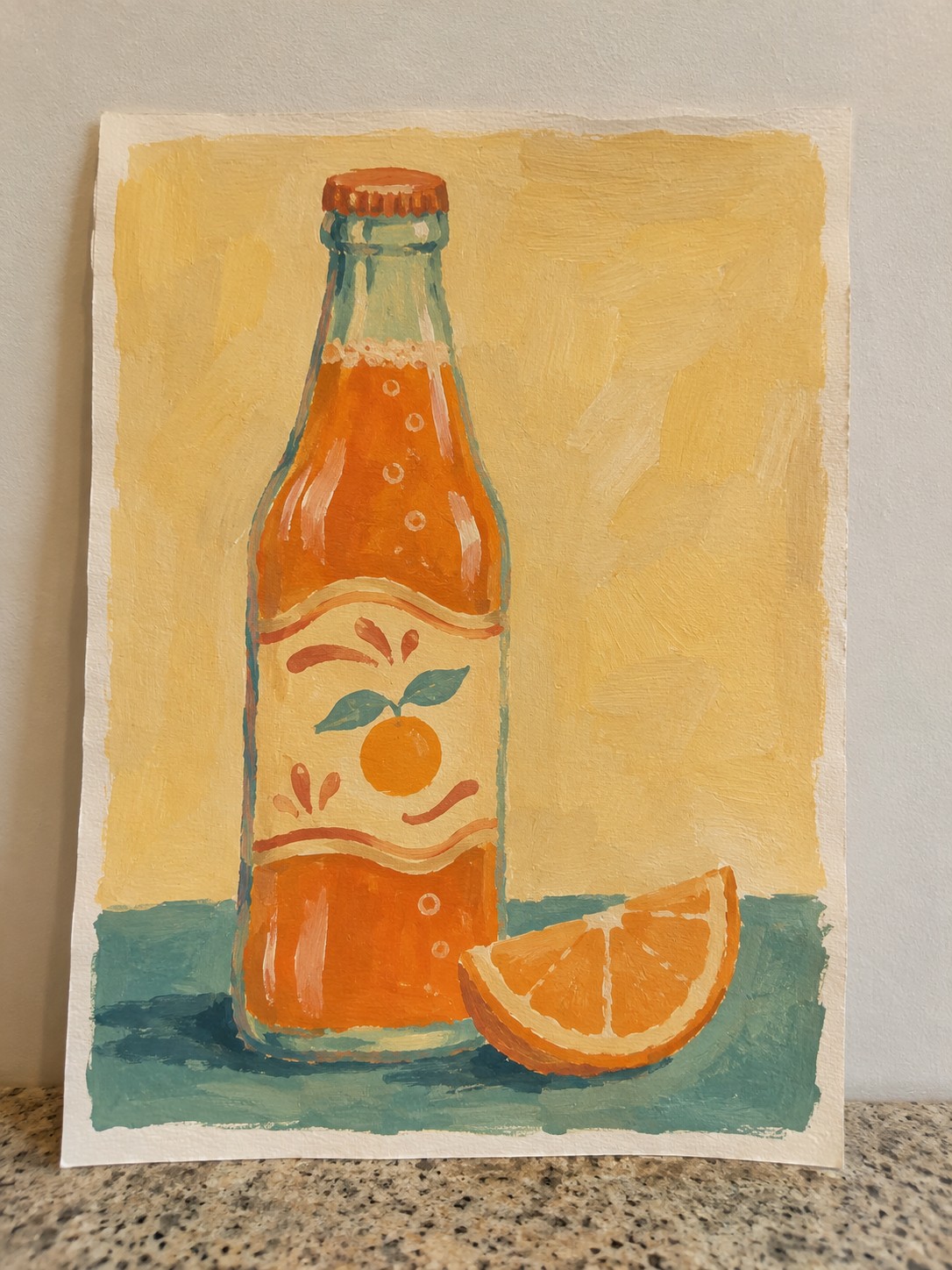
A vintage-style orange soda bottle makes a bold food still life, with a bright citrus palette and a sliced orange to reinforce the flavor. The tall bottle, curved label, and simple orange-and-leaf motif create a clear focal point, while the contrasting teal tabletop and warm yellow background keep the composition balanced.
The composition does much of the work here, so you can adapt it by changing the drink color, label design, or fruit while keeping the bottle as the main shape. Simplify the label into a few decorative marks for a more approachable painting, or add hand-lettering to make it personal. Its strong colors and recognizable subject also help it stand out in a collection of retro food art.
A Cherry Pie Slice with a Decorative Border

A slice of lattice-topped cherry pie makes a strong retro food still life, with deep red filling set against warm golden pastry. The angled slice, white plate, and simple blue corner motifs create a clear focal point while giving the composition the feel of a vintage recipe illustration.
The plate and border provide useful shapes to practice alongside the pie’s layered crust and clustered cherries. Adapt the palette to suit your space, or simplify the filling into larger red shapes; the framed layout also makes this idea easy to save as inspiration for a kitchen print or a Pinterest pin.
A Vintage Cup of Cocoa with Cinnamon
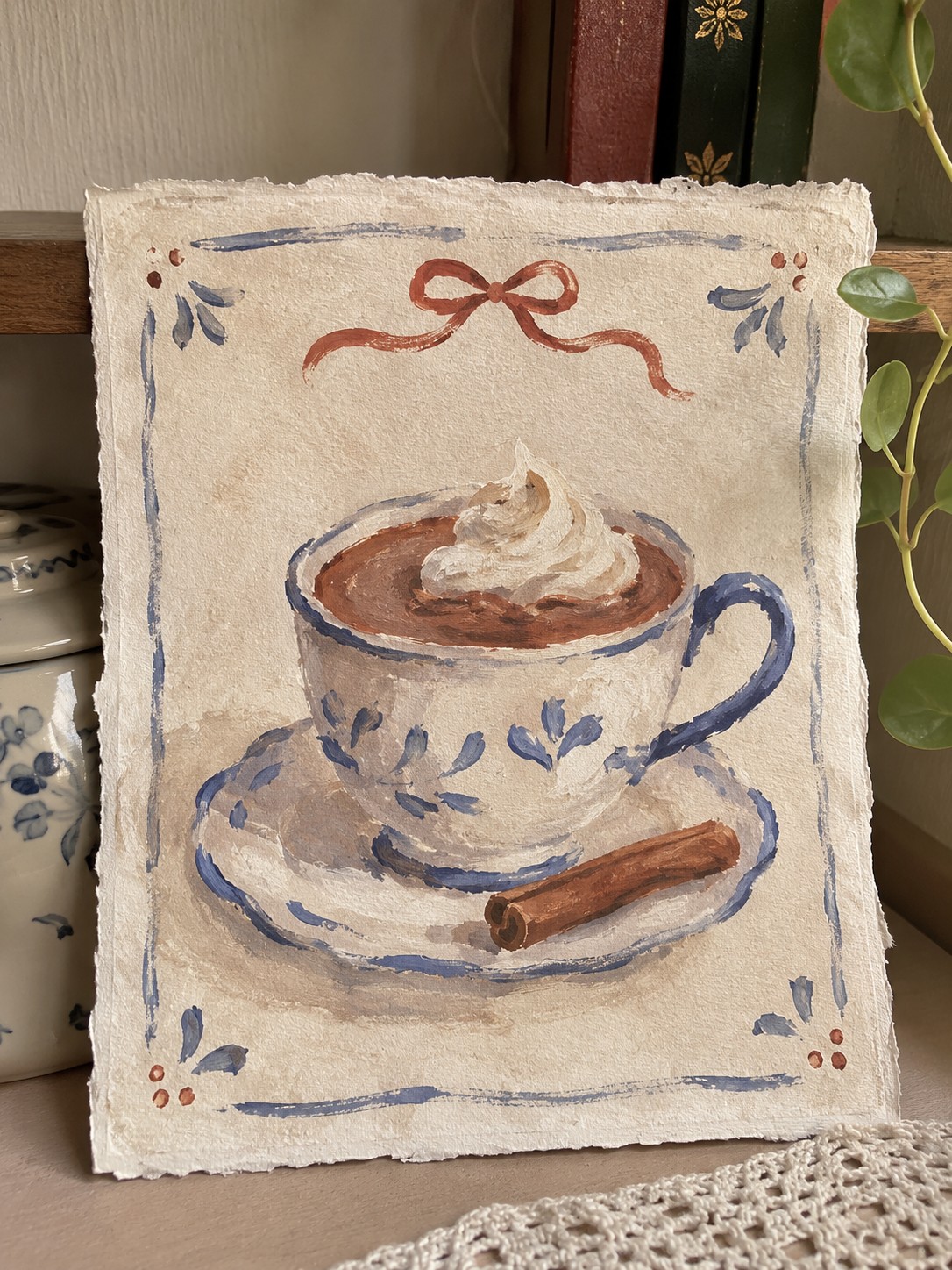
A cup of cocoa topped with whipped cream makes a strong retro food still life, especially when paired with a saucer and cinnamon stick. Creamy neutrals, russet browns, and blue floral details keep the central cup easy to read, while the hand-painted border and bow give the composition a decorative vintage-illustration style.
The cup and saucer provide simple, recognizable shapes to build around, and the limited palette can be adapted with different mug patterns or topping colors. For a simpler version, focus on the cup, cocoa, and cream, then add a small border as a finishing detail. Its clear subject and vintage framing also make it a useful reference for a Pinterest-friendly kitchen print or handmade gift.
A Retro Bunch of Bananas with Bold Color

A hanging bunch of bananas makes a strong vintage-inspired food still life, especially against a warm coral background. Broad yellow fruit shapes and deep green leaves create clear contrast, while the loose painted edges and visible strokes keep the composition from feeling too polished.
The simple background keeps attention on the fruit, and the curved bananas give the cluster an easy sense of movement. For a quicker version, reduce the bunch to a few overlapping shapes and save the darker lines for the peel details; changing the background color or adding a single loose banana can make the idea your own. Its bold colors and recognizable subject also make it easy to spot in a Pinterest feed.
A Retro Diner Booth and Milkshake
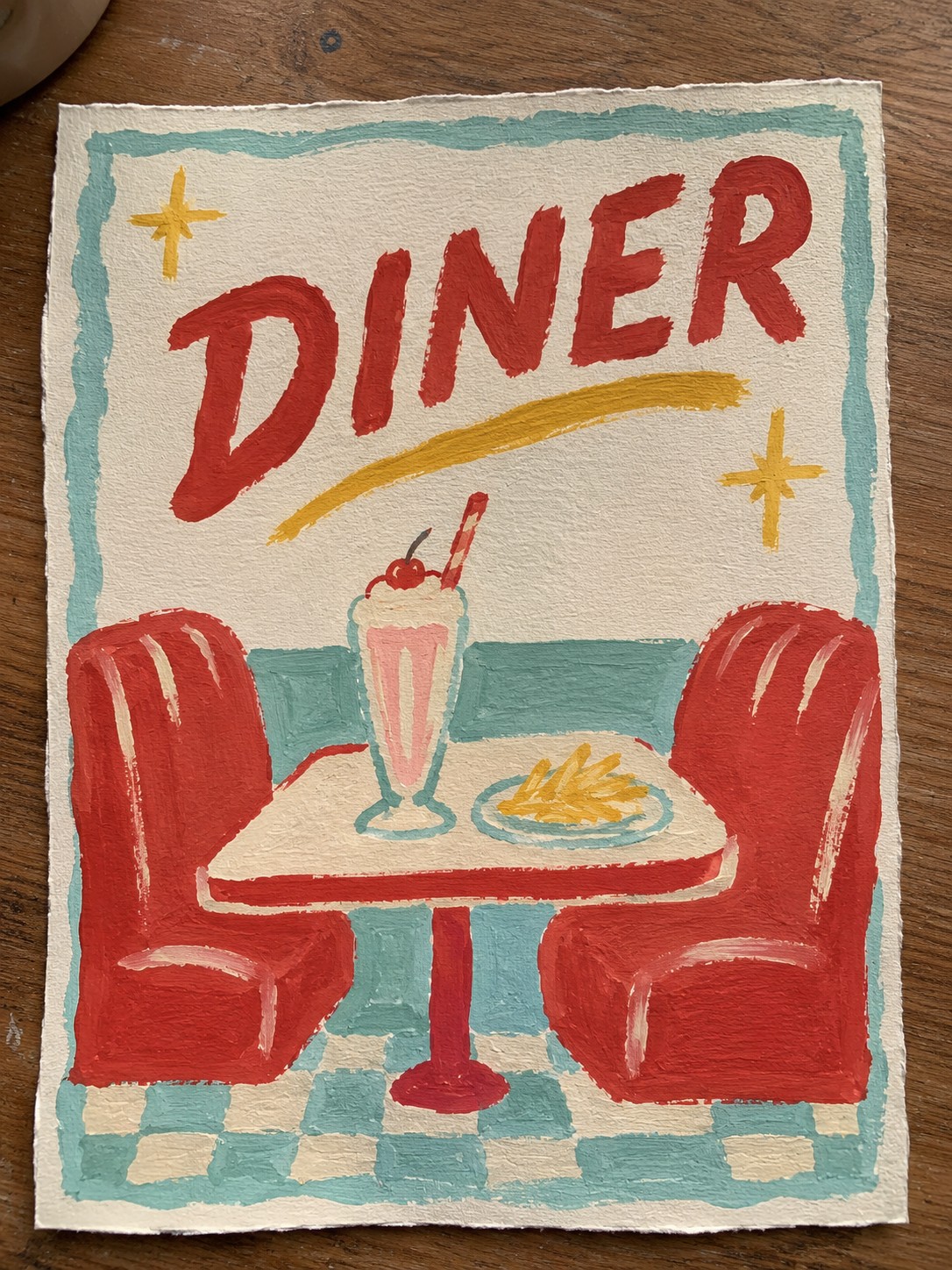
A vintage diner scene makes a distinctive food illustration by pairing a strawberry milkshake and a plate of fries with a small booth table. The bold red seats, teal accents, and hand-painted lettering create a clear, poster-like composition that fits both food art and decorative art.
The large shapes and limited color palette make this idea easy to adapt to different layouts, from a small postcard to a larger kitchen print. Simplify the lettering or swap in another diner treat to make it your own, while keeping the booth and tabletop as the main structure. Its bright colors and nostalgic sign-style design also give it strong Pinterest appeal.
A Vintage Pear Pair with a Painted Border
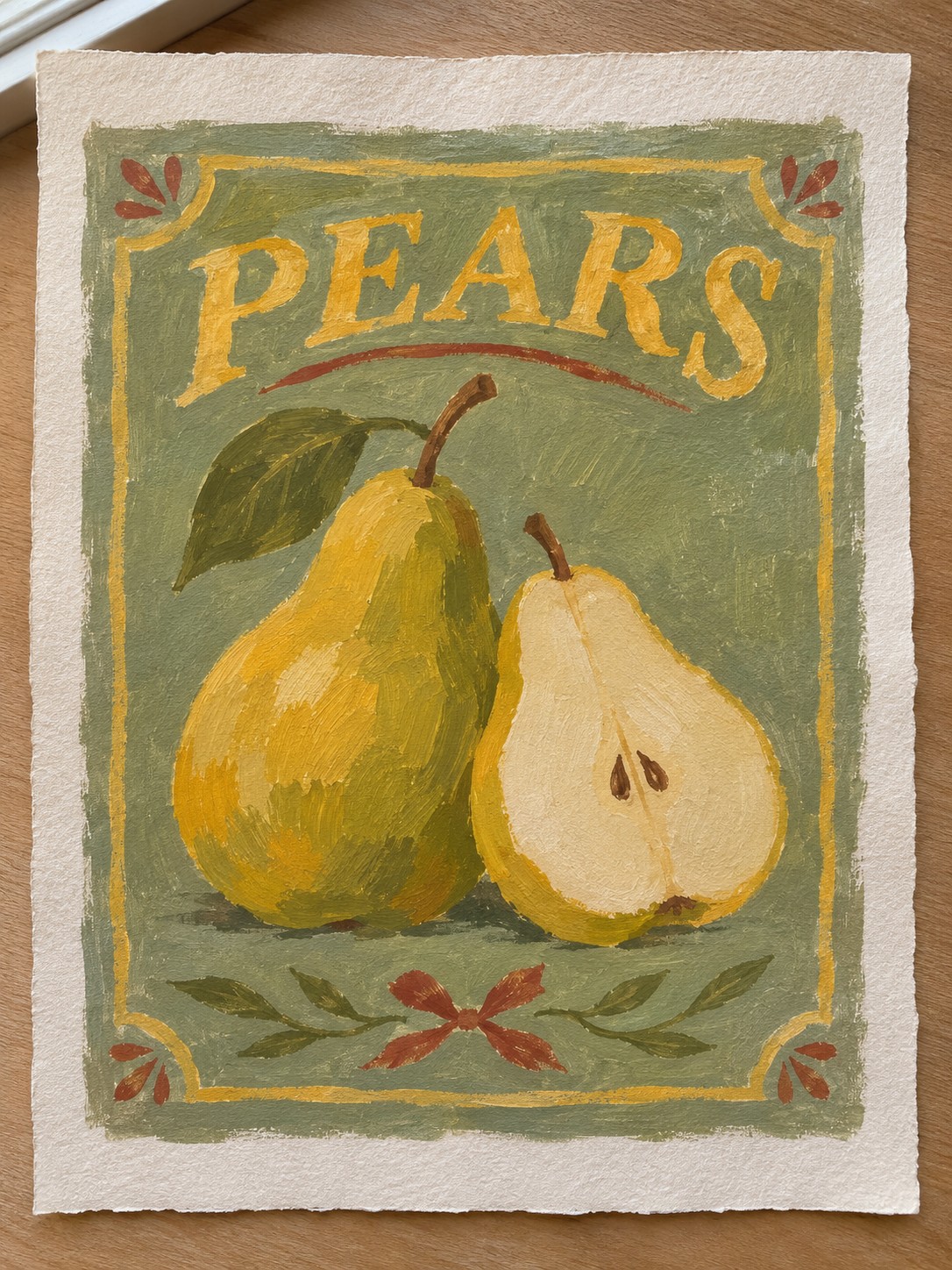
A pair of pears makes a strong vintage food illustration, with one whole fruit beside a cut half to add variety in shape and color. The muted green background, golden border, and loose painted leaves frame the still life without competing with the fruit.
The composition is easy to adapt by changing the pear colors, simplifying the corner decorations, or adding a short label for a pantry-inspired print. Its large, readable shapes make it useful for practicing layered color and highlights, while the decorative frame helps it stand out as a finished Pinterest-worthy wall-art idea.
A Vintage Strawberry Shortcake Slice

A strawberry shortcake slice makes a strong vintage food illustration subject, with its stacked cake layers and fruit giving the composition clear, easy-to-read shapes. Creamy yellows and whites stand out against the dusty rose background, while the decorated plate adds a small decorative-art detail without competing with the cake.
The composition is easy to adapt by changing the cake shape, plate pattern, or background color while keeping the layered structure as the main focus. For practice, paint the cake in broad blocks first, then add the strawberry seeds and plate flowers as small accents. Its warm retro palette and centered subject also make it a good fit for a kitchen print or a Pinterest food-art collection.
A Vintage Jar of Homemade Pickles

A homemade pickle jar makes a strong vintage food still life, with its rounded glass shape, striped red lid, and illustrated label giving the composition clear layers. Muted greens and warm reds keep the palette cohesive, while the label adds a decorative focal point.
The jar’s simple overall silhouette gives you a useful starting point, and the label and lid offer room to practice smaller shapes and pattern. You could simplify the lettering or personalize the label with different wording and colors, making the design easy to adapt as kitchen wall art or a handmade gift.
A Retro Watermelon Slice Still Life

A watermelon wedge makes a bold retro food illustration, with a broad red-pink cut surface, dark seeds, and layered cream and green rind. Its simple curved shapes stand out against a flat aqua background, while the second, smaller slice adds balance and keeps the composition from feeling too symmetrical.
The strong color blocks make this idea easy to adapt for a small print, kitchen art, or a summer-themed card. Simplify the seeds and rind into a few painted shapes, or change the background color to suit your space; the oversized fruit and bright contrast also give it a clear focal point for Pinterest.
A Retro Ice Cream Sundae in a Pedestal Glass

A three-scoop sundae with whipped cream, a cherry, and a spoon makes a strong retro food still life. The tall fluted glass gives the composition a clear vertical shape, while the pink and chocolate scoops stand out against the pale background and checkerboard counter.
The broad areas of color and simple shapes make this a useful idea to adapt: change the scoop flavors, glass color, or striped awning to suit your palette. Keep the garnish and spoon for a classic diner look, or simplify the background to make the sundae the main focus. The bright, recognizable subject and vintage details also make it a distinctive choice for a food-art Pinterest board.
A Vintage Lemon Still Life with a Scalloped Border

A cluster of whole lemons and a cut half makes a strong retro food still life, with the pale blue backdrop and scalloped green border giving the composition a decorative, framed look. The bright yellow fruit stands out against the cooler background, while loose brushwork keeps the forms from feeling too stiff.
The clear central arrangement is easy to adapt: use fewer lemons for a simpler layout, or change the border flowers and background color to suit your palette. Its bold colors and tidy frame also make it a natural choice for a kitchen print or a Pinterest-friendly vintage food illustration.
A Vintage Sardine Tin with Lemon

A sardine tin, silvery fish, and lemon wedge make a compact retro food still life, framed with label-style lettering and a decorative border. The deep blue and yellow palette keeps the tin prominent, while the fish and checked tablecloth add layers without making the layout feel crowded.
The strong shapes and limited colors make this idea easy to adapt for a small print, kitchen wall art, or a handmade food-themed card. Simplify the lettering or fish details, or swap the blue background for another bold color while keeping the tin and lemon as the main focal points.
A Golden Loaf of Bread with Butter

A sliced, golden-brown loaf served on a plate makes a strong vintage food still life, with the cut face and layered crust giving the bread a clear focal point. Warm ochre and cream tones stand out against the muted green background, while the painted border and small corner sprigs give the composition a decorative, old-fashioned finish.
The large loaf and plate make the layout easy to adapt to a different bread or serving dish, and the broad color areas offer useful practice with light, shadow, and texture. Simplify the crust into a few irregular patches, or personalize the border with different leaves and colors. The bold, centered food subject and vintage framing also make this a distinctive idea for a Pinterest inspiration board or kitchen wall art.
A Vintage Bowl of Cherries
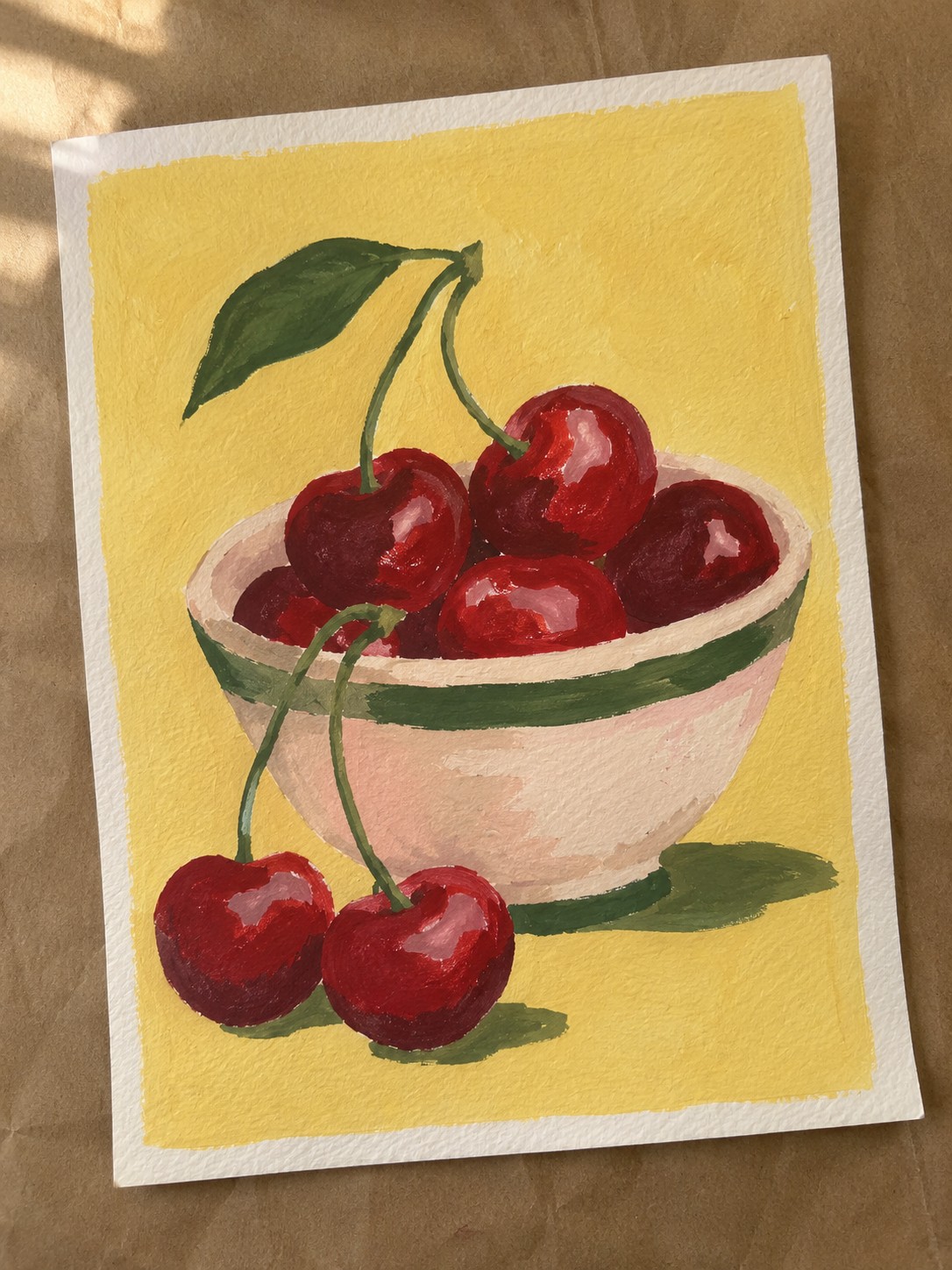
A bowl of glossy red cherries makes a strong retro food still life, with a pair of cherries in front adding depth to the fuller bowl behind them. The warm yellow background sets off the red fruit, while the dark green stems and bowl stripe tie the composition together.
The overlapping fruit and bowl make a useful study in simple shapes, highlights, and shadows without requiring a detailed setting. Keep the yellow backdrop for a bold vintage look, or swap it for a muted cream or pale blue; the finished piece could work as kitchen wall art or a handmade food-themed card.
A Vintage Egg Carton with Hand-Lettered Label

A painted egg carton with a “Fresh Eggs” label makes a strong retro food illustration, combining a familiar grocery item with decorative lettering. The blue-gray carton and border, warm yellow lid pattern, and small flower on one egg give the composition clear color blocks without crowding the main subject.
The carton’s boxy shape and repeated eggs offer useful practice with simple forms, while the lettering and border can be adapted to suit your own design. Try changing the carton colors, adding a different small motif, or simplifying the label for a more minimal version. The bold title and vintage packaging layout also make it easy to frame as kitchen wall art or share as a Pinterest-friendly food illustration.
A Red Apple with Honey and a Wooden Dipper
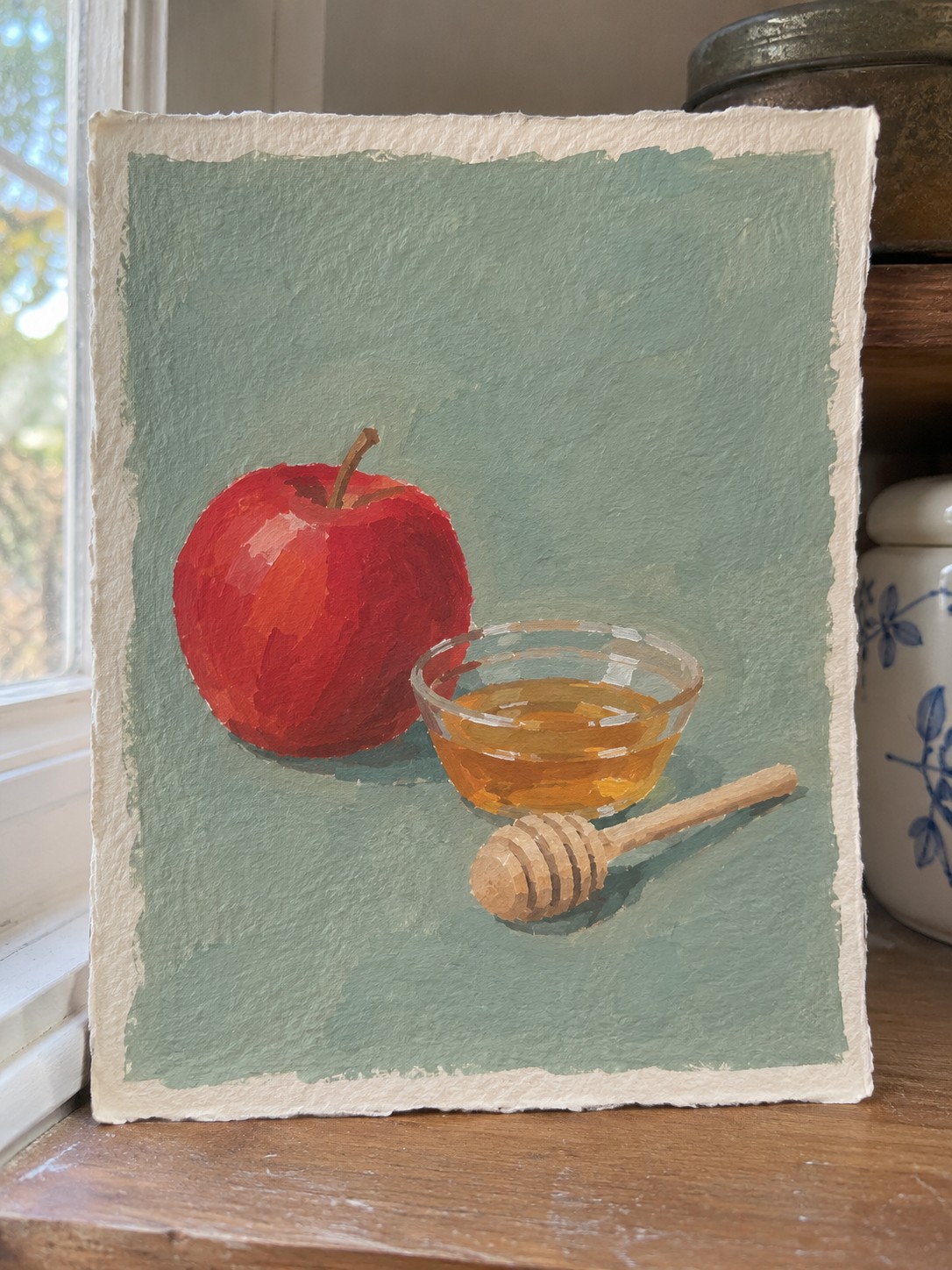
A red apple, a small bowl of honey, and a wooden dipper make a simple food still life with a warm, vintage palette. Their rounded shapes and compact arrangement stand out against a muted green background, while layered blocks of color give the subjects clear form without relying on fine detail.
The composition is easy to adapt for a small print or kitchen wall art: keep the apple bold, then use the bowl and dipper as smaller shapes to balance it. For practice, try limiting the palette to red, sage, and amber, or personalize the setup with a different fruit or bowl. The contrasting colors and recognizable food subjects also make this a clear, eye-catching Pinterest idea.
A Retro Stack of Pancakes with Syrup

A plate of syrup-covered pancakes makes a strong retro food still life, with the tall stack giving the composition a clear focal point. Warm golden browns stand out against the muted pink background, while the plate and blueberries add contrasting shapes and colors.
The simple pancake layers are easy to adapt by changing the toppings, plate pattern, or background color. Keeping the stack large and centered helps the subject read clearly, making this a practical idea for a small kitchen print or a Pinterest-friendly food illustration.
Frequently Asked Questions
Vintage food illustrations often combine simplified shapes, rich but slightly muted colors, visible brush texture, and bold outlines or carefully defined edges. Look at old cookbooks, fruit labels, menus, and packaging for inspiration. Rather than copying every detail, focus on a recognizable subject, a limited palette, and one or two charming imperfections that give the painting a hand-printed feel.
Choose foods with distinctive silhouettes or appealing details. Fruit, pastries, canned goods, diner drinks, vegetables, and kitchen staples are all excellent subjects. A single cherry, a stacked sandwich, or a tin of sardines can make a strong small painting. For a more playful composition, arrange several foods together as a still life or create a repeating pattern.
Try warm, softened colors such as tomato red, mustard yellow, cream, dusty pink, olive green, and faded turquoise. You do not need to use every color in one painting. A limited palette helps the artwork feel cohesive and keeps the food subject easy to read. If your colors look too bright or modern, mix in a little of a complementary color or a neutral to tone them down.
Start with paper designed for watercolor or mixed media, then apply thin, even layers. Gouache is naturally opaque, but very thick paint can crack or become difficult to control. Use enough water to make the paint flow smoothly without turning it transparent. Let each layer dry before adding details, and test your color mixtures on scrap paper since gouache can look different as it dries.
Build the composition around a clear focal point, then add a simple border, decorative lettering, or a few graphic accents. Use curved banners, stars, dots, or small leaves sparingly so they do not compete with the food. If you include text, keep it short and make sure it remains readable. You can also add a slightly uneven edge or subtle paper-colored background to suggest an old printed design.
