

I like keeping painting simple, especially when I want to relax without pulling out a lot of supplies.
Using just three colors is an easy way to make a canvas feel cohesive while still giving me room to experiment.
These ideas are beginner-friendly and use basic shapes and brushstrokes.
I’ve gathered a mix of designs I’d be happy to try on my own canvas.
I hope you find one that suits your mood and the colors you have on hand.
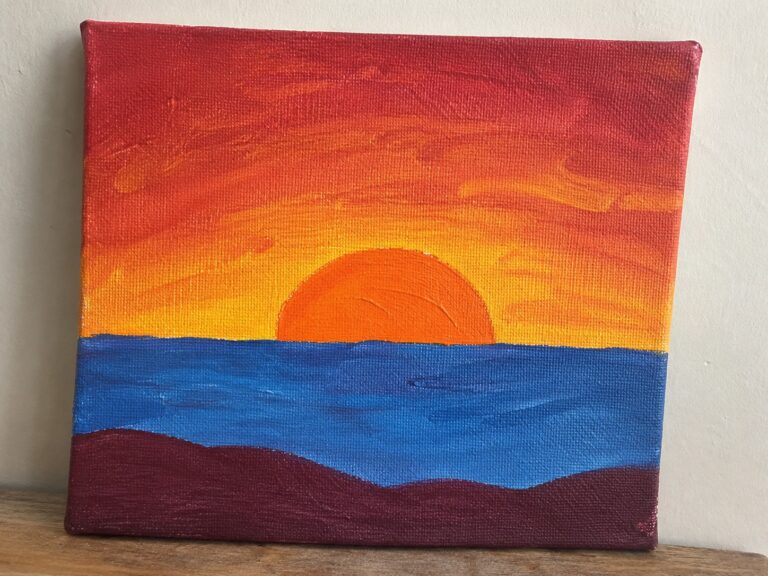
Three-Color Sunset Over the Water

A sunset landscape is a useful way to build a painting around broad color bands and simple shapes. The warm red, orange, and yellow sky contrasts with the blue water, while a half-circle sun and dark shoreline give the composition a clear focal point.
The simple layout makes it easy to adapt for a small canvas or a wider format, and you can adjust the balance of sky and water to suit your space. Keep the shoreline as one basic shape for a quick beginner study, or add a few brushstrokes to suggest ripples and clouds without adding more colors. Its bold bands and strong contrast also make it easy to spot in a Pinterest feed.
Winding Path Through Three-Color Hills
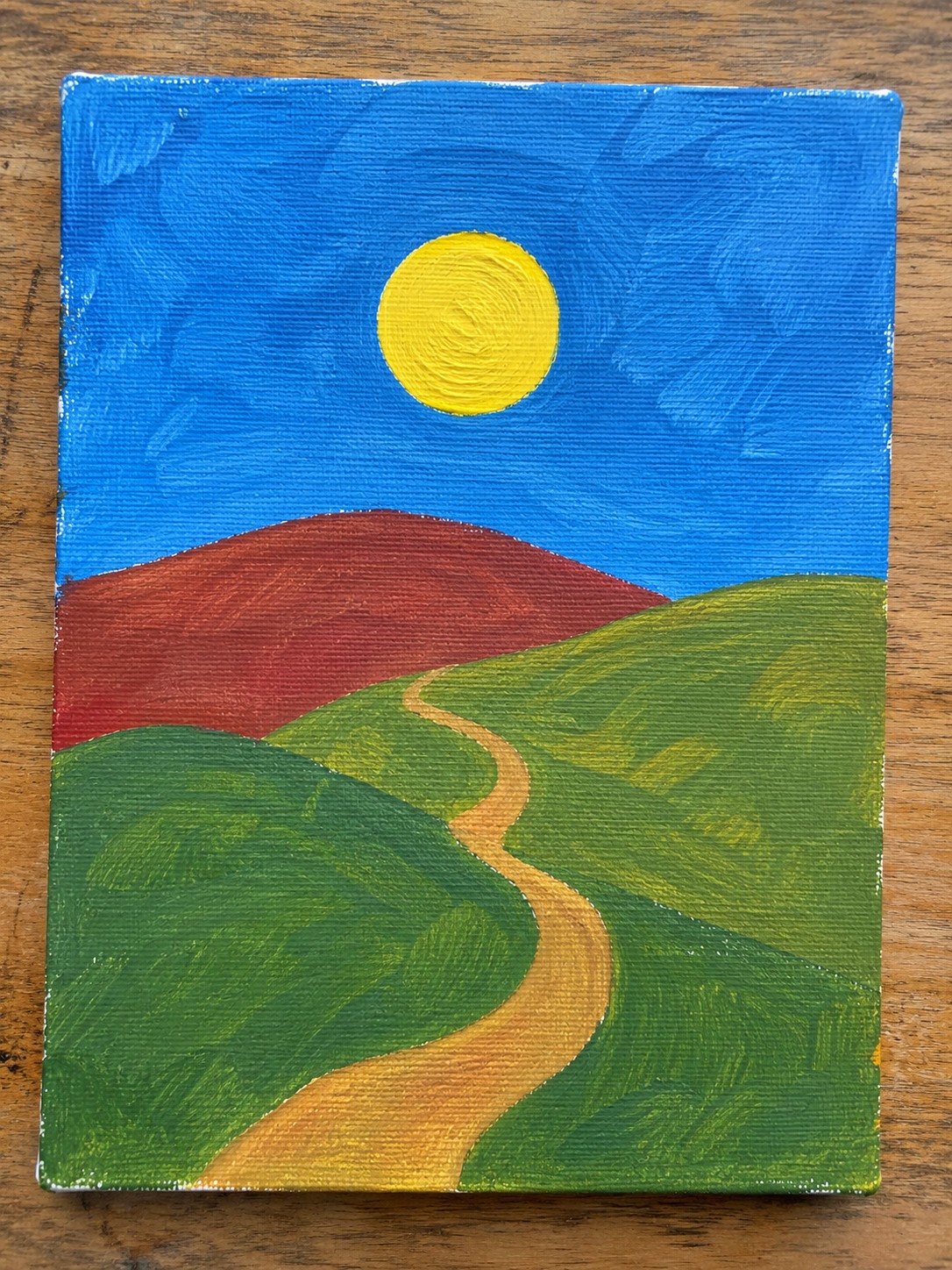
A winding golden path leads through layered green hills beneath a bright yellow sun, with a red hill adding contrast in the distance. This simple landscape painting uses broad color shapes and a curved path to create depth without relying on fine details.
The composition is easy to adapt for a three-color palette by mixing lighter and darker greens from one base color, then reserving the warm accent for the path and sun. Change the hill shapes or make the path wider to personalize the layout, and the bold colors and clear central curve make it easy to recognize in a Pinterest feed.
Loose White Daisies on a Blue Background
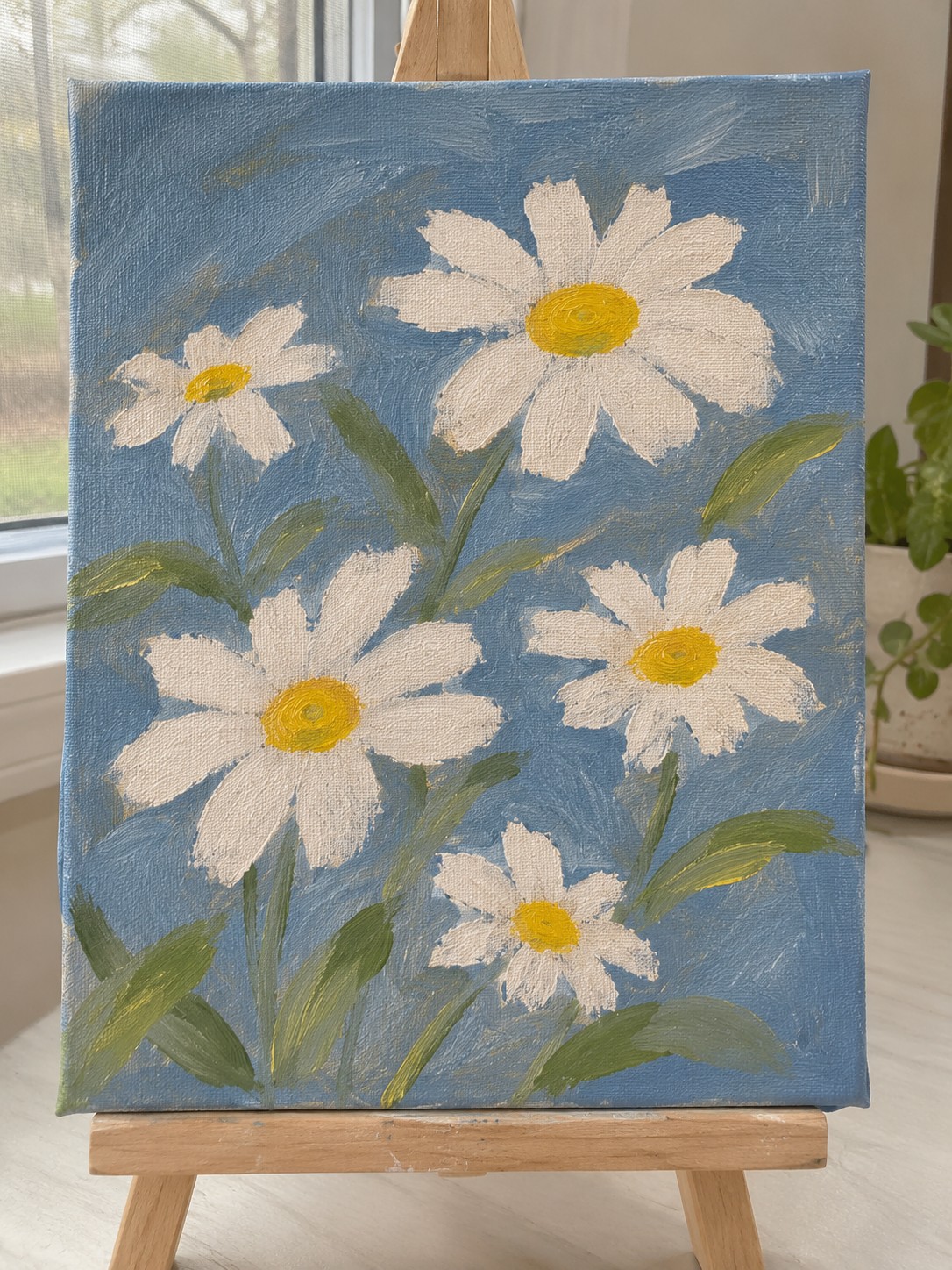
A cluster of white daisies with yellow centers and loose green stems makes a straightforward floral canvas idea. The varied flower sizes and overlapping leaves keep the composition lively, while a textured blue background gives the pale petals clear contrast.
The simple flower shapes make this a useful design to adapt to a three-color palette: use blue for the background, white for petals, and mix yellow with blue to create the green leaves. Arrange fewer flowers for a more open layout, or change their sizes and positions to fit a smaller canvas. The bold color contrast and recognizable subject also make this floral design easy to spot in a Pinterest feed.
Crescent Moon Over a Mountain Lake

A crescent moon above a dark mountain range makes a striking night-sky landscape, with bands of purple and pink in the sky echoed by gold and warm pink reflections across the lake. The simple silhouettes and horizontal water strokes give the composition clear layers without relying on lots of small details.
The limited palette makes this idea easy to adapt for a three-color canvas, using mixes of blue, red, and yellow to create the purples, pinks, and golds. Beginners can simplify the mountains into a few uneven shapes and build the water reflections with short horizontal strokes, while changing the moon’s position or the mountain outline makes the design their own. Its bold contrast and tall canvas layout also make it a good fit for a saveable night-landscape painting idea on Pinterest.
Three Oranges and Leaves on a Warm Table
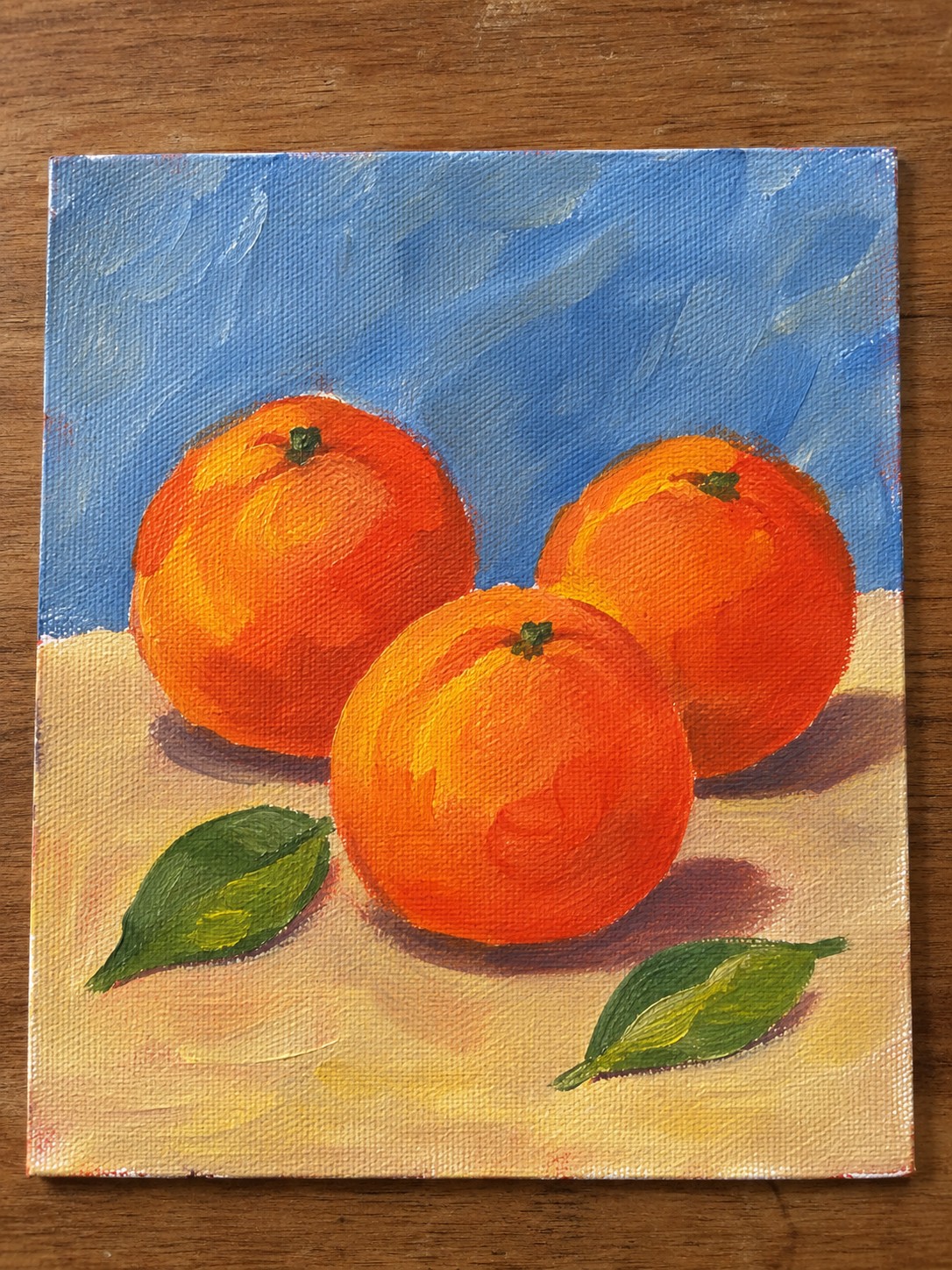
A three-color still life of oranges and leaves uses overlapping round shapes to create a clear, balanced composition. The blue background contrasts with the orange fruit, while warm tabletop colors and simple shadows give the arrangement depth.
The large fruit shapes are approachable to paint, and the leaves add a useful chance to practice tapered forms and curved brushstrokes. Keep the palette to blue, yellow, and red, mixing them to make the oranges, greens, and warm neutrals, or simplify the scene to two oranges and one leaf for a smaller canvas. The bold color contrast and easy-to-recognize subject also make this a strong idea for Pinterest-friendly kitchen wall art.
Three-Color Flowers in a Blue Vase
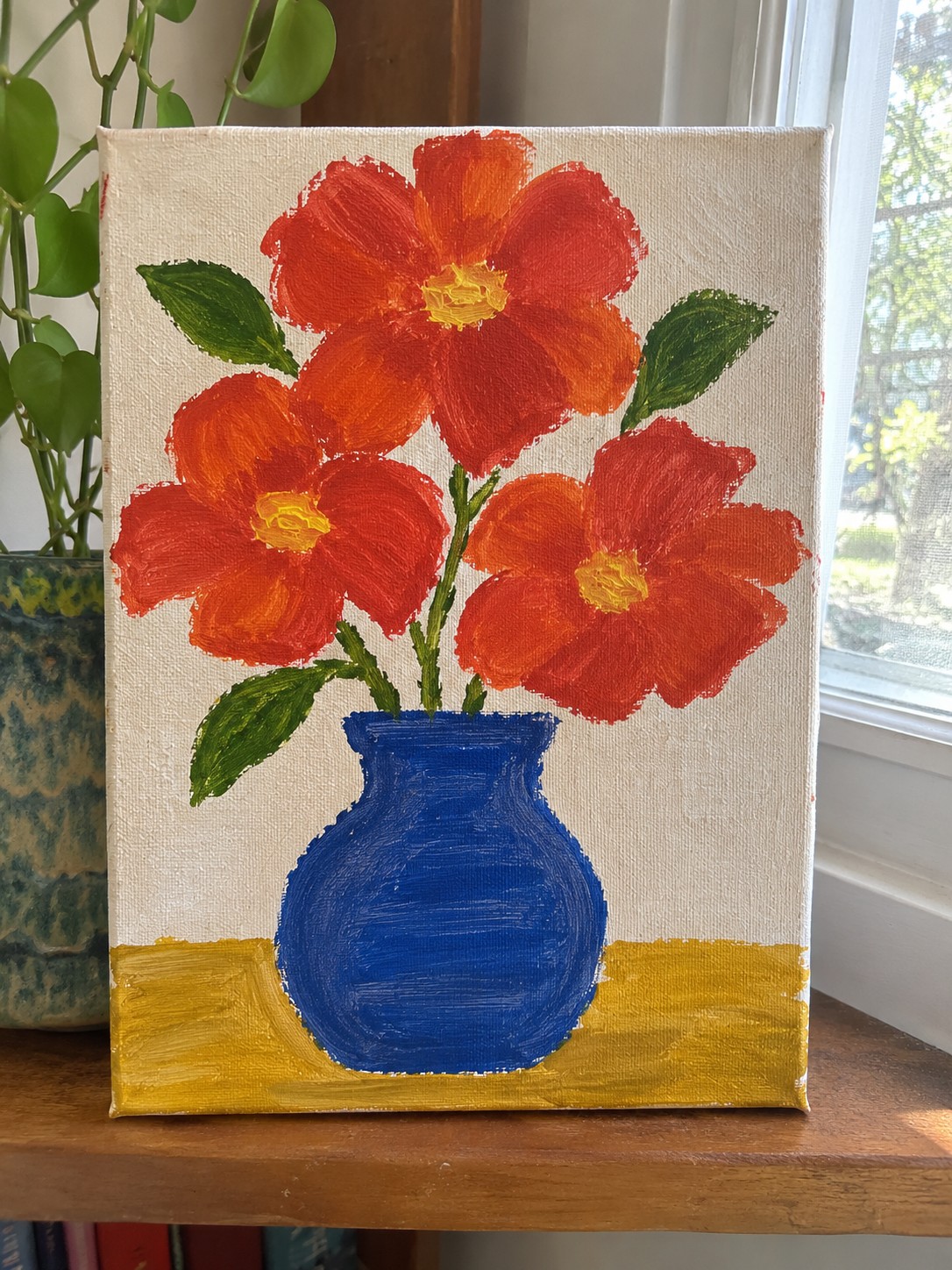
A bold floral still life pairs three red-orange blooms with green stems and leaves in a rounded blue vase. Broad, loosely layered petal shapes stand out against the light background, while a simple golden tabletop grounds the composition without competing with the flowers.
The large blooms and clear color blocks make this idea easy to adapt to a limited palette: simplify the leaves and petals into basic shapes, then use lighter or darker strokes for texture. Try different flower counts, vase shapes, or background colors to make the piece your own. Its bright, recognizable subject and strong color contrast also make it a good fit for a handmade gift or a Pinterest-friendly art project.
Red Cottage on a Curving Garden Path

A small red cottage, two leafy trees, and a path winding through green hills make a straightforward landscape painting idea. The broad areas of sky, grass, roof, and house create a clear composition, while layered brushstrokes add texture without requiring lots of fine detail.
The composition does much of the work here, so you can simplify the house and trees into basic shapes before adding windows, branches, and grass marks. For a three-color version, choose red, blue, and yellow, then mix them to make greens, browns, and lighter sky tones; adjusting the colors or adding a name to the cottage can make the finished canvas feel personal. The bold house and winding path also give it a clear thumbnail shape for Pinterest.
Red Sailboat Under a Bright Sun
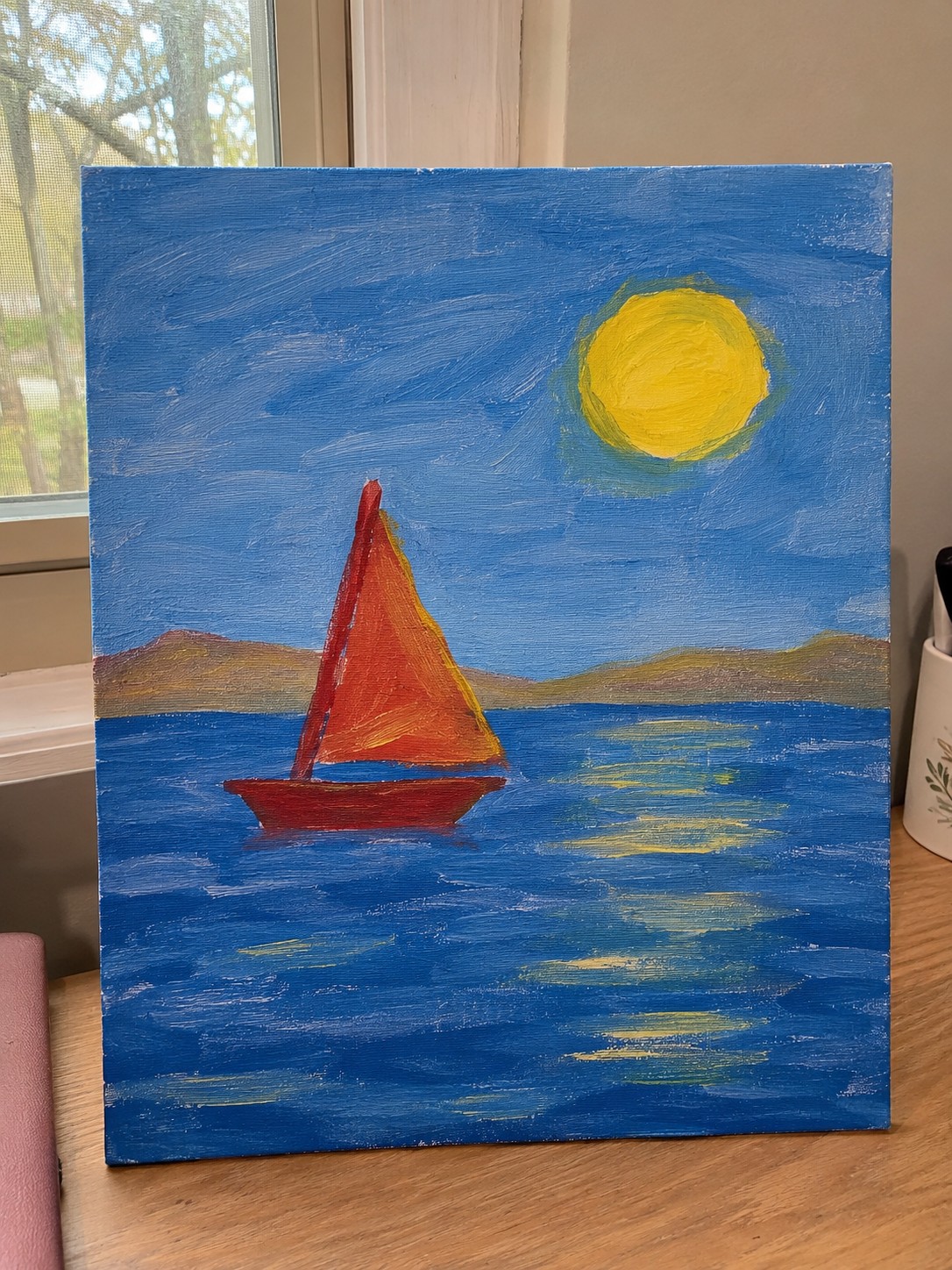
A red sailboat on blue water makes a bold coastal landscape painting, with a bright yellow sun and low shoreline adding a few clear shapes to the scene. The warm sail stands out against the cool sky and sea, while short strokes of yellow on the water suggest reflected sunlight without needing detailed waves.
The simple sail and hull are easy to block in with three main colors, and the shoreline can be reduced to a few uneven bands. Adjust the palette or sail shape to make the scene your own, or add more reflection marks for texture. The strong color contrast and easy-to-read subject also make this a good choice for a small canvas or a Pinterest-friendly wall art idea.
Three Mushrooms Beneath a Crescent Moon
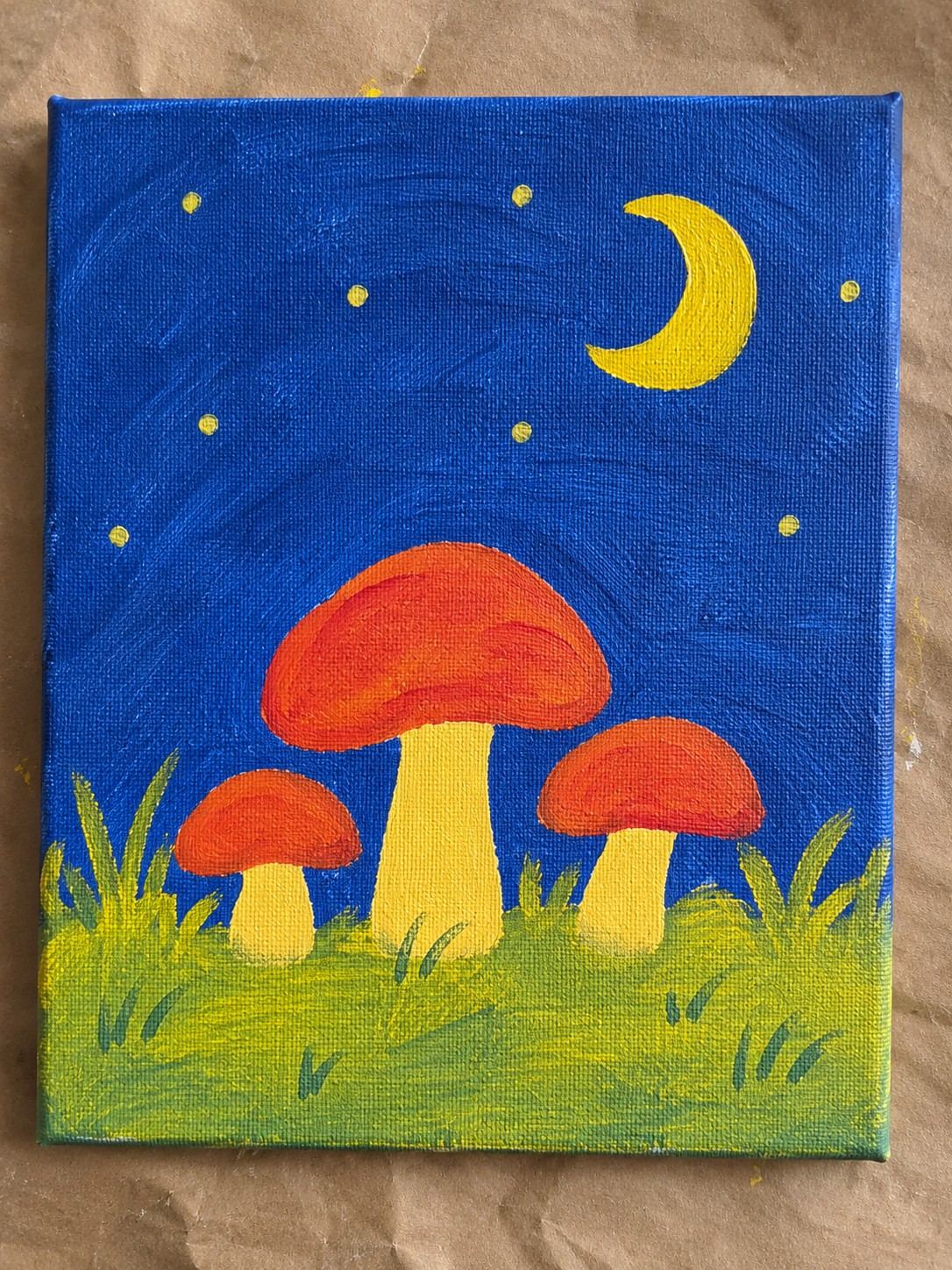
A nighttime mushroom scene makes a clear decorative painting idea, combining a grassy foreground with three red-capped mushrooms, a deep blue sky, and a yellow crescent moon. The large mushroom anchors the composition, while the two smaller ones and scattered stars balance the open space above.
The simple, rounded shapes make this scene easy to simplify or personalize, and its blue, yellow, red-orange, and green areas can be adapted to fit a three-color palette by mixing shades. Try changing the mushroom sizes, adding fewer stars, or using a different sky color to make a small canvas or gift feel your own. The strong contrast and clear subject also help it stand out in a Pinterest feed.
Three Bright Apples in a Red Bowl

A fruit still life built from three large apples makes color and overlapping shapes the main focus. Red, yellow, and green fruit stand out against a blue background, while the broad red bowl anchors the composition and keeps the arrangement readable.
The simple, rounded forms make this a useful subject for practicing color blocking, curved brushstrokes, and shading without needing many small details. Keep the blue, red, and yellow-green palette, or swap in other fruit colors; changing the bowl or background can also make the painting suit a kitchen wall or a handmade gift.
Three Bright Hot Air Balloons Over Green Hills
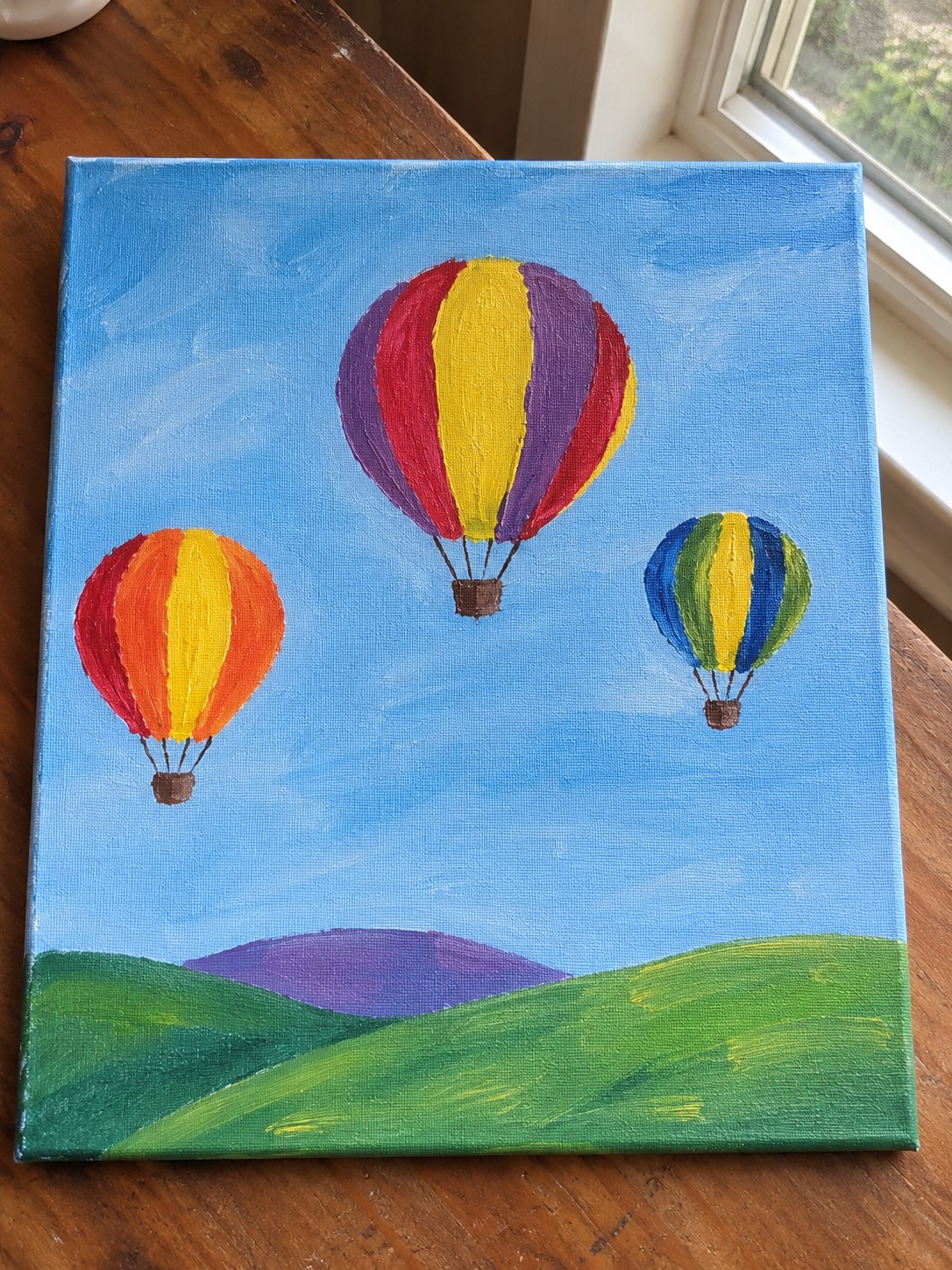
Hot air balloons make a colorful decorative painting idea, with three striped balloons floating above a simple rolling landscape. Their rounded shapes and contrasting bands stand out against the open blue sky, while the green hills give the composition a clear base without adding much detail.
The simple shapes make this a useful idea for practicing clean color sections, curved lines, and basic layering. Keep the three balloons in the same colors or give each one a different palette, and adjust their size and spacing to fit your canvas. The bold colors and uncluttered layout also make it easy to recognize in a Pinterest thumbnail.
Three-Color Sunset Reflected in a Winding River

A winding river leads the eye through golden fields toward low blue hills and a setting sun, making this a bold landscape idea built around a simple, readable composition. Broad bands of warm color in the sky contrast with the cool river, while a few uneven strokes add texture without needing lots of small details.
The river’s curving shape gives the landscape movement and is easy to sketch as one continuous line before filling in the color. Keep the palette to blue, yellow, and red, mixing them for orange and darker shades, or change the river’s width and the hill shapes to make the scene your own. Its strong color contrast and clear focal point also make it easy to spot in a Pinterest collection of beginner canvas ideas.
Red Heart with Blue and Yellow Vines
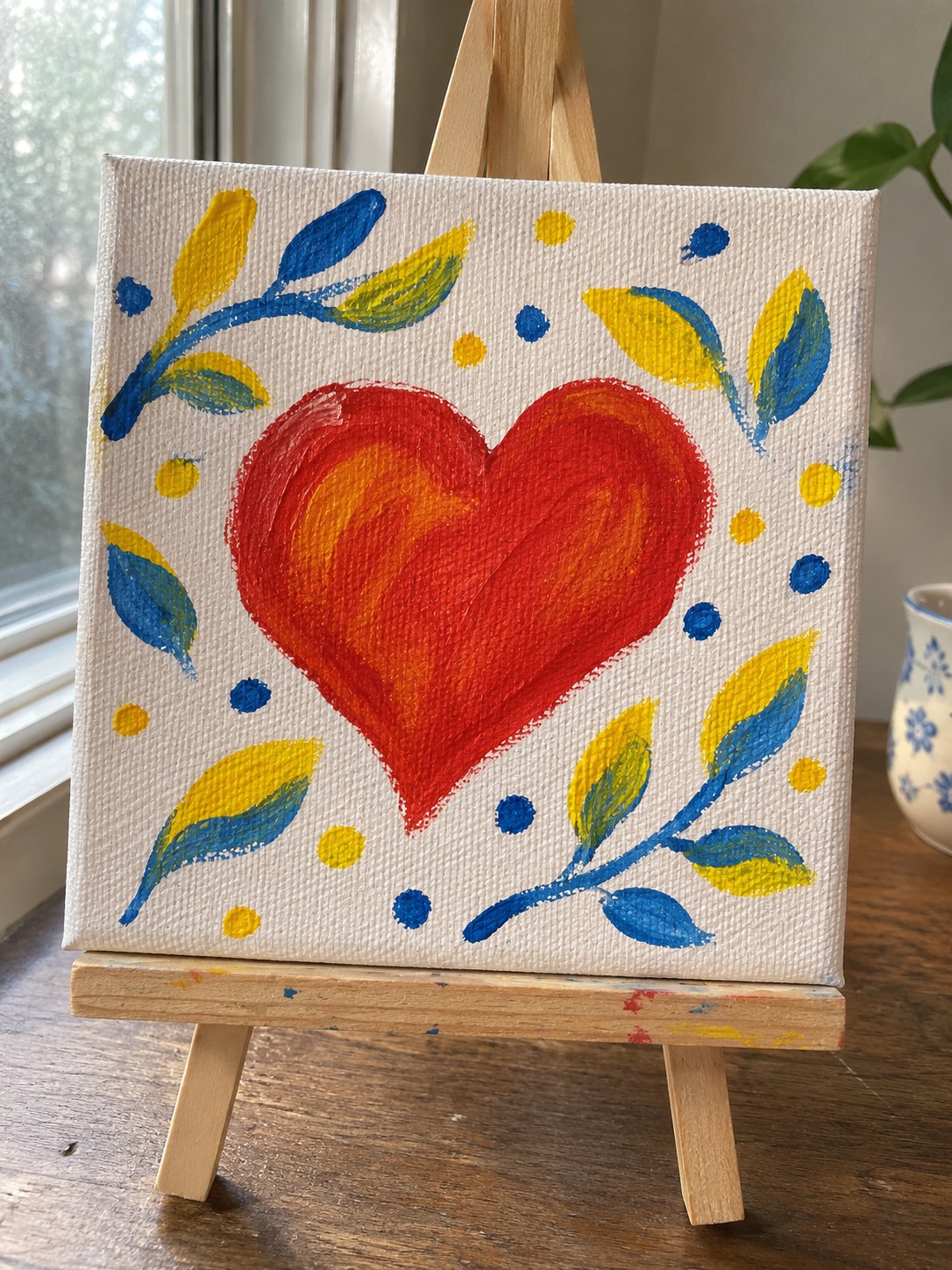
A bold heart surrounded by leafy blue-and-yellow vines makes a decorative painting idea built from simple, repeated shapes. The large red focal point stands out against the light canvas, while the curved branches and scattered dots fill the space without making the layout feel crowded.
The composition is easy to adapt to a small canvas, greeting card, or handmade wall piece by changing the heart size or rearranging the leaves and dots. For a three-color palette, use red, blue, and yellow, letting the light background remain unpainted; vary the leaf shapes or brushstrokes to make the design your own. The strong central shape and bright colors also give it a clear, eye-catching look for Pinterest.
Three-Color Tropical Beach with Arching Palms

A tropical beach landscape built from blue sky and sea, warm orange sand, and green palms makes a clear, graphic canvas subject. The two curved trunks frame the water and draw the eye toward the bright sun, while a few short strokes add movement without requiring detailed scenery.
The simple color blocks make the layout easy to adapt to a small canvas or a limited palette, and the palm shapes can be varied to make the scene your own. For a three-color version, use blue, yellow, and red, then mix green and orange from those colors; save the loose waves and textured sand for a quick finish. Its bold beach imagery and strong color contrast also give it a clear, eye-catching look for Pinterest.
A Three-Story House in Bold Primary Colors
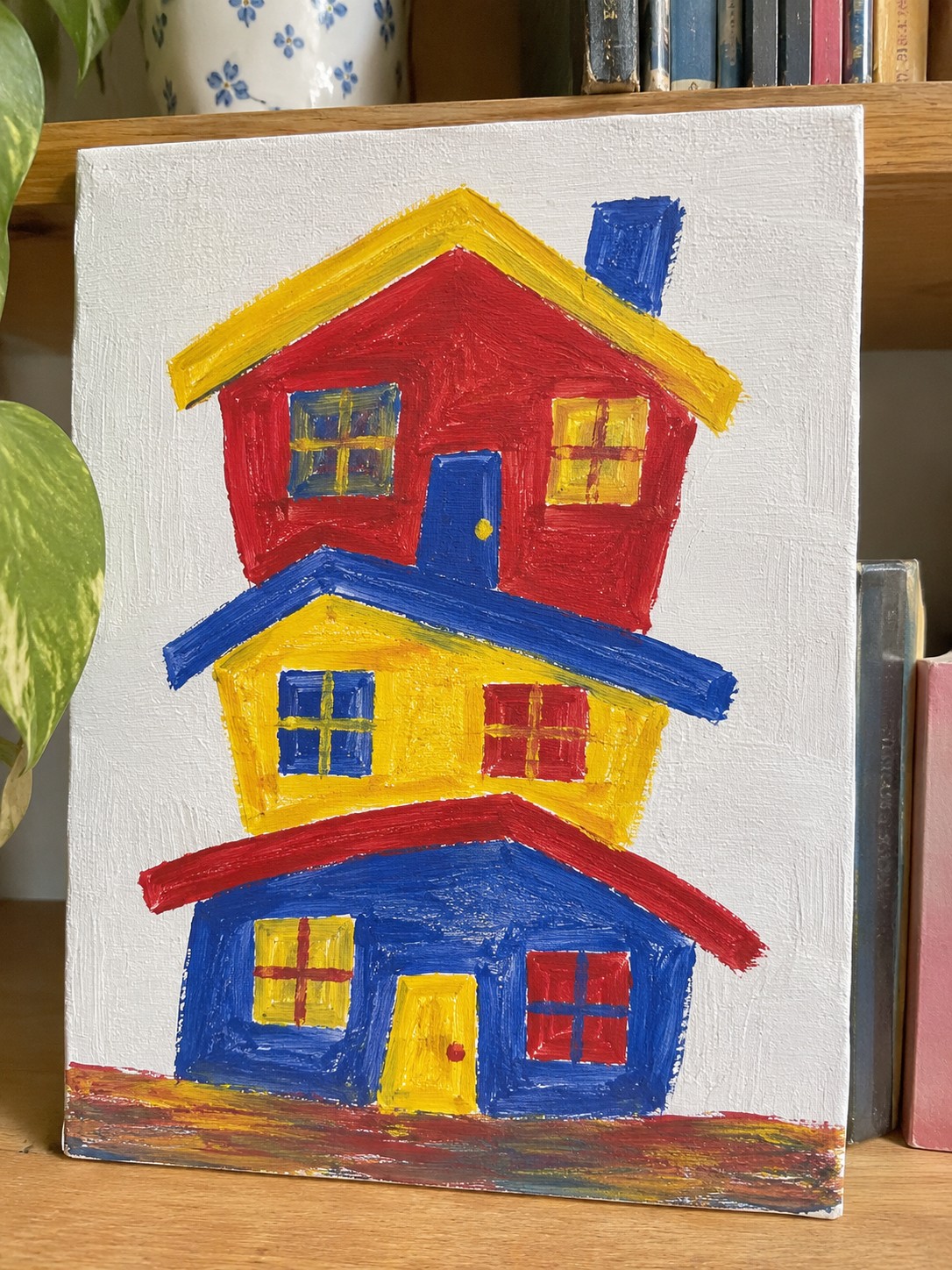
A stacked, three-story house makes a playful piece of decorative architecture, with each level defined by a different bright color and a strongly angled roofline. The large geometric shapes, contrasting windows, and plain background keep the composition easy to read while giving the building a hand-painted, textured look.
The repeating windows and roof shapes offer useful practice in placing simple forms and adding details without needing a complicated scene. Keep the red, yellow, and blue palette, or swap one color to suit a room; you can also simplify the house to fewer stories or personalize it with different doors and window patterns. Its tall layout and bold color blocks make it a distinctive idea to save for a small canvas or a handmade gift.
Crescent Moon Over a Blue Sea
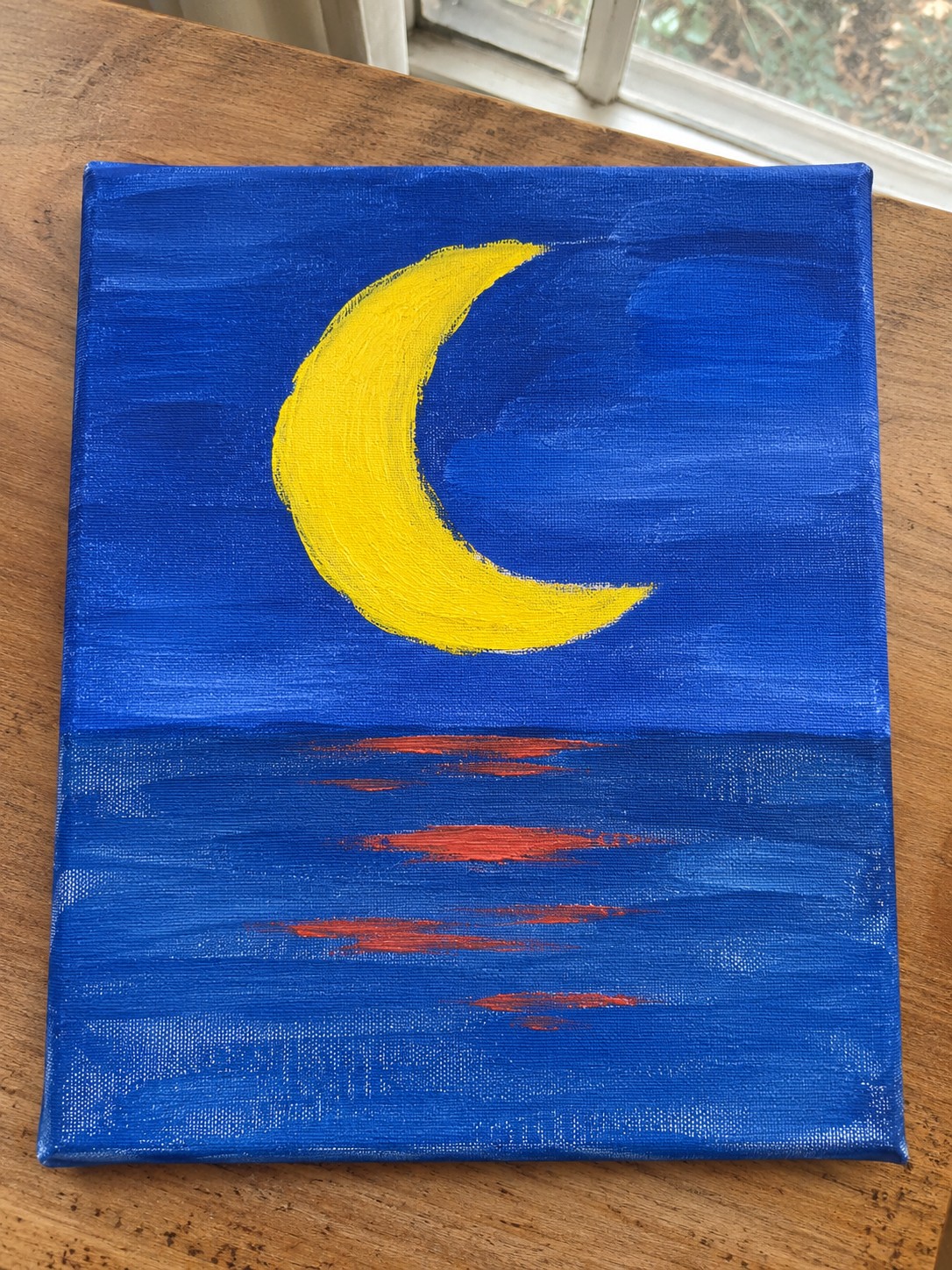
A large yellow crescent above a blue sea makes a bold night-sky landscape, with thin orange reflections adding a warm accent to the water. Broad horizontal strokes give the scene texture while keeping the moon as the clear focal point.
The simple shapes make this composition easy to adapt to a small canvas or a limited palette of blue, yellow, and orange. Keep the water mostly horizontal and use just a few orange marks for reflections, or personalize the scene by changing the moon’s size and position.
Three-Color Cactus with a Red Flower

A round cactus topped with a bright flower makes a simple decorative still life, with the red pot and yellow background keeping the composition bold and easy to read. Layered green strokes give the cactus texture, while small red spines and the flower add contrast without crowding the main shapes.
The large, clear forms make this idea easy to adapt to a three-color palette: use yellow for the background, mix greens from one blue and one yellow, and save red for the pot, flower, and spines. You can simplify the cactus to a single oval and personalize the pot or flower, making the design a practical choice for beginner wall art or a small handmade gift.
Three Colorful Birds on a Branch

A trio of round birds perched on a branch makes a cute animal painting with a clear, easy-to-read composition. Blue, yellow, and red give each bird its own bold shape, while a few loose leaves add movement without crowding the open background.
The simple body shapes and repeated bird forms make this idea easy to simplify or personalize with different poses, expressions, or leaf colors. Keeping the palette to three main colors is useful for practicing shape and brushwork, and the bright contrast against the light background helps the finished piece stand out in a Pinterest feed.
Three-Color Autumn Tree on a Warm Background

A curving tree with spreading branches and loose clusters of autumn leaves makes a decorative seasonal landscape. The orange and yellow background creates a bright field behind the dark trunk, while layered red, orange, and yellow leaf shapes add color without requiring finely drawn details.
The broad trunk and open space between the branches give you clear areas to paint, and the foliage can be built up with simple dabs of color. Limit the palette to red, yellow, and blue, mixing them for the darker trunk and warm orange shades, or adapt the colors to suit your room. Its bold, upright composition also makes a distinctive canvas idea to save for fall wall art.
Red Flower Growing from a Blue Cup

A bold floral still life pairs a simple red flower with a blue cup, using a bright yellow center and green leaves to connect the two strong colors. The large petal shapes and plain canvas background keep the composition clear, while visible brushstrokes add texture without requiring fine detail.
The cup gives the flower a distinctive base and makes the arrangement easy to adapt for a small canvas, a greeting card, or a cheerful wall piece. Keep the red, blue, and yellow as your main colors, then use lighter or darker mixes for depth; changing the flower shape or cup design can make the idea your own.
Three-Color Sunset Between Blue Mountains
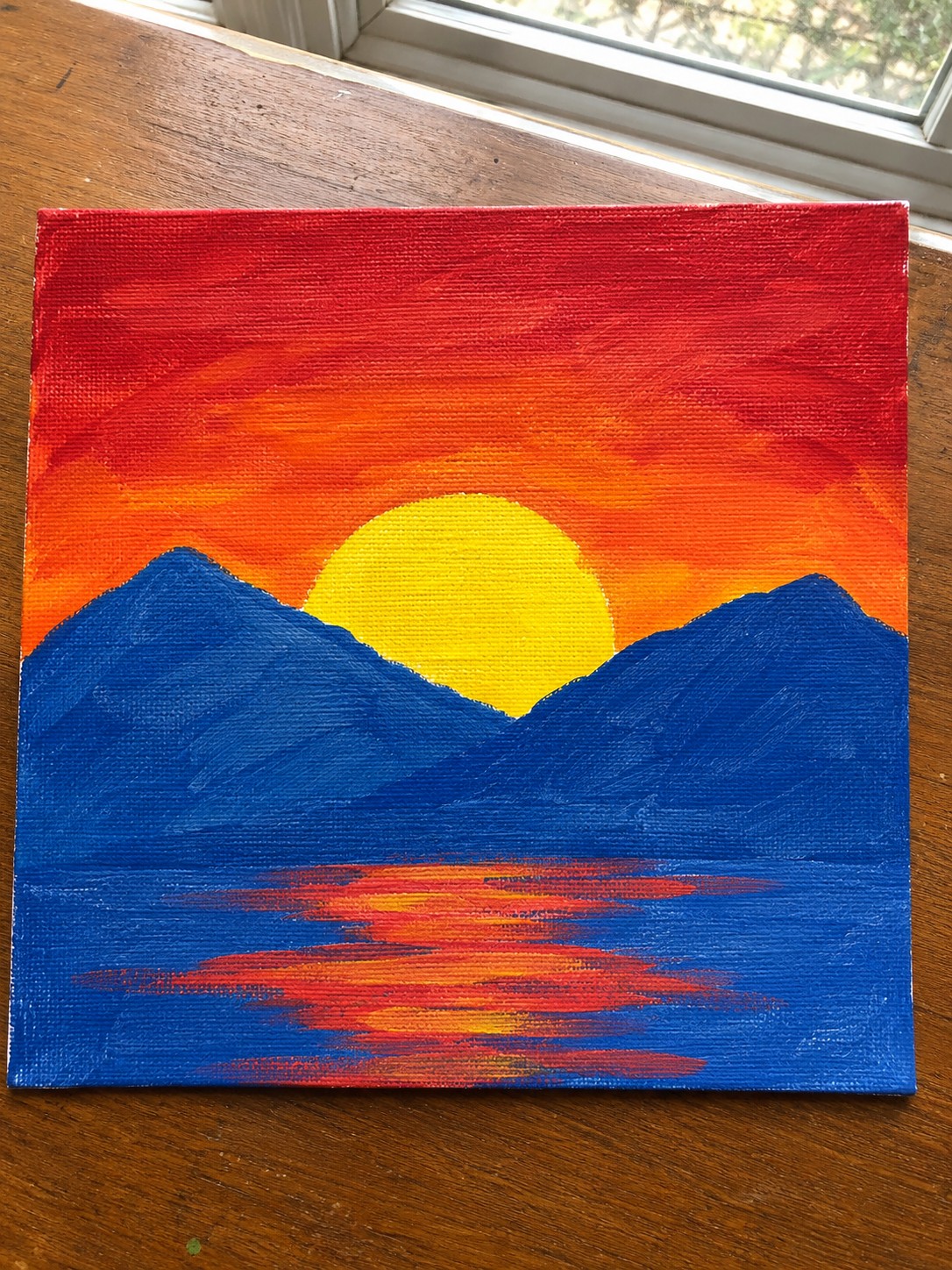
A mountain landscape with a low, bright sun makes a strong three-color canvas idea, using warm reds and oranges against deep blue peaks and water. The simple mountain silhouettes frame the sun, while horizontal strokes of warm color carry its reflection across the lake.
The composition is easy to adapt by changing the mountain outlines, making the sun larger or smaller, or using fewer reflection strokes. For a beginner-friendly version, block in the sky, mountains, and water as broad shapes, then add a few short marks for the reflection; the bold color contrast also makes this a clear, eye-catching Pinterest painting idea.
Frequently Asked Questions
Start with one red, one yellow, and one blue. These primary colors let you mix a wide range of shades, including greens, oranges, purples, and browns. For easier mixing, choose a warm and a cool version of each primary color, or use a simple set such as cadmium red, cadmium yellow, and ultramarine blue. If you want lighter tints, mix in white, but keep it optional if you want to stick strictly to three paints.
Yes. The variety comes from mixing colors, changing how much of each color you use, and leaving some areas unpainted. You can create simple landscapes, sunsets, flowers, abstract patterns, and other beginner-friendly subjects with the same three paints. Try making a small color chart first so you can see which mixtures work well before you start a painting.
You’ll need a few brushes in different sizes, a palette or a disposable plate, water for rinsing brushes if you’re using acrylics, and paper towels or a cloth. A pencil can help you sketch a simple outline before painting. Acrylic paint is a practical choice for beginners because it dries quickly and cleans up with water while wet. Protect your work surface, and rinse brushes promptly so paint doesn’t dry in the bristles.
Use small amounts of paint and mix gradually, rather than combining large blobs all at once. Rinse and dry your brush between colors, and avoid endlessly stirring a mixture after it has reached the shade you want. It also helps to mix a fresh puddle for each new color. For a clean green, for example, combine yellow and blue in small amounts, adjusting the ratio until you like the result.
That’s completely normal, especially when you’re learning how paint behaves. Let the first layer dry, then add another layer to adjust shapes, colors, or details. You can also turn an unexpected result into an abstract design or a different subject. Keep practicing with small canvases, and save your color-mixing notes so you can repeat combinations you like.
