

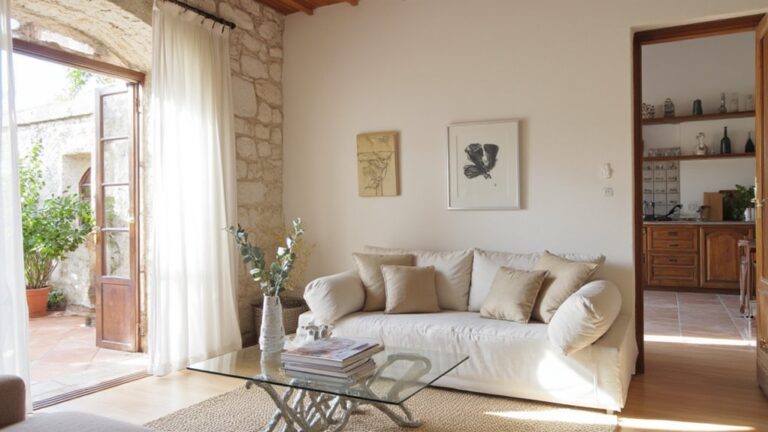
When I think about contemporary Italian interior styles, I see a perfect blend of minimalism and elegance. These designs balance sleek lines with warm, natural materials, creating spaces that feel inviting and sophisticated. I love exploring elements like color, architectural details, and vintage touches to see how they reflect personal style. Let’s explore the nuances of these styles and discover how they can transform your home into a timeless sanctuary.
Embracing Minimalism in Italian Design
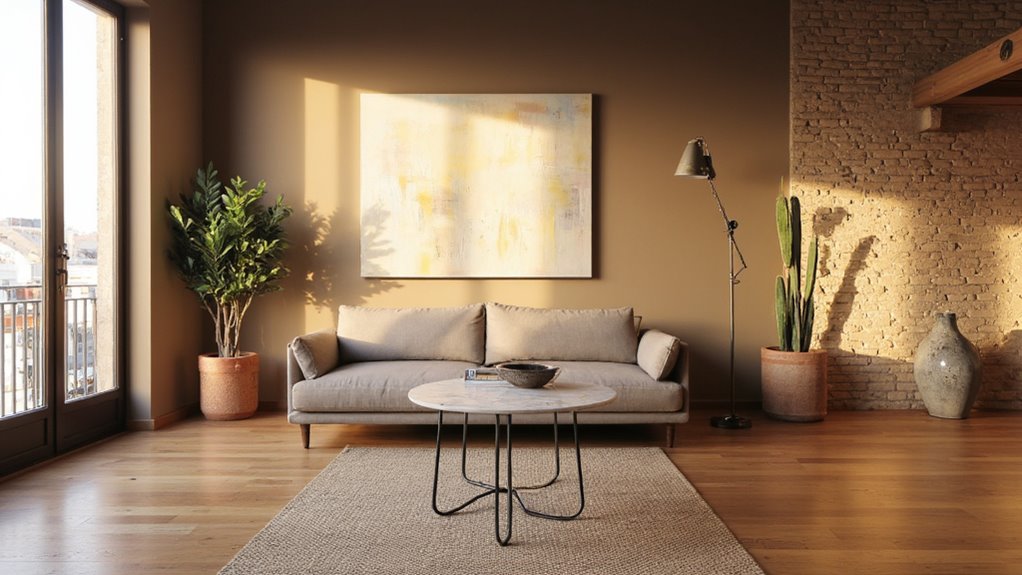
Although many people associate Italian design with opulence and intricate details, I believe embracing minimalism brings a fresh perspective to the aesthetic.
By focusing on clean lines and functional spaces, minimalism highlights the beauty of craftsmanship without overwhelming the senses.
It allows me to appreciate each piece for its simplicity, creating a serene atmosphere that feels both modern and timeless in any Italian-inspired home.
The Allure of Modern Rustic Italian Interiors
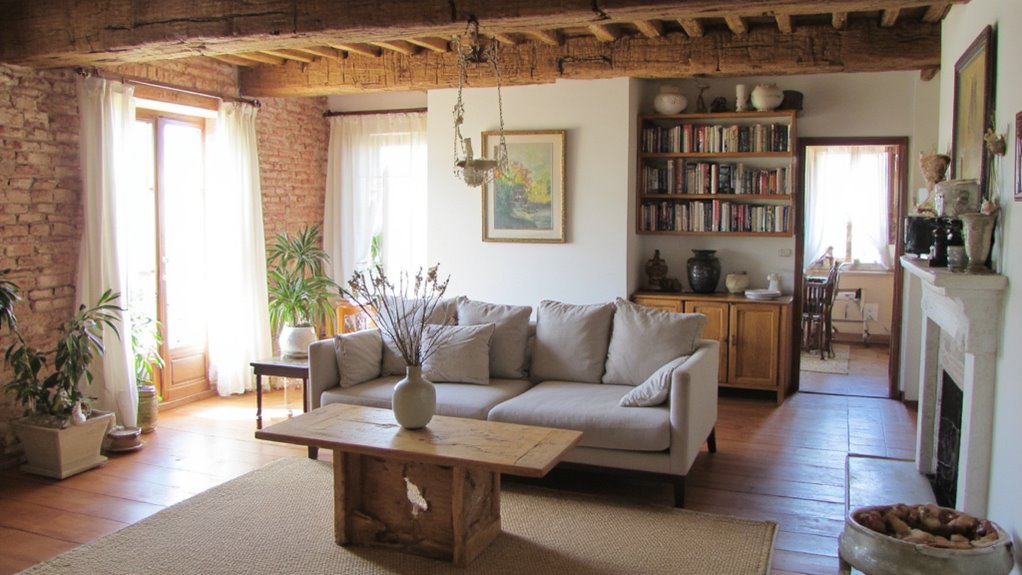
As I explore modern rustic Italian interiors, I find an enchanting blend of warmth and sophistication that effortlessly evokes the charm of the countryside.
The use of natural materials, like reclaimed wood and stone, creates a cozy atmosphere. Earthy tones and vintage accents add character, while contemporary touches guarantee a fresh feel.
It’s a style that invites comfort without sacrificing elegance.
Sleek Lines: The Essence of Contemporary Italian Style
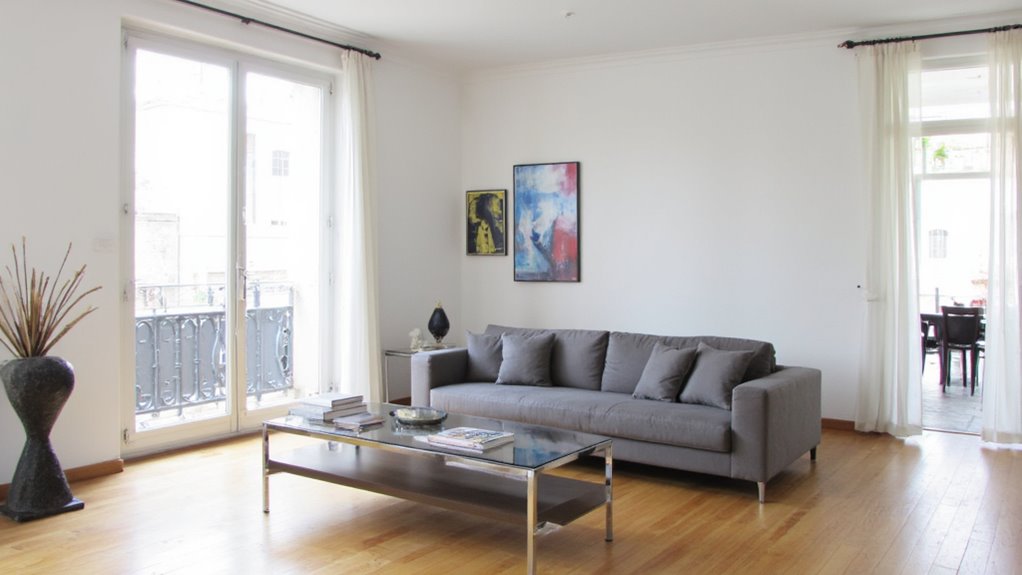
When I think of contemporary Italian style, sleek lines immediately come to mind, embodying a sense of modernity and sophistication.
These clean, geometric forms create an effortlessly chic atmosphere that feels both inviting and refined.
From furniture to architectural details, each element showcases precision and elegance, making it easy to appreciate the beauty of simplicity in our homes.
Incorporating Natural Materials for Warmth in Interiors
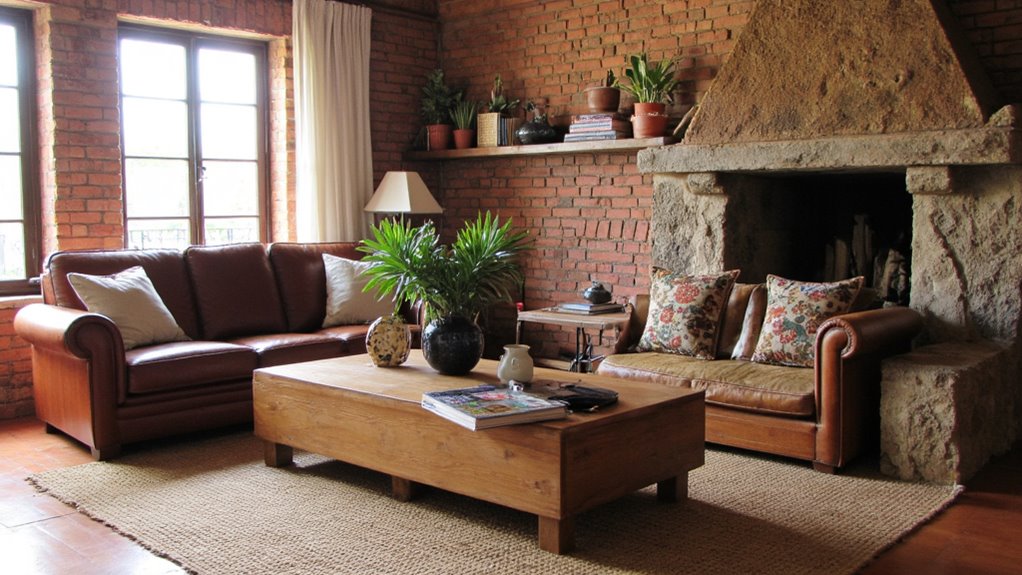
To create a warm and inviting space, I often turn to natural materials that add texture and character to contemporary Italian interiors.
Think warm wood accents, soft linen fabrics, and stone elements that ground the design.
These materials not only enhance the aesthetic but also foster a sense of comfort, making my home feel both sophisticated and cozy at the same time.
Understanding Color’s Role in Italian Interiors

Natural materials lay a strong foundation for warmth, but color plays an equally significant role in shaping the atmosphere of Italian interiors.
I love how rich hues like deep reds and vibrant greens can evoke a sense of luxury, while soft pastels create a calming environment.
Choosing the right palette can transform a space, reflecting both personality and the timeless elegance of Italian design.
Balancing Functionality and Aesthetics in Italian Design
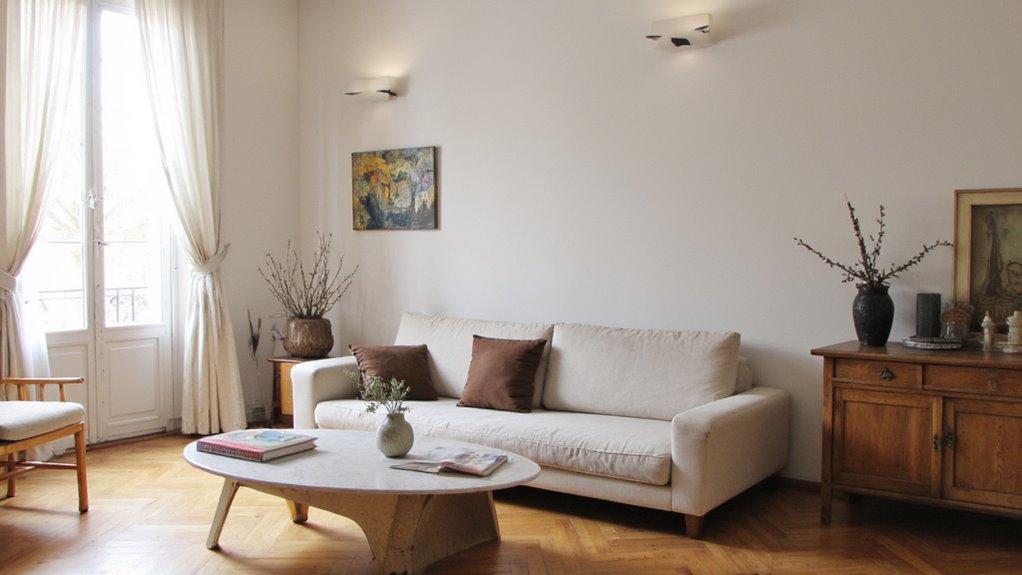
While aesthetics often steal the spotlight in Italian design, I believe functionality is equally essential.
In my experience, a well-designed space should seamlessly blend beauty and practicality. I love how Italian interiors prioritize clever storage solutions and versatile layouts without sacrificing style.
Italian Luxury: Choosing High-End Furniture and Decor
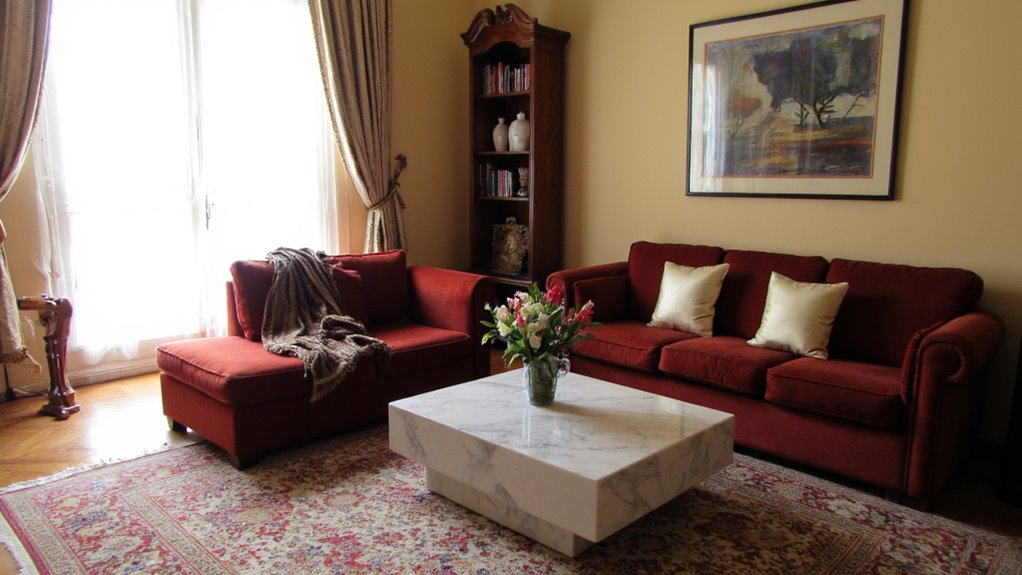
When it comes to Italian luxury, the choice of high-end furniture and decor can transform a space into a true masterpiece.
I always look for pieces that blend elegance with timeless design. Opt for rich materials like leather and marble, and don’t shy away from bold colors.
Each element should tell a story, creating a harmonious environment that reflects your personal style and sophistication.
The Charm of Open-Concept Living Spaces in Italian Homes
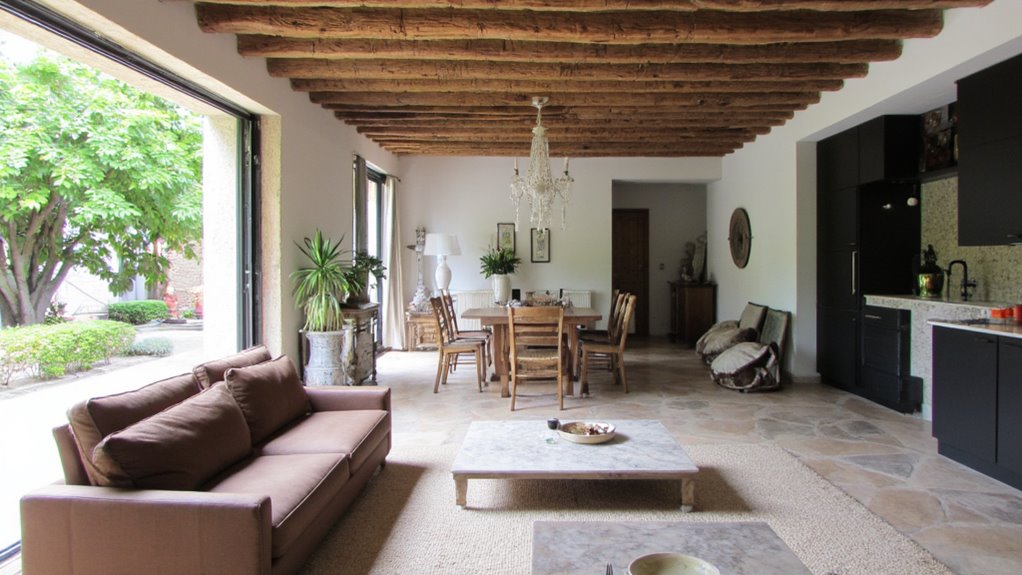
Embracing the charm of open-concept living spaces in Italian homes can truly elevate your day-to-day experience.
These layouts promote a seamless flow between the kitchen, dining, and living areas, making gatherings more inviting.
I love how natural light floods these spaces, enhancing the aesthetic.
Plus, it creates a sense of unity, allowing you to enjoy both style and functionality effortlessly.
How to Create Cozy Nooks With Italian Style
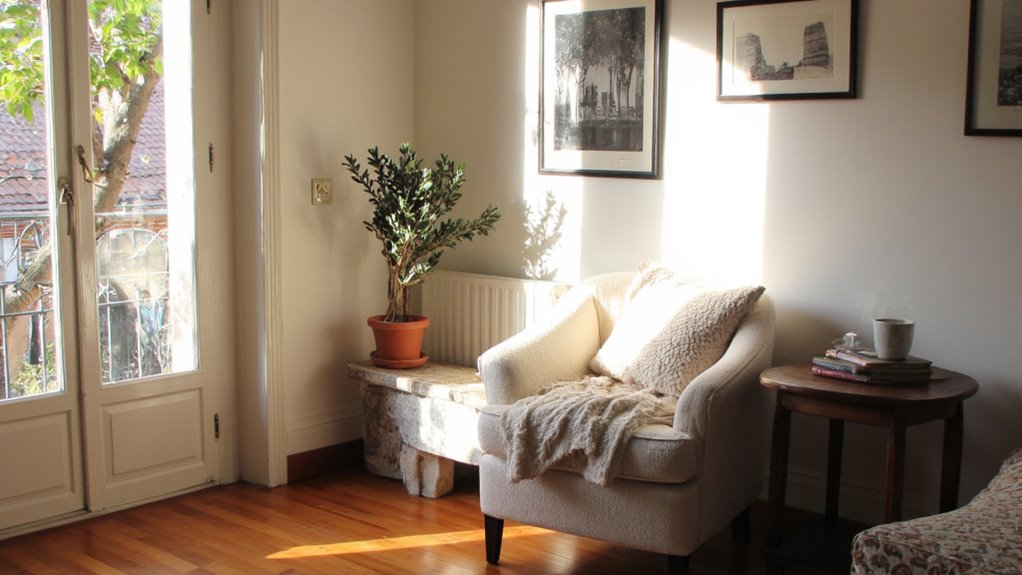
To create cozy nooks with Italian style, I often start by selecting a comfortable chair that invites relaxation.
Next, I add soft textiles like warm throws and plush cushions for that inviting touch.
Incorporating a small side table for drinks or books enhances functionality.
Finally, I choose artwork or a plant to personalize the space, making it a perfect retreat for quiet moments.
Statement Lighting: A Key Element in Italian Design
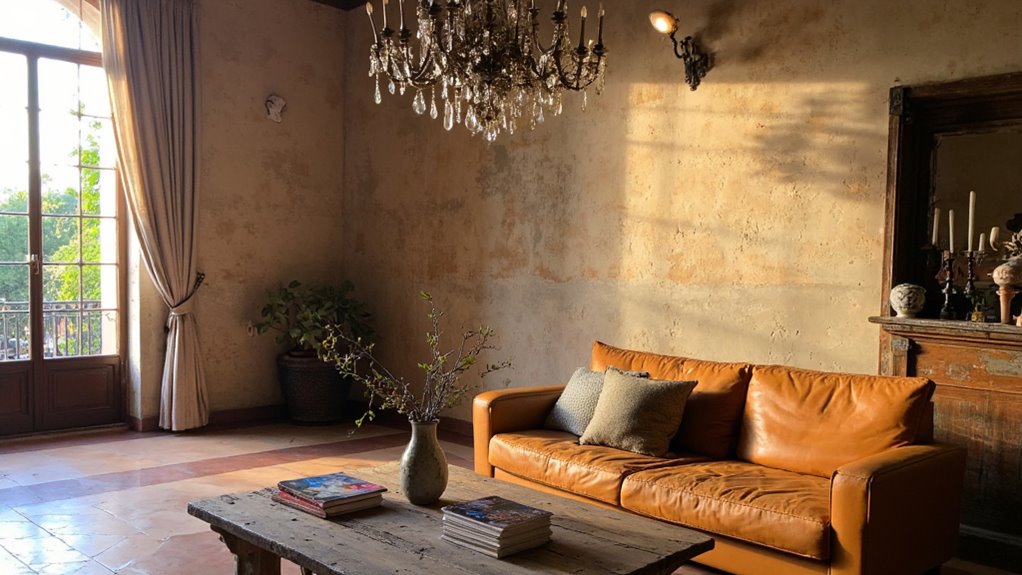
While exploring Italian interior design, I’ve found that statement lighting often defines the character of a space.
It’s not just about illumination; it’s about creating a focal point that draws the eye. From elegant chandeliers to sculptural pendant lights, these pieces add personality and drama.
Incorporating statement lighting can transform a room, making it feel both inviting and sophisticated.
Integrating Italian Art and Culture Into Your Space
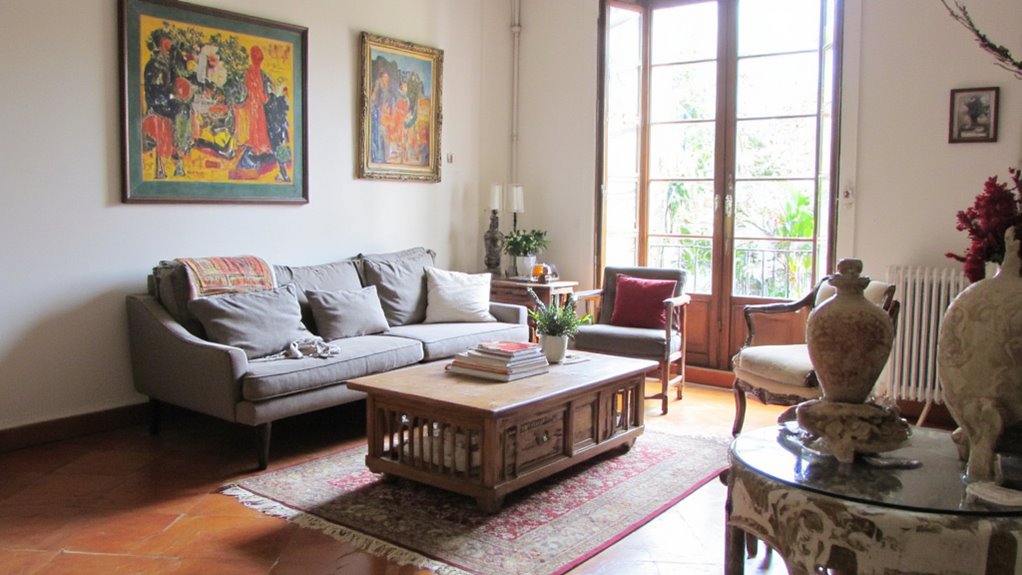
After enhancing your space with striking statement lighting, consider how to weave Italian art and culture into your home.
I love incorporating traditional ceramics, colorful textiles, and bold paintings that reflect Italy’s rich heritage.
Adding a vintage Italian poster or a sculpture can spark conversation and infuse warmth.
It’s all about creating a space that resonates with the beauty of Italian artistry and history.
How Mediterranean Style Influences Italian Interior Design
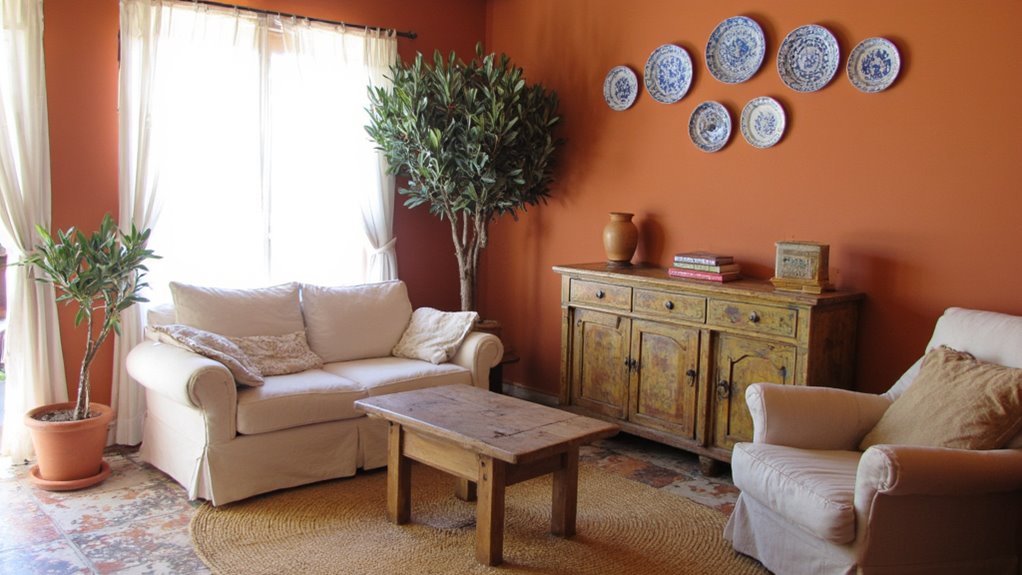
As I explore the essence of Mediterranean style, it becomes clear how deeply it influences Italian interior design.
The warm color palettes, rustic textures, and natural materials create an inviting atmosphere. You’ll notice the emphasis on open spaces and light, enhancing a sense of tranquility.
Incorporating Mediterranean elements not only enriches aesthetics but also fosters a welcoming and relaxed environment in contemporary Italian homes.
Indoor-Outdoor Living: Blending Nature With Italian Design
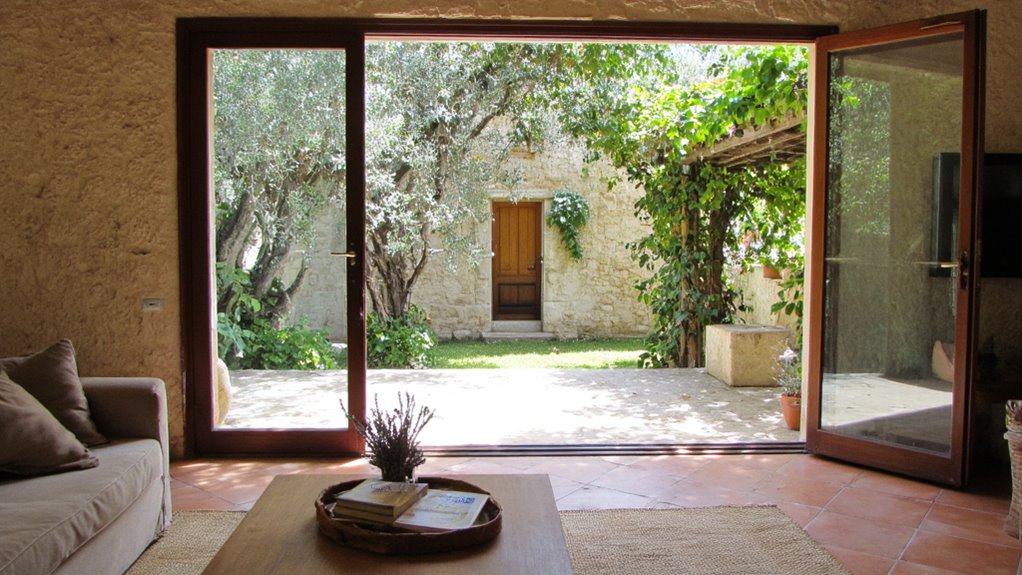
Incorporating indoor-outdoor living into Italian design creates a seamless connection with nature that I find truly enchanting.
Large windows and sliding glass doors invite the outdoors in, while natural materials like wood and stone enhance this harmony.
I love how terraces and gardens become extensions of living spaces, offering tranquil retreats that celebrate Italy’s breathtaking landscapes and foster a serene, sophisticated atmosphere.
Sustainable Italian Design: Eco-Friendly Choices
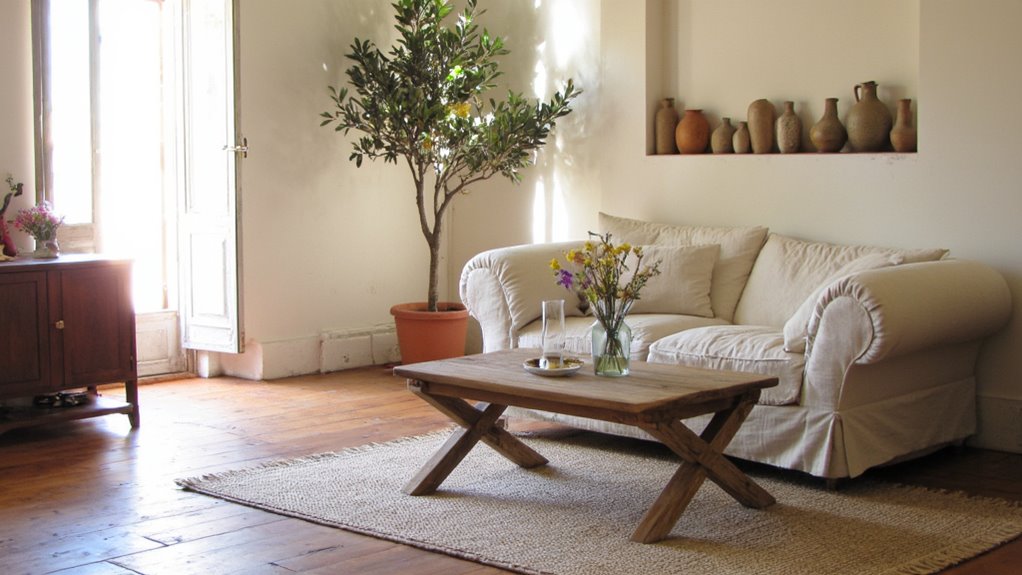
While embracing the beauty of Italian design, I can’t help but appreciate how sustainability plays an essential role in modern interiors.
Choosing eco-friendly materials like reclaimed wood and natural fibers not only enhances the aesthetic but also reduces our environmental footprint.
Opting for reclaimed wood and natural fibers elevates design while minimizing our impact on the environment.
I love incorporating energy-efficient lighting and sustainable furnishings, which create a serene atmosphere while honoring our planet.
It’s a win-win for both style and sustainability!
Textures That Define Italian Sophistication
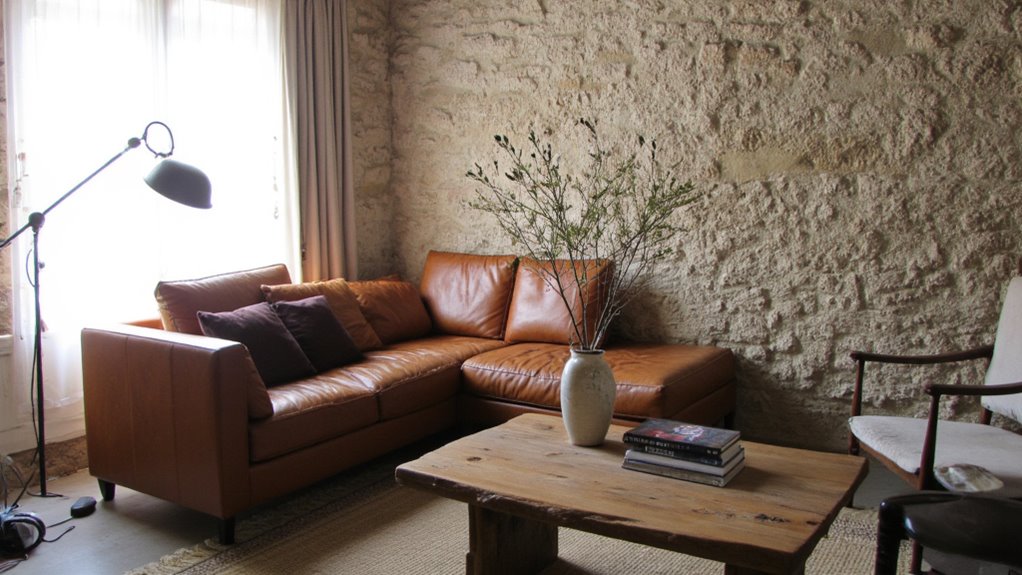
When I think about the elegance of Italian interiors, textures immediately come to mind as essential elements that elevate sophistication.
From smooth marble surfaces to rich, woven fabrics, each texture adds depth and character. Natural wood accents provide warmth, while sleek metal finishes introduce a modern edge.
These combinations create a visually striking atmosphere that embodies the essence of contemporary Italian design.
Layering Fabrics for a Luxurious Feel in Interiors
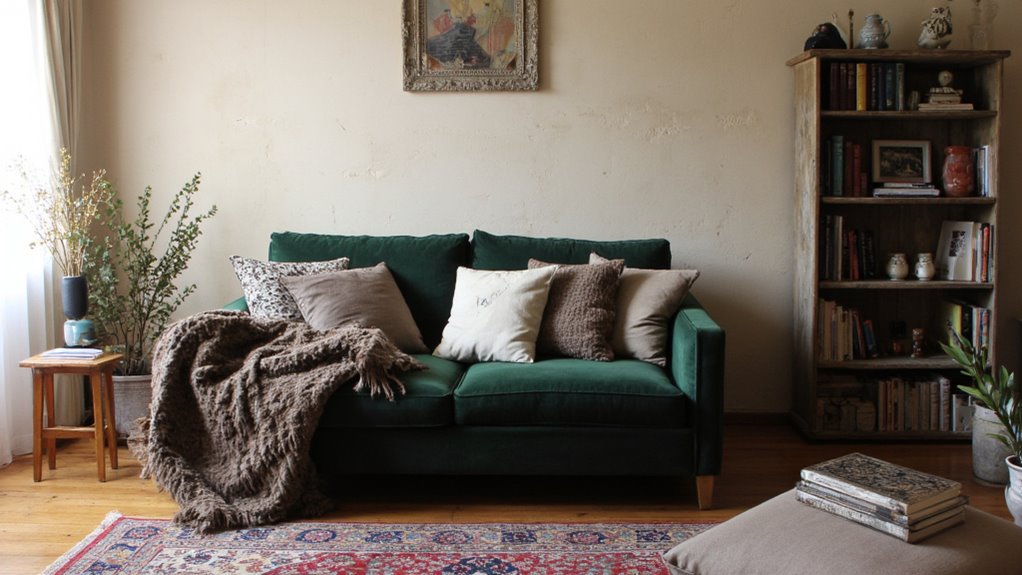
Layering fabrics transforms any space into a haven of luxury, as it creates a rich tapestry of textures and colors that invites comfort and style.
I love combining plush velvets with soft linens and intricate weaves. This not only adds depth but also enhances the overall aesthetic.
Each layer brings its own character, making my interiors feel inviting and sophisticated.
How to Tastefully Incorporate Vintage Pieces in Modern Italian Design
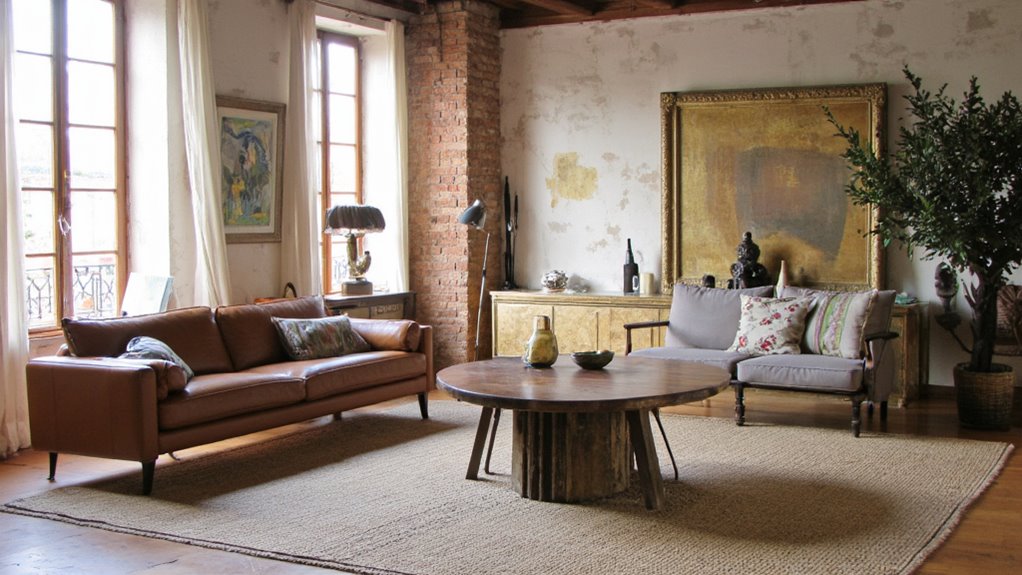
Incorporating vintage pieces into modern Italian design can elevate your space, as it adds character and a sense of history.
I love mixing a stylish mid-century chair with sleek contemporary furniture.
Try using vintage art or ceramics to create focal points that spark conversation.
Balance is key; make certain your vintage finds complement your modern elements for a cohesive and sophisticated look.
Architectural Details That Enhance Italian Interior Design
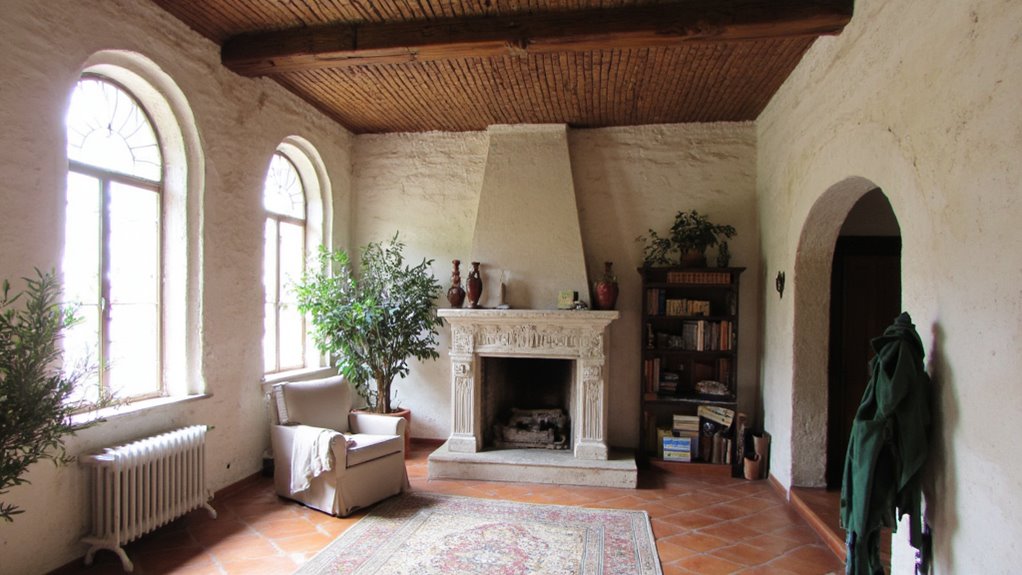
While exploring Italian interior design, I’ve found that architectural details can truly transform a space.
Elements like arched doorways, intricate moldings, and exposed beams add character and depth. I love how high ceilings create an airy feel, while terracotta tiles bring warmth.
Incorporating these details not only honors tradition but also enhances the overall elegance of your home, making it uniquely Italian.
Designing Small Spaces With Italian Flair
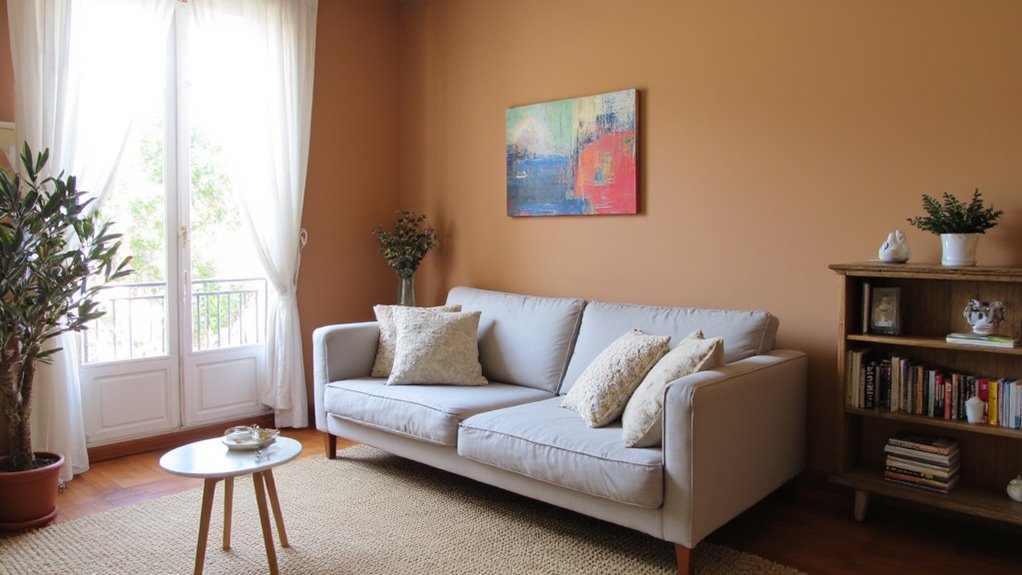
When I think about designing small spaces with Italian flair, I realize it’s all about making smart choices that maximize both style and functionality.
I love opting for multi-functional furniture, like a stylish sofa bed or a chic coffee table with storage.
Light colors and mirrors can create an illusion of space, while elegant accessories add that signature Italian touch without overwhelming the room.
Personalizing Your Decor With Italian Touches
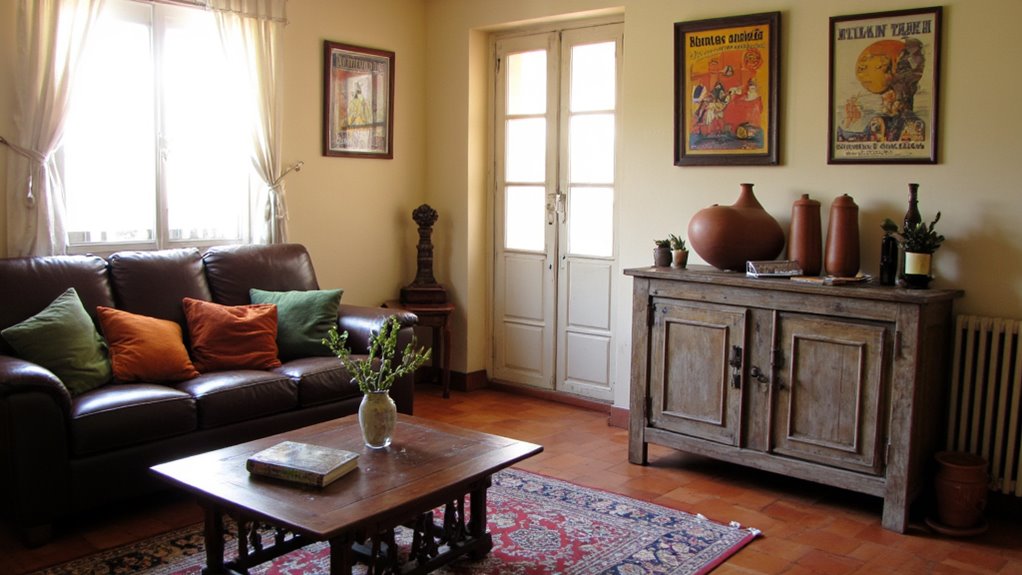
How can you infuse your space with that unmistakable Italian charm?
I love adding handmade ceramics or vibrant textiles to create a warm ambiance.
Incorporating vintage Italian art pieces can also make a statement.
Don’t forget about lush greenery—an olive tree or potted herbs brings life indoors.
Lush greenery, like an olive tree or potted herbs, effortlessly breathes life into your space.
These personal touches reflect my style while celebrating Italy’s rich design heritage.
Trends to Watch in Contemporary Italian Interiors
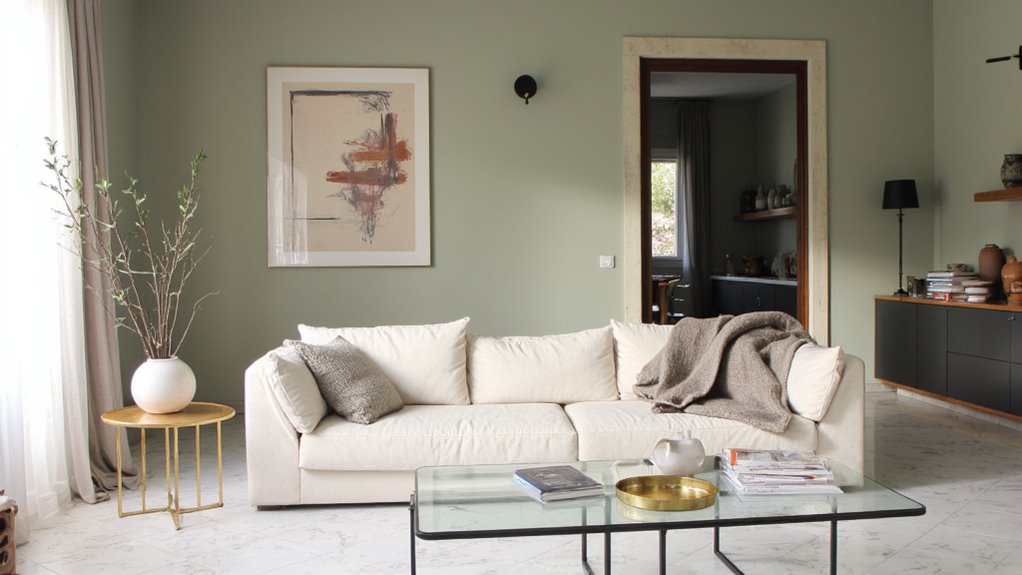
As I explore contemporary Italian interiors, I notice a shift toward embracing sustainability and functionality without sacrificing elegance.
Natural materials like reclaimed wood and eco-friendly textiles are in vogue, alongside minimalist designs that prioritize open spaces.
Bold colors and geometric patterns add personality, while smart technology integrates seamlessly into the décor.
These trends create a harmonious balance, making modern living both stylish and responsible.
