

I enjoy painting folk art because its simple shapes and repeating patterns are easy to make your own.
Symmetrical flowers are a lovely place to start, even if you have just a few paints and brushes on hand.
I’ve gathered 19 ideas with floral patterns that are simple to follow and fun to personalize.
I hope one of them gives you a nice starting point for your next painting.
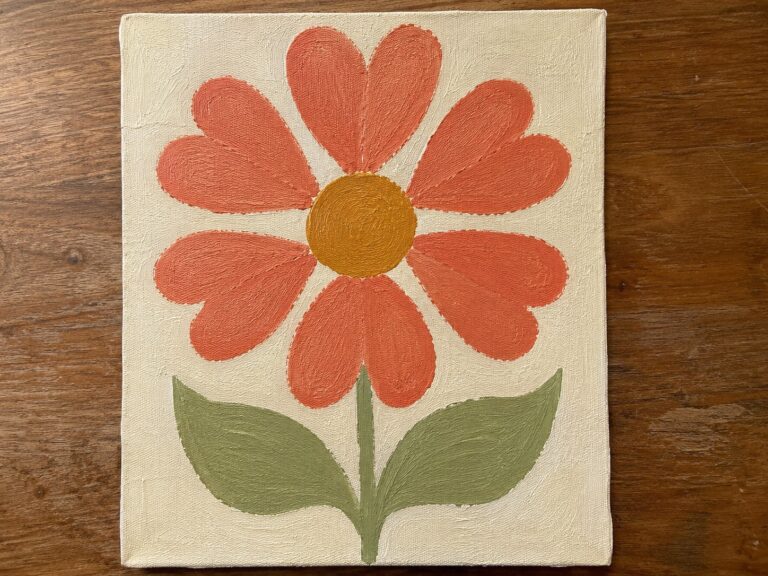
A Coral Daisy With Rounded Folk Art Petals

A symmetrical folk art flower makes a clear decorative painting idea, using rounded coral petals around a mustard center, with a simple green stem and two leaves. The warm colors and broad shapes keep the design readable, while the textured cream background gives the flat floral forms a handcrafted finish.
The composition does much of the work here, so it can be adapted by changing the petal color, center, or leaf shape while keeping the same basic layout. For practice or wall art, sketch the flower around a central point, then repeat the petal shapes on both sides to keep the design balanced. The bold flower against a plain background also makes a strong, easy-to-recognize Pinterest image.
Symmetrical Folk Art Tulip Bouquet

A folk art floral design built around three pink tulip-like blooms uses a central flower and matching side blossoms to create a balanced bouquet. Broad green leaves and small blue accents give the composition clear shapes and color contrast, while the textured paper background keeps the focus on the flowers.
The repeated shapes make this a useful idea for practicing symmetry, and the simple palette is easy to adjust with different flower or leaf colors. You could simplify the smaller details for a quick study or add a border to turn the design into a greeting card or a small piece of wall art. Its centered layout and distinct colors also make it easy to recognize in a Pinterest collection of folk art patterns.
Folk Art Sunflower With Layered Petals

A bold sunflower makes a strong subject for symmetrical folk art, with golden outer petals and a second ring of pale petals framing a dotted brown center. The centered flower, paired leaves, and small decorative accents create a balanced floral design against a textured teal background.
The clear shapes and limited palette make this composition easy to adapt for a painted panel or wall art. Simplify the petal layers, change the background color, or personalize the leaf details while keeping the flower centered; the strong contrast and symmetry also help the design stand out in a Pinterest feed.
A Symmetrical Folk Art Flower Stem
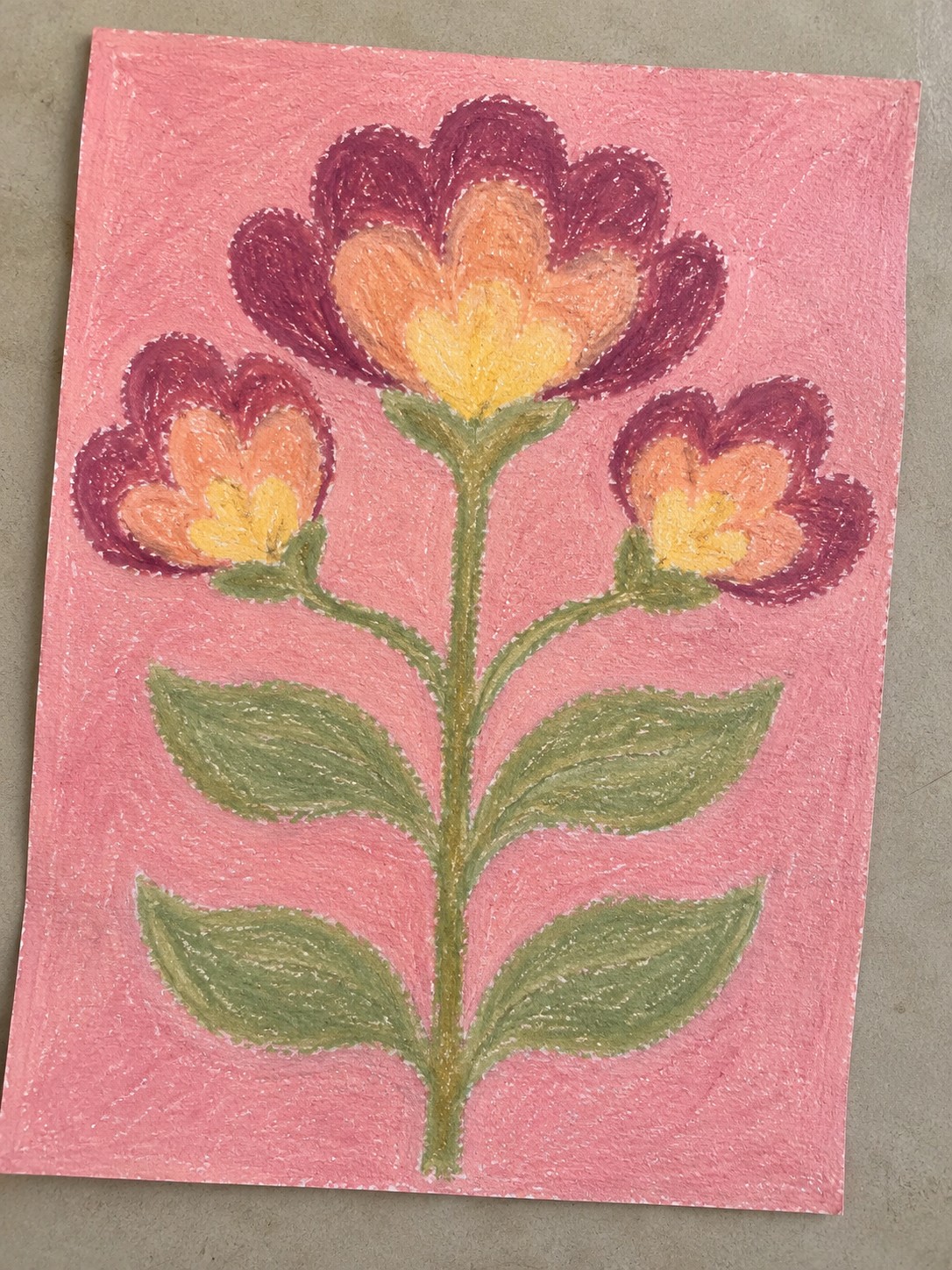
A folk art floral painting can build a balanced design from one central stem, paired leaves, and three layered blossoms. The deep plum outer petals, warm orange middle petals, and yellow centers stand out against a textured pink background, while the repeated shapes keep the composition easy to read.
The central stem gives you a useful guide for placing leaves and flowers on both sides, and the petal shapes can be adjusted without losing the overall balance. Try a smaller palette, change the background color, or add simple leaf veins to make the design your own. Its bold color blocks and clear silhouette also make it easy to recognize in a Pinterest feed.
A Folk Art Flower Pot With a Symmetrical Floral Arrangement

A patterned flower pot anchors this decorative folk art composition, with a large blue-and-orange bloom at the center and smaller orange flowers balanced on either side. Repeated shapes, paired leaves, and a warm cream background make the arrangement feel orderly without relying on realistic detail.
The clear layout makes this idea easy to adapt: simplify the central flower, change the side blooms, or choose a different palette while keeping the balanced structure. It could work as a small wall piece or a handmade gift, and the bold flower shapes and contrasting colors make the design easy to recognize in a Pinterest save.
A Folk Art Daisy on a Mustard Background

A single daisy with a coral center and rounded cream petals makes a clear focal point for this decorative floral painting. Its centered flower, curving green stem, and balanced leaves create a simple symmetrical layout, while the mustard background and lightly textured brushwork keep the design bold without adding extra detail.
The composition is easy to adapt by changing the background color, petal count, or leaf shapes while keeping the central flower as the anchor. Its broad, distinct areas of color make it useful for practicing symmetry and layering, and the strong contrast helps the design read clearly as a small wall piece or a Pinterest-friendly painting idea.
A Symmetrical Folk Art Garden With Mixed Flower Colors
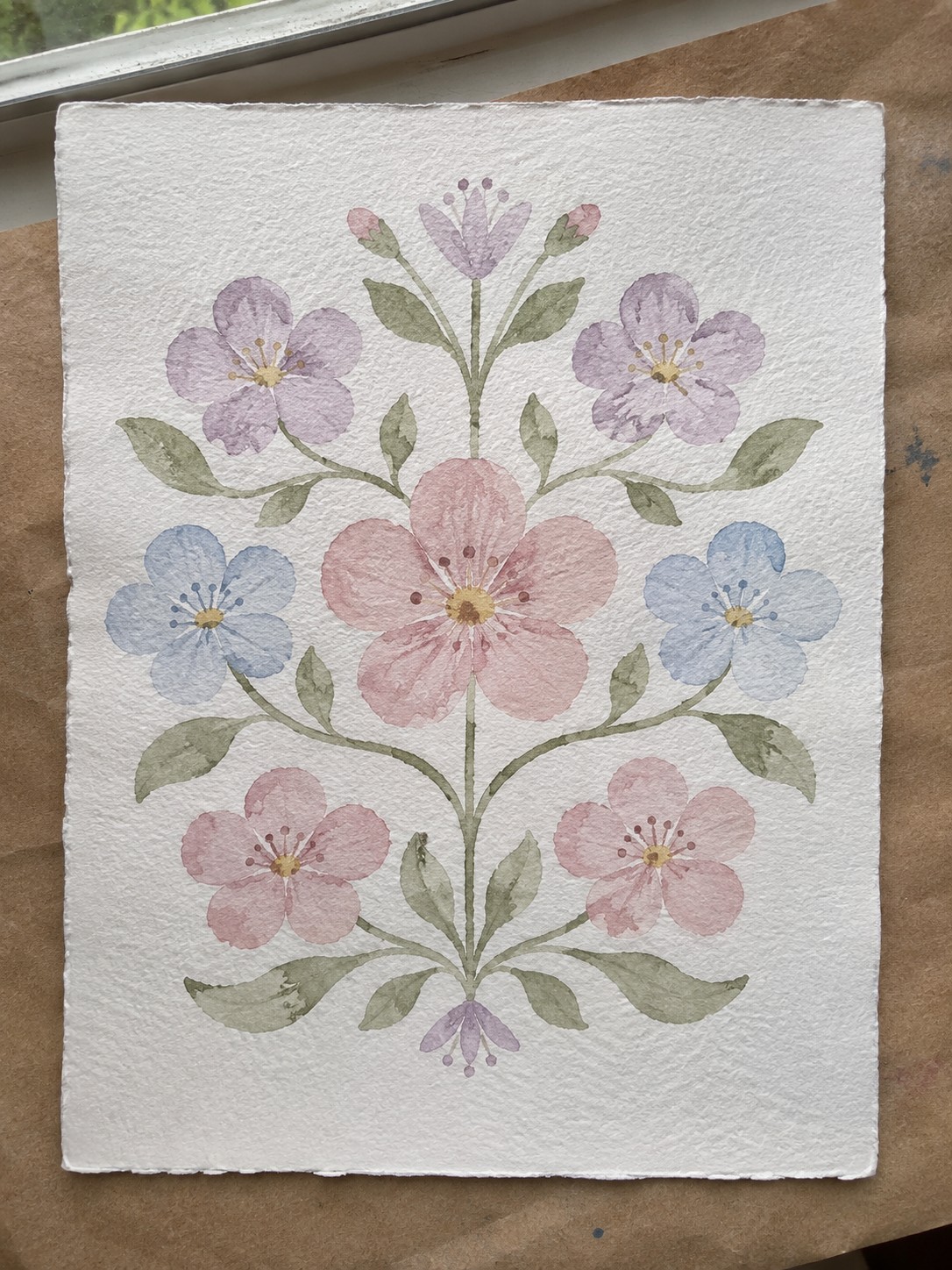
A balanced folk art floral arrangement can combine several flower shapes and colors around one central stem for a decorative, mirror-like composition. Soft pink, purple, and blue blooms stand out against muted green leaves, while the plain background keeps the layered petals and curved stems easy to read.
The centered layout provides a useful guide for placing each flower, and the repeated shapes can be simplified or adjusted to suit different sizes of paper or wall art. Try changing the palette, reducing the number of blooms, or adding small details to personalize the design. Its clear symmetry and gentle colors also make it easy to recognize and save among floral painting ideas on Pinterest.
Four-Flower Folk Art Medallion

A balanced floral medallion makes a decorative folk art painting, with four red flowers arranged around a small central heart and green leaves curling between them. The repeated flower shapes, pink inner petals, and mustard-yellow accents create a clear radial pattern against the plain background.
The layout is easy to adapt by sketching a center point and placing each flower around it, then repeating a small set of colors throughout. Simplify the leaves or use fewer petal details for a more minimal version, or adjust the palette to suit a room or handmade gift. Its bold symmetry and strong color contrast also make the design easy to spot in a Pinterest feed.
A Folk Art Floral Panel With a Scrolling Vine
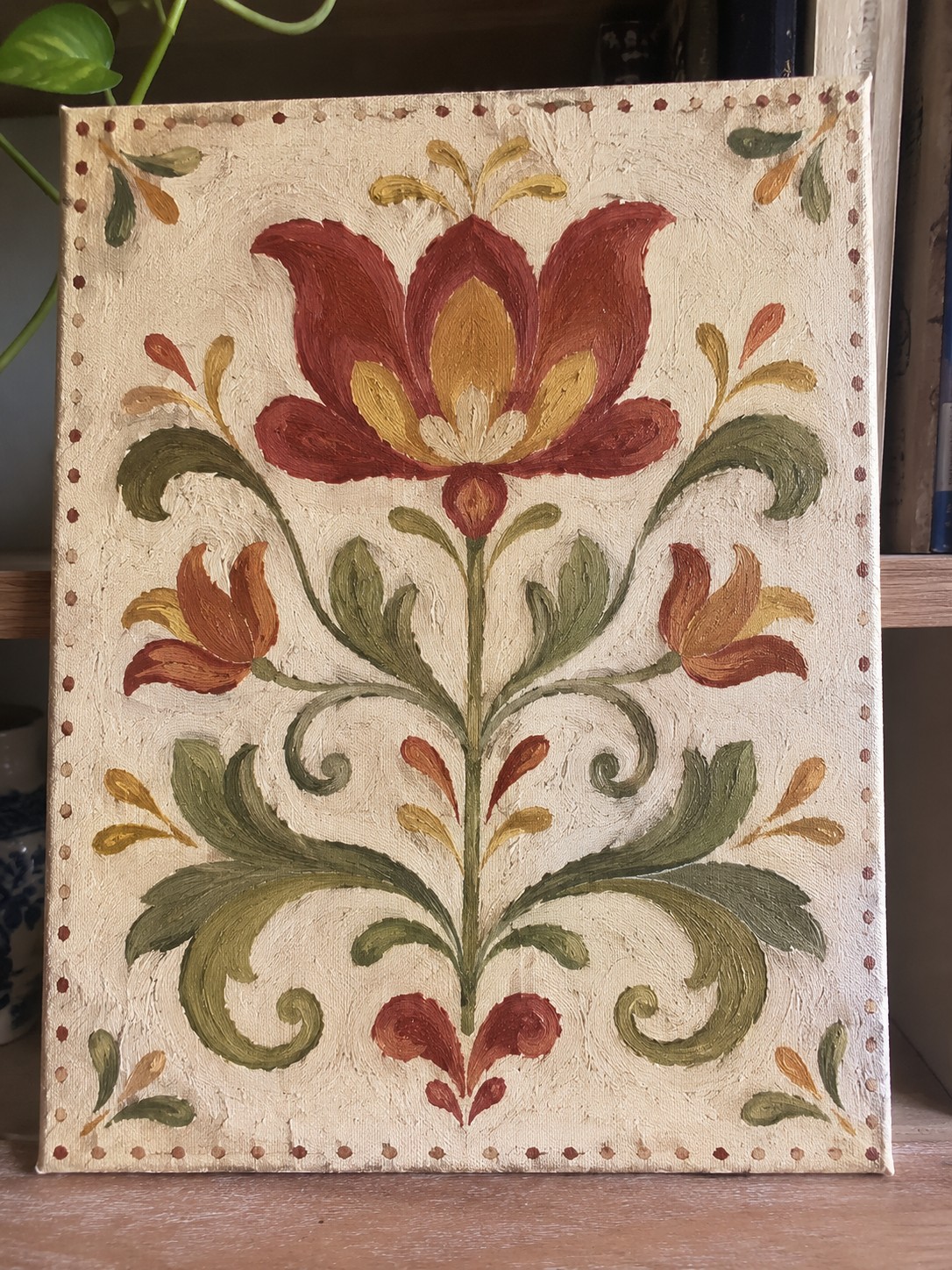
A large, symmetrical red-and-gold flower anchors this decorative folk art panel, while smaller blooms, curling green leaves, and sprigs extend from a central stem. The balanced layout and muted cream, rust, mustard, and olive palette make the pattern read clearly against its textured background.
The central stem gives you a useful guide for placing matching shapes on either side, while the smaller details can be simplified into basic petals and leaf forms. Try changing the flower colors or background to suit your decor, or use the design as a reference for a painted panel or handmade gift. Its strong symmetry and clear color blocks also make it easy to save as a folk art pattern idea.
Folk Art Floral Wreath Around a Center Daisy
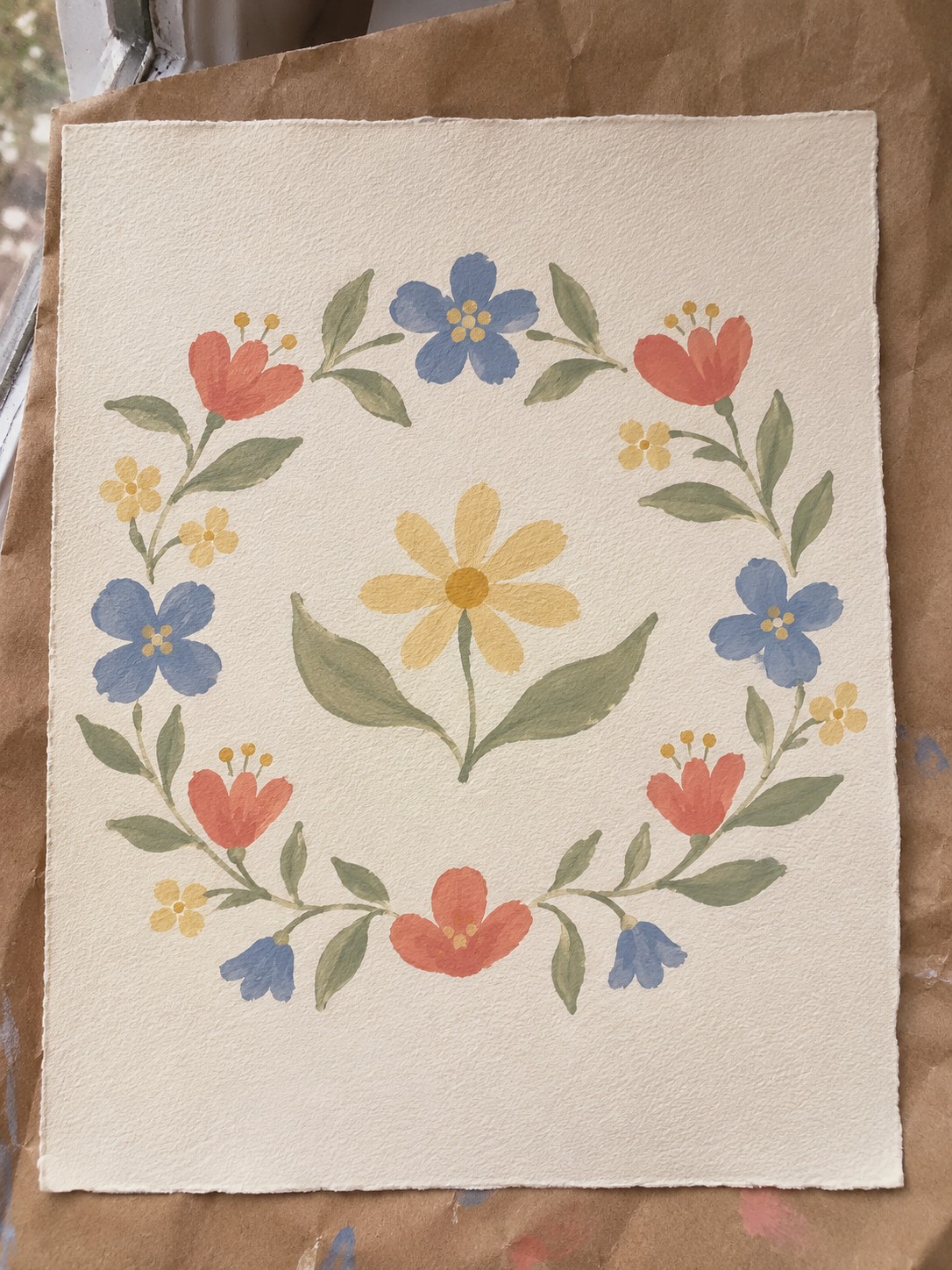
A loose folk art wreath of coral, blue, and yellow flowers curves around a larger golden daisy, leaving open space between the blooms and the center. The rounded petals, simple leaves, and muted green stems create a decorative floral composition that feels balanced without being perfectly mirrored.
The curved layout gives you a clear structure to sketch, while the varied flower shapes keep the pattern from feeling repetitive. Adapt it by changing the flower colors, making the wreath more circular, or simplifying the smaller blossoms; the textured paper and open background also make this a strong idea for a handmade wall piece or a Pinterest-friendly floral design.
A Folk Art Lily With Sun and Scrollwork

A large coral lily forms the center of this decorative folk art design, with green leaves and curved blue flourishes balancing the flower on either side. The warm pink, orange, and yellow washes, dotted petal details, and small sun motifs give the symmetrical floral composition plenty of interest without crowding the paper background.
The centered layout makes this idea easy to adapt: keep the lily and matching leaves, then swap the sun and scrollwork for dots, small leaves, or other simple accents. A limited palette also makes it straightforward to personalize for a room or handmade gift, while the bold flower silhouette and decorative details help it stand out in a Pinterest pin.
Folk Art Flowers in a Blue Striped Vase
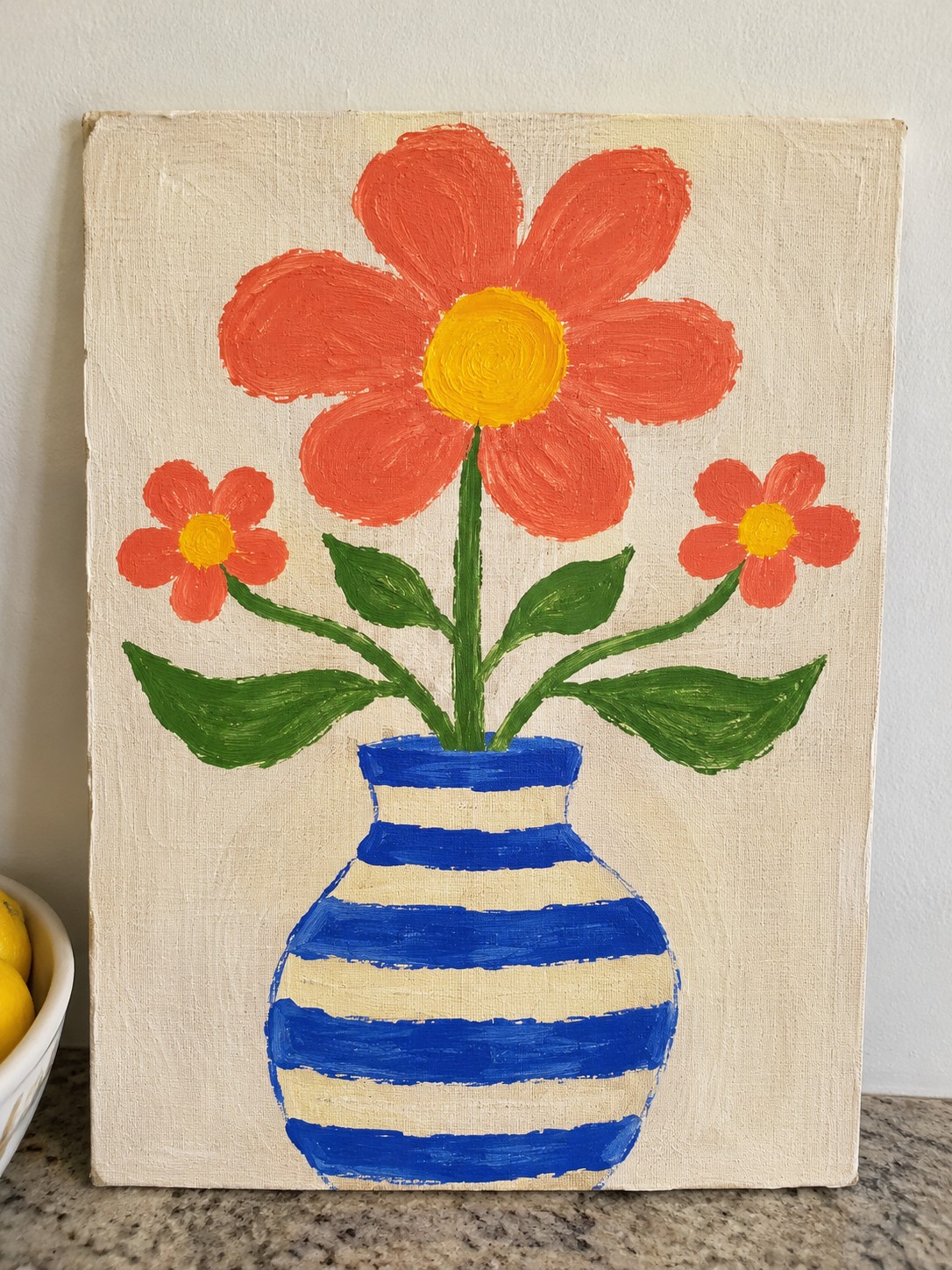
A loose bouquet of coral flowers arranged in a blue-and-cream striped vase makes a decorative folk art still life. The tall central bloom and smaller flowers create a balanced layout, while the rounded petals, green leaves, and bold vase stripes keep the shapes clear and easy to read.
The simple flower forms make this idea approachable to adapt: change the petal count, add a different flower color, or adjust the vase stripes to suit your palette. The strong contrast between coral, green, yellow, and blue also helps the design stand out as a small wall piece or a Pinterest-friendly painting reference.
A Folk Art Flower With a Dotted Arch
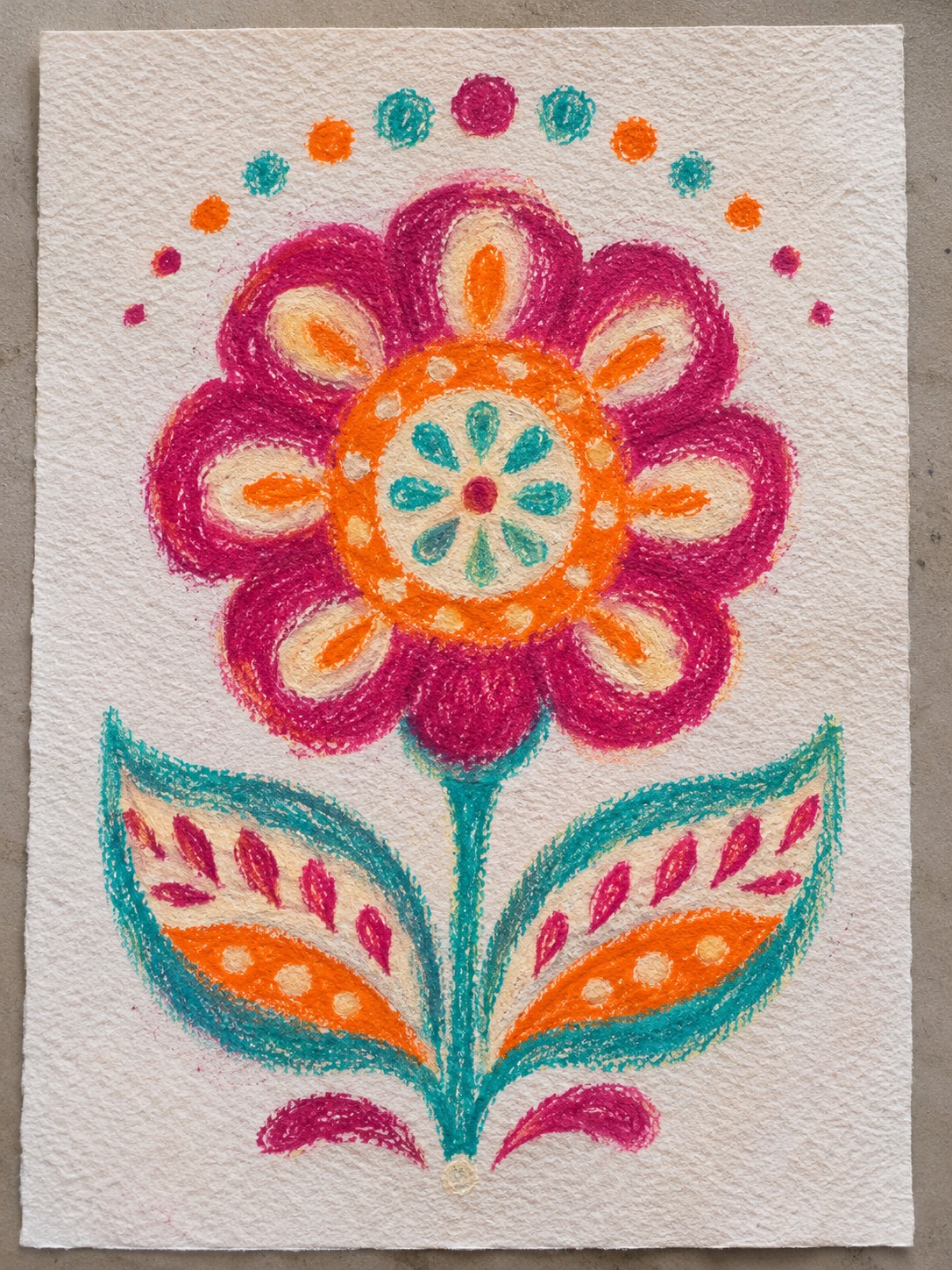
A large, rounded flower anchors this decorative folk art design, with a patterned center, paired leaves, and a curved row of dots above it. The magenta, orange, and teal shapes create clear contrast, while the balanced layout and textured marks give the floral composition a handmade look.
The strong central stem and repeated petal shapes make the layout easy to sketch before adding smaller details like the center motifs and dots. Keep the palette as shown or swap in a few favorite colors, and simplify the patterns for a cleaner version; the bold symmetry and bright contrast also help it stand out as a small wall print or Pinterest project.
A Folk Art Cactus With Symmetrical Flowers

A tall, rounded cactus topped with a coral flower makes a distinctive folk art floral composition, with smaller flowers and leafy stems balancing the sides. The vertical cactus ribs and repeated pale markings add pattern, while the soft blue background keeps the green, coral, and yellow shapes clear.
The central shape gives the design an easy structure to adapt: keep the side flowers matched for symmetry, or change their colors and leaf shapes to make the arrangement your own. Its bold outlines and simple forms suit a small decorative panel, and the cactus-and-flower combination makes a memorable Pinterest idea beyond a typical bouquet.
A Folk Art Blossom With Mirrored Branches

A five-petal coral flower anchors this symmetrical folk art design, while matching blue blooms, olive leaves, and berry-like dots extend along curved branches on either side. The restrained earthy palette and repeated shapes give the decorative floral composition a clear, balanced layout without making every detail identical.
The central flower and paired branches provide a useful structure to sketch first, then fill with simple petal, leaf, and berry shapes. Keep the palette muted for a similar look or swap in brighter colors, and adjust the small details to suit a card or a larger piece of wall art.
A Layered Folk Art Peony on a Teal Background

A large, symmetrical peony makes a strong floral folk art design, with rounded petals layered from coral pink and cream toward a golden center. The deep teal background and balanced gold leaves keep the detailed flower easy to read as a decorative panel.
The layered petals offer useful practice in repeating shapes while changing their size and color to build depth. Keep the teal ground and gold accents, or simplify the flower to fewer petal rows for a smaller canvas, handmade gift, or coordinated wall piece.
A Folk Art Flower With Side Buds and Mirrored Foliage

A large coral flower anchors this decorative folk art composition, with a small bud on either side and leafy stems branching in a balanced, nearly symmetrical pattern. Rounded petals, olive-green leaves, and a textured golden center stand out against the warm cream background, making the floral layout feel cohesive without relying on intricate detail.
The central stem gives you a simple structure to sketch first, while the side branches can be adjusted to make the design more or less symmetrical. Try changing the flower and bud colors, or add small dots and lines to personalize the leaves and petals. Its clear, centered layout also makes a strong reference for a square canvas or a Pinterest-ready floral painting.
A Folk Art Flower Beneath a Crescent Moon

A large coral flower anchors this decorative folk art design, with mirrored green branches, small gold accents, and a navy crescent arranged around it. The lavender background and balanced placement of the leaves, dots, and star shapes give the floral composition a clear, symmetrical layout.
The central flower and paired branches make a useful template for practicing symmetry, while the repeated dots and gold accents help fill open spaces without adding complicated shapes. You could adapt it by changing the background and flower colors, or simplify the details for a smaller card or wall piece. The crescent moon gives the design a distinctive focal point that can help it stand out in a Pinterest collection of floral painting ideas.
A Folk Art Floral Mandala With Mirrored Blooms
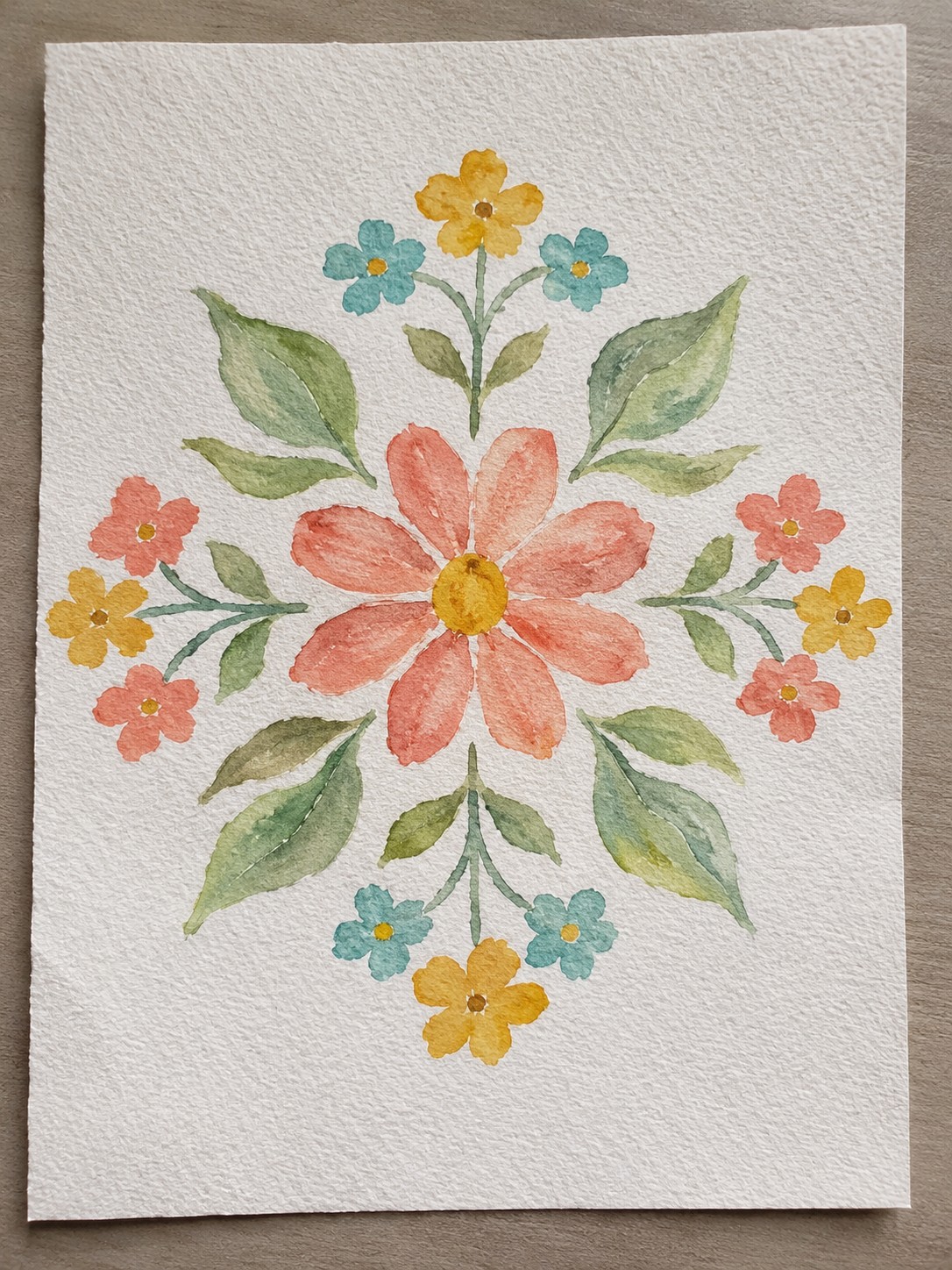
A large coral flower anchors this decorative folk art design, with smaller yellow and teal blooms arranged in balanced pairs around it. The mirrored leaves and branching stems create a clear radial layout, while the textured white background lets the warm, cool, and green colors stand out.
The repeated shapes make the arrangement easy to plan around a center point, and the flower sizes can be simplified or adjusted to fit a card, canvas, or wall piece. Keep the palette as shown or swap in seasonal colors; the strong symmetry and distinct color blocks also make the design easy to recognize in a Pinterest feed.
Frequently Asked Questions
A symmetrical floral pattern has shapes or motifs arranged evenly around a central point or line. For example, you might paint matching leaves on either side of a stem, repeat petals around a flower’s center, or mirror a design across a vertical line. Symmetry gives folk art designs a balanced, harmonious look, but small differences can make a handmade piece feel more personal.
No. Simple symmetrical floral patterns are well suited to beginners because they rely on basic shapes, repeated details, and easy-to-follow layouts. Start with a central flower, add matching leaves or buds, and build outward one shape at a time. You can practice on scrap paper before painting your final surface.
A basic setup includes acrylic paint, a smooth surface such as wood or canvas, a small round brush, a flat brush, a pencil, and water for rinsing brushes. A ruler or tracing paper can help you plan symmetrical designs. If you paint a wooden item that will be handled or displayed, finish it with a suitable clear sealer once the paint is completely dry.
Lightly mark a center line or center point before painting. Sketch the main flower first, then use it as a guide for placing matching leaves, petals, or smaller blossoms on either side. You can also draw one half of the pattern on tracing paper, flip it, and trace the other half. Exact duplication is optional: aim for balanced shapes rather than a perfectly mechanical result.
Choose a small palette of two or three main colors, then add a contrasting color for details such as flower centers or leaf accents. Classic combinations include red, yellow, and green, or blue, cream, and terracotta. For a softer look, use muted shades; for a bold design, pair bright colors with a neutral background. Painting a small color test first can help you check that the shades work well together.
